Despite legal frameworks designed to ensure that Disabled children can attend mainstream schools, many still face significant barriers and are refused admission. This is particularly an issue for Disabled children labelled with “complex needs or challenging behaviours”. Schools often refuse admission by claiming they cannot meet the specific needs. This situation raises significant legal and ethical questions for parents of Disabled children, especially concerning the legality of such refusals.
How can these issues be challenged, in particular:
What is the legal position on refusal due to the perceived needs of Disabled children?
Why are some schools still allowed to act unlawfully?
Why are some schools still failing to meet their legal obligations to provide inclusive education within mainstream schools, despite existing laws?
How can Disabled people, Disabled People’s Movement campaigners, and parents of Disabled children effectively campaign to challenge unlawful rejections, to ensure their child’s legal right to inclusive education in mainstream settings?
As a general principle, Local Authorities (LAs) are required to ensure that Disabled children are educated in mainstream school. This is known as the mainstream presumption and includes learners with special educational needs as set out in the Children and Families Act (CFA) 2014. All children have the right to mainstream education if preferred by their parents (subject to a few exceptions which are detailed below).
School admissions authorities cannot discriminate against a child because they have a disability. They are legally required to consider applications from all parents and children, and cannot refuse admission to a child because they consider they are unable to meet their needs.
If a child has an Education, Health and Care Plan (EHCP) and the parents seek a mainstream placement, this can only be denied if the placement would be incompatible with the education of others, and no reasonable steps can be taken to avoid this (s. 33 CFA 2014). This is a deliberately high threshold, and the focus should be on removing any barriers to the child accessing that school place.
Children without an EHCP must be admitted to a mainstream setting (s. 34(2) CFA 2014) unless for example the parents choose to fund attendance at an independent school or electively home educate their child. Learners without an EHCP can only be placed in alternative provision in extremely limited circumstances.
Since 2002, every school must have an accessibility plan to eliminate barriers to Disabled individuals from accessing their preferred school. This document should be available directly from the education providers.
Discriminating against learners because of disability is contrary to the protections afforded under the Equality Act 2010, which identifies that discrimination occurs if someone is treated unfairly due to something arising from their disability, and that treatment is not ‘a proportionate means of achieving a legitimate aim’. Mainstream schools also have a Public Sector Equality Duty to prevent discrimination.
As Education Law providers, we all too often see instances of schools failing Disabled children. Unfortunately, it is often up to parents to challenge the actions of LAs or schools.
If the child has an EHCP, an action could be brought to the SEND Tribunal to challenge the school named in the EHCP. The legal presumption in favour of a mainstream placement is strong, and in our experience appeals of this nature for mainstream placements frequently succeed.
Applications for Judicial Review, made to the High Court, can be submitted against school admissions decisions in some instances. The Court will consider the legality of any decision to refuse admission, for example if a discriminatory policy has been applied.
It is also possible to bring disability discrimination claims against schools in the SEND Tribunal.
In the first instance, parents should voice their concerns and request a rational explanation from the school. If informal resolution fails, legal advice should be sought regarding action that could be taken.
This legal question was posed by ALLFIE’s Michelle Daley and Catherine Bebbington.
Welcome to the latest edition of Inclusion Now magazine, inclusive education news including a tribute to Micheline Mason, inclusive practice from Mel Ainscow, SEND crisis updates, policy news, EHCPs and more.
Welcome to the 70th edition of Inclusion Now magazine. Text versions are in the articles below, or you can read it in magazine format on Issuu. The audio version will follow shortly.
To receive three issues of Inclusion Now a year, on the publication date, you can subscribe here. Subscribing supports our work and helps us plan for the future.
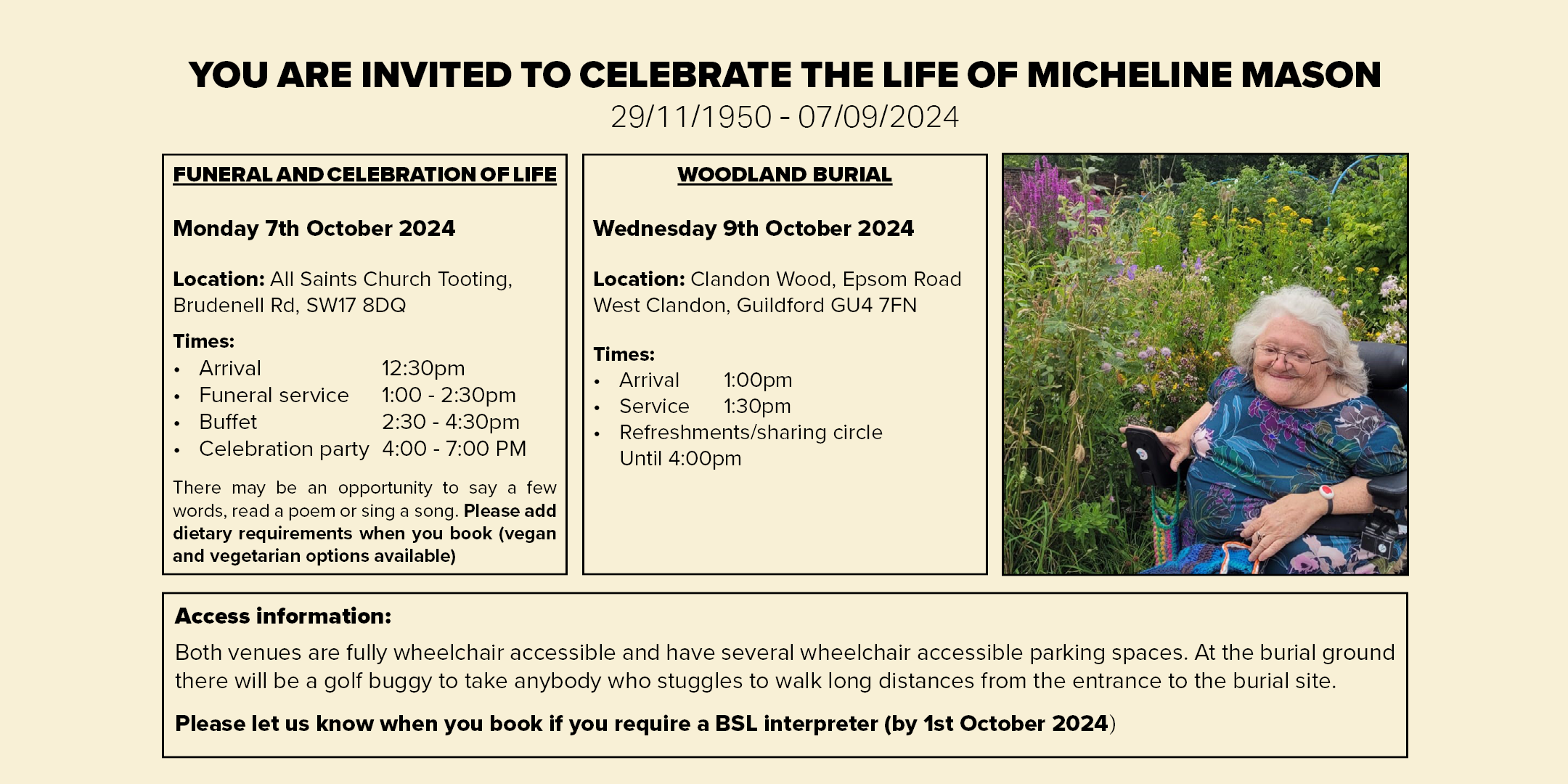
Invitation to celebrate the life of Micheline Mason
29.11.1950 – 07.09.2024
You are invited to celebrate the life of Micheline Mason. There are two separate events in October – please book to attend either or both events (links below):
Both venues are fully wheelchair accessible and have several wheelchair accessible parking spaces. At the burial ground there will be a golf buggy to take anybody who stuggles to walk long distances from the entrance to the burial site.
Please let us know when you book if you require a BSL interpreter (by 1st October 2024)
A tribute to Micheline Mason
It is with deep sadness that we announce the passing of Micheline Mason. She is known to many as the Founder of ALLFIE and an indomitable force in activism for inclusive education, not to mention the wider Disabled People’s Movement and beyond. Rest in love and power dearest Micheline
Dear ALLFIE Members and supporters,
It is with deep sadness that we inform you of the passing of ALLFIE’s Founder and lifelong friend, Micheline Mason. In particular at this time, our thoughts and love go out to Micheline’s family.
This is also a huge loss to the inclusive education movement, the Alliance for Inclusive Education which honors Micheline as its founding member, and the wider Disabled People’s Movement.
Micheline was a remarkable activist who dedicated her life to campaigning for inclusive education and the rights of all Disabled people to be educated in mainstream settings. As a Disabled mother of a Disabled child, Micheline was determined that her daughter, Lucy, now an adult, would attend her local mainstream school rather than be segregated from society, as this was her own experience within the education system.
In this video, filmed for ALLFIE’s 30th Anniversary in 2020, Micheline explains how she formed ALLFIE around her kitchen table, alongside a group of parents determined to ensure their children were educated equally, and formed the pivotal inclusive education group, Parents for Inclusion:
“I started the Alliance for Inclusive Education 30 years ago now. At the time I was a parent of a Disabled child who was 4. Who was coming up to school age. Having been educated myself for 14 years at home on the sofa and then 3 years in a special boarding school which brought great problems to me when I left. I was so determined as a mother that my daughter wasn’t gonna follow the same path as me. And ever feel excluded from her local community. I felt she deserved to have all the same opportunities as any other child, possibly even more because she needed, she would have limited choices because of her impairments.”
All her life, Micheline, alongside other activists, drove forward the inclusive education movement, it is now a global campaign that remains one of the most powerful tools in combating societal inequalities and discriminatory practices. Micheline played a crucial role in supporting other parents of Disabled children in advocating for their child’s right to attend a mainstream school. She was instrumental in introducing national policy changes and reshaping the language around inclusive education.
Micheline was not only a passionate campaigner but also a talented poet and author, with several published works. The legacy of her work will undoubtedly continue to influence and guide the Disabled People’s Movement globally and other social justice movements. Her contributions will be celebrated and cherished as we continue to carry forward the work she began.
Let us take a moment to remember and honour Micheline Mason’s extraordinary contributions. We will continue to gather Micheline’s work and dedicate ourselves to the power she brought to this movement, with care and love for everyone.
Micheline you let me be who I am and loved me for that. You have enriched my life more than I can express. Thank you. Your love will be forever with us. (Maresa Mackeith)
Micheline and I go way back. I was a member of Parents for Inclusion when my daughter Chloe was very young. She has Down’s Syndrome and I knew I would need support for her to go to an ordinary neighbourhood school. So I met Micheline through that organisation and was present at the initial conference introducing the Alliance for Inclusive Education. The energy, passion, and positivity of that day furthered my resolve that my daughter would not go to a segregated special school. I also attended that historical launch of Micheline and Richard Reiser’s book written for the ILEA, “DisabilityEquality in the Classroom: A Human Rights Issue. This further helped to totally convince me about the real possibilities, and advantages of a mainstream education, not only as Chloe’s Mum, but also as a nursery teacher. I very quickly became a member of Allfie, and laterally was on the trustee board for many years.
At that time I began to learn about the disability rights movement, the history of disabled people, the social and medical models, as well as the importance of being an ally. I was then connected to so many resources and organisations to inform my own practise, but also to strengthen my support for Chloe at her mainstream school. We joined many marches, conferences and demonstrations which all were incredibly memorable; like when Young and Powerful delivered a letter to Tony Blair insisting on inclusive education for all disabled learners. And on another occasion burning statements at Lewisham Town Hall, and then delivering a petition to the DFEE; as was chasing Micheline over Westminster Bridge one night as we posted “Reverse the Bias Towards Segregation” stickers along Westminster Bridge in preparation for a march to Parliament the following day.
When Lewisham LEA refused to allow Chloe to carry on into mainstream schooling for her Secondary education, Micheline spoke up for her at the original appeal at the Town Hall. This was the 1990’s before the Tribunal system was in place. After an unsuccessful appeal to the Secretary of State for Education, Micheline hatched a plan for a campaign to highlight and publicize the backward policies that discriminated against Chloe’s right to an inclusive secondary education. “The Friends of Chloe McCollum” was formed. And with Micheline’s support, Richard Reiser from World of Inclusion , Jo Cameron from PI and many others, we strove to enlighten the local LEA with information, explanation, to hopefully change their policy and practise. We started with a sit down in the Town Hall and had many many meetings with all those involved in decision making. Although we were only offered a dual placement after a very long battle, subsequently many more disabled pupils were included in secondary school, and we do feel we helped to pave the way for that.
That experience certainly gave me the determination as a Nursery School teacher, Deputy Head and Senco that no local child would be discriminated against and not able to join our Nursery School no matter the level of their impairments. My school’s Headteacher was on the same wave length and working hard with the whole school community we were able to make this a reality for many disabled children, even gaining an Inclusive Education Chartermark for our work.
On Micheline’s recommendation I joined the Re-Evaluating Community for a bit. Certainly enjoying many of the workshops led by Micheline. Although these were sometimes challenging, certainly they furthered my learning and helped me to gain greater awareness of the importance of being an ally and a greater understanding about the social model and barriers. Indeed when Micheline retired from being the Director of ALLFIE and I from teaching, we gained a stronger friendship and renewed partnership working on training workshops like Planning Positive Futures with Parents for Inclusion. As well as supporting parents to complete an accredited Inclusion Pathway course. I also sort of became a bit of a Micheline ” groupie”, trying to keep up with her many projects and plans supporting others to work towards positive change through the skills of being a good listener. A skill I’m continuing to work on today.
I have so much to thank Micheline for. We shared so many fun times together and so much laughter; from our trips to Wisley, lunches at Tooting Common Cafe, around her dining table, and in her fabulous garden. I’m so pleased that I joined her, Lucy and her close friends at the Tate’s “Women in Revolt” exhibition to celebrate her 43d birthday. It was also fabulous to organise a successful launch of one of her latest books “An Ordinary Baby: Tales of Childhood Resistance” at my local library introducing Micheline to my local community. As always everyone was blown away by her warmth, humour, thinking and creativity.
So many have been touched, enriched and supported by you Micheline. We will miss you so; but you will somehow always be with us and your legacy will live on and on. Rest in power and peace.
Much much love, Zelda McCollum
I met Micheline in the late 1990s, when through a conversation with Richard Reiser at the teacher’s union (NUT) conference I became committed to full educational inclusion and Disability Rights and joined Allfie. Meeting Micheline and attending Allfie meetings was an inspirational and rich experience. Micheline was always kind but her incisive intelligence kept me thinking about my responsibility as an Ally.
So, before I retired, because I was a local authority educational psychologist, I realised that the origins of Educational Psychology, and much cotemporary practice, created barriers to inclusion. So, I formed “Educational Psychologists for Inclusion, holding more than a dozen national seminars, attended by between 10 and 60 EPs. The aim of EPs for Inclusion was to develop ways of supporting disabled children and their families into inclusive mainstream schools and have an impact on local and national policy.
Micheline advised me all along the way and, as a re evaluation co counsellor, challenged me to make inclusion meaningful in my own life and work. There is no doubt that Micheline’s encouragement kept me going over more than a decade. The last time I saw Micheline was at the final EPs for Inclusion Seminar, when she braved the sometimes patronising comments of some of the EPs (they can be an arrogant lot!) then went for a meal with my wife (Chrissie) and me. The Italian Restaurant, seeing Micheline’s wheelchair, helpfully moved the tables around then asked Micheline her food choices, speaking over her head, to Chrissie in “Does she take sugar?” fashion! She coped. One of the best brains in the Universe, and “Wheelchair equates with Stupid”.
It seems to me sad and poignant that Micheline passed away on 7th September because, on that day, now as a person with Parkinson’s (PwP), I attended (and helped organise) a Seminar run by Parkinson’s people on research into Living Well. We, PwP, follow the Disability Rights approach and organise ourselves, with allies.
For me, Micheline was an inspiration and a mentor. I shall miss her. (Keith Venables, Convenor, EPs for Inclusion)
Micheline, your friendship changed my life. I owe you so much and feel so privileged to have been around your power, love and wisdom. I will miss you.
(Caroline MacKeith)
Micheline Mason was one of the architects of inclusive education in the UK, passionate and powerful in changing attitudes, helping to dismantle outdated structures and opening the doors for disabled children to join mainstream education. This was no mean feat. Micheline did this with genuine love for disabled children, political understanding, and personal experience of the harm that segregation inflicts on all. Her influence was world-wide through her talks, books, training and engagement with people – those who held power and those who didn’t. It is a huge loss to society that she is no more. My thoughts are with her daughter Lucy, her wider family, and the community of disabled people.As a parent of a disabled daughter Zahrah who was being directed to a special school in the 1990s, Micheline tirelessly accompanied us on meetings and spoke eloquently at the tribunal which we won but then had to fight all over again – this was the mindless bureaucracy we faced. Micheline was always bristling with energy, she had an infectious laugh and it’s hard to believe only few weeks ago she wrote to encourage me on my writing some of the history of the inclusion battle. She was a true friend to many. She taught me so much about what it means to be truly human. Long may her legacy live on! (Preethi Manuel)
The UK Disabled People’s Movement mourns the sad passing of Micheline Mason, disabled activist, author, artist and founder of the Alliance for Inclusive Education -Dave Lupton’s blog post tribute: Crippen remembers Micheline Mason | Crippen Cartoons
My dear Micheline, you had a great sense of humour.
You were always positive and a wonderful activist.
I was lucky to have met and talked to you across the ocean.Thank you very much for the wonderful interview time.
But I really wanted to talk to you more…I will pass on your words to the people of Japan and the world through my book.
Please continue to watch over me.
Rest in power and peace, my dear Micheline.(Nariko Hashida) Nariko included their research paper with contributions from Micheline
I got to know Micheline after my wife Linda joined the team at Patents for Inclusion. By degrees Linda began working with Micheline training people on the Pathway. They were a close partnership who had huge love and respect for each other, who did some brilliant work together.
I got to know Micheline better when I joined a support counselling group which she led after Linda died. She was a brilliant counsellor and a humble, straightforward and honest human being who tackled the most difficult challenges with courage, lightheartedness and a great sense of humour.
Her counselling helped me grow through the issues I dealt with at that time. I will remember her for all that, and her groundbreaking achievements in awakening so many to the enlightenment of inclusive practice.
But most of all I’ll remember those many moments together when both of us were helpless with laughter.
Micheline left the world a better place. (Tim Whitehead)
So so sad. Micheline helped my friends access mainstream education. I met her in person and always thought she had done amazing work. Thank you and RIP. (Sarah Ismail)
This is very sad news. A huge loss to the movement but Micheline leaves an amazing legacy. Her warmth, humour, passion and determination always shone. Deepest condolences to her family and friends (Marianne Scobie)
This is very sad news indeed. Micheline was multi talented – artist, speaker, writer, etc. etc. I can honestly say, had I not met Micheline when she was little, my daughter would probably be barely literate and friendless, rather than having 2 degrees and an interesting social life. And I still use Micheline’s “What’s this got to do with you dear” cartoon to win an argument over disabled people’s involvement in matters that affect them. Condolences to Lucy and I hope you have good people supporting you. (Midge and Kate Caryer)
So saddened to learn from Tara that we’ve lost the truly wondrous Micheline Mason, who started and led the inclusion movement in the UK and overseas too. I first met Micheline when she and Richard Rieser invited me to one of their very first Disability Equality in Education ‘Training the Trainers’ weekend courses in London in the 90s. Along with the other participants, including Jane Campbell and Christine Wilson we all came away fired up to make education better and truly inclusive for all disabled children. Micheline, together with Richard empowered me to challenge other education ‘professionals’ across Scotland and show the way ahead with Social Model thinking rather than the ‘traditional’, disempowering medical model so beloved by those who excluded. She encouraged and supported me when I was awarded a Churchill Travel Fellowship to look at Inclusive Education from an Equalities and Rights Perspective in North America and when I came back. The world will be much the poorer and never the same without her gentle but hugely powerful wisdom. Micheline was always crystal clear that no disabled child should ever be segregated and separated from their friends and families in a special school setting as so many of us had been. She put me in touch with people here and in North America and encouraged me to apply for a Churchill Fellowship and involved me in so many things over the years. I remember pinching myself when she asked me to write a chapter for one of her books as she knew the challenges of my school life, the impact on those closest to me and the horrendous adverse professional experiences while teaching. Her writings, videos and speeches are unique and life changing to all who read them or were blessed to be in her company. Thinking especially of Lucy, family and friends, the staff and volunteers at The Alliance for Inclusive Education, her friends and allies in the Disability Movement and all the families and education professionals who realised there is a better way – by right, and worked together to make change happen. God bless you Micheline, rest in peace, With love, respect and much sadness (Wilma Lawrie, Edinburgh)
I learned about the Social Model through listening to Micheline at workshops and reading her work. It made a massive difference and impacted our battle to get our daughter into mainstream school. She has left a legacy. (Katie Clarke)
Micheline was hugely influential in my life. I first met her in Reevaluation Counselling where we were building an ‘allies’ movement, trying to create spaces, both physical and with our thinking to include and put disabled people in the centre of things. Also trying to understand about how not to behave oppressively in the way that society is. So for example we built ramps, laid ‘hearing loops’ and tried to think about things differently. We didn’t always get it right but with hers and Christine O’ Mahoney’s advice and thinking we did things. Understanding the ‘Medical model’ and the ‘disabled by society’ model was such a huge and seismic piece of learning from Micheline and others for me. I went on to have a disabled son later on so my work in this area was very important. Through Micheline’s work I found the ‘Inclusive Solutions’ people who helped me help my son in his challenges. I have followed Micheline through reading her books and avidly follow the Allfie emails I get. Micheline’s innovative thinking and goals for a more inclusive world continue to amaze and reset my thinking. Her ideas are hugely relevant today and as a climate activist, putting people before profit is needed now more than ever. Thank you Micheline. I love you, Cath Goldstein
Micheline was an absolute powerhouse; a force of nature and amazing human being and a massive loss to inclusive education and the disabled people’s movement and to everyone who knows Micheline was such a lovely human being. Condolences to her family and everyone who knew her. Rest in Power Micheline x (Paula Peters)
Micheline you gave us so much. The countless lives you touched and emboldened, ever so passionately and powerfully. You certainly did that for us. Your legacy will carry on, the fight for an inclusive education for all disabled learners carries on underpinned by your wisdom and creativity. Condolences to Lucy, your family, and your very wide circle of friends. Rest in power and peace. (Zelda McCollum)
Deepest solidarity. Last year, Micheline asked me to read her latest book before it was published. She said, “You’ll get it,” and she was absolutely right. I connected with it on so many levels. As Bob Marley said, “Never give up the fight,” and this was Micheline she never did – she fought tirelessly for inclusive education. Micheline leaves behind a remarkable legacy. Her work will continue to flow through the very DNA of ALLFIE’s values and practices, driving inclusive education for everyone.
With abundant love and peace. (Michelle Daley)
Very sad news to hear, please send our deepest condolences to the family. (Jacqui Byland)
What a loss for the disabled community! She was a pioneer in so many ways. Our condolences to Lucy, family and friends. Xx (Toucan Diversity)
Oh no. Not another amazing disabled champion gone. 💔 Micheline was a powerhouse of passion and intelligence. We all owe her so much. A legacy of positivity and inclusion. (Mik Scarlet)
An incredible lady who did so much for disabled people and society. She will be truly missed xx (Lucy Fisher)
So sad. Micheline was a warm, compassionate person and a wise and determined campaigner. (Janet Mearns)
A great loss. Sincerest condolences. She was a very determined lady. (Jan Nicholas)
Such a massive loss to disability activism. (Alison Wilde)
May you rest in perfect peace and power Micheline,🙏🏽💛your legacy has changed countless lives including mine, 🙏🏽💛I will be forever grateful 🕊️🙏🏽💛 (Yewande Akintelu-Omoniyi)
It is with great sadness to hear that Micheline has passed away. I remember her warmth and enthusiasm in fighting for the inclusive education for her daughter and for many other disabled children. The work that Michelin started will be carried on with that enthusiasm. She will be sorely missed.
(Anthony Ford-Shubrook)
I first knew of Micheline when I was learning Re-Evaluation Counselling. I was a school teacher and everyone said I really should meet her.
In my heart I already knew that inclusion was the way forward for education. Meeting Micheline helped me understand that at such a deeper level.
I went to Micheline’s workshops and got involved with Allfie as contributor and later as a trustee.
Micheline’s love of humanity has changed the education of many children and inspired educators across the world. When I was a headteacher I had a photo of Micheline, with Lucy looking out from under her chair, on my wall. My schools were always a hotbed of inclusion thanks to a wonderful teacher.
Micheline was courageous, indomitable, highly intelligent, kind, loving and generous.
Micheline will be missed but her energy and legacy will keep on building momentum – we will achieve an inclusive world where all people are valued for their unique contribution.
(Nigel Utton)
I was very sad to hear of Micheline’s passing.
Her powerful spirit and her clarity of purpose, born of experience, really did change the world.
What a struggle it was – and still is – for voices like hers to be heard.
Thank you, Micheline, for the inspiration that you brought to others, and to me, as you resolutely pursued your life’s work.
You will be much missed.
(Katy Simmons)
I met Micheline on a few occasions and was immediately struck by her warmth but also steel in challenging the inequality and discrimination that exist in the education system whereby a group of humans are segregated away from other humans just because of their differences. She told me in her gentle voice that campaigning for the inclusion of all Disabled people in mainstream education settings was no longer just about her daughter but more importantly about a complete system and societal change that must involve not only the inclusive education movement but the Disability movement at large. I felt her strength on those occasions and was honoured to be in the presence of greatness, Rest in power – Ms Mason
(Iyiola Olafimihan)
Michelene
Farewell my friend.
You who more than any other,
Taught me the true meaning of disablement
And the continuing struggle
For Equality, Justice and our Rights.
Most unlikely leader,
Who through your wisdom,
Built an Inclusion Movement.
The ripples of which spread out still
Across the World.Micheline I will always venerate and love you!
(Richard Rieser)
Dear Sir Stephen Timms MP,
We would like to take this opportunity to congratulate you as a Member of the newly elected government and in your new role as the Minister of State for Social Security and Disability.
The Alliance for Inclusive Education (ALLFIE) is the only national Disabled People’s Organisation (DPO) campaigning for the rights of Disabled people to an inclusive education, led by and for Disabled people. Our work is informed by the United Nations Convention on the Rights of Persons with Disabilities (UNCRPD), particularly Article 24 (on inclusive education), which focuses on the right of Disabled people to mainstream education. As you know, the duty placed on signatory State parties is to make progressive realisation towards equity and justice for every Disabled person within their State. However, the reality for us Disabled people is that the education system continues to adjudge our lives in wholly negative terms, based on a deficit needs-based system (medical model of disability), which is contrary to the UNCRPD.
We appreciate the support you have shown for ALLFIE’s work in the past. We want to continue our collaboration in your new role as the Minister of State for Social Security and Disability. Your experience as MP for the London Borough of Newham, a borough once celebrated for its inclusive education, gives you a unique perspective. We have experienced a nationwide setback in progress toward full participation of Disabled people in mainstream education and beyond. There are an increasing number of Disabled children and young people not in education or receiving formal learning, a disproportionately high number of school exclusions, and many not receiving the appropriate support and resources required to access the National Curriculum. Disabled children and young people labelled as having “complex needs” are disproportionately placed in segregated day and residential educational provisions, placed away from their families, breaking family bonds and community connections. Disabled children and young people placed in segregated settings are at risk of experiencing abuse and violence. These systemic problems repeatedly violate their basic human rights to safety and education.
As the government that signed the UNCRPD on 30th March 2007 and ratified the Convention on 8th June 2009, we know that you have an interest in Disabled people’s entitlements, rights and inclusion in Britain. We welcome your priorities and intentions to “raise educational standards and break down barriers to opportunity.” We are also pleased about the government’s plan to make “all schools to cooperate with the local authority on school admissions, SEND inclusion, and place planning, by giving local authorities greater powers to help them deliver their functions on school admissions and ensure admissions decisions account for the needs for communities.” We believe that this shows a commitment to making inclusive education a reality.
At ALLFIE, we want every Disabled person to have a positive experience within the education system where we are not disadvantaged, in which we have access to appropriate support and resources, and have access to full educational experience, opportunities and outcomes. We know that inclusive education in mainstream settings is central to the work of full participation for everyone in society. For this reason, we have produced a Manifesto that sets out 6 demands for inclusive education for all that promote equity, justice, and inclusion. We believe that our Manifesto is a useful tool for influencing policy and decision-making. Therefore, we want to address the concerns ALLFIE raised with the previous government about the introduction of the SEND and Alternative Provision Improvement Plan, including through our submission to the SEND and AP green paper consultation.
We do not believe that the current plan will improve the educational experience for every Disabled child and young person because it has failed to address the structural and systemic barriers within the education system. In fact, we would argue that this Implementation Plan exacerbates the exclusion of Disabled children and young people and will reduce later life chances and to be part of their communities. It is perplexing to us that there is a common misguided view that in order to be included, at first individual Disabled people are segregated.
We want to assist your parliamentary work by providing briefings that you can use during parliamentary debates and by holding regular engagement meetings with our Inclusive Education Coalition, which consists of a diverse group. We would be keen to be part of your engagement with stakeholders to assist with and participate in your policy work.
We look forward to your leadership in advancing the rights and inclusion of Disabled people within the education system. We would like to meet with you to discuss our proposal to develop an education system that is embedded in justice and rights for every Disabled person.
We hope you accept our invitation to meet with us, as the only Disabled People’s Organisation working on education.
We would like to take this opportunity to congratulate you as a Member of the newly elected government and on taking up your new role as Minister of State for School Standards.
We are the Chairperson, Navin Kikabhai and Director, Michelle Daley of the Alliance for Inclusive Education (ALLFIE). ALLFIE is the only national Disabled People’s Organisation (DPO) campaigning for the rights of Disabled people to an inclusive education, led by and for Disabled people. ALLFIE’s work is informed by the United Nations Convention on the Rights of Persons with Disabilities (UNCRPD), particularly Article 24 (on inclusive education), which concerns Disabled people’s right to mainstream education. As you know, the duty placed on signatory State parties is to make progressive realisation towards equity and justice for every Disabled person within their State. However, the reality for us Disabled people is that the education system continues to adjudge our lives in wholly negative terms, based on a deficit needs-based system (medical model of disability), which is contrary to the UNCRPD.
We continue to experience a nationwide setback in progress toward full participation of Disabled people in mainstream education and beyond. There are an increasing number of Disabled children and young people not in education or receiving formal learning, a disproportionately high number of school exclusions, and many not receiving the appropriate support and resources required to access the National Curriculum. Disabled children and young people labelled as having “complex needs” are disproportionately placed in segregated day and residential educational provisions, placed away from their families, breaking family bonds and community connections. Disabled children and young people placed in segregated settings are at risk of experiencing abuse and violence. These systemic problems repeatedly violate their basic human rights to safety and education.
As the government that signed the UNCRPD on 30th March 2007 and ratified the Convention on 8th June 2009, we know that you have an interest in Disabled people’s entitlements, rights and inclusion in Britain. We welcome your priorities and intentions to “raise educational standards and break down barriers to opportunity.” We are also pleased about the government’s plan to make “all schools to cooperate with the local authority on school admissions, SEND inclusion, and place planning, by giving local authorities greater powers to help them deliver their functions on school admissions and ensure admissions decisions account for the needs for communities.” We believe that this shows a commitment to making inclusive education a reality.
At ALLFIE, we want every Disabled person to have a positive experience within the education system where we are not disadvantaged, in which we have access to appropriate support and resources, and have access to full educational experience, opportunities and outcomes. We know that inclusive education in mainstream settings is central to the work of full participation for everyone in society. For this reason, we have produced a Manifesto that sets out 6 demands for inclusive education for all that promote equity, justice, and inclusion. We believe that our Manifesto is a useful tool for influencing policy and decision-making. Therefore, we want to address the concerns ALLFIE raised with the previous government about the introduction of the SEND and Alternative Provision Improvement Plan, including through our submission to the SEND and AP green paper consultation.
We do not believe that the current plan will improve the educational experience for every Disabled child and young person because it has failed to address the structural and systemic barriers within the education system. In fact, we would argue that this Implementation Plan exacerbates the exclusion of Disabled children and young people and will reduce later life chances and to be part of their communities. It is perplexing to us that there is a common misguided view that in order to be included, at first individual Disabled people are segregated.
We want to assist your parliamentary work by providing briefings that you can use during parliamentary debates and by holding regular engagement meetings with our Inclusive Education Coalition, which consists of a diverse group. We would be keen to be part of your engagement with stakeholders to assist with and participate in your policy work.
We look forward to your leadership in advancing the rights and inclusion of Disabled people within the mainstream education system and beyond. We would like to meet with you to discuss our proposal to develop an education system that is embedded in justice and rights for every Disabled person.
We hope you accept our invitation to meet with us, as the only Disabled People’s Organisation working on education.
We would like to take this opportunity to congratulate you as a Member of the newly elected government and on taking up your new roles as the Secretary of State for Education and Minister for Women and Equalities.
We are the Chairperson, Navin Kikabhai and Director, Michelle Daley of the Alliance for Inclusive Education (ALLFIE). ALLFIE is the only national Disabled People’s Organisation (DPO) campaigning for the rights of Disabled people to an inclusive education, led by and for Disabled people. ALLFIE’s work is informed by the United Nations Convention on the Rights of Persons with Disabilities (UNCRPD), particularly Article 24 (on inclusive education), which concerns Disabled people’s right to mainstream education. As you know, the duty placed on signatory State parties is to make progressive realisation towards equity and justice for every Disabled person within their State. However, the reality for us Disabled people is that the education system continues to adjudge our lives in wholly negative terms, based on a deficit needs-based system (medical model of disability), which is contrary to the UNCRPD.
We continue to experience a nationwide setback in progress toward full participation of Disabled people in mainstream education and beyond. There are an increasing number of Disabled children and young people not in education or receiving formal learning, a disproportionately high number of school exclusions, and many not receiving the appropriate support and resources required to access the National Curriculum. Disabled children and young people labelled as having “complex needs” are disproportionately placed in segregated day and residential educational provisions, placed away from their families, breaking family bonds and community connections. Disabled children and young people placed in segregated settings are at risk of experiencing abuse and violence. These systemic problems repeatedly violate their basic human rights to safety and education.
As the government that signed the UNCRPD on 30th March 2007 and ratified the Convention on 8th June 2009, we know that you have an interest in Disabled people’s entitlements, rights and inclusion in Britain. We welcome your priorities and intentions to “raise educational standards and break down barriers to opportunity.” We are also pleased about the government’s plan to make “all schools to cooperate with the local authority on school admissions, SEND inclusion, and place planning, by giving local authorities greater powers to help them deliver their functions on school admissions and ensure admissions decisions account for the needs for communities.” We believe that this shows a commitment to making inclusive education a reality.
At ALLFIE, we want every Disabled person to have a positive experience within the education system where we are not disadvantaged, in which we have access to appropriate support and resources, and have access to full educational experience, opportunities and outcomes. We know that inclusive education in mainstream settings is central to the work of full participation for everyone in society. For this reason, we have produced a Manifesto that sets out 6 demands for inclusive education for all that promote equity, justice, and inclusion. We believe that our Manifesto is a useful tool for influencing policy and decision-making. Therefore, we want to address the concerns ALLFIE raised with the previous government about the introduction of the SEND and Alternative Provision Improvement Plan, including through our submission to the SEND and AP green paper consultation.
We do not believe that the current plan will improve the educational experience for every Disabled child and young person because it has failed to address the structural and systemic barriers within the education system. In fact, we would argue that this Implementation Plan exacerbates the exclusion of Disabled children and young people and will reduce later life chances and to be part of their communities. It is perplexing to us that there is a common misguided view that in order to be included, at first individual Disabled people are segregated.
We want to assist your parliamentary work by providing briefings that you can use during parliamentary debates and by holding regular engagement meetings with our Inclusive Education Coalition, which consists of a diverse group. We would be keen to be part of your engagement with stakeholders to assist with and participate in your policy work.
We look forward to your leadership in advancing the rights and inclusion of Disabled people within the mainstream education system and beyond. We would like to meet with you to discuss our proposal to develop an education system that is embedded in justice and rights for every Disabled person.
We hope you accept our invitation to meet with us, as the only Disabled People’s Organisation working on education.
We look forward to your reply.
Sincerely,
Navin Kikabhai and Michelle Daley
The Alliance for Inclusive Education (ALLFIE)
We now have a Labour Government who, in their manifesto, stated for children and Young people labelled with SEND: “Labour will take a community-wide approach, improving inclusivity and expertise in mainstream schools”, and went on to commit that: “We will make sure admissions decisions account for the needs of communities and require all schools to co-operate with their local authority on school admissions, SEND inclusion, and place planning”.
This new approach is certainly needed after the last 18 years (including 4 years of the last Labour Government), which could be characterised as a period of rising exclusion.
As the articles in this issue amply demonstrate, the Inclusion Movement has the tools, knowledge and experience to help build an alternative inclusive school system in England.
The latest English SEND Data from January 2024 shows, 4.8% of all pupils now have an Education Health and Care Plan, which was aimed at only 2% originally. Increasingly, recipients are segregated in expensive private provision that is bankrupting the education budget. But numbers with SEND Support are also rising against a background of real term cuts in schools. 13.6% or 1,238,851 are on School Support. Here there is also a strong link to child poverty, which Labour want to tackle.
Previous periods of Labour in power have taught us we will need to build a massive campaign in the community. This will be parents, teachers, youth, schools and local authorities pushing the Government to reverse current practice and bring in a period of inclusive education practice.
Is Government Working Against the Presumption of Mainstream Education?
By Edmore Masendeke, ALLFIE’s Policy and Research Lead
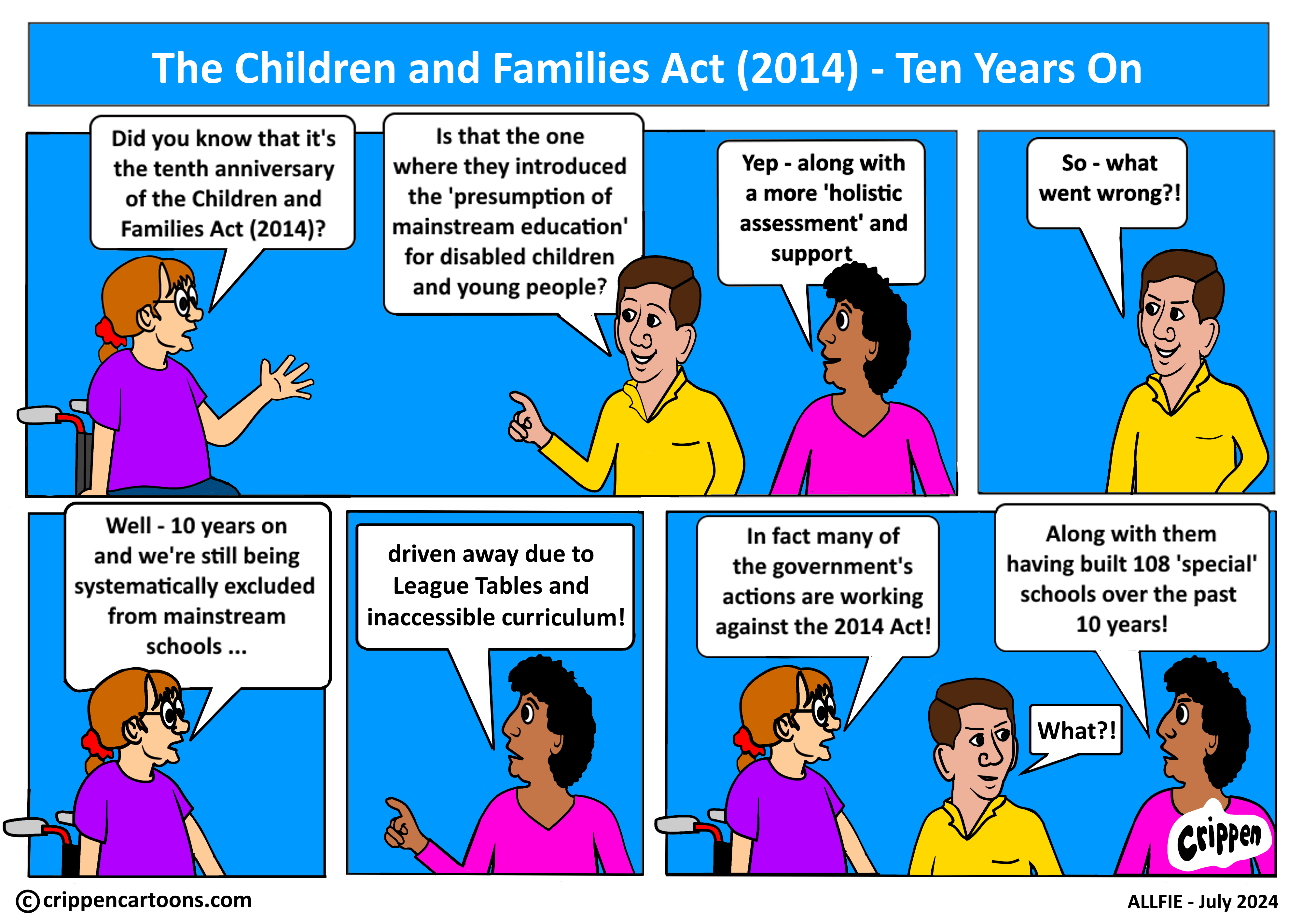
This year marks the 10th Anniversary of the Children and Families Act 2014. The Act introduced the ‘presumption of mainstream education’, requiring local authorities to ensure that Disabled children and Young people, including those labelled with special education needs, are educated in mainstream settings. The Act also replaced statements of Special Education Needs (statements of SEN) with Education, Health and Care plans (EHC plans). This reform was intended to ensure that Disabled children and Young people receive more holistic assessments and support from local authorities, the National Health Services and other stakeholders. Together, these provisions should have improved Disabled children and Young people’s access to education and their experiences in mainstream settings.
On the contrary, today, ten years on, too many Disabled children and Young people are structurally and systematically excluded from mainstream schools. Some mainstream schools do not even have the resources or desire to include Disabled children and Young people. Meanwhile, the Government has failed to adequately support the education of Disabled children and Young people in mainstream settings. It has also failed to address the intersectional experiences of Disabled children and Young people, resulting in further marginalisation. This has been highlighted in ALLFIEs recent research on lived experiences of Black and Global Majority Disabled pupils in education. In fact, many of the Government’s actions over the past ten years appear as though it is working against the ‘presumption of mainstream education’. Is it?
Since 2014, when the Act came into force, more special schools have been built, the proportion of pupils labelled SEND (special education needs and disabilities) attending special schools, alternative provisions or excluded from mainstream education has grown and SEND budgets have reduced in real terms. In addition, Disabled children and Young people have been driven out of mainstream schools due to reasons such as league tables and inaccessible curriculum and assessment techniques. This article discusses how each of these issues has contributed to Disabled children and Young people’s exclusion from mainstream settings.
As I discuss these issues, it is also important to remember that this year marks the 30th anniversary of the Salamanca Statement on Inclusion in Education. The Salamanca Statement recognised that all children should be included in mainstream education settings: “All children should learn together, wherever possible, regardless of any difficulties or differences they may have. Inclusive schools must recognise and respond to the diverse needs of their students.” This was a clear call for countries around the world to adopt more inclusive education systems.
Building New Special Schools and Increasing Alternative Provisions
The drive to build new special schools began before the Children and Families Act 2014 was enacted. The Government has opened 108 new special schools since 2010 and plans to open another 93 in the future. Thus, the Government continues to invest continues to invest in the construction and maintenance of special schools, having made a commitment to invest £2.6 billion for local authorities to open 133 new free special schools between 2022 and 2025. In May 2024, the Government announced the opening of 16 new special schools for over 2,000 Disabled children.
In addition to more pupils attending special schools, a growing number of Disabled children and Young people are attending alternative provisions or being excluded from mainstream education. Disabled children and Young people are overrepresented among those in Pupil Referral Units (PRUs) and Education Other Than at School (EOTAS). Additionally, there were 1,260 pupils with EHCPs of compulsory school age not in education and more than 15,000 Young people with EHCPs were not in education, employment, or training (NEET). This data needs to be approached with care as it does not cover all children and Young people labelled with SEND. It just covers those with EHCPs, representing about a third of them.
Resourcing Issues for EHC Plans
Inadequate funding for the implementation of the 2014 legislation has been an issue from the start. Although the age range of Disabled children and Young people to be supported by local and health authorities (through EHC plans) was broadened from 3-16 to 0-25, the SEND budget remained the same until five years later. The Act also shifted responsibility for resourcing of SEN support from local authorities to schools, reducing the support available in mainstream schools, particularly for children and Young people without EHC plans. Consequently, demand for EHC plans have increased in recent years as it has become the only way for some children and Young people to access support in mainstream settings.
The number of children and Young people labelled with SEND who get support through a statutory plan has more than doubled since the SEND reforms were launched in September 2014.
In mid-January 2024, there were 575,963 active EHCPs, 11% more than last year.
In the first few years after the 2014 reforms, most of this growth was down to the expansion of plans in the post-16 sector. These days, the growth is largest amongst school-aged children – not just in primary, but also in secondary too.
Keer also noted that the number of pupils with EHC plans grew faster in mainstream schools than in special schools in 2023. In January 2024, the number of pupils with EHCPs in mainstream schools rose by 17% on the previous year, while the number of pupils with EHCPs in special schools rose by 8% on the previous year. The growth in demand for EHC plans among school-aged children can thus be partially attributed to the dwindling state of SEN support in mainstream schools and the creation of new state special school placements.
Systemic Issues
Due to inadequate funding from the Government, most local authorities have financial deficits in their overall education budgets – known as Dedicated Schools Grant (DSG) – and are failing to meet the rising demand for EHC plans and to provide support to Disabled children and Young people with EHC plans. The Department for Education (DfE) forces local authorities with the largest DSG deficits to address their spending through the Safety Valve and the Delivering Better Value programmes. These programmes require local authorities to cut spending on SEND provisions and reduce the number of EHC plans approvals. This is concerning as the number of children and Young people with EHC plans is rising and local authorities are already failing to meet this demand. Keer noted that local authorities receiving support under these programmes were slightly more likely to refuse than other local authorities and almost all of them had higher EHC needs assessment refusal rates in January 2024 than they did the previous year. Related to this, a report by Pro Bono Economics revealed that more than £60m of public funds was spent on SEND tribunals between 2021 to 2022 and councils lost 96% of these court disputes. These funds could have been used to support more children and Young people with EHC plans in mainstream settings instead.
Driving Disabled children and Young people out of mainstream settings
Over the past decade, mainstream schools have also become less welcoming and more hostile to Disabled children and Young people as they strive to improve standards. Schools have increasingly faced a lot of pressure to maintain their status on league tables, including through reducing absenteeism levels after COVID-19. This has led to increased exclusions/off-rolling (removing a pupil from school without using permanent exclusion, when this is in the interests of the school rather than the best interests of the pupil) of Disabled children and Young people. These practices contradict the child’s human right to education under both domestic law and international treaties, such as the UN Convention on the Rights of Persons with Disabilities (UNCRPD) and the UN Convention on the Rights of the Child (UNCRC).
Another factor that has contributed to Disabled children and Young people’s exclusion from mainstream settings is the curriculum and how it is assessed. The curriculum is inaccessible, linear and focused on equipping pupils for productivity and international competitiveness. This is what is behind the Government’s plan to replace A levels and T levels with a Baccalaureate-style qualification called the Advanced British Standard in England. The introduction of this qualification is thus likely to worsen the exclusion of Disabled children and Young people in education.
Education for All
Ensuring education for all in mainstream settings promotes social justice, citizenship, and equity for Disabled children and Young people. Over the past decade, efforts to ensure that Disabled children and Young people are educated in mainstream settings have been hampered by increased investment in special school places, less spending on support and the failure of mainstream schools to be inclusive. This has clearly undermined the ‘presumption to mainstream education’ enshrined in the Children and Families Act 2014 and, more importantly, goes against Article 24 of the UN Convention on the Rights of Persons with Disabilities which the UK Government ratified in 2009.
Mount Stuart Primary School: “Inclusive education is an entitlement”
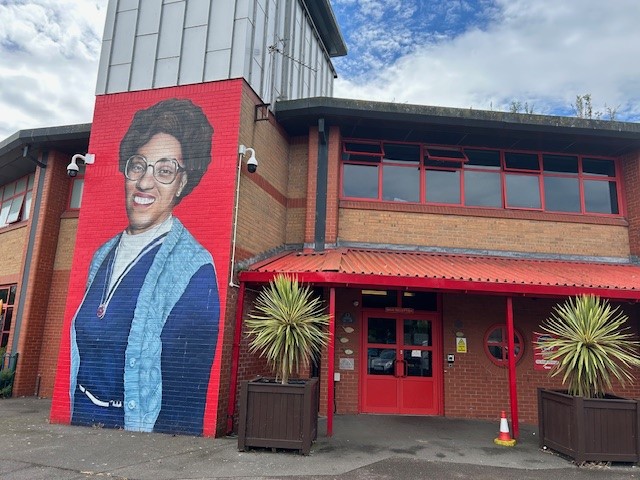
ALLFIE’s Yewande Akintelu-Ominiyi (Our Voice Project Youth Officer), and Michelle Daley (Director), interview Helen Borley, Headteacher at Mount Stuart Primary School.
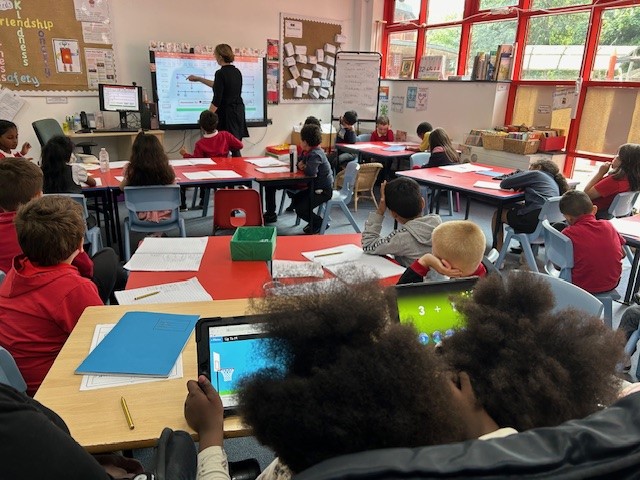
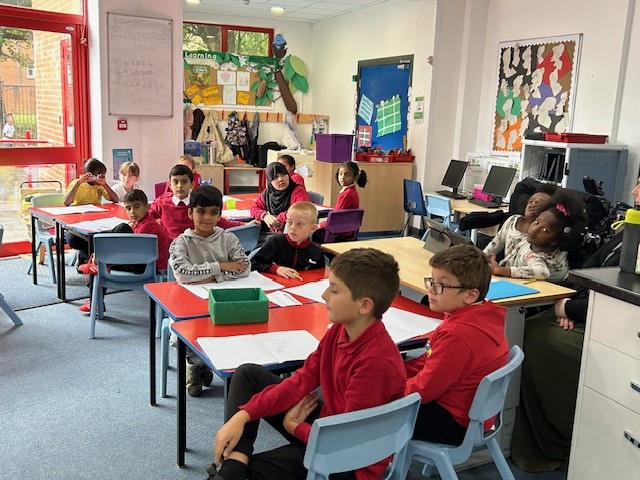
The BBC documentary Inseparable Sisters follows the journey of Marieme and Ndeye, 7-year-old conjoined twins who moved from Senegal to Cardiff with their father, Ibrahima. In the documentary we see how inclusive education isn’t just about life in school but how it positively influences the community outside it. Marieme and Ndeye’s story highlights the importance of liberated leadership, collaborative efforts, and community-centred values of belonging. Their experience at Mount Stuart Primary School proves how the school embraces uniqueness as beauty and understands how intersectional experiences and inclusivity benefit every member of the school community.
On April 16, 2024, Yewande Akintelu-Omoniyi and Michelle Daley met with Headteacher Helen Borley at Mount Stuart Primary School. We discussed Helen’s role in school leadership and strategies for enabling Marieme, Ndeye, and other Disabled pupils to have a liberating and enriching experience.
It was a great pleasure meeting with Helen Borley, especially given the ongoing concerns about how the education system views Disabled children and Young people as a ‘problem’. An increasing number of Disabled children and Young people are missing out on inclusive education in mainstream settings due to structural and systemic barriers, which is very disappointing. However, we were keen to learn how Mount Stuart Primary School has enabled Marieme and Ndeye to feel included and valued through their inclusive practices.
In our introduction, we wanted to find out more about Helen Borley’s background and how she got into promoting inclusive education. Helen has extensive experience as a teacher and headteacher, working in various schools in and out of London before moving to Cardiff in 2017. In addition to her role at Mount Stuart Primary School, she is actively engaged in different areas of education and serves as a Peer Inspector in Wales.
During our discussion, Helen explained the differences between school inspections in Wales and England, carried out by Estyn and Ofsted respectively. She emphasised that Estyn takes a more collaborative approach – it’s about “doing with” the schools, rather than “doing to” them like Ofsted, which can feel more like an audit of leadership and management.
We asked Helen what motivated her to develop an interest in inclusive education?
“I became a SENCo in Southampton. It was a diverse school… [a] school with a lot of challenge. With a very high proportion of children with additional needs. It was there that I really started to do my research, my reading around the subject… it has helped shape my vision of what I think education should be.”
Helen’s experiences have reinforced the importance of consistent expectations for inclusion, directing her towards improving the schooling experience for every child in the school that she leads.
Mount Stuart Primary School
Mount Stuart Primary School is in Butetown, South Cardiff, known for its historic docks. Helen Borley, described it as “the oldest Global Majority community in Europe, with over 400 years of history.” She further elaborated on the socioeconomic background of the area, noting the high levels of poverty. “Our school reflects this diversity; 95% of the children come from Global Majority backgrounds. We have 45 different ethnicities and 43 languages spoken. 75% of our students speak a language other than English at home.”
Helen also mentioned that the school has “Four Disabled children, who are either visually impaired or wheelchair users.” There are “additional needs in classrooms over and above 25% of the 450 that we have on roll.” This means that there “will be children in every classroom with some kind of level of [additional] learning need.”
The BBC documentary focuses on Marieme and Ndeye’s experiences as conjoined twins but also shared their life at Mount Stuart Primary School and their relationships with other children at the school. ALLFIE, was particularly interested in Marieme and Ndeye’s school experiences.
Combating attitudinal barriers & fears
Helen explained that Marieme and Ndeye started the school in Nursery, supported with two assistants throughout the day. She also described how the school facilitated their transition from reception to year 1. In the the documentary Helen shared her initial apprehension about enrolling Marieme and Ndeye, influenced by her own concerns and the concerns of medical professionals. She recalls attending a “multidisciplinary team meeting” at the hospital, where discussions about palliative care and life expectancy were deeply distressing for her and her colleague. Helen said:
“I remember coming out [of the meeting] and I’m not an emotional person at all it takes a lot to make me cry. I came out with [my colleague] and literally we sat in my car, and we sobbed for probably a good 10 minutes. We sat and we sobbed, and we went, ‘that was just horrific’, and it was because the information we were given was just horrific, because they [medics] didn’t know about the children’s strength. They [medics] didn’t know their capacity to get over an infection. They [medics] didn’t know about their physiology.”
In addition to addressing their learning support, medical requirements and “conducting thorough risk assessments”, Helen ensured that every teacher spoke to their students about Marieme and Ndeye’s attendance in the school. She said, “We got every teacher to talk to their class about Marieme and Ndeye’s being in the main school and that they’re two children who are joined in the middle but are just two children. The only issue we have had are [new] children who join the school … and that’s just a conversation with those children.”
The school’s familiarity with diversity explains why Marieme and Ndeye’s inclusion was viewed positively and welcomed. Helen also highlighted that Estyn’s inspection focuses on “helping schools shape their future direction but also emphasises the need to ensure all children are included and making progress.” Inclusivity is central to Mount Stuart Primary School’s ethos. Helen said, “we wrote the vision statement collectively and collaboratively. We believe that children should come to their local school and whatever barrier there is for a child to come to the local school is not the child’s fault, the child is not to blame.” She continued to say, “my view, is about finding ways to eliminate those barriers.”
Educational support services and provisions
We wanted to learn about how Wales supports Disabled pupils in education. Helen explained that “in Wales, instead of EHCPs, we use the ALNET Bill, which is currently undergoing reforms.” She further elaborated that “at Mount Stuart, about 18 children have Individual Development Plans (IDPs). Helen described IDPs as being “run by the school, and they are for children with identified additional learning. To be deemed to have a need that is different from and in addition to anything you would normally offer in a classroom. So, for example, a child may have a diagnosis of autism, or a child may have ADHD, or it may be that they have Global Delay. That system is then supported by the Cardiff Council who have to then agree with the school that the child has identified an ALN (Additional Learning Need). That then goes to a panel and the children are given support via a team. It might be a Learning Team, it might be an Autism Team, it might be a Speech and Language Team, it might be Disability Team. It might be whatever team they are most suited to.”
Helen provided context to ALNET Bill reforms including funding changes.
“If a child has an identified, agreed ALN they are not automatically given funding to meet those additional needs.” She further explained that “At the moment, we are given a pot of money that we are to use with all children with ALN, not just those with IDPs, to ensure they make progress. Now that is complex because for some children the funding is ringfenced, so for children with an identified Disability funding is ringfenced. So a child with VI [visual impairment] or a wheelchair user they get ringfenced funding which is separate to that.”
She noted the school’s challenges:
“As with all pots of money it does not meet the needs that you have in the school so inevitably, there is a fairly large amount of budget that is spent on supporting learning in classrooms, either by additional adults… usually, or additional support via interventions or reading support or emotional and social support.”
School Leadership Practices and Strategies
As we finished our discussion, we asked Helen what advice she would give to new Headteachers on how to build an inclusive educational environment for every child. Here are her thoughts:
Having a vision:
“A new Headteacher should work on their vision and what they want their school to be. Inclusivity, to me, has to be at the centre of that because children have to be at the centre of that.”
Personal journey of leadership:
“You go back to finding those models to make it work. It’s not strong enough that people say it’s an inclusive school, where’s your proof that you’re an inclusive school? What have you done to include every child? Headship and leadership, a lot of it is such a personal journey.”
Driven by a moral decision:
“Inclusivity comes from the top. It comes from an ethos of, whether it’s the right thing to do. That’s a moral decision. I’d like to think my moral compass is quite strong and is a strength of my own leadership.”
Believing and Ethos:
“So much comes from the ethos that you set. If you set an ethos of, we can do this rather than you can’t do this – that’s where you start. They’ve got to believe it first.”
Communication:
“What you communicate is that this is the school that we are, and we welcome as many children that we can accept. We adapt our practice to teach the children that are in front of us whether that be dyslexia, or whether that be a physical impairment or whether that be a behavioural issue. Those are things that, as a school, we have a duty to do.”
Got to Matter:
“It’s got to matter to them at a personal and professional level. Because you do meet Headteachers who say, ‘oh no, we don’t do special needs’, and to me, that’s a moral compass [issue] because no matter how difficult it is, if it’s the right thing you do it, however hard it is.”
Doing the right thing:
“Sometimes it’s really hard but actually you’ve still got to do it because it’s right. For me, it’s about having that moral compass and having the thought that it’s the right thing to do, and that ethos that it’s a school, and we’re here for children, not that it’s an easy job. Inclusive education is an entitlement.”
Embedding values:
“As a Head, you’ve got to share that view, that ethos, that belief, and bring people along with you. If people don’t come along with you, they are at the wrong school, and they’ve got to go. If sounds harsh, but you’ve got to come back to that vision, and you have to make sure you’re going in the right direction. I have had those conversations with staff – that is what we believe here, and if it’s not what you believe, then you’re in the wrong school.”
The Exploitation of Young Disabled People Transitioning from Education to Work
ALLFIEs Our Voice, a collective of Young Disabled people, calls out deep rooted discrimination in apprenticeship and internship programmes, including a shocking disparity in pay between Young Disabled people and their non-disabled counterparts, and systemic barriers which cause unequal opportunities transitioning from education to work.
ALLFIE has been campaigning against barriers that exist in the transition from school to employment for Young Disabled People, highlighting significant inequalities. Since 2009, they have campaigned for National Inclusive Apprenticeships and shared their successes.
In 2018, Inclusion Now magazine published an article titled ‘The Apprentice Chef’, sharing the experiences of 23-year-old Maxime Soret in the catering industry.
ALLFIE’s ‘Our Voice’ is a national collective of Young Disabled people who speak out against educational, and social inequalities caused by systemic barriers. Continuing previous campaign work, they collaborated with ALLFIE’s Young people’s project leads, Yewande and Maresa, to focus on the transition from education to employment, particularly Apprenticeships and Supported Internships for those with an Education and Health Care Plan (EHCP). This article discusses the opinions of Bethany Coles, Zen Adams, Tolu Soleye, Samuel Bartley and Lucy Wing about:
Supported Internships and Apprenticeships.
Whether the current system is just.
Whether changes should be made and what those changes might be.
Supported Internships: No legal requirement to be paid
Supported Internships are work based learning programmes. This means you can learn workplace skills while learning at a school or college. Supported Internships last 6 months and are 20 hours a week. You get enrolled in Supported Internships by your school or college. You can only be accepted on a Supported Internship if you are aged 16 to 24 and have an EHC plan. Earlier this year, Special Needs Jungle reported on a pilot scheme to test Supported Internships for those without EHC plans in 12 local authorities, noting:
“At present, you can only go on a supported internship if you have an EHCP, but with many councils keen to strip plans from disabled Young people as soon as they hit 16, many of those who could benefit miss out.”
Most of the Young person’s learning happens in the workplace and Young Disabled people also get a job coach to mentor and guide them through the process of the internship.
Supported interns are still in full time education, and the learning that happens on the Internship is viewed as a part of their education. However, ALLFIE’s Our Voice believes there are huge inequalities to Supported Internships. For example, the Department for Education (DfE) says that:
There is no legal requirement for Supported Interns to be paid.
Young Disabled people are not paid the national living wage.
Young Disabled people are not guaranteed a job at the end of their Supported Internship.
Here at ALLFIE, we also believe that this is extremely unjust and that it adds to the discrimination that Young Disabled people continue to face. The DfE says that Supported Interns should feel valued in the workplace and develop confidence at work. However, Our Voice question how this can happen when the interns are not being paid for their time and hard work, unlike non-Young Disabled people who are. The difference between Disabled and non-Disabled Young people understandably makes Young Disabled people feel devalued and lack confidence in the workplace. Some Our Voice members shared their disappointment and voiced these concerns. One member in particular, expressed that it is “unfair.” Another member, named Zen, highlighted the issue of internships “not being paid” and Samuel echoed this sentiment, stating that “I too want to be paid”.
Considering the inequality of treatment between these two workplace training programmes, it is disheartening that the Government’s SEND and AP Improvement Plan proposes between 2022 and 2025 to invest £18 million to increase the Supported Internship Programme. The Young people at Our Voice want the Disabled People’s Movement, and the public, to be aware that segregation persists not only in education but also in employment, as highlighted by Young people participating in the Supported Internship programme. Despite all these concerns, the Government still hosts a National Supported Internship Day on the 27th of March each year to promote awareness of Supported Internships and share what they believe to be positive experiences about them.
Barriers within the Apprenticeship Programmes
Another work-based learning option available to Young Disabled people are apprenticeships. An apprenticeship is like a Supported Internship where you learn while you are working. You are enrolled by your school, college, or apply through online portals. A significant difference is that:
Young people are paid on apprenticeships.
Apprentices get a qualification at the end of the apprenticeship which is recognised nationally.
There is a lack of clarity regarding the type of financial grants available to support Disabled Young people partaking in (SEND and AP Improvement Plan, chapter 3, P48 – 49)
There are some apprenticeships where Young people need to have certain qualifications like GCSEs and A levels, or even a degree before they are accepted to be an apprentice.
Once more, members of Our Voice highlighted the injustices in the entrance criteria for apprenticeships, pointing out that these educational requirements discriminate against many Young Disabled people. This is because the Apprenticeship Programme fails to address the systemic barriers related to disablism, ableism and intersectional experiences within education, particularly around curriculum, assessments, and exams.
It was stressed by the members that, although there have been attempts to address entrance requirements by introducing some exemptions (Young Disabled people do not need to have the required grade for Maths or English at GCSE and can have Entry Level 3 Maths or English instead, or can work to achieve this entry level during the time of the Apprenticeship), this must be agreed by the organisation that is providing the apprenticeship. What’s more, the structural and systemic barriers within the Apprenticeship Programmes haven’t been adequately addressed. The concern raised by the members is that it could be a barrier for the Young Disabled person, especially if they have an Apprenticeship provider that does not understand disablism, ableism and accessibility.
Denied Meaningful Work Opportunities
During one of its meetings, Our Voice member Tolu made a poignant statement; “I want a job where I’m not put in the cupboard alone”. This statement highlights the reality faced by Young Disabled people. Yet the Government promises in the SEND and AP Improvement Plan to “provide a ladder of opportunity to help Young people access excellent education and skills training and continue learning through adulthood, to secure good jobs and progress into their careers”. (p.44) However, the injustice remains.
This injustice has a deep emotional impact for the Young Disabled people. There isn’t enough public awareness about the barriers they face within the education system and employment. Members emphasised that they do not have equal chances within the field of work and are denied meaningful work opportunities, such as:
Barriers to entrance criteria.
No right to be paid for their services.
Barriers to support and equipment.
Barriers to training and continuous professional development.
Being valued.
National Inclusive Apprenticeship programme
As discussed throughout this article, ALLFIE has been campaigning for many years for a National Inclusive Apprenticeship programme. There is a pressing need for a framework of inclusive practices that offer all Young people meaningful professional development. Apprenticeships must offer invaluable opportunities to learn while working, providing a pathway to a fulfilling career. However, Young Disabled people experience barriers that impact their access and hinder their success in the workplace. Recognising and addressing these barriers is necessary for an inclusive workplace where every Young person can thrive.
Bethany, a member of Our Voice, has had countless negative experiences and expressed that “it’s hard because we get told to try and work but it’s hard to find places of work that understand us.” Similarly, Zen emphasised the importance of understanding Disabled people’s experiences, stating, “If I am helped at work, I can do the job but need a little understanding that I work in my space, am shy to talk to customers and I just can’t rush.”
To be inclusive, it is necessary that every workplace:
Allows every Young person to thrive.
Recognises and addresses barriers. Adjustments must be made during apprenticeships to ensure accessibility for Young Disabled people.
Provides adjustments that can include flexible working times, training for staff, assistive technologies.
ALLFIE campaigns that the whole apprenticeship programme should be inclusive anyway, instead of making different apprenticeship programmes for Young Disabled people. It is another way of segregating Young Disabled people and reinforces discriminatory practices and a notion of ‘otherness’. It also fails to address the deep-rooted issues that perpetuate exclusion. As Lucy, a member of Our Voice, says: “improve the accessibility of apprenticeships instead of putting us into a different category again. Segregation doesn’t help us.” Her words resonate deeply with ALLFIE’s sentiment for a National Inclusive Apprenticeship programme.
Our Voice has also been looking at the topic of systemic injustice. All Our Voice members agreed that having two different workplace training programmes is an example of systemic injustice towards Young Disabled people. Lucy commented that systemic injustices were accepted by people as “legally okay,” but she also said that they are “morally wrong.” Lucy speaks out about the status quo and demands accountability for the deep-rooted inequalities and inequities hidden within the two programmes.
Bethany echoes this point stressing the fundamental principles of fairness, “I think we all need to be treated fairly.” Clearly, the Our Voice message was very clear that having two systems of apprenticeship was a sign of systemic inequality.
Call for Systemic Change
Our Voice is campaigning for a radical commitment from apprenticeships programmes to dismantle disabling barriers and ableism, alongside other intersectional injustices within the transition from school to employment programmes and within workplaces.
Job coaches, additional support through Access to Work, and meeting access requirements should be part of an inclusive apprenticeship scheme for individuals with or without Education, Health and Care Plans.
Achieving inclusivity calls for systemic change that addresses the root causes of inequality, and embeds a culture of equity and belonging where every individual is treated with dignity and respect in all areas of life, including professional development.
ALLFIE’s campaign for Inclusive Education as a human right is backed by funders and donors who reject the systemic segregation of Disabled people from society.
![ALLFIE [logo]](https://pedantic-shannon.91-238-163-161.plesk.page/wp-content/themes/allfie-2025/assets/img/allfie-logo-original.svg)
 (Marianne Scobie)