Please ensure Javascript is enabled for purposes of website accessibility Skip to main content

Mrs Keegan,  

As the Director of the Alliance for Inclusive Education, I welcome you into your new appointed role as Secretary of State for Education. Our work intersects with several areas that the Department for Education are responsible for including, Special Educational Needs and Disabilities (SEND), high needs funding and alternative provision. During this time of uncertainty, it is vital that Disabled people have educational equity and that their potential and life courses do not become a casualty of the current circumstances. We welcome your message to the education and care sector on SEND reform, and your commitment to delaying the release of the reform in order to truly listen and consider the consultation and voices of Disabled people. 

We would like the opportunity to meet with you to discuss the importance of inclusive education. ALLFIE has over 30 years of experience and is the only Disabled People’s Organisation (DPO) specialising in the field of education. We passionately believe that inclusive education is a fundamental human right, as set out by the UN Convention on the Rights of Persons with Disabilities (UNCRPD) and is the basis for all Disabled people to develop, achieve and thrive.  

ALLFIE have been active in the recent SEND Review consultation, enabling a wide range of partners to participate in the discussion including teaching professionals, parents and by centring the voices of Disabled children and young people themselves. We believe that the SEND Review could be a vehicle for real, positive transformation, if it centres a truly intersectional, inclusive vision and is led by the experience and expertise of Disabled people. 

We need a clear and comprehensive working definition of inclusive education that is aligned to the UNCRPD (on article 24). This knowledge is essential to embed into the development of successful working practices, that all Disabled young people, parents, institutions, local authorities, and funding agencies are expected to use to guide their practices, operations and decision-making.  

While we recognise the additional funding within your message, the current framework sees educational inclusion underfunded, with baseline funding decreasing in mainstream settings and funding increasingly being invested in segregated provisions, which consequently limits the life chances and potential for Disabled people to achieve in all areas of our society. We are gravely concerned by recent reports that suggest that Local Authorities are being pressured to cut SEND funding in exchange for broader financial assistance from the Government1. In this current crisis, where schools are considering a four-day week2, facing financial collapse3, and are unable to retain essential SEN-focused staff4, we request that as a starting point, the Department for Education give some reassurance that funding intended to support Disabled pupils to access education will be protected and will meet the need. Education is the bedrock of society, and it is necessary that Disabled people, who are disproportionately impacted by every aspect of this crisis, are given the right to lifelong education, and therefore the pathway to reach their potential, within their communities and as part of society as a whole.  

We know from this summer’s statistics5, that the permanent exclusion rate for pupils with an education, health and care plan (EHCP) is 0.08, higher still for pupils labelled with SEN with no EHC plan (SEN support) is 0.15, compared to 0.03 for those without SEN. The suspension rate is also higher, at 12.98 for pupils with an EHC plan and 11.86 for pupils labelled with SEN support, compared to 2.80 for those without SEN. Thus, the Government’s own data makes a compelling argument for a change to the current status quo. We offer an evidenced-based approach to ensuring children and young people fulfil their potential in education, with the unparalleled expertise of being an organisation that is led by Disabled people with lived experience.  

It is imperative that any reform aligns with the UNCRPD, which frames education as a human right, that is centred upon inclusive education. We are deeply concerned about the concept of care and health becoming increasingly synonymous with education, and as a DPO, we believe that Disabled people should have access to autonomous lives with the assistance of independent living. While it is important that Disabled pupils have access to healthcare and social care, needing access to these provision should not supersede the right to education. 

The work of the Department for Education is key to defining the outcomes for Disabled people and we would welcome establishing a long-term, equitable and consultative relationship with the Department. We look forward to speaking to you and working with you and your ministerial team to realise the sustainable and successful vision of inclusive education. 

 Kind regards, 

Michelle Daley

Director to Alliance for Inclusive Education
Campaign flyer with the slogan: Education Not Segregation

Campaign news

We were recently very disappointed to hear about the London Borough of Newham’s proposals for “a designated school to support children with autism”, as outlined in November’s Newham Recorder article: New Connaught School set to open in Newham next year.

According to the article, The Connaught School will be opened by Learning in Harmony Trust, a ‘private limited company’ that is “delighted to have received confirmation from The Department of Education to open the Newham school.”

ALLFIE has responded with the following campaign response letter, which we have sent to 68 London Borough of Newham officials including:

A message from ALLFIE’s Trustee Board

“ALLFIE should be seen at the front and centre when opposing this ‘segregated insult’ against Disabled and non- disabled people in Newham. This shift towards deeper segregation, across London in particular and around the UK in general, is one that has been orchestrated by this government over many years. It must be challenged and exposed for what it is – part of a systemic rejection of the rights fought for and won by Disabled people and their allies over the last 35 years

What you can do – a call to action

We are asking our members and supporters to oppose this action.


You can listen online below, or if you want to download the audio files, right click each article and choose “Save Link As”.

Welcome to Inclusion Now 64, with autumn inclusive education news.

Editorial by Richard Rieser, World of Inclusion

Recently we have been left with a revolving door feeling, as the different factions of the Tory Government pulled themselves apart. The irony is that whatever their level of competence they remain the Government of inequality, representing the interests of the rich.

Regarding the SEND Green Paper, we have been told that regardless of who is Minister in charge of schools, there will be a response to the consultation before Christmas. It will emphasise more inclusion but will not address the key barriers to inclusion. This is likely to introduce restrictions on parental choice, as well as national funding criteria and be about saving money rather than giving Disabled children the education that they need. The ‘reforms’ the Tory Government have introduced narrow the curriculum, include more normative testing, destroy teacher professional autonomy and encourage punitive behaviour systems, all of which undermine inclusion. New austerity measures, brought about by mismanagement of the economy, Brexit, COVID-19 and inflation, are very likely to impact on Disabled people and their families, just as the austerity measures of the last 12 years have. We say, “Disability Rights Not Austerity”. Support this year’s UK Disability History Month (page 14).

Our articles give an in-depth analysis of how families have not been given a fair deal in relation to SEND provision. Friendship is arguably the most important and least practiced ingredient for successful inclusion (page 6). The pilot curriculum project in Wales demonstrates the benefits of bringing disability rights into the curriculum for all (page 12). Linking segregation to Race, Class and Disabilism, shows the corrosive impact of poverty and their intersectional links to segregation (page 9).

We know we have a big fight on our hands to resist Disabled children, adults and their families being forced to pay for the financial crisis. We have an even bigger fight to get any future incoming Government prepared to structurally change the education system to develop genuine inclusion, but the contents of Issue 64 give us much food for thought in preparing for implementing full Disability Rights.

Financial pressure on schools

Parliamentary research documents 12 years of cuts in public expenditure, with a clear decline recorded from 2012. Despite a spending increase between 2020-2021, the consequences of cuts continue to have real, damaging implications to the educational outcomes of Disabled people. While this is acknowledged by professionals in private settings, there is a reluctance to speak out publicly, and in order to effect change.

The legacy of continued financial pressure on schools has led to an increasing gap between funding they receive to meet the needs of pupils labelled with special educational needs and/or disabilities (SEND), and the costs of delivering this provision. Government spending for pupils labelled with SEND has been reported to be ‘inadequate, with the Education Select Committee similarly concluding that: “There is simply not enough money in the system to provide for the scale of demand

SEND law and policy: Education, Health and Care Plans (EHCPs)

By law, children are entitled to educational support that meets their individual needs. Despite the cuts, Local Authorities maintain they are meeting their legal obligation to the EHCP process, namely stated in the legislation as:

“consider how best to achieve the outcomes for the child.”

This legal requirement often places professionals in the position of being unwilling/unable to indicate the adverse consequences of cuts in expenditure to Disabled students. Given an increase in complaints from parents being reported by Special Needs Jungle, there seems to be a growing trend to divert responsibility and accountability for the lack of progress made on meeting student’s needs onto parents.

 The ‘lie’ about cuts

Local Authorities and professionals therefore continue to perpetuate the lie; that services have not been reduced to individual students. That services provided are informed by need, which is the requirement, and not determined by dwindling resources, as the financial reality demonstrates.

Further to this point, Schools Week reported in March 2021 that Councils in deficit have been told by the Government to find SEND savings in exchange for £100m of overall financial bailouts, despite a supposed funding increase.

SEND Policy

This targeted approach to SEND funding seems to be supported by the Government guidance given to Councils in deficit, which has a template to monitor how funding is being spent and gives direction for them to highlight areas where local authorities may wish to review spending in evidence to demonstrate financial management by reducing their deficit.

The consequence of this Government’s failure in policy to ring-fence and protect SEND funding, particularly in mainstream settings, is that this funding is targeted for cuts, which is somewhat inconsistent with publicly made commitments and further paints the picture. As the National Education Union, the national body for teaching states:

The Government is failing children with special educational needs and disabilities. Without adequate high needs funding, thousands of children are losing out on a proper education and the support they need to learn.

However, the Education Health and Care Plans (EHCPs) do not exist solely in an educational space, but rather bring together professionals from education, health and social care in an attempt to give a holistic overview of a student’s needs. While this is based on an ideal scenario, it often results in disjointed and disconnected services and support in practice.
Research shows that there is a culture against professionals engaging in collaboration due to a lack of experience of collaboration during professional training– that is to say, professionals train only within groups of their specific professions and not in a collective manner. This often leads to parents and Disabled students becoming the coordinating factor between different professionals, as they navigate and mediate conflict within an ineffective support framework.

In contrast, the tendency of professionals to shift accountability onto parents can result in their child’s needs being seen as an exaggeration, the focus of assessments and or any subsequent investigations being focused on the parent, the ‘creation’ of difficult needs by parenting and a collective professional narrative being formed in opposition to addressing a student’s needs which block educational access and opportunities.

While the legislation within the Children and Families Act 2014 maintains that students without a EHCP must be educated in a mainstream school (offering very limited exceptions) and those with a EHCP must be educated within a mainstream school if the student/parent wishes it, the context of funding and the subsequential performative attitudes employed by professions, to save face in the glare of legal responsibilities, have created an increased diversity of segregation, masquerading as choice.

In previous years, 280 million pounds had been allocated to increasing SEN places, improving facilities and that included the building of 35 new segregated ’special’ schools. While cost is only relevant during the EHCP assessment when comparing two suitable schools, data used by Independent Provider of Special Education Advice (IPSEA) in their training, reveals that local authorities will operate a financial presumption that funding will equate to £6,000 per pupil labelled with SEN, while special school placements are base line funded to £10,000 per child. Meaning that a larger proportion of funding is being invested into segregated provision than into more inclusive mainstream support. IPSEA training data also suggests that Local Authorities make savings from residential placements in terms of respite and direct payments. This demonstrates how educational placement has not only an academic impact but also if and how a Disabled student is able to access their community and independent living that is within their own control.

Education Other Than Schools (EOTAS)

This systematic move to increased segregation is seen in not just the increase in better recognised specialist segregated provision, but also in the increase in Education Other Than School (EOTAS) – a specific legal provision allowed for the education of children and young people, for whom education in a school or post-16 institution has been deemed inappropriate. EOTAS is not Elective Home Education, but is the legal mechanism whereby a Disabled student with an EHC Plan can receive special educational provision and under a formal EOTAS arrangement, is not required to be on the roll of, or in attendance at, a “traditional” educational setting. Instead, they will receive their education and special educational provision either at home, or in some circumstances, within an external setting that is not a registered educational setting.

While these figures are not available from the UK government centrally, the figures for Wales state that there are 1,814 EOTAS pupils mainly educated outside school. That is 3.8 of every 1,000 pupils in Wales, which is up from 2.1 of every 1,000 pupils in 2009/10. The number of EOTAS pupils mainly educated outside school appears to be trending upwards, having nearly doubled proportionately since 2009/10. The percentage of EOTAS pupils mainly educated outside school is 80.5%, up from 42% in 2009/10. While EHCPs are still in place for students subject to EOTAS, there is confusion on access to healthcare and support services and little data on how this impacts community inclusion, social development and a student’s sense of self.

International law: UNCRPD

Our current educational framework is not in line with the Convention on the Rights of Persons with Disabilities (UNCRPD) on inclusive education, whose guiding principles include respect for inherent dignity, individual autonomy including the freedom to make one’s own choices, and independence of persons. There is a lack of full and effective participation and inclusion in society, equality of opportunity and respect for the evolving capacities of Disabled children, alongside respect for the right of Disabled children to preserve their identities. Article 24 (on inclusive education) states that Disabled people should not be excluded from the general education system, and Disabled people can access an inclusive, quality and free primary education and secondary education on an equal basis with others in the communities in which they live.

Conclusion

The UN Convention is holistic and written from an intersectional position that centres Disabled people as autonomous individuals with equitable access to all aspects of their lives. The current Government’s failure to implement this into UK law is not only failing Disabled people’s educational outcomes, but is also fundamental to the limiting of Disabled people’s human rights and our access to society.


Maresa MacKeith: “Friendship is fundamental to our humanity; friendship is the soil from which inclusion grows.”

Maresa is an Inclusion Now editorial board member and Quite Riot group member

We develop as people through our relationships with each other. Disabled young people are no different. Our need for friends surpasses many of our additional needs, which too often are the only thing noticed about us. Inclusion, for me, is about relationships which we develop by being in the midst of diversity. Disabled young people have to be present with others, as well as having the right support.

For most schools, friendship is not seen as a priority. There is no time for this even though most adults will look back at their childhood and recognise the importance of early friendships to their lives.

How do young people get to be with each other to be able to make friends?

They need to be able to be in the same space, they need to be able to communicate with each other, they need to be able to move around in that space, sometimes as part of their communication. Having a laugh with each other is often the glue to a bond. All this needs time and sometimes help. Some Disabled young people need help with all of these things.

My experience was that I was not in the same space.

I was at a special school where we all needed help, so it was hard to reach each other. At the special school I had no communication system and couldn’t move around without help, so the loneliness within a crowd felt terrible.

When I started to go, one day a week, to a mainstream primary school, one of the young people took me in my wheelchair into the playground on my first day. He wanted to help me meet the other young people. Two others decided they wanted to help me at lunchtime, and they started to learn my communication system. We started to connect but I was only there one day a week, so it was hard but still a lot better than before.

When I eventually got to a school (in year 9) where friendship was seen as important, life started to change. A little time was given for the young people to learn my communication system and time was given to forming a ‘circle of friends’. One person went out of her way to connect with me and draw me into her world. Then at Further Education College, somebody else sought me out and the three of us remain friends to this day 20 years later.

I love working with young people. They love talking about friendship. I tell them my story of feeling alone, I ask them what they feel they can give as a friend and I ask them what they want from a friend. They all respond in the same way about trust, connection and having fun. Here are some responses from a workshop I did in September 2022 with year 6, (aged 10-11):

‘..a friend is someone who understands you, makes you laugh and someone you can trust.’

‘..a friend is someone who cares for you and makes sure you are not alone.’

‘..you can offer a friend your trust, your respect and your kindness. You can also take time to learn how to communicate with a friend that finds it hard to communicate.’

It doesn’t seem to matter what age the young people are, they can have their successes and struggles. Even the teachers have talked about their own struggles with friendship.

I also ask them about their dreams for themselves and the world. Again, the same desire for connection comes across:

‘..My dream for the world is for everyone to treat others with kindness and also stop littering.’

‘..My dream for the world is for everyone to feel safe and to live happily with food, water, shelter and love.’

‘..I hope that in the future, no-one who is different gets punished or treated differently.’

Young people know what is important and they seem to enjoy what I do with them. The schools I have worked in have welcomed me and have asked me to come back.

We need to take the lead from young people. Isolation is the biggest disabling feature in all our lives. We are born wanting to connect.

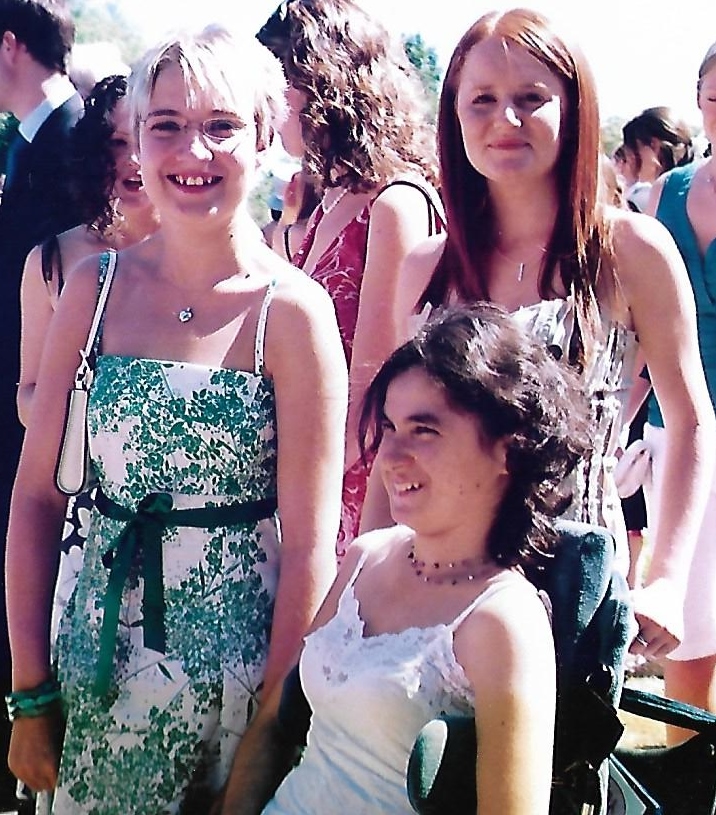
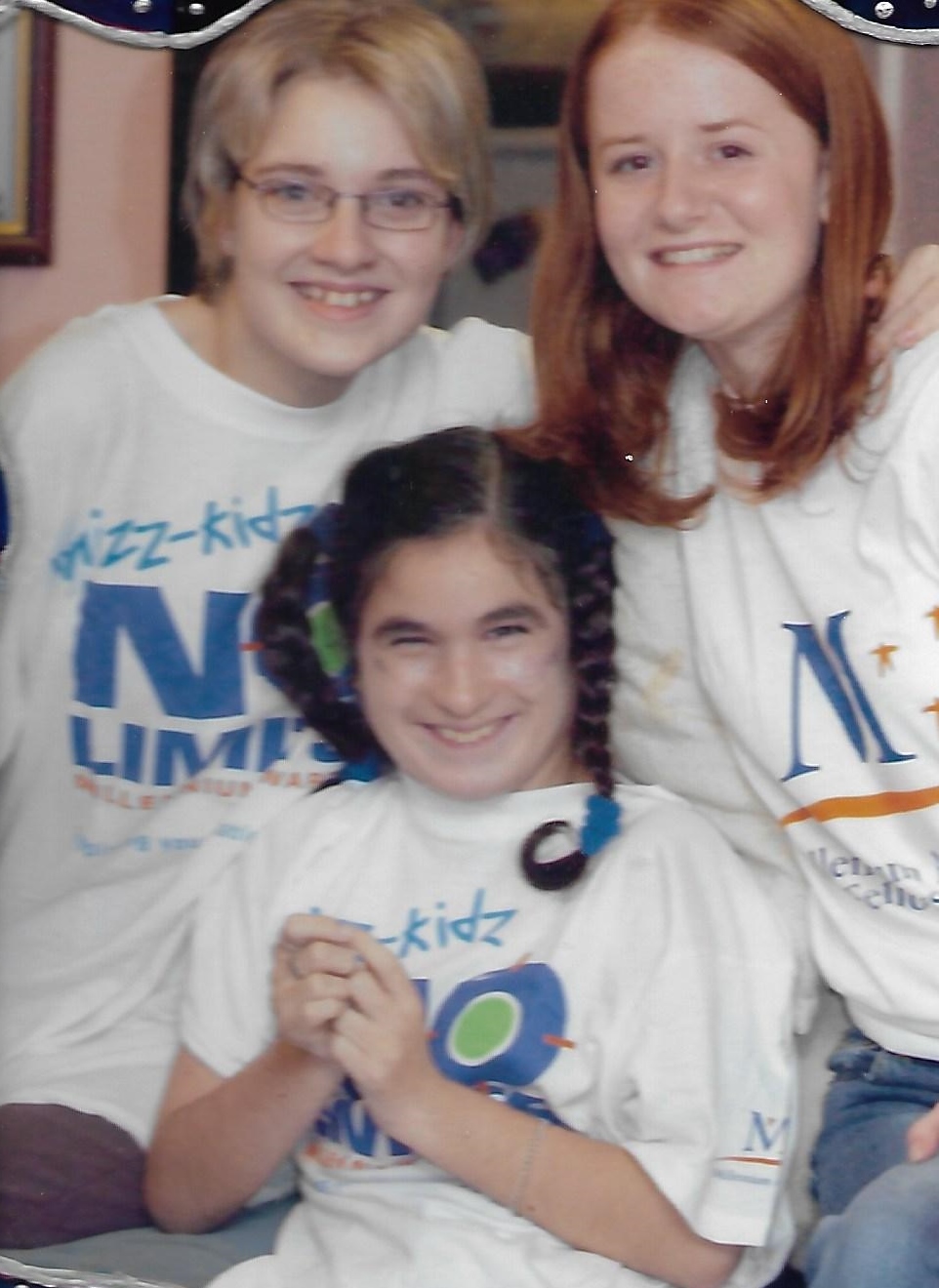
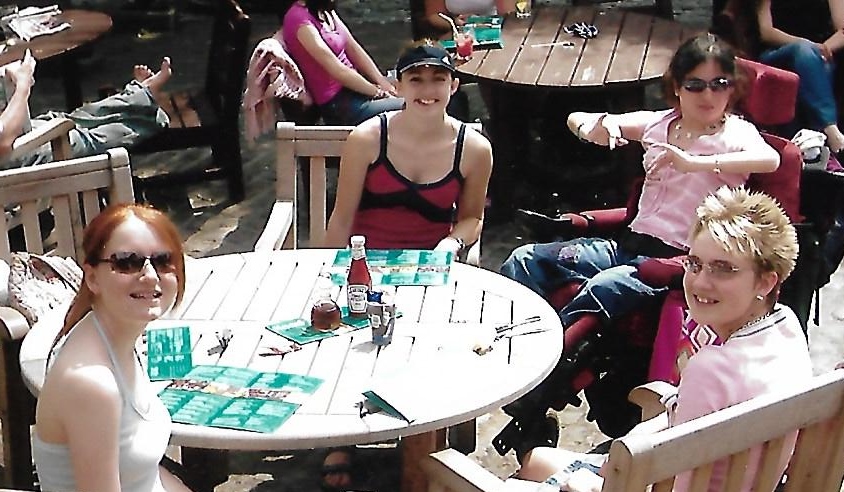
Maresa, Lindsey and Lucy: 2006 at the wedding of Maresa's PA Maresa, Lindsey and Lucy: Enjoying Whizz-Kidz group in 2003 Maresa, Lindsey and Lucy: Celebrating together in 2004 with Maresa's PA

Maresa MacKeith books

Contact Maresa MacKeith for purchase information.

Segregated Education: Linking poverty, class, race and disability

Lani Parker is Capacity Development Officer for the Alliance for Inclusive Education (ALLFIE), and leads ALLFIE’s new Stronger Voices project.
It is well known that Disabled people in the UK are statistically more likely to be in poverty than their non-Disabled counterparts. This includes families with Disabled children. Research shows that in 2019, life cost on average £583 a month more for a Disabled person. Families of Disabled children, on average, face extra costs of £581 a month. For almost a quarter (24%) of families with Disabled children, extra costs amount to over £1,000 a month.

What is less talked about are the links between segregated education and poverty. Segregated education is both a cause and a consequence of poverty. This issue needs to be highlighted and action needs to be taken. The team at the Alliance for Inclusive Education (ALLFIE) have just launched a new and exciting 3-year project aiming to highlight and tackle this, through building the capacity of the Disabled people’s movement. We aim to fight alongside you for different kinds of visions of education, not based on separation but on inclusion and community.
Defining Poverty

The Child Poverty Action Group suggests that 27% of children are living in poverty in the UK. Trust for London defines “poverty” as living on less than £141 per week after housing costs if you are an adult. Alongside this, they describe “destitution” as somebody who lives on less than £70 per week after housing costs. Many people with asylum-seekers and undocumented migrants’ status live in destitution as they are unable to access work or suitable benefits. On a wider scale, the impact of Covid-19 and the cost-of-living crisis means many more people will and do struggle to afford the essentials they need to have a reasonable standard of living[1].  This project has therefore become increasingly urgent.

Poverty is a result of the various ways in which people are systematically denied resources. In order to challenge this and make much needed systemic change within the education system and beyond, we need to understand how these systems are upheld, make the connections between disability, race and class, and understand the historical context. For example, poverty often results from structural discrimination in terms of access to resources such as housing and well-paid work. The Joseph Rowntree Foundation (JRF) points out that Black and global majority Disabled people are more likely to be in poverty, and what they call ‘deep poverty’, than white and non-Disabled groups[2]. JRF finds a number of connected factors that mean that children labelled with special educational needs and Disabled children, particularly those who have been segregated, are more likely to live in poverty. A disproportionate number of children eligible for free school meals labelled with special educational needs or are Disabled.

But it is also important to think about poverty beyond money. It has a huge impact on many aspects of life: how you relate to society, how you relate to yourself, what opportunities are open to you and what you think you’re worthy of. As Darren McGarvey points out, “Poverty is more like a gravitational field, comprising social, economic, emotional, physiological, political and cultural forces.” (Poverty Safari, 2018)

Segregation

Segregated education is a way to dehumanise and isolate young people. It is strongly connected to structural forms of oppression, including ableism, racism and classism. It’s not surprising that this is the case, as segregation has historically been and continues to be a tool to keep inequalities in place.

There are numerous ways to segregate children, including special schools, pupil referral units, special units within mainstream schools, lowered expectations and reduced support. As we at ALLFIE delve deeper, we are finding more and more ways in which children are segregated.

Much of the education system is based on ideas of intelligence that have their roots in eugenics. Historical categories such as ‘educationally sub-normal’, were based on ableist and racist ideas about intelligence and this was used to justify segregation in special schools. Although an important struggle was won to abolish this category, the structure of ableism and racism still means that Black Caribbean, African and children from a traveller background are more likely to be labelled with social and emotional needs, and more likely to be excluded. In addition, 7 out of 10 children who are excluded from school are Disabled. This ableism, racism and classism determine the distinctions made between those who are deserving and those who are not, which have profound impacts on people’s feelings of belonging, dignity and safety. They also often set off a chain of social and economic exclusions later in life, which deepen poverty and trauma. If you do not have strong and varied social networks, it is difficult to survive and challenge the conditions of poverty.

Linking segregation, poverty and social justice

The economic system in which we live relies on scarcity and restricting resources. We are currently living in a pandemic and a cost-of-living crisis that will further entrench the already widening inequality gaps that exist here in the UK. As I write this article, the funeral of Queen Elizabeth II, costing an estimated £8-20 million (although this has not been verified), has just taken place and the government has announced £55 billion tax cuts for the super-rich, yet more and more people are being thrown into poverty, increasingly inhumane anti-migrant policies are being introduced, and austerity-plus policies are on the cards. This shows how the current structure of society upholds and reinforces inequalities, including the idea of stratification on grounds of class, race, ability, gender and immigration status. This is visible in schools through streaming and setting policies, unequal resources for different schools, unequal access to well-funded schools, and the private school system.

Segregated education is at risk of worsening in the current economic climate. Schools are saying they are unable to meet rising energy costs despite the government’s announced support, and may have no option but to increase class sizes, cut subject choice and reduce additional support. This will have a huge impact on a child’s ability to learn, and their ability to be part of the school environment.

Visions of Inclusion

When we think about inclusion in an educational setting, we need to take every child’s needs into account. Educational settings should foster a sense of safety and belonging for every child, not only offering respect and dignity, but also giving access to the resources children need to reach their full potential and to be an integral part of the community. This means we need a complete overhaul.

ALLFIE’s new project will support Disabled People’s Organisations to work on this overhaul. Not only will we evidence links between segregated education and poverty, but we will look at the wider context and other oppressions as well. We will support DPO’s to influence local antipoverty plans, build organisations’ capacity to provide support and challenge laws, look underneath the surface at where we need to go and go there together. There will be ongoing reflections and new learning processes created. This article is some of our first thoughts and we will be relying on our collective voices to shape the project over the course of the next three years.

Text box:
ALLFIE blog

ALLFIE’s Social Value in Education Researcher, Kariima Ali, highlights the Intersectional experiences of Disabled Black and racially minoritized students: A new research project

“Intersectionality has been underutilised in inclusive education research. In this blog I stress the importance of thinking with intersectionality when challenging ongoing inequalities and injustices experienced by Disabled people within the education system. In particular, how the intersections of ableism/disablism, racism and other intersectional oppressions play out in practice which further increases social injustice in other areas of society.”

[1] The Joseph Rowntree Foundation states that in 2022, with the rising cost of living, a single person needs to earn on average £25,500 a year to reach the minimum acceptable standard of living. As of April 2022, a couple with two children needs to earn £43,400 between them. Joseph Rowntree foundation https://www.jrf.org.uk/report/minimum-income-standard-uk-2022

[2] In 2019/20, the poverty rate for the Bangladeshi ethnic group is 53% while it is 48% for the Pakistani ethnic group. This is in sharp contrast to the white group, where it is 19%. Poverty rates for the Black/African/Caribbean/Black British ethnic group have largely stayed just over 40% for the last 25 years. https://www.jrf.org.uk/data/poverty-rates-ethnicity     There is also a useful blog about poverty and deep poverty and cost of living crisis https://www.jrf.org.uk/blog/ethnicity-and-heightened-risk-very-deep-poverty

Human Rights is one of the new Curriculum for Wales’ cross-cutting themes, this includes the UNCRPD. There is a duty on headteachers in the Curriculum and Assessment (Wales) Act 2022 “In designing, adopting or implementing a curriculum, section 64 of the Act also places a duty on schools, settings, and providers of EOTAS including PRUs to promote knowledge and understanding of Part 1 of the UNCRC, and of the UNCRPD, among those who provide teaching and learning. Promoting knowledge and understanding Disability Rights and the UNCRPD is a mandatory requirement.”

Disability Wales secured funding from the Welsh Government and chose to offer a tender to develop materials and try them out with some Welsh schools to promote Disability Rights and the UNCRPD. World of Inclusion was awarded this contract. From March to June 2021, they developed and delivered the project. Welsh schools were just coming out of Covid restrictions. Originally, we wanted to work with three Local Authorities, but they were unwilling at this time. We wrote to over 200 schools in English and Welsh explaining the project and asking for their participation. In the end, the logistics of visiting during 3 weeks of fieldwork in the summer term 2022 limited the number of schools that could be involved to 2 special schools, 8 primary schools and 6 secondary schools (16 schools across 12 Local Authorities). We developed and trialled a suite of materials, many bilingual, and initiated work on disability equality in many areas of the Curriculum. The team involved were Richard Rieser, Katie Cohen, Arabella Turner and Jon Ralphs (Graphic Facilitator) and Kat Watkins from Disability Wales. We:

The core of what we did was to develop different methods and tools to work with selected groups of children in the participating schools. The sessions varied in length from 45 minutes to 2 hours. We asked for there to be a mixture of Disabled and non-Disabled students in mainstream schools and for those who usually had learning support to have it with them in the workshop. The aims of the workshops were for participants to:

  1. Identify the wide diversity of impairments that count as a disability under the Equality Act. We did this by putting forward a range of impairing conditions and the children, having discussed the definition of disability, decided if people are in or out of the disability circle.
  2. Understand that it is the barriers, rather than the impairment that disable. A visual chart of the main groups of impairments was provided to groups. Then two envelopes with pictures of common barriers and then solutions, which worked very well.
  3. Identify barriers for the diversity of Disabled people and come up with solutions and that this is ‘social model’ thinking. Children went on to identify barriers on cardboard bricks and built a wall of barriers followed by solution-focused thinking to come up with solutions that were attached to the wall on a thought card.
  4. Recognise that in language and throughout history, thinking is mainly negative towards Disabled people. In groups students were asked to identify all language about disability on a flip chart sheet, then to discuss and circle all that is negative, which it mostly was. This for older children was followed by the disability timeline exercise, after a talk about the history of Disabled people. [See the next article].
  5. Appreciate that in recent years Disabled People have challenged this negative thinking through protests and attaining a Convention on their rights and laws in each country that make discrimination difficult. We used 2 short films on the Social Model and a Scottish film on UNCRPD to get this point across.
  6. Examine key Articles of the UNCRPD and apply these to a range of discriminatory scenarios to improve the position of Disabled people. We produced a simplified version of UNCRPD and then gave out scenario cards of breaches of disability rights and the children in groups had to identify which article applied. They got the hang of this quickly.
  7. Apply this thinking in their schools and local areas and make creative representations of the key message.

Disability Wales have now received a specific grant from the Welsh Government to take this work forward with selected schools in Swansea, Powys and Conwy. The results of this extension and the original material will all go up on the Curriculum Hub website at the conclusion of the extension. We will let you know when this is up online.

What is already clear is the enthusiasm that children and staff at the participating schools had, as well as the sense of empowerment that Disabled students expressed as their issues became central to what their class was doing. Already in pilot schools’, practices have changed and several schools told us they would continue to embed this work in their curriculum. Others have taken it out into the community, surveying barriers and sending letters to their local councils about lack of access.

Disability History Timeline Activity

By Richard Rieser World of Inclusion

Suitable for Year 5/6 and secondary pupils and above. A series of cards identify periods in history. On the top are general historical events in that era and on the bottom are events that relate to Disabled people. These are either spaced out and stuck on a wall, or laid out on joined together desks. A larger number of cards depict events or circumstances relating to Disabled people over this period. A number are given to each group and they choose where on the timeline they come and put them in place at right angles to the main timeline. This activity generated a lot of discussion.

The learning point, the oppression Disabled people experience is universal and continues in different forms overtime. The question of resistance is raised. This then leads on easily to the need for a Human Rights Treaty for Disabled people and the need for implementation of the United Nations Convention on the Rights of Persons with Disabilities.

Disability Time Line (powerpoint)

Disability History Examples for Timeline (powerpoint)

Disability, Health and Well Being: Disability History Month 2022

UK Disability History Month (UKDHM) is an annual event which creates a platform to focus on the history of our fight for equality and human rights


UK Disability History Month (UKDHM) is an annual event which creates a platform to focus on the history of our fight for equality and human rights, including how this informs the struggles Disabled people still face today and also how far we have come.

Disability History Month this year will run from Wednesday 16th November 2022 to Friday 16th December 2022, and focus on the theme of Disability, Health and Wellbeing.

Why Kids Miss School – BBC Panorama.

By Yewande Akintelu-Omoniyi, ALLFIE’s Office volunteer and Amelia McLoughlin, ALLFIE’s Policy and Research Officer

On the 30 of September 2022, Panorama aired a documentary on the BBC called Why Kids Miss School, focusing on non-attendance and truancy in schools. ALLFIE’s Yewande Akintelu-Omoniyi and Amelia McLoughlan review the programme for Inclusion Now Magazine, from a perspective of inclusive education that is aligned to UN Convention on the Rights of Persons with a Disability.

The programme spoke to the current Children’s Commissioner for England, Dame Rachel De Souza, who stated that she wants every child to have 100% attendance at school and made a request to the UK Prime Minister to make this a priority. As an example of tackling school absence, the documentary showed Horizon Community College in Barnsley, dealing with non-attendance by phoning parents and driving door-to-door to students’ homes. The Commissioner was clear that poor behaviour should not be used as an excuse to not support children and young people, and that measures should be used/found to tackle any underlying causes for poor behaviour. The implementation of issuing fines to parents was also mentioned, but the Children’s Commissioner acknowledged that fines are only part of the solution.

The government’s own data shows that the attendance rate across the academic year to September 26th 2022 was 93.9%. The absence rate was 6.1% across all schools, with that figure rising to 11.6% in state-funded special schools due to authorised absences almost doubling.

The programme followed three young people in the UK, exploring their reasons for not attending school. 

Abbie from Sevenoaks had not attended school since January 2022. She has ADHD and Autism and restarted secondary after Covid restrictions eased. Abbie began to struggle with sensory overload on her return to school and was not sleeping properly. Eventually she was diagnosed with autistic burnout. Abbie’s school stated it did all it could, but Abbie expressed that school became too much for her.

Abbie’s parents both teachers who “know the value of school”, wanted her to return but saw the negative impact of the pressure she put on herself to try and return. They found her a small private school, which the Local Authority agreed to pay for, as they believed it could better meet her needs. The programme showed that Abbie made it through an hour on her first day at the new school. She reiterated her wish to return to school, when she has “enough energy for it” and had tried her best to socialise on her first day.

In the UK-first study published in Autism, researchers found that a staggering 43 per cent of those surveyed were persistently absent from school. Lead Researcher, Dr Vaso Totsika commented that while reasons for absenteeism vary, autistic students may be at a greater risk of missing days because mainstream schools are unable to provide the specialist support they need to succeed academically. Further studies have shown that persistent absence can increase the risk of dropping out of school by up to 28 per cent.

Bradley from London has been struggling with lateness and non-attendance due his Dad’s death last year. According to the Child bereavement Network, at least 10,000 children have been bereaved of a primary caregiver across the UK due to the pandemic according to research published in the Lancet in July 2021. And over 50,000 children have had a parent, guardian or carer die from other causes over the last 20 months.

The documentary showed Bradley making it into school almost every day, and said that the school said it was doing everything it could to support him. It had allowed Bradley to use a time out card to leave class when he feels overwhelmed. However, this did not always work out, as the documentary showed an argument between Bradley and his teacher about whether or not to use his time out card to go to the bathroom. Bradley mentions that sometimes people think he is using the card as an excuse to stay out of lessons.

Separately from the bereavement, Bradley has been supported in the school by an organisation called Football Beyond Borders for a number of years, and has begun writing music to aid in the processing of his grief as he finds it difficult to speak about. Bradley did not declare in the programme whether he was under SEND, but was seen going into a dedicated SEND classroom. This is not discussed in the programme and so it is unclear if Bradley was placed in SEND provision previously, or whether this placement was linked to the school’s bereavement support.

Later in the program, Bradley is unusually absent from school, and via information gathered from his classmates, it is revealed that the family had travelled to Sierra Leone in order to mark the one-year anniversary of his father’s death. The school seemed unaware of this, and any potential cultural and/or religious requirements within the bereavement process. Bradley and his family’s background was not explored in the programme, with his caregivers not featured as were the parents of the other children.

Statistics from 2019, show that 6% (896,000) of children under age 18 living in the UK were born abroad and more than a quarter (28% or 3,839,000) of children under age 18 living in the UK have at least one parent who was born abroad. These children have family connections and potential responsibilities oversees, and yet as evidenced by the documentary, schools are not necessarily being inclusive of these circumstances. In Bradley’s case, it was quickly resolved when Bradley’s family later contacted the school, and he attended when the family returned to the UK.

Mollie from Nottingham had non-attendance at school due to conflict with staff, students and repeatedly being sent out of lessons. However, Mollie and her mum state that she was experiencing consistent bullying, that the school failed to address the issue and did not manage the situation well. The school’s Ofsted report has rated them “inadequate” and specifically stated that bullying and behaviour were “poorly managed” by the school.

Research from the Department for Education looking at pupils in year 10 found that, 21% of children who had experienced bullying daily had been absent from school in the previous 12 months (three times more that those who were not bullied), girls were almost twice as likely to be absent because of bullying and almost a quarter children bullied often were most likely to be kept off school by their parents.

Mollie wants to become a sports coach, and volunteers with a local charity called Helping Kids Achieve. She said her experience has inspired her to be the “mentor she never had”. To achieve her chosen career, she would need to enrol on a college course that has GCSE entry requirements. We see her express doubt as to whether she will have obtained the required grades. Sadly, the link between bullying and academic performance is supported by numerous studies, including one commissioned by the Department for Education, that found experiencing bullying in a child’s teenage years has a negative impact on GCSE performance.

Later in the programme, Mollie picks up her GCSE results, confirming that she has missed the requirement by one grade in both Maths and English. However, after speaking with the College, she is accepted onto her chosen course with the offer of support to re-sit her Maths and English GCSE. The program concludes with her determination to make a success of her new life at college.

The issues outlined in this BBC Panorama documentary facing young people show that the education system needs a social justice and rights approach to stop Disabled children and young people being driven into segregated educational settings. ALLFIE believes that the UNCRPD will allow the education system to address the social issues that are currently in education. These don’t allow children and young people to be looked at as a whole person, to address the issues that they are facing at home and community, so their needs can be met in their education setting.

The program also did not look deeply enough at the barriers faced by Disabled children in school. For example, there was no mention of how they tried to support Abbie during her time at school, possibly looking at sensory or quiet rooms to help when she was feeling overwhelmed, to help not just Disabled students, but all students.

When schools start to think more holistically about these issues, maybe kids will be less likely to miss school, and we can have a more inclusive education system and practice.

I am a 19-year-old student, with a diagnosis of Autism, who recently gained my A levels and wish to further my IT studies through a university degree. I’m also making a claim for Universal Credit as an independent adult, and am required to undertake a work capability assessment before continuing. Under this system, I will lose my established EHCP adjustments, which include communications support for speech therapy. Do I have any legal rights for continuation of my EHCP as I transition from college to university?

Your Education, Health and Care Plan (EHCP) can only come to an end when either or both of the following apply: your EHCP is no longer necessary and/or the local authority is no longer responsible for you.

The law states that an EHCP comes to an end when you attend university, as the Local Authority is no longer responsible for you when you attend ‘Higher Education’ (University). Therefore, you will not have any legal rights for the continuation of your EHCP as you transition to university, however there is other support you can access and you may be able to obtain adjustments once your EHCP comes to an end if attending a university setting.

Universities do not have to provide the exact provision specified in an EHCP but they must comply with the Equality Act 2010 and ensure they are not discriminating against students. This includes a duty to make reasonable adjustments.

The duty to make reasonable adjustments requires education providers, such as universities, to take positive steps to ensure that Disabled students can fully participate in the education and enjoy the experience and other benefits, facilities and services provided for all students.

Support can usually be sought from the Disabled Student’s Department of the relevant university.

You should contact the department and if appropriate, apply for the Disabled Students’ Allowance (DSA) to request an assessment which is completed by Student Finance England. The assessment is likely to be with occupational health and you should explain your communication and any other needs as within your EHCP as, although not legally binding, this helps document what your needs are.

If the university refuse to complete the assessment or, following the completion of the assessment, the university does not follow the recommendations for support and/or reasonable adjustments, then you should seek advice in relation to potential discrimination, under the Equality Act 2010. This could be a County Court claim and must be lodged within 6 months of the potential discrimination occurring. This would look at whether or not the adjustment is ‘reasonable’ as there is no set list of adjustments to be made within the Act. It is all fact and case specific. This makes getting advice on your specific circumstances very important. We have also found that some student unions to be very good at offering this support.

The Equality Act (and the principles within it) also apply to any other processes such as application for certain benefits etc.

This Legal Question was answered by Alice Gough at Simpson Millar Solicitors

Background 

The Alliance for Inclusive Education (ALLFIE) has led the lobby for change in inclusive education for over 30 years and is the only national Disabled people’s campaigning organisation working on this issue. ALLFIE’s vision is to create an inclusive society, by ensuring inclusive education within mainstream settings for ALL Disabled people. We campaign for ‘a world where inclusive education is a right not a struggle’, and for Disabled pupils and students to be fully included in mainstream education, training and apprenticeships, with all necessary support. We also create the resources that people and organisations need to advocate for inclusive education and to develop good inclusive practice. 

Purpose of the Job 

This is a new role and has been resourced by the Esmeé Fairbairn Foundation for 2 years to create a national inclusive education coalition, to set up a Young Disabled people’s parliamentary group, to create a feasibility study  and  to fundraise to ensure the sustainability of ALLFIE’s work for inclusive education within mainstream settings. Inclusive education is a social justice and human rights issue for all Disabled people. The programme will connect and work across ALLFIE’s different strategic objectives to support our drive for change.  

The post-holder will share and demonstrate a strong passion for inclusive education, social justice, and human rights issues. The successful candidate will be accountable for our sustainability objective. The role will be focussed on supporting ALLFIE to deliver on our strategic plan to tackle the challenges Disabled people experience in education. They will deliver work that is representative of Disabled People from an intersectional experience and draw on other intersecting areas that impact on education to bring about change. You will push forward ALLFIE’s work on inclusive education through working across ALLFIE, Disabled People’s Organisations, partners, members, and social justice movements. You will be conscious of ALLFIE’s work to help create trust and collectively build the movement for inclusive education for ALL Disabled people.  

This role is an exciting opportunity for someone with strong fundraising and project management skills and a passion for disability justices. This is a demanding and fulfilling role that will give the successful candidate the opportunity to work within a national Disabled People’s Organisation. 

We support flexible working and large aspects of the role could be done remotely, however some travel to attend face-to -face meetings will be required.

ALLFIE is committed to centring social justice frameworks, social model of disability, intersectionality and human rights in our practice. If you are a Disabled person and we need to make any adjustments to our recruitment process to enable you to apply for this role, please let us know.

How to apply

  1. How to apply
  2. Sustainability Programme Officer Job Description & Personal Speciification
  3. Equality and Diversity Monitoring form

JOB DESCRIPTION 

MAIN RESPONSILIITES and ACCOUNTABILITY  

The programme manager is responsible for: 

Programme management 

 Partnership 

Administration and monitoring 

 General responsibilities 

 PERSON SPECIFICATION 

Essential criteria 

Knowledge and experience  

The successful candidate will demonstrate knowledge and experience in the following areas: 

 Skills  

The successful candidate will demonstrate a range of skills including:  

 Aptitudes / Personal qualities 

The successful candidate will demonstrate: 

 Other requirements 

 Desirable criteria 


Supported by

ALLFIE’s campaign for Inclusive Education as a human right is backed by funders and donors who reject the systemic segregation of Disabled people from society.