Inclusive support and relationships: Personal assistants
By Maresa Mackeith, ALLFIE’s Youth Parliamentary Officer
Disabled people have the right, as stated in Article 19 of UNCRPD, to be included in their communities with the “personal assistance necessary to support living and inclusion in the community” (b). Young people also have this right to be included at school, with appropriate support. (Article 24 2 b and 2 e). In addition, young people with communication needs have the right to “augmentative and alternative modes, means and formats of communication” (Article 24 3a). Many Disabled people struggle to recruit and get the role of a personal assistant recognised for the skills involved.
I am in the process of recruiting a new personal assistant. Every recruitment, for me, is momentous as I use a communication system that depends on support from a PA. This means I cannot share my thinking or my needs without that support. The skills the PA will have to learn might take months and depend on a close relationship. This is the same for a Young person in school with similar needs.
The recent SEND Alternative Provision Improvement Plan implies that Young Disabled people with “complex” needs should go to a special school and be separate from others. In my experience of a special school, this never included making a relationship with an assistant who knew what I needed. It was, instead, being passed around from one person to another, none of whom had the skills to assist my communication.
Developing a relationship with a PA takes time as there has to be a level of trust that is not often encountered in most people’s everyday life. Many Disabled people, like myself, cannot ask for what we need, express our thinking or move on our own so are completely dependent on help for everything. The upside of this is that I have made close relationships with many of my PA’s.
For Young Disabled people in a school setting all this has to be taken into account. In school a Young disabled person has to make friends and they have to be able to express their thinking by whatever means is best for them. The assistant has to have a developing relationship of trust with the young person with the time and commitment to learn the skills needed. The job of the assistant in school for Young people, with a level of need similar to my own, is about enabling the right to a life and the recognition that the young person also has the right to be able to contribute to the lives of the others around them.
The separation of young people with “complex” needs in units or special schools is a denial of these rights. All Young people have something to give society as a whole.
As part of ALLFIE, in my role as Youth Parliamentary Officer, I am looking forward to having the opportunity to give Young Disabled people a voice to those who create education policies.
We need a society where all Young people have their needs met and can contribute in their own way. The only way to achieve this is for all young people to grow together with the time and resources to meet their needs. This means, for some, that a consistent developing relationship with assistants is crucial. Other Young people will then see that it is their right too to have the help they need from people they know and trust.
What Could be the Impact of a 20% cut in new EHCPs on Disabled Children and Young People?
By Edmore Masendeke, ALLFIE’s Policy and Research Officer
On 10 September 2023, the Guardian reported that the Government plans to cut the number of new Education, Health and Care Plans (EHCPs) for children with Special Education Needs and Disabilities (SEND) by 20%, through its “Delivering Better Value” (DBV) programme. However, the Government denied that the 20% is a target that it is working towards in communication with the Special Needs Jungle. The Government has said that the 20% is an expected outcome of the DBV programme, including improving early identification and the quality of SEN Support (school-based support for Disabled children and young people without EHCPs). As the latter outcomes are not associated with the DBV programme, but the SEND and AP Improvement Plan, and the two are being managed separately, the Government’s response has not reassured the disability community/ALLFIE that EHCPs will not be arbitrarily reduced through the DBV programme.
ALLFIE’s main concern is that a reduction in EHCPs will adversely affect Disabled children and Young people’s access to education and learning in mainstream educational settings. We also believe that Disabled children and Young people from disadvantaged backgrounds will be affected the most as evidence shows that Disabled children and young people experience higher levels of poverty and social disadvantage than the general population. In January 2020, close to a third (31%) of Disabled children and Young people were also eligible for Free School Meals (FSM). In addition to coming from under-resourced households, these children and Young people are more likely to be socially disadvantaged due to a range of intersectional injustices, such as generational poverty or poor living conditions.
Also, some of their parents are unable to work as they cannot find jobs that are flexible enough to allow them to both work and care for their children. Therefore, the cut in the number of new EHCPs is likely to put these Disabled children and Young people at risk of being excluded from school/college and achieving poorer outcomes than their non-disabled peers. This is not only because of their economic and social disadvantages, but also because their parents are less likely to have the resources to challenge a decision by a Local Authority not to issue an EHCP.
The number of pupils with an EHCP increased by 9% between 2022 and 2023 to almost 390,000, and by a total of 64% since 2016. This increase was partially driven by the need to secure an EHCP to ensure that Disabled children and Young people could get the support that they need in mainstream settings, as there is insufficient funding for children and Young people without EHCPs. Securing an EHCP gives children and Young people labelled SEND the legal right to support and has, unfortunately, become the only way that some children and Young people can get the support that they need in mainstream settings. Therefore, cutting the number of new EHCPs will make it difficult for Disabled children and Young people to get the support that they need to access and remain in mainstream educational settings, as the available support for those without EHCPs varies depending on what school/college you go to and local budgets. This means that there are disparities in the support available for those without EHCPs.
These disparities do not guarantee Disabled children and Young people equal access to education and learning opportunities in mainstream educational settings. This means that Disabled children and Young people at different schools/colleges have different education and learning opportunities, and these opportunities are most likely to be less than those of their non-disabled peers.
As a signatory to the United Nations Convention on the Rights of Persons with Disabilities (UNCRPD), the UK is obliged to ensure an inclusive education system that is not discriminatory against Disabled children and Young people. This includes ensuring that they receive the support they require to facilitate their effective education within the general education system. While the UK has not yet domesticated the UNCRPD, the Equality Act 2010 prohibits all forms of discrimination against Disabled children and Young people and requires all local authorities, schools and colleges to make reasonable adjustments, to ensure Disabled children and Young people are not at a substantial disadvantage compared with their peers. Due to the discrepancies in the support available for those without EHCPs, some Disabled children and Young people are already at a substantial disadvantage compared with their peers. Cutting the number of new EHCPs is likely to put more Disabled children and Young people into a similar situation.
Therefore, before cutting the number of new EHCPs, the Government should ensure that the support available for those without EHCPs adequately addresses their support needs. It should be as flexible and responsive to the needs of Disabled children and Young people as possible. Support should also be adequately funded and more consistent across schools and local authorities. Cutting the number of new EHCPs, without first ensuring that the support available for those without EHCPs adequately addresses their support needs, is likely to reduce the education and learning opportunities for Disabled children and Young people in mainstream educational settings.
We should be wary of Government SEND initiatives, but Is the SEND Change Programme an opportunity to develop Inclusive Practice?
By Richard Rieser World of Inclusion
The crisis in Schools Grant Higher Needs Funding: How statutory EHC Plans are paid for [£2.3billion deficit in 2023/24 in England]. This has been ringing alarm bells in the Treasury and many Local Authorities for the last 4 years. The crisis has been caused by Government policy toward mainstream schools making inclusive education of Disabled children much more difficult. This includes narrowing the curriculum, increasing assessment, getting rid of continuous assessment, cutting the value of SEND budgets, increasing workload on staff, setting up academies (many with rigid behaviour policies), failure to deal with bullying, non-compliance with the Disability Equality duties and destruction of Local Authority support for SEND schools. As a result, parents increasingly sought refuge in an EHC Plan, special schools and independent numbers of cases at First Tier Tribunal have risen from 3,000 to 13,000. Numbers of EHCPs have risen to 390,000, now 4% of the school population. Both numbers and percentage of Disabled children in special schools are at an all-time high. (1.94% of all 5–16-year-olds: 172,772 in 2021)
Rather than deal with the policy difficulties leading to the failure of inclusive education, managerial solutions are being sort over the last three years with the Safety Valve and Better Value programme.
The government Safety Valve has given additional money to Local Authorities (LAs) with the highest deficits, for 5 year period to help them reduce deficits in exchange for more cost effective delivery. In 2021, 5 LAs had £100million. In 2022, 9 additional LAs had £300million and in 2023, 20 additional LAs had £586million. This has caused much concern that the legal rights to EHCPs are being undermined in practice, without changes in law. Some 55 councils with less severe deficits are being supported through a separate scheme called Delivering Better Value:
Appropriately managing demand for Education, Health and Care Plans (EHCPs), including assessment processes that are fit for purpose
Use of appropriate and cost-effective provision – this includes ensuring mainstream schools are equipped and encouraged to meet needs where possible, whilst maintaining high standards for all pupils. This is a £19.5million consultancy with Newton Europe and CIPFA working mainly through case review.
Recently, Delivering Better Value programme was heavily criticised and Government Minister had to issue grovelling statements when it emerged that Newton Europe, the consultants were contracted to reduce reliance on EHCPs by 20% for new EHCPs. Matt Kerr, a parent who discovered this is not convinced by the replies. All these measures will continue with the High Needs Budget at £10billion and rising.
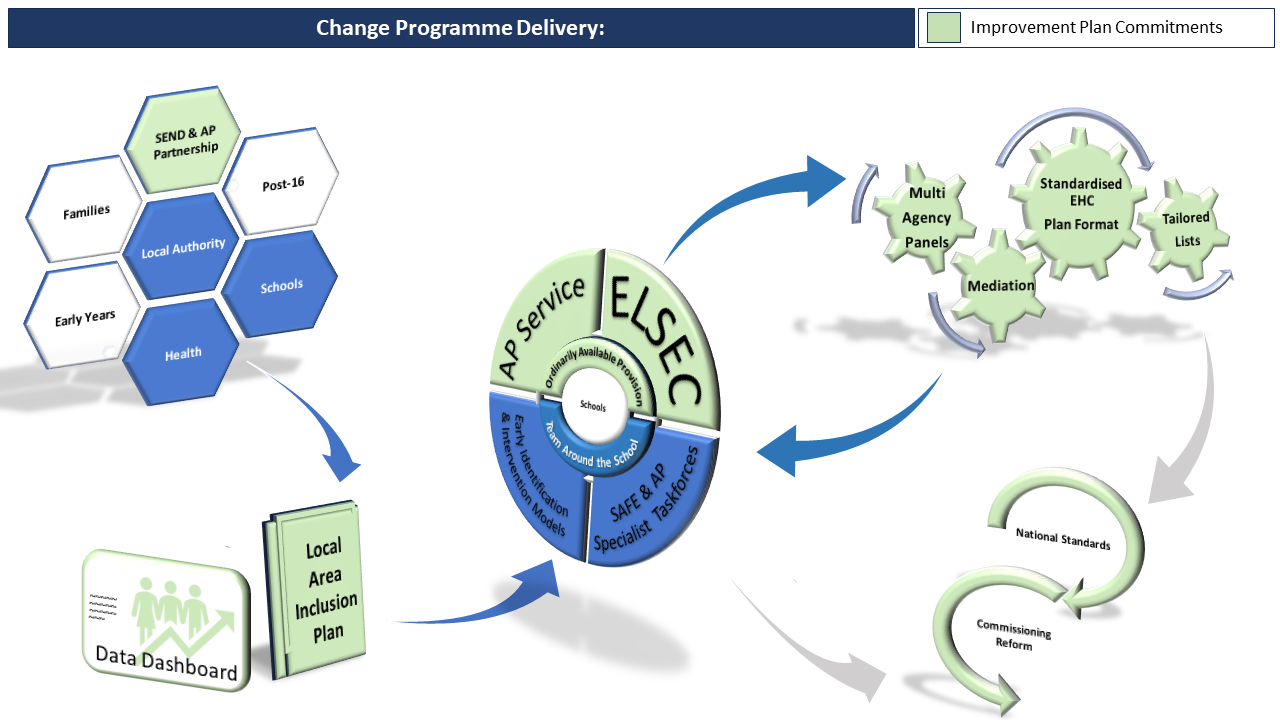
Those who support Inclusion and look in dread at these manipulative programmes may at least want to examine one new element of Government SEND policy that seems less punitive and mechanistic. The £70million SEND Change programme just being set up, is focussing on a whole system approach, with a clear focus on early identification, quality first teaching, intervention and pivoting improved support in and around schools. This is focusing on the 85% of children with SEND in mainstream schools and examining ways to change and improve inclusive practice and looks like an opportunity we should engage with. The Change Programme Delivery Partners are 9 consortiums of Local Authorities and other relevant partners (early years, schools, Post 16, health, families and community) who are being given 6.3million each to spend over 2 years. The objective is to pilot ways to enhance mainstream settings and come up with suggestions for reforming the EHC Plan Process (Information from presentation to Special Education Consortium on 19th October 2023). It is envisaged that the Local Area Inclusion Plan and Data Dashboard will demonstrate the changes to enhance inclusion that will be taking place in the 31 Local Authorities[1]. These will lead through to enhanced standards and guidance.
In the Inclusion Movement we should be engaging locally and emphasising:
Local groups of teachers, parents, Disabled people and Young Disabled people should engage with these processes and argue for what we know works to enhance good inclusive practice.
We need to keep pressing that all partners are much more aware of the Equality Act and its implications for Disability Equality and intersectionality. This includes insisting the Access Planning Duty is fully implemented
Create much more awareness of good inclusive mainstream practice developing around thew world and the link to Article 24 of the UNCRPD
Not re-invent the wheel but learn from the many studies and recording of good inclusive practice in English schools over the last 30 years e.g. the 2006 Reasonable Adjustment Project
It is ironic that a Conservative Government that came to power with David Cameron committed to rid the education system of the ‘bias to inclusion’ has been so successful, that it now has to come up with a whole range of measures to reduce reliance on expensive independent schools, reduce numbers in special schools and work on ways of improving inclusive practice in mainstream schools for budgetary reasons! What they and potential Governments need to realise is that inclusive values and equality have to be at the heart of the state education system and many of their policy folies that hinder this must be got rid of.
[1]North East CPP Hartlepool,, Durham, Gateshead, Stockton on Tees; North West CPP Manchester, Rochdale, Oldham, Trafford; Yorkshire & Humber CPP Wakefield, Bradford, Calderdale, Leeds; East Midlands CPP Rutland, Leicester, Leicestershire; West Midlands CPP Telford & Wrekin, Shropshire, Herefordshire, Worcestershire East of England CPP Bedford Central, Bedfordshire, Luton; South West CPP Swindon, Gloucestershire; London CPP Barnet, Enfield, Islington, Camden; South East CPP Portsmouth, Brighton and Hove, East Sussex, West Sussex.
UK Disability History Month
This year Disability History Month runs from 16th November to 16th December. The theme is Disability, Children and Youth.
The history of the mistreatment and prejudice towards Disabled children and Young people is examined. Solutions to the ongoing issues are discussed for education and social care staff. Many activities are presented in ways children of different ages can relate to.
The website has many resources https://ukdhm.org including a history and time line activity, examining the oral history of Disability, Children and Young people in the first and second half of the 20th Century. It examines the history of the education of Disabled children from segregation to inclusion, with filmed examples of inclusion working and responding to disability bullying.
“My daughter Mia, aged 11, has Down syndrome, Autism and Epilepsy, and we live in rural England. Mia had a positive experience in her mainstream primary school, where a good circle of support staff ensured all her different support needs were met. She also had a network of close friends, with whom she enjoyed various extra-curricular activities, both in and after school. Mia has been looking forward to going the local mainstream secondary school in September, which also has good extra-curricular activities, where she would join some of her primary school friends as well as making new friends. The school Mia wants to attend lies between our house and her grandparents’ house, and she also has an older brother who attends the school, so she will have additional family support including us or her grandparents collecting her after school. However, the local authority is not in a position to fund all her support needs in this secondary school, which we are very disappointed by. What rights do we have this secondary school named on her EHCP, to enable her to have support in secondary school, and who has final responsibility for this?”
Unfortunately, you do not have an absolute right to have your preferred school named in Mia’s EHCP, but there is a presumption that the local authority (LA) should name your preferred school in Mia’s EHCP, and this should be the LA’s starting point. This is because your preferred school is a mainstream school (I have also assumed it is a state school), which the LA should name unless particular exceptions apply. The onus is on the LA to set out why these exceptions apply rather than you.
These exceptions are:
That the school is unsuitable for Mia’s age, aptitude, or ability. In other words, it cannot meet her needs.
And/or
To place her there would be prejudicial to the efficient education of other students and/or use of resources.
If the LA does not agree with your preferred school and allocates Mia a school elsewhere, they need to name that other school on her EHCP no later than 15th February in the year she is due to transfer. At that point, you will have a right of appeal to the Special Educational Needs and Disability Tribunal (the FTT).
During the course of your appeal, it would be wise to focus your evidence on why/how your preferred school is able to meet Mia’s needs. Whether the FTT finds your preferred school to be suitable for Mia’s needs will depend largely on what is specified in Sections B and F of her EHCP. The question is: does the school offer what Mia needs? The school’s own views are relevant. If they think they can meet need, there is a good chance that the LA or the FTT standing in their shoes will agree. If they don’t, your appeal will be more difficult but not impossible, as the FTT will consider all the evidence in the whole.
If the school is found to be suitable, the FTT will go on to decide whether Mia’s attendance at the school would be incompatible with the “efficient use of resources”. Whether this exception will apply will depend on what provisions Mia needs to meet her SEN, and how much they would cost the LA/public purse. I.e., if the LA names a school which already has all the provision Mia needs but your chosen school would require significant funding to meet need, this exception could apply. This is very individual to the facts, and you would benefit from detailed legal advice should this exception be relied upon by the LA.
You also asked about who has final responsibility for providing the support named in Mia’s EHCP. This rests with the LA. If Mia does not receive the provision in her EHCP, legal action can be taken against the LA.
To summarise, you do not have an absolute right to have your preferred secondary school named in Mia’s EHCP, but you do have a right to appeal against the LA’s refusal to name the school, and there is a strong presumption in favour of parental preference. Based on what you have told us, that you requested a mainstream (we think state) school which is local to you and to which you could arrange transport, you have a strong starting point. We wish you and Mia all the best.
This legal question was posed by Edmore Masendeke, Michelle Daley, and Louise Arnold. It was answered by Eve French from Simpson Millar Solicitors.
Inclusion Now 67 | Autumn 2023
Welcome to the latest edition of Inclusion Now magazine, with inclusive education news including Young Disabled people’s voices, Government SEND reform, the legacy of eugenics in education and effects on society, capacity building the Disability Movement, UK Disability History Month, and more.
Welcome to the 67th edition of Inclusion Now magazine. Text and audio versions are in the articles below, or you can read it in magazine format on Issuu.
To receive three issues of Inclusion Now a year, on the publication date, you can subscribe here. Subscribing supports our work and helps us plan for the future.
The government will move forward with its plans to introduce the British Advance Standard and increase the number of Young people undertaking ‘high quality apprenticeships’, King Charles III said in the King’s speech on Tuesday 7 November 2023. Not much else was said about the government’s legislative agenda in education. This means that the status quo will remain the same in all other aspects of education, including the Special Educational Needs and Disabilities (SEND) and Alternative Provision (AP) system, which is failing Disabled children and Young people across England.
The SEND and AP system is under-resourced and provides inconsistent support services for Disabled children and Young people in mainstream settings. In addition, resources are being taken from mainstream provisions to support special schools and alternative provisions that provide limited opportunities and marginalise Disabled children and Young people. Consequently, too many are not in school and not accessing learning, signifying a denial of their human rights. This social injustice has a disproportionate impact on Disabled children and Young people who come from families that are under-resourced intersecting with race and other backgrounds.
Looking at the government’s plan to introduce the British Advance Standard and increase the number of Young people undertaking ‘high quality apprenticeships’, it is apparent that these reforms will be of little benefit to Disabled children and Young people.
These reforms affect post-16 education, and this is a problem because many Disabled children and Young people are denied the opportunity to progress to this stage because of the systematic barriers and injustices described above. In the 2021/22 academic year, only around a third (37.1%) of Disabled pupils labelled with SEN (Special Education Needs) in year 11 achieved Level 2 (equivalent to 5+ A*- C/ 9-4 at GCSE) including English and mathematics (GCSEs). This means that two thirds of Disabled pupils labelled with SEN are automatically excluded from the proposed reforms because they are unlikely to qualify for the British Advance Standard or apprenticeships.
Beyond that, those Disabled children and Young people who progress to the British Advance Standard, when it is introduced, will find themselves in a learning environment that is not designed for Disabled people, as the thrust of the introduction of the British Advance Standard is to increase the competitiveness of Britain’s post-16 qualification on an international level. The suggested British Advance Standard will also maintain a segregated education system, where the education of Disabled people has the lowest value among the different communities and groups. This will be done with little or no consideration of how these changes will impact on the learning or educational outcomes of Disabled children and Young people.
In particular, the British Advance Standard will require students to study five subjects including English and maths. This increased workload and focus on English and maths will disadvantage some Disabled children and Young people, especially those who have support needs that are currently being ignored by the system. These students will be disadvantaged in the exams that they will be required to earn the qualification if the assessment tools remain the same, and nothing is done to ensure that the assessment tools are inclusive and accessible to all.
It is also likely that Disabled children and Young people will not be priority in the plan to increase the number of Young people undertaking ‘high quality apprenticeships’, as the government currently provides supported apprenticeships for Disabled Young people with high support needs. However, this is likely to limit the opportunities for better employment and benefits.
The government’s approach to providing education is failing many Disabled children and Young people. The government has proposed to introduce the British Advance Standard and to increase the number of Young people undertaking ‘high quality apprenticeships’. These reforms are unlikely to benefit the many Disabled children and Young people, due to deep rooted structural and systematic educational barriers. Furthermore, if everything else remains the same, these reforms will increase the marginalisation of Disabled children and Young people in education.
You can listen online below, or if you want to download the audio files, right click each article and choose “Save Link As”.
Opening this edition, Richard Rieser reports back on his visit to Monega Primary School in the London Borough of Newham, “a shining example of how inclusion can become a reality in schools. If the Government were to learn from Monega’s inclusive practice, they would put inclusive values and practice at the heart of their SEND Plan of Action.” (Page 3)
The Government’s current action plan side-lines discussion about mainstream education for Disabled people and meets more extreme expectations we had about the emphasis on segregation. In Sharon Smith’s article (page 6) on the SEND Improvement Plan, she argues and the ‘apparent’ shift to inclusion, is not a real shift at all, from a parent’s perspective.
On a local level, ALLFIE and others are campaigning on a local government level for greater inclusion strategy and policy in Local Authorities. On page 8, Linda Jordan discusses inclusion in London Borough of Newham, and how it began, a retrospective.
On page 13 we hear from Inclusive Solutions, as magazine partners Colin and Derek join Maresa Mackeith for a Q&A about their inclusive practices.
Inclusive schools, like Melody Powell’s previous one, are downgraded because they don’t meet Ofsted tick boxes. Melody and ALLFIE’s Michelle Daley, highlight school intake discrimination (page 18).
Maresa and Michelle look at intersectional approaches to inclusive education under the UN Convention on the Rights of Persons with Disabilities (Page 20). Maresa’s own experience highlights what the UNCRPD is calling for and why we need Article 24 implemented in law, to achieve mainstream inclusive education as a right for all in the UK.
UK Disability History Month have launched a creative exploration for Young Disabled people. Richard Rieser explains how to enter (page 24). Rounding up, in the Legal Question (Page 25), ALLFIE’s Navin Kikabhai and Victoria Higgins, Simpson Millar, tackle school exclusions.
Monega Primary: ‘Inclusion is our core value’
In May this year, Richard Rieser visited Monega Primary School in the London Borough of Newham. The school’s vision and ethos statements is: ‘A happy, inclusive, caring school, where every child matters’. Our approach encourages all children to be enthusiastic lifelong learners.’
Monega Primary school is housed in an old School Board, triple decker, brick-built school from the 1900s. Located in Manor Park, Newham, it serves a diverse catchment area, with 40 languages spoken. Monega has 700 children in three forms per year group and two nursery classes. The school has 42 pupils with complex needs and 70 pupils on the SEN register. In the four years since joining Boleyn Academy Trust, Monega, which is committed to providing an inclusive, high-quality education for all, has moved from being classed inadequate (in 2017) to outstanding (in 2022) by OFSTED.
Katie Ives, the SENCO and the assistant head teacher, who learned her craft as an inclusive educator at Tollgate School (See issue 50 Summer 2018 for an article on the school), explains why Monega’s commitment to pupils with SEND is a highly successful aspect of work across the school:
“All on SEND Register have Individual Education Plans with half-termly targets. All of them have a personalised package of support delivered in the mainstream classes with withdrawal kept to a minimum.”
Complex needs include Down syndrome, autism spectrum, global development delay and speech and language needs. They have differentiated work and peer support is strongly encouraged. A buddy system operates at break and lunchtime. There is no bullying towards Disabled pupils. They start with their peer group in nursery or reception and go up the school together and the non-disabled children, especially the girls, are very loyal and protective to their Disabled peers.
Katie stated that COVID-19 had a minimal impact on the education of pupils with SEND. All pupils in receipt of Education Health and Care Plans (EHCPs) were invited into school every day, as well as keyworker’s children, which included school staff. All children in the school take part in shows and performances and go on residential trips, where their parents agree. One innovation is a school camp where each year group, for one night, camps (usually a Thursday term time night) in tents in the school hall, and then have campfires in the playground to toast marshmallows.
The school has a family support worker and a coordinator for medical needs, all of which build strong links with parents and the local community. I witnessed a pre-reception session for those joining reception in the autumn, who are not in the two nursery classes, where staff were getting to know the children and their parents, and the children were undertaking a variety of exciting activities.
All children make progress, whatever their starting point, with a great team of teaching and support assistants who meet every day with the class teacher, before school for 10 minutes and after school for 30 minutes. This ensures that the Quality First Teaching is adapted to the needs of all learners. To back this up, in the Intervention Room (a support/small group room) are cupboards of differentiated learning materials often visual, collected and compiled by the SENCO. These are customised by each class teacher and their team and then added back in the resource cupboards.
Given the number of pupils with autism, behaviour could be a big issue, but all staff are trained to deal with dysregulated behaviour with a range of strategies. These include fidget toys and differentiated behaviour approaches.
The Pupil Premium allow for pupils to be timetabled for Cantonese, which children labelled with complex needs can access. Two physical education (PE) instructors run extra sessions for pupils labelled with complex needs, SEND PE, three mornings a week to develop their skills and deliver their occupational therapy targets. They then also take part in PE with their whole class and, additionally, this team run art interventions.
All teachers are expected to teach all children in their class. The school provides regular training every Monday evening and subject lead teachers can attend training at the Boleyn Hub, with teachers from eight other schools, to share and develop practice. The SENCO and the SEND team ensure that all pupils have targets, materials and curriculum materials adapted to their levels.
The head teacher, Elizabeth Harris, is an Autism Spectrum Condition (ASC) specialist. Along the SENCO, they have developed very useful pathways for pupils labelled with complex needs, with a pupil profile and a learning profile, which includes sensory learning, word learning, sentence learning and story level learning. From this level, a schema for the bottom 20%, based on attention, memory, language, processing, organisation, and independent learning tasks ensures waves of intervention, not just for those with SEND but also those with English as an additional language. The Pupil Premium allows for many of these interventions. This results in much better progress in learning for this cohort than for the average.
Monega uses MAPP (Mapping and Assessing Personal Progress), to supplement the statutory pre-key stage standard assessment tools in reading, writing and maths, to ensure a full breadth of coverage of personalised progress. The system assesses four aspects of skill using a 10-point scale across the whole curriculum. The four areas are: independence, fluency, maintenance, and generalisation. This system gives all educators a snapshot of where children with complex needs are, in all areas of their learning, as they progress to National Curriculum levels and focus on developing skills in what they are interested in.
Head teacher, Ms Elizabeth Harris says about the school:
“Monega Primary School is a welcoming and happy school, where everyone is caring, considerate and respectful of each other. The children are very polite, work very hard and are committed to their learning. Safeguarding is given the highest priority and we work in partnership with parents and carers. We very much value the support and contribution that parents and carers make to school life. The strong cooperation across home and school means that we can reinforce the highest expectations.
We have carefully designed our curriculum to be progressive, ensuring pupils have a rich, relevant, broad and balanced education which is in line with the National Curriculum. Our aim is that all pupils will find passions, strengths and interests in both subjects and learning techniques that will prepare them well for future learning.
We teach subjects discreetly to ensure that all subjects have value and important knowledge is acquired and embedded. Our pupils are provided with rich opportunities to ensure that they are excited about their learning and challenged to achieve their very best.
Enrichment is a very important aspect of learning at Monega. All areas of the curriculum have enrichment opportunities that include visits to museums, theatres, exhibitions, festivals, and residential visits. We work collaboratively with community organisations to provide opportunities in dance, drama, and arts. Our musician in residence ensures that music composition, performance and singing are an important part of school life.
We offer a large selection of after school clubs, including booster and tuition sessions to ensure that all children meet their full potential.
At Monega, we are very fortunate to have such a dedicated team of teachers, teaching assistants and other staff members who strive to ensure that every child is successful, confident, and responsible. The school standards are above average and the quality of teaching across the school is excellent. Strong outcomes in pupils’ books, pupil and parent voice and our academic achievement demonstrate the impact of our approach.”
Asked to consider whether high quality mainstream provision can exist alongside inclusive provision, Ms Harris replies that, in her experience, that is a yes. Out of eight inclusive schools in the Boleyn Trust, five are rated outstanding and three are rated good by Ofsted. Performance is above the national average and local performance. They have high expectations for everyone. They have good support for teachers to differentiate well, and good levels of intervention to enable children to meet their potential.
Conclusion
Monega Primary school is a shining example of how inclusion can become a reality in many more schools. If the government were to learn from Monega’s inclusive practice, they would put inclusive values and practice at the heart of their SEND Plan of Action.
SEND and Alternative Provision Improvement Plan: Right Kind of Pupil, Right Place, Right Price.
By Sharon Smith, Parent and PhD researcher
“We believe the most vulnerable children deserve the very highest quality of care. We will improve diagnostic assessment for school children, prevent the unnecessary closure of special schools, and remove the bias towards inclusion.” (Cabinet Office, 2010)
In 2010, David Cameron set out an intention to ‘end the bias towards inclusive education’ in the Conservative Party manifesto for the forthcoming general election. Following the election, the coalition government adopted this aim, as seen in the quote above. Professor Katherine Runswick-Cole (Sheffield University) described at the time how this was an attempt to ‘re-narrate the special education agenda’ by implying that there had previously been a ‘bias towards inclusion’, which would be addressed ‘by putting forward a “reasonable and sensible” solution to what is seen by some to be the “problem of inclusion”’. She argued, in the British Journal of Special Education 2011, that:
“Although there may have been an inclusive education policy rhetoric, this rhetoric is rooted in conceptual incongruities which, rather than promoting inclusion, undermine an inclusive approach to education”. (Runswick-Cole, K. 2011: Time to end the bias towards inclusive education?)
In reality, there never had been a meaningful bias towards inclusion.
Fast toward to 2023, and inclusion is a hot topic within the government’s recently published SEND & Alternative Provision Improvement Plan: Right support, Right place, Right time. According to the introduction, this plan, alongside the Schools White Paper, sets out ‘bold proposals to deliver a generational change for a more inclusive system’ (page 3). Not only does it set out proposals for a more inclusive education system, but the aim is to use this system to create a more inclusive society too (page 7). At the heart of the government’s plan is new ‘National Standards’, which will ‘set out clear expectations for the types of support that should be ordinarily available in mainstream settings’ (page 5).
Alongside these National Standards, each local area will be required to ‘create evidence-based local inclusion plans that will set out how the needs of children and Young people in the local area will be met’ and which will be used to ‘provide a tailored list of suitable settings’ for children, Young people and their parents to choose from (page 10). They also plan to ‘publish a local and national inclusion dashboard’ which will give greater transparency of local performance, inform decision-making and apparently drive ‘self-improvement across the system with ongoing updates and iterations in response to user feedback’ (page 12). The role of alternative provision is clarified, to ensure it is seen as a temporary solution offering preventative work and reintegration back into mainstream schools (page 13). And finally, best practice from areas that have inclusive provision will be shared more widely (page 13). Does this mean that there is a renewed (or new?!) bias towards inclusion taking place here? Sadly, I do not think so. I think that the only thing we are seeing is an increase in education policy rhetoric, with no meaningful commitment to inclusion evident anywhere.
The SEND and Alternative Provision Implementation Plan is designed to have three main goals – fulfilling children’s potential, building parental trust, and providing financial stability. It appears that it is the latter that is the key driver of the newfound focus on ‘inclusion – the need to find cheaper ways to educate children and Young people who are identified as having Special Educational Needs. You see, the Implementation Plan does not discuss ‘inclusive schools’, but rather the hope is to develop an ‘inclusive system’. Instead of providing details about what an ‘inclusive school’ or ‘inclusive education’ might look like in practice, this plan sets out what it believes an ‘inclusive system’ looks like. And embedded within that inclusive system remains a strong commitment to specialist provision, including funding for new special free schools over and above the 49 new special free schools already in the pipeline.
“An inclusive system also depends upon improved access to timely, high-quality specialist provision, where this is appropriate for the child or young person, so that every child and young person has access to the resources, information and opportunities that enable them to thrive and feel a strong sense of belonging” (page 22-3).
The concern seems to be about ensuring that the ‘right kind of pupil’ is educated in the ‘right place’ at the ‘right price’. There continues to be some pupils who are deemed to have needs that can only be met through specialist settings; the new improved ‘inclusive system’ will ensure that they are the ones who get access to specialist places, rather than places – apparently – going to those children whose parents are armed with knowledge of the law and whose pockets are deep enough to pay for solicitors to support complex SEND Tribunal appeals. There is no desire to end the current segregated system, simply the intention is to provide greater financial stability by controlling which pupils are the ‘right’ ones to be educated separately. Everyone else will need to have their ‘needs’ met in mainstream settings, through ‘quality first teaching and evidence-based SEN Support’ – yet there is absolutely nothing in the improvement plan that suggests how mainstream schools will become more inclusive, or how these children’s experiences of education will be improved. There is no increase in investment for mainstream settings, instead it appears that the National Standards will be doing the heavy lifting here, along with three ‘practice guides’, which will provide advice to mainstream settings (page 9).
Instead of any sense of reform, this feels like a game of musical chairs. My concern is that the National Standards and the tailored list of settings will result in some children being pushed into specialist settings who do not necessarily want to be there. The National Standards and the local inclusion plans will be used to determine who belongs where, rather than being used as an opportunity to transform local schools to become places where all children and Young people have the resources, information and opportunities that enable them to thrive and feel a strong sense of belonging. It feels like a missed opportunity, and it most definitely is not an ideological shift away from specialist education playing a significant and fundamental role in the government’s vision for education.
How Inclusive Education Developed in Newham
The following is an interview with Linda Jordan (LJ), Teacher and Parent, conducted by Richard Rieser (RR).
RR: Tell us, Linda, about yourself and when you had a Disabled daughter?
LJ: I have lived in Newham most of my life. When my first child, Ellen, was born in 1982 I was working as a secondary school teacher. It was immediately obvious that Ellen had been born into a society which thinks disability is a problem. Her arrival was shrouded in ambiguity. Me and Ellen’s Dad wanted a baby and were not concerned that she had Down’s syndrome. We had been involved in campaigns for peace and justice for many years and believe passionately that all human beings are equally valuable and should be equally valued.
I was immediately confronted by professionals who didn’t know what to do, who were scared to look at me. I found myself having to explain to them that their attitudes were wrong, and that Ellen would have an ordinary life.
A few years before Ellen was born, at university, May Warnock, my philosophy tutor, had recently chaired a government committee of inquiry into the education of Disabled children. I learned from Mary that large numbers of Disabled children were still in segregated education. Mary shared that this had been one of the most controversial issues she had ever been asked to examine, mainly due to vested interests. I was shocked. I had been out of the education system for nearly fifteen years and had no idea that Disabled children had a separate education. When I started teaching, I wanted to be a teacher of all children.
Soon after Ellen’s arrival, I met Anna, Laura’s Mum (another Disabled child). Anna explained that there was a new law that meant our children would go to their local schools. I discovered that the Warnock Report had led to this legislation.
Newham Parent’s Centre hosted several programmes focused on equality in education. They set up the Parent Support Network, which attracted many parents who wanted inclusive education. The parents made a pact that our children would go to mainstream schools, and we would support each other.
We met the Chair of the Education Committee who responded positively. A working party was set up with five parents invited to join, alongside Council officers, heads and teacher representatives. We began meeting in 1984 with those of us who wanted to end segregation and those who didn’t. For eighteen months we had difficult meetings. A special school head teacher publicly characterised me as an ‘extremely dangerous woman, who did not like having a disabled child’.
The outcome of the working party was a minority report signed by the parents and a teacher and a majority report.
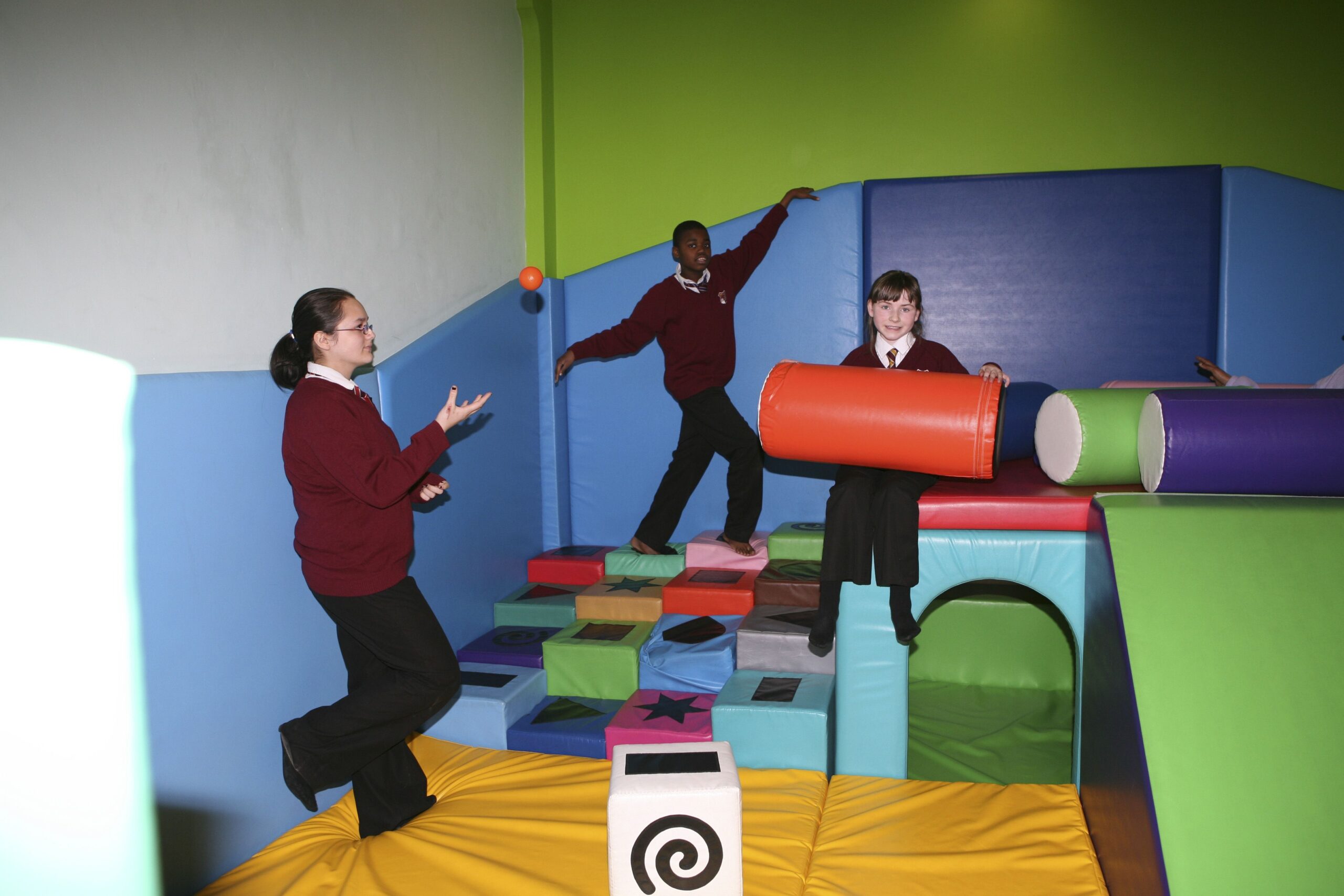
Langham School, Newham 8 Feb 2008
RR: What happened to these two reports?
LJ: The reports went to the Education Committee for consideration and the Chair asked for a report based on a consensus. The local Labour Party was preparing for the 1986 council elections. My local branch suggested that I should stand for election to provide the leadership required to develop inclusive education. I was elected in May 1986, determined to implement the manifesto commitment to inclusive education.
At the first Labour Group meeting I presented a one-page motion which included:
“Newham Council believes that segregated special education is a major factor in the discrimination and prejudice faced by disabled people. We believe that de-segregating special education is the first step in tackling this prejudice. Disabled people have been omitted from previous equality initiatives and it is now obvious that our aim of achieving comprehensive education will remain hindered while we continue to select 2% of children for separate education… It is also the right of children without disabilities to learn that people are not the same and those who happen to have a disability should not be treated differently, any more than they would if they were from a different ethnic background”.
This was passed unanimously.
RR: That’s amazing. So that was in 1986?
LJ: Yes. Several councillors were very supportive of the special schools and were quite rightly concerned about what would happen. People were nervous. This was a big deal, and it was hard to imagine how it could work. I guaranteed we would do nothing that would have a detrimental impact on children and that we would work with parents. People were reassured.
A report went to the Council, and it was agreed a steering group would oversee implementation. First steps were for children from 1987 to start at their local nursery and be supported by a newly created learning support service. The new service was led by a teacher from one of the special schools. Chris was amazing. She had so much experience and was completely committed to inclusion. The climate in Newham was ready for inclusion.
We met the education unions. As Chair of the Education Committee, I wanted a partnership with the unions. I wasn’t deeply involved in the detail of this, but I delegated to my officers and the Union Reps to come up with a policy to protect jobs while we restructured. The sensible agreement was made. It just said there would be no compulsory redundancies, that every staff member who wanted to, would be able to keep within the system and they’d be trained. It was a genuine agreement that both sides were happy with.
As more children attended their local schools, it was obvious that special schools would close at some stage. The first school to close was for children with behaviour difficulties. Very few children were attending, the head teacher was off sick, and nobody was happy. The statutory consultation with parents and staff created no opposition. The closure enabled the creation of a secondary behaviour support service that was quickly successful.
A hurricane in Autumn 1987 blew the roof off a special school. The school was quickly relocated, and we started to consult on the closure of the school. We met parents and asked them to do “blue sky thinking” about what they would want for their children in an ideal world. Two parents were not happy, but the rest came up with creative ideas. Some parents wanted their children to go to their local school, but others came up with the idea of a “resourced school”. Staff either joined the learning support service or relocated to the new resourced mainstream schools.
At Newham School for the Deaf, children were not allowed to use BSL. The school was supported by the deaf community locally, but once people heard about the ethos of the school and our proposals for two resourced mainstream schools, they supported the proposals. The two resourced schools included the whole range of specialist staff.
Langham School, Newham 8 Feb 2008
RR: In the end, how many special schools did actually close?
LJ: It was six. Eleanor Smith, the primary school for children with behaviour difficulties would have been the 7th. The school put forward a proposal that they become a primary behaviour support service, working with mainstream schools to be confident in supporting these children.
The remaining special school was John F Kennedy. During this period, the school worked to include children in their neighbourhood schools. The school roll had reduced to 20 by the time I left the Council in 1994.
RR: You initiated a big change, with a lot of consent from both teachers and parents. That was the key, wasn’t it? And building those support teams.
LJ: Definitely. And I was very fortunate to have amazing support from so many people. The things that made inclusion possible were:
Positive relationships with parents
An agreement with the unions
Learning and behaviour support services
School improvement – inspector and advisory teachers
An Education Psychology service committed to inclusion
Induction for all new staff and an ongoing training and development programme including for school governors
Close relationships with relevant research departments at universities
National and International connections with others developing inclusive education
Political leadership
Director level support
The learning and behaviour support services worked day-to-day around individual children supporting their class and subject teachers. The inspectors and advisory teachers were responsible for quality assurance and curriculum development. They worked together to provide the ongoing training and development.
RR: More recently we’ve had heads appointed who don’t agree with inclusion and that is one of the big problems. Do you think the programme that you had in the 80s / early 90s would have stopped those people even coming to work there?
LJ: Yes. From the mid-1980s people were attracted to work in Newham for all sorts of reasons but certainly the inclusion policy was number one. People who did not support inclusion chose not to work in Newham. Teachers reported that having such a diverse community of children made them better teachers.
RR: Tell me about the purpose-built schools, like Cleves and North Beckton.
LJ: Yes, it was a great to be able to build new schools. The population was growing, particularly following the docklands developments. We worked with parents and architects to design the schools. Cleves and North Beckton primaries and Royal Docks secondary were specifically built to include children with profound and multiple learning disabilities. It is important to stress, however, that any school can be inclusive, but it was nice to be able to design some schools from scratch. Royal Docks was built without the need for stairs, so the whole of the school is accessed via a central circular rising walkway.
Langham School, Newham 8 Feb 2008
RR Why do you think Inclusion lasted for a long time and has now run into problems?
LJ: Inclusion in Newham schools has sustained because the policy was so strongly embedded. Newham still has less children attending special schools than any other area of the country. However, national developments have had a negative impact. There is even a proposal to build a new special school in the borough. I suppose when I was on the Council, I provided the necessary leadership and clarity of purpose.
RR There isn’t now a champion on the Council. You were the champion, weren’t you?
LJ: Yes, in a way. My experience as a parent and a teacher gave me the advantage of understanding the system and the knowledge that any child can be included if we work out how. I provided the leadership that gave the officers and head teachers the confidence.
RR: An independent report commented that having to cater for children with serious learning difficulties helped schools make better provision for all pupils. This is born out in 1997-2000 when Newham schools had the biggest improvement nationally in the GCSE results of all pupils in grades A-G. Many children labelled as having severe learning difficulties are now passing exams. In addition, the numbers of exclusions have been falling whilst they have been rising in most other areas of the country. By 2003, the Labour Government became obsessed with academic outcomes, PISA tables, Literacy and Numeracy hours and a tighter Inspection Regime with OFSTED.
LJ: Yes, all that is true and proved inclusion worked. We avoided those later changes for quite a long time. But eventually as people committed to inclusion retired and the policy ceased to have the same political priority, the national move away from inclusion began to have an impact in Newham. Some head teachers started to speak about inclusion going too far in Newham. And of course, academisation had an impact too.
RR: Yes, I remember taking educationalists from around the world to Cleves. Then the head left, and the new head started to segregate the Disabled children within the school.
LJ: Yes, that is true but fortunately that didn’t last long, and the new management put the school back on track.
Things started to change nationally around 2004. It was not until around 2016 that the changes really hit Newham. Most of the officers who had supported inclusion had retired. The whole atmosphere in education changed. We were now in the era of academisation and a focus on norm referenced outcomes. This does not support diversity and inclusion. We know from the national statistics that we have more children being excluded than ever, more children being home educated or without a school place and more children attending segregated special schools.
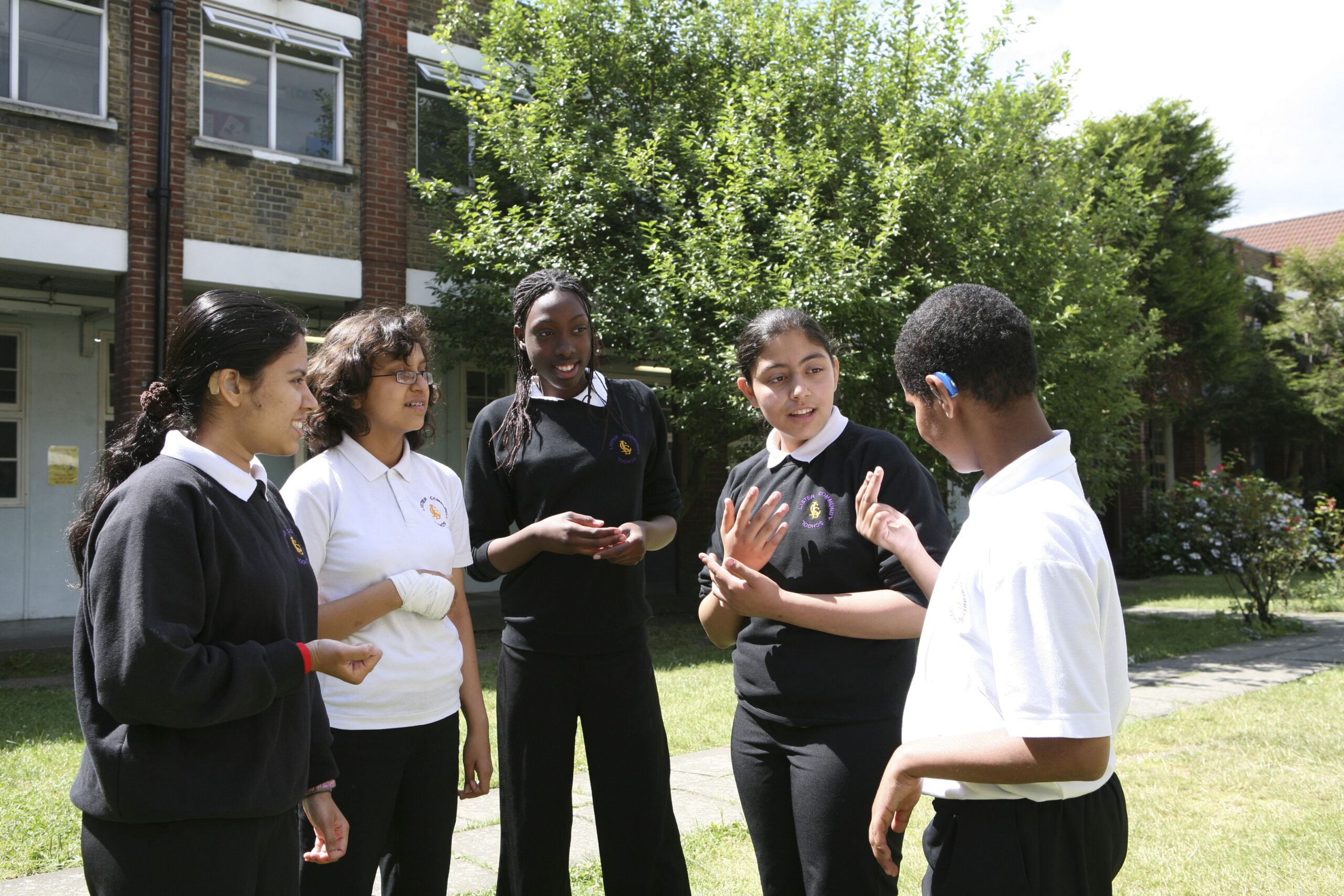
Lister School 4 July 2008
Supported by
ALLFIE’s campaign for Inclusive Education as a human right is backed by funders and donors who reject the systemic segregation of Disabled people from society.
![ALLFIE [logo]](https://pedantic-shannon.91-238-163-161.plesk.page/wp-content/themes/allfie-2025/assets/img/allfie-logo-original.svg)