Please ensure Javascript is enabled for purposes of website accessibility Skip to main content

Christine Lenehan’s review of residential special schools and colleges (RSSC) was commissioned by the Department for Education after it was one of the key recommendations of the earlier “These are our Children” report, also authored by Lenehan. The timing of the RSSC review was also influenced by Sir Martin Narey’s recent report on residential children’s homes and his recommendation that residential special schools warranted separate consideration. Lenehan’s earlier report found that many disabled children and young people were being bounced back and forth between residential special schools and inpatient care, including Assessment and Treatment Centres.

The RSSC review findings are no surprise to any of us and they conclude that the following factors are pushing pupils into residential special schools:

ALLFIE responded to the review’s call for evidence by setting out the case for an ambitious plan to phase out RSSCs in line with the UN Convention on the Rights of Persons with Disabilities. We are therefore deeply disappointed by the lack of ambition in the recommendations coming out of the review – essentially not much more than tweaking at the ends of a broken system.

The review is co-authored with Mark Geraghty, Chief Executive of the Seashell Trust which is a residential special school, so it is not surprising that there is a central theme running through the report that not all disabled children can be educated in local schools, upholding the status quo that there will always be a need for residential special schools – in fact such settings will be in the “best interests” of some disabled children!

The review does say a lot about the need for local authorities and clinical commissioning groups to do much more to develop local services which facilitate the inclusion of disabled children and young people in mainstream education. However, this falls short of supporting the ‘presumption of mainstream education’ principle set out in the 2014 Children and Families Act. Or indeed addressing the growing numbers of children being pushed into residential special schools as a fallback position when they and their families have been repeatedly failed by a plethora of local education, health and social care agencies.

Why are Lenehan & Geraghty not shouting from the rooftops that the ongoing institutionalisation of disabled children because of failings by the state is nothing short of a national disgrace? Why do they not concur with the UN Disability Committee’s Concluding Observations that government policies to cut vital services to disabled people (including children) and their families is causing a “human catastrophe”? Instead they have crafted a series of recommendations that lack real ambition and fail to set out a new and radical approach to supporting ALL disabled children to stay in their local communities.

We must push back on these recommendations and remind government that residential special schools and colleges are not compliant with their UNCRPD obligations. We must also keep up the pressure on government to recognise the UN Disability Committee’s call for a ‘comprehensive and co-ordinated framework for a fully inclusive education system’ – anything less is failing this and future generations of disabled children and young people.

Simone Aspis (ALLFIE Campaigns Coordinator) and Tara Flood (ALLFIE CEO)

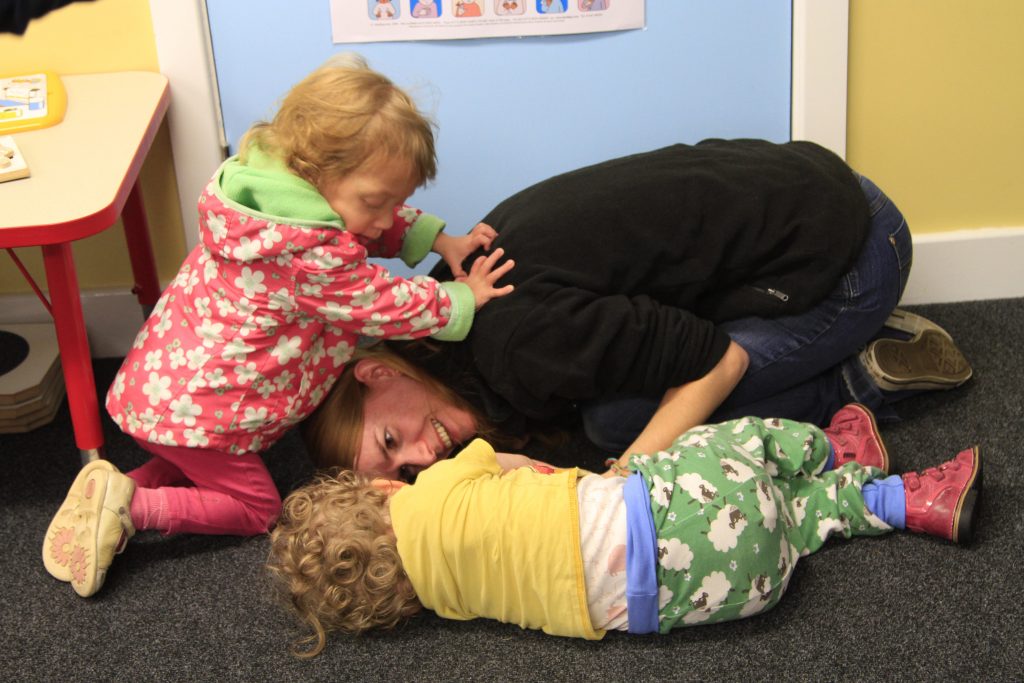
Nursery worker on floor with two small children

Most organisations that understand inclusion, become inclusive. Dingley’s Promise though, decided that it could help more children and families if it remained specialist but with a key aim of ensuring the long term inclusion of children in the mainstream education system. This model means that there is an option for children who, like around 50% of children with SEND in the UK, are turned away from mainstream nurseries. However research shows that the earlier we can reach children with SEND, the better their lifelong outcomes will be. With this in mind, Dingley’s Promise aims to ensure that no child is left behind in the early years, and acts as a safety net to get them on the path to inclusion.

While most local authority decisions are made according to the perceived needs and development levels of the child, at Dingley’s Promise we look at three aspects when planning activities and pathways to inclusion. Firstly, with the child, we identify strategies that work for them, and fully understand their interests, needs and preferences so that learning can be built around them.

Child's hand with some cards with pictures of food on, and some actual foodOliver (not his real name) attended daily sessions with us when he had to leave his mainstream early years setting who said they ‘couldn’t cope’ with his needs. We worked with Oliver to help him communicate using PECS, and he progressed to stage 4, where he would form a sentence using symbols (e.g I want garden) and take the sentence strip to a practitioner and point to each symbol. He then began to make sounds and use some words when using PECS. We encouraged him to eat at the table with other children, as when he came to us he insisted on eating alone and would become very distressed if this was changed. Small steps were used to bring him closer to the other children until he was happy to eat next to them.


Secondly, we focus on the situation of the family and really understanding what is happening for them, what their hopes are for their child and what support they need themselves. We have a family support worker who engages closely with the family through a range of activities – both one to one and in groups where they can also find peer support.

Oliver’s parents really wanted him to go to a special school due to the experiences they had at the first early years setting. We worked with the parents to reassure them that he would be able to succeed in a mainstream primary school with the right strategies while he waited for his EHCP assessment to take place. We supported them in the process of applying for the EHCP, ensuring that their views were a key part of the assessment process. Once his parents were comfortable, we helped them to identify the primary school they would like him to go to, and supported them to apply for that school, safe in the knowledge that we would have a detailed transition with the school.Child drinking milk

Finally, we work closely with mainstream settings to make sure that they have detailed, supportive transitions. In addition, we also provide support and advice to settings if they have concerns about working with a child effectively.

We worked very hard to ensure that Oliver’s transition to primary school was successful. In addition to our reports and information, for one month before he moved, teachers from the school visited weekly to observe the strategies that work with him such as timers, warnings, and now and next.

Oliver is just one child, and last year 60% of all of our transitions were to the mainstream. However our own research showed that 63% of local settings felt they couldn’t accept more children with SEND unless they had more training and support, and so we are committed to providing this to support the growth of wider inclusion.

Catherine McLeod

For more information see www.dingley.org.uk

Catherine McLeod


Q: My child has significant learning difficulties. The LA have now finalised her education, health and care plan (EHCP) and have named a mainstream school which I am pleased about. However it does not specify she must attend mainstream courses with significant curriculum differentiation, assisted by a specialist teacher (that the school does not have). My concern is that without any mention of participation in mainstream lessons the school will simply place her in the SEN unit full-time. What are my options, including going to the SENDIST (Special Educational Needs and Disability Tribunal), to help me secure a full time mainstream placement – one that goes beyond the minimum requirement that my child is on the roll of a mainstream school?

A: As the provision that your child needs isn’t in the final plan, I would recommend that you appeal to SENDIST to try and have the provision included in Section F and I would recommend you do this even if the Local Authority or school indicates that they can make this provision available without it being included in the EHCP. This is because unless the provision is clearly specified and quantified in the EHCP, the legal duty placed on Local Authorities to arrange provision does not kick in.

If you are appealing to SENDIST, you do not need to have legal representation; however, some parents prefer to. What you will need is evidence to support that the provision you are requesting is required to meet your child’s needs and ideally, if possible, you would want expert evidence to back this up. This is because the Tribunal determines cases on the basis of the evidence they have available to them and therefore if you do not have evidence to support that the provision is needed and the Local Authority produces evidence that it is not needed, this is likely to go in the Local Authority’s favour.

If the EHCP isn’t amended or your child starts attending the school whilst you are in the process of appealing and the school places your child in the SEN unit full-time, I would suggest considering pursuing a discrimination claim. This would be on the basis that they are segregating your child from their non-disabled peers. I think this would be grounds for a disability discrimination claim in particular if the EHCP just names the school and doesn’t specify that your child should be educated in the SEN unit.

Disability discrimination claims against schools are also made to SENDIST and you do not need legal representation to make a claim. However, some parents express a preference to have legal support, in particular as the arguments made in discrimination claims are more legal in nature than an EHCP appeal.

You, of course, have other options available to you such as making a complaint to the Local Authority for not putting the provision in the EHCP but I would recommend either appealing to SENDIST against the contents of the EHCP and/or making a discrimination claim.

Samantha Hale

Samantha is an Associate Solicitor with Simpson Millar and specialises in education, community care and public law.

Inclusion Now 49 Spring 2018

Visit to Emerson’s Green primary school, interview with visually impaired MP Marsha de Cordova, inclusion in Malaysia and the Ukraine, a response to the residential special schools review and more…

Welcome to Inclusion Now 49. Audio and text versions are in the articles below.

To receive three issues of Inclusion Now a year on publication date, you can subscribe here. Subscribing supports our work and helps us plan for the future.

Inclusion Now is produced in collaboration with World of Inclusion and Inclusive Solutions

You can listen online below, or if you want to download the audio files, right click each article and choose “Save Link As”.

The struggle for inclusion is a long one. Gains are shown by students with the label PMLD being included in mainstream schools, such as Eastlea. Finn Murphy’s parents’ long struggle to get him included in mainstream is well described, but should not have been necessary. On a global scale we have seen the adoption of a strongly pro-inclusive General Comment on Article 24 of the UN CRPD. This closes down much of the wiggle room governments have been hiding behind to prevent progress to inclusive education. The General Comment follows last year’s commitment in Sustainable Development Goal 4 by the governments of the world, which commits them to inclusive education for all!

Back in the UK, in the’ Brexit’ aftershock, Theresa May is promoting more selection which means more segregation for the majority of children. Comprehensive schools have achieved the most, for most children and young people, and are the most inclusive in our history. The word ‘meritocracy’ is being used to suggest there is a fixed pool of talent which must be sifted out by quasi-eugenic testing, rather than recognising that all young people should be supported to reach their potential. Accessing exams and apprenticeships remains an issue for young disabled people but we show a way forward. The article on Ashton on Mersey shows that the threat of increased segregation is looming large. Everyone should further the struggle for disability equality in this autumn’s UK Disability History Month, challenging disabilist language and bullying. We mourn the passing of Linda Whitehead, a campaigner, mum and champion of inclusion for her son. However both leaders of Greens and Labour Party are now fully supporting inclusive education.

Richard Rieser

Is the purpose of education to reproduce existing inequalities and power structures or is it to be transformative in developing quality education for all? The Government’s insistence on increasing selection by aptitude, religion and tested ability at 11 (and as a concession for a very few at 14 or 16), expanding grammar schools and increasing other forms of selection, goes to the very heart of this question.

The Government’s own statistics show that there are eighteen times fewer children with SEN statements or Education, Health and Care plans, and three times fewer disabled children without statements or EHCPs, in grammar schools than in the secondary school population as a whole.

Originally grammar schools were set up to give some access to education for the poor at a time when only the rich were educated. Education was generally restricted to the rich, who could buy it, until technology made it necessary for the workforce to be trained to use it, leading to state education with the 1870 Act. Elementary education for all was expanded after the 1944 Education Act identified three types of minds: academic, technical and the rest, destined respectively for grammar, technical and secondary modern schools. Entry was based on the idea that intelligence was innate, fixed and could be determined by a single test: the 11 plus. This was heavily influenced by the psychologist Sir Cyril Burt, who believed all intelligence was inherited or innate and capable of being measured with accuracy and ease. He was an influential member of the Haddow Committee, (The Primary School, 1931) and the Spens Committee (The Secondary School, 1938), which framed Post War education based on selection.

Later, the problem was that increasingly some children who had failed the test at 11 showed the ability to pass the General Certificate in Education (GCE) which they were meant to be not capable of achieving. This led to the campaign for comprehensive education with the outlawing in 1998 of any further grammar schools. If the more academically inclined were to go to grammar schools it left the majority, some 80%, to go to schools where they did not receive a broad and balanced quality education. Under the pressure of school leaving age being raised to 16, teachers and the Schools Council began to develop appropriate curriculum and examinations leading to the Certificate of Education (CSE) which showed the potential of students in comprehensive schools. This was then merged into the GCSE to cover most learners in secondary. Government has continuously moved the goalposts on acceptable outcomes, but today’s secondary students, including many disabled students in comprehensives, are achieving well over three times the outcome of the cohort in the heyday of grammar schools.

At the heart of this Government’s schools policy is the establishment of an elitist education system under the guise of improving educational outcomes for children from low income families. Justine Greening has set out ambitious plans to increase grammar school placements with a promise of a £50 million grant year on year. Apart from grammars, partially selective schools will be allowed to increase the selective proportion of their pupil intake, whilst non-selective schools will be allowed to become selective. It’s clear the Government believe that the only good schools in town are those that have a selective intake of pupils. To ensure that selective independent schools and universities are brought into the frame, the Government has set out conditions they will need to fulfil in order to obtain charitable status or to charge tuition fees of more than £6,000. The independent selective sector will be expected to expand selective education either by establishing new free schools or by sponsoring or working with state-funded schools. Non-selective schools will be expected to partner with selective schools. Whilst the policy does not advocate the end of non-selective schools, more schools will have to become selective as they compete for pupils. Those remaining in non-selective schools will particularly be the children of poor, white families on free school meals, and those with SEN/disabilities will be deprived of the benefit of mixing with peers of different social backgrounds and abilities.

Eugenics was a dangerous false science, based on taking Darwin’s ideas of natural selection and applying them to human beings, with the aim of improving the innate quality of the human race by selective breeding. If the test showed certain groups scored lower than others, they were inferior. This is the principle on which testing at 11 is based. It was not considered that results might be to do with environment or unfamiliarity with the test. Eugenics started by segregating/sterilising the ‘feeble minded’, extended to prohibiting certain ethnic groups from entering the USA, justifying black/white segregation in the Southern USA and apartheid South Africa, and ultimately led to creating the ‘Master Race’ in Third Reich Germany, eliminating Jews, Gypsies, disabled people and homosexuals. Today it leads to the idea that there are some who are more equal than others –the meritocracy, which conveniently for Mrs May and her right- wing government, fits a two tier education system, with less funding for the lower tier, and feeds prejudice and social fragmentation.

The Government certainly did not have equality and inclusion in mind when developing “Schools that work for everyone” as there has been no equality impact assessment on how the policy will affect disabled children’s and their parents’ ability to choose mainstream education. As the number of selective schools rise, parents and young people will be less able to choose great inclusive mainstream schools. Yet these are the schools that add most to the educational achievement of all their students as value added and now Progress 8 measures demonstrate. This inclusive pedagogy includes mixed ability teaching, peer support, collaborative learning, learning without limits, making effective reasonable adjustments, a stimulating curriculum, putting in place individual support and an ethos of respect for all – all equal, all different. These proposals need to be fought hard because they will lead to less inclusion and a more segregated education system and society. Otherwise the only choice in town for disabled children could be special schools – so the Government’s Every School that Works That Work For Everyone will work for everyone other than poor children and disabled students.

[The consultation is now closed.]

Simone Aspis and Richard Rieser

Autumn has been a good season for disabled peoples’ rights to inclusive education. In September the UN issued guidelines clarifying what is required by governments to uphold human rights in education under Article 24 of the Convention on the Rights of Disabled People. The advice on segregation is what ALLFIE has advocated all along: a phasing out of separate, “special” provision is required under the Convention.

Although the Convention did not explicitly ban segregation, ALLFIE and others who took part in the negotiations at the UN over ten years ago understood that the agreement to develop inclusive education systems by governments around the world implied a phased ending of separate provision. The move to fully inclusive education systems, accommodating and supporting all students whatever their impairment or needs, would render “special” education in separate settings unnecessary.

That understanding has now been confirmed by the UN Committee on the Rights of Persons With Disabilities in General Comment No. 4 (2016) on inclusive education which states that a core aspect of inclusive education is a commitment “to ending segregation within educational settings by ensuring inclusive classroom teaching in accessible learning environments with appropriate supports”. The Committee also recognises that developing inclusive education “is not compatible with sustaining two systems of education: mainstream and special/segregated education”. It stresses governments’ obligations to move “as expeditiously and effectively as possible’’ to full realisation of Article 24 and urges a “transfer of resources from segregated to inclusive environments”.

The General Comment defines the key challenges in reform for inclusion – exclusion, segregation, integration and inclusion – and highlights the importance of recognising the differences between them. The UN guidelines define segregation as when “the education of students with disabilities is provided in separate environments designed or used to respond to a particular or various impairments in isolation from students without disabilities”. Other definitions can be found at http://bit.ly/2c1JsEh

This guidance means the Government’s policy of a market where parents and disabled learners state a preference for segregated or mainstream schooling cannot claim to fulfil disabled peoples’ human rights to inclusive education under the Convention. It also clarifies that an education policy which increases, rather than reduces, segregated education is in breach of international obligations.

As well as clarifying the position on segregation, the General Comment provides details of other actions required by governments to develop inclusive education and fulfil disabled peoples’ education rights. This proactive approach should include “a comprehensive legislative and policy framework” supported by an education plan with timeframes, goals and monitoring mechanisms – an approach which Allfie has consistently recommended over the years. While the Conservative government in the UK would have to make big changes in values and doctrine to fulfil its UN obligations as now clarified in the General Comment, recent initiatives in the Labour Party potentially bring it closer to an education policy in line with Article 24.

“Education not Segregation” has been Allfie’s slogan since we were founded more than 20 years ago, and is also the slogan being used in Labour’s new campaign against grammar schools. According to Shadow Education Secretary, Angela Rayner, speaking at the recent party conference, selection into grammar schools is “toxic” because of the damage it causes and should be more appropriately named segregation. Hopefully, the party will tackle all forms of segregation in education when formulating the new national education service for all, proposed by Labour leader, Jeremy Corbyn. The General Comment leaves no doubt that developing inclusive education for all and ending segregation in separate “special” provision over time is the policy direction required to fulfil human rights obligations.

Belinda Shaw, long time ALLFIE member

ALLFIE staff team

ALLFIE has known about Eastlea Community School, in the London Borough of Newham, for some time because of the work they are doing to include disabled young people, but we hadn’t had an opportunity to visit until we were contacted by the parents of Finn Murphy who travels across London every day to attend the school. The ALLFIE staff team visited the school in May this year.

The school had received funding for refurbishment and for an extension, and was clearly well resourced. Governor Linda Jordan explained that they received additional resources via the pupil premium. During the works, disabled pupils were involved in auditing the school’s accessibility where they noted simple things like the position of the door knobs, which were at a standard height rather than accessible for wheelchair users. The classrooms are set out in an informal but purposeful manner that allows small groups of children to sit together whilst providing opportunities for disabled children to work as part of the group with their learning support assistants. Gone are the days of rows of desks with the teacher in front of the class demanding pupils’ attention.

The school is visibly incredibly diverse – over 60 different languages are spoken. As we walked down one of the hallways we saw a notice board displaying a Guinness World of Records certificate from 2014 for the classroom with most nationalities at a history lesson (41). The prom photo board proudly included a number of disabled pupils.

17.5% of students at Eastlea have SEN, and some of these have statements/EHC plans, but many do not because Newham has for many years prioritised a resource provision model which focuses on building the capacity of mainstream schools to be inclusive. Eastlea is particularly interesting because many of the young people we met have significant levels of impairment and support needs – many of whom, if they lived elsewhere, would be on a fast track to segregation.

We started our visit in the Additional Learning Centre where students access a range of additional support either for learning or related to their impairment. Some pupils may spend part of the day here. However every student, whatever their impairment, health condition or learning ability, is in mainstream classes for at least 50% of the time, where they are supported to access the national curriculum.

For instance when we visited a Maths class on averages, some pupils with learning difficulties were exploring figures with numbers of plastic frogs or beads. In an English Literature class on the Merchant of Venice, students were assembling news stories about the play’s storyline using picture collages. Teaching assistants at Eastlea are assigned to a specific subject area because supporting the differentiated curriculum requires them to have knowledge of the subject area.

Students with labels of challenging behaviour were also supported – we met a student who when she first arrived had hit a couple of staff, including the Head, but instead of leaping to a sanction, the school worked with her to develop a “social story” book that support staff use with her – the book helps her to think about other things she might do with her hands, such as waving. The social story also helps others to understand why she behaves in a particular way. Such techniques are used to ensure that students are not excluded from the school for behavioural or other reasons. Emma Lane, the Inclusion Lead, explained that the staff use every situation as an opportunity for learning, and work together to come up with possible solutions. ‘Exclusion’ of any student was not an option.

A lot of thought has also gone into developing communication dictionaries with those young people who communicate through movement or sound rather than speech, which has clearly helped staff and fellow pupils to engage with them and appreciate their method of communication.

Some children go to alternative provision outside the school, and this is mostly where for instance they are attending hairdressing or mechanics courses which the school is not equipped to provide – but pupils stay on the school roll.

We asked Emma whether bullying of disabled children was ever a problem. She explained that because the pupils have mostly come from Newham primary schools they are well used to inclusion of disabled pupils, and because the school population is so diverse in other ways it is not really an issue.

Emma also explained that the challenges of inclusion were sometimes just as much about extracurricular activities as about the curriculum. For instance one pupil, who used the school transport service to get to school, stood for the student council. It was not easy to get the transport service to understand that collecting her at 3.25 pm would not allow her to be fully involved in the life of the school.

Ana-Maria Grigore is the very dedicated complex needs teacher at Eastlea. Ana is clear that her role is to help the teaching staff develop skills to support the learning of ALL the students in their class. Differentiation of the curriculum is time intensive and can’t be done as a standard set of materials that will suit many children, but a set can at least be used as the basis for the next pupil. She explained the various processes they have implemented and how they keep trying different techniques to ensure that all students leave school with a qualification and enrolled into a college.

She was clear that being in mainstream benefits even students with the most significant learning difficulties: “For them to be in a mainstream class and just hear the noises of the activities or the silence of the lesson is progress in itself because in a special school they don’t have this type of experience.”

Ana stressed that their ethos of inclusion required a whole school approach with staff sharing good practice across the school – just having great SENCOs and support staff is not enough, and sharing ideas externally by attending SENCO network events and conferences is also important. She feels that although teachers are getting inclusion training in colleges, and support for inclusion among teachers coming into the school is clearly growing, there must be legislation to back this process up.

It was also easy to see the benefits of inclusion for non-disabled students. Classrooms reflect the similarities and differences of people in the real world. It felt that the non-disabled students were not ‘disrupted’ by disabled students in the classroom and in fact the atmosphere of the school was surprisingly peaceful – Emma told us that Ofsted inspectors always commented on this too – and the students we came into contact with were polite and welcoming.

The only disappointment was not having the opportunity to talk with both the disabled and non disabled pupils about the ethos and inclusivity of their school from their perspective.

In 2014 OFSTED found Eastlea school “good” in all areas. Interestingly, and despite the narrowing down of the inspection regime, OFSTED have shown a real interest in the inclusive practice happening at Eastlea, and have recently visited the school to capture that practice on film with the intention of training their inspectors.

Unsurprisingly, staff we talked to were concerned about the future for Eastlea and its inclusive ethos, particularly with the constant pressure on schools to academise and to achieve academic results. It was clear to them that their work on inclusion of disabled children was not valued in the statistics, or politically: “When it comes to assessments, when it comes to exams, when it comes to the numbers, then we do not count,” says Ana. They also had concerns about how these pressures can affect the mix of schools in an area: “When the whole inspection criteria are based on academic attainment you can see why heads that have that leeway would exclude children with SEN. If you then become the only school in an area that meets those needs then that’s not fair on us,” says Governor Linda Jordan. Finn Murphy’s case is an example: every school in his home borough refused to accept him as a student because he is disabled, and so he came to Eastlea.

What struck us was that the school understood that inclusive education is not a one-size fits all, but an ongoing, changeable and dynamic process that requires constant learning. Linda stressed that the reason inclusion works for them is that it has the full support of the Head Teacher and board of governors. Emma, the Inclusion Lead, is a member of the Senior Management Team. There is no doubt that the amazing and innovative work that is happening at Eastlea Community school is under threat. It is crucial to share their good practice and learning with other education providers to ensure that the lessons of what is possible filter across the entire education sector, dispelling the myth that inclusion isn’t for every disabled child – Eastlea is living proof that inclusion works!

You can also hear children and staff of Eastlea talk about how inclusion works in the school, the challenges and benefits and what it means to them in this video.

Tell us something about you and your family, particularly Finn

Finn is 15 and lives in Harrow with his family and his dog Horace; he has lived all his life in this borough. He has a rare form of congenital muscular dystrophy, muscle-eye brain disease (MEB) a neuro muscular condition which is characterised by him having a movement disorder, a visual impairment, a severe learning difficulty, and no speech, although he’s just started to say “Mama”! Finn was the first person to be diagnosed with this condition in the UK and there are just a handful around the world with MEB. Finn loves music, noisy toys, people and visiting different places, especially the seaside.

The first school he attended was a special school which although it had many good features, didn’t really provide Finn with what he needed. Finn is fully integrated into the community and regularly takes part in mainstream activities, for example he has a season ticket for Fulham Football Club.

Why do you think it is important for Finn to be included in mainstream education?

Mainstream education is important for disabled children because it provides invaluable learning opportunities with mainstream peers. It creates the possibility that children will not simply accept the segregationist attitudes so prevalent today. Teaching disabled and non-disabled children together provides a solid foundation for inclusion more generally in society. Whilst inclusion in school is essential, it is equally important in the workplace and inclusive education will enhance work opportunities for disabled people as it helps break down segregationist values. There is a lot of pressure on disabled people today to get a job and employers are expected to look favourably on employing them. Many employers have little or no experience of disabled people and may question why they are being asked to act supportively towards them when it has always been “someone else’s” responsibility to engage with them – special schools etc. If all children were educated together, employers would be more likely to see how a disabled person could fit in to their workplace having learned all through school about the needs and abilities of their disabled peers. We believe special schools are an anachronism and hinder the pupils who attend them. Why would we want Finn to attend such an outdated institution? Finn was out of school for three years during which he received no help (therapy, etc) from the local authority (LA), but the advantages of him being at Eastlea Community School have made this huge sacrifice worth it.

The therapy Finn received in his special school came from the Local NHS Trust, as is generally the arrangement, where, astonishingly no service level agreement existed between the two organisations and the therapy he received was largely dreadful.

What have been the challenges?

There were a huge number of challenges in getting Finn into a mainstream school.

The LA (the London Borough of Harrow) did not support our preference for Finn to attend a mainstream school, claiming it wasn’t ‘suitable’ and that “children like Finn do better in a special school”. This approach is of course wholly unlawful. They then claimed there were no schools in the area that Finn could attend, but were not prepared to put any effort into making the schools ‘suitable’ as required by the Education Act 1996 and now the Children and Families Act 2014. There is a fully accessible school in Harrow that Finn could have attended; there are pupils there who are wheelchair users but the LA and the school were wholly hostile to Finn attending this school – one of the reasons being that Finn’s presence would “upset” the other children. Indeed there were other schools in Harrow Finn could have attended but without exception they all adopted a segregationist attitude whilst at the same time claiming they were an inclusive school!! Around forty mainstream schools were contacted about a place for Finn and all except one refused – they all gave unlawful reasons, which were accepted by LB Harrow. The one out of borough school that did say Finn could attend changed their mind after meeting individuals from LB Harrow and then refused to take him. We went through the tribunal service (four hearings in total) which was lengthy, taking well over two years. Perhaps the most concerning part of it was that we were confronted by members of the judiciary who had attitudes towards inclusion that would have been more at home in the 19th century! The only positive result of Finn’s case was that it was established that costs to the LA are not a reason to prevent a child attending a mainstream school.

Harrow were wholly resistant to acceding to our preference and spent many thousands of pounds of public money to prevent Finn attending a mainstream school, upholding their segregationist position. For example they spent over £15,000 on instructing their barrister.

On a more positive note we made comprehensive complaints against the judges etc involved in Finn’s case about the bias shown by the tribunal service in favour of the LA, which were received with some anxiety. All those in the LA and the tribunal service who claimed that Finn couldn’t attend a mainstream school have been proven wrong as Finn now attends a mainstream school in Newham called Eastlea Community School and is thriving!

What would have helped your family secure a mainstream school place for Finn?

The two things that would have helped would have been if those involved embraced inclusion rather than segregation. Secondly it would be a huge advantage if the LA and relevant members of the judiciary actually understood what the law says about mainstream education for children like Finn; this would have helped them discharge their obligations to our son and other children.

What advice would you give other parents of disabled children starting the inclusion journey?

I would like to offer four pieces of advice. Firstly, find out what your rights are in relation to mainstream education. Secondly, put as much effort as you need to into finding a school which will take your child. Thirdly don’t take for granted that what your LA tell you about your child’s entitlement to mainstream education is accurate because all or most of the agents of the LAs are ignorant as to their legal obligations towards your child or they will deliberately mislead you as they do not want to comply with your wishes and the law. Last of all, avoid telephone conversations and unnecessary meetings with agents of your LA, rather use email to communicate with them, as this provides a paper trail and could be used as evidence in your case. Meetings with these people tend to be an ineffective use of your time and are generally used by the LA to try to convince you to do what they want. For example, we were told by one uninformed individual that he thought mainstream school was not ‘suitable’ for Finn. The two problems with this advice are that firstly it is not suggested that a child go to an unsuitable school as the LA are obliged by law to make the school suitable, and secondly, the person giving the advice was deluded as he genuinely thought his opinion was significant.

Lastly I haven’t met Finn so don’t know whether he would want to say something. If he wants to or is able to – I was thinking maybe what does he like about school at the moment?

Finn loves everything about his school day, even the journey, and he’s made huge progress especially in his walking. I would like to add that Finn’s mainstream peers enjoy having him in classes, especially daily mentor time when they get together. Sometimes all his peers ‘clap’ for him because he likes it, other times they tell him to be quiet if they are listening to something and he’s being noisy. Children who know Finn from their mentor group etc come over to him in the playground and say hello, which I’m sure he likes. He also loves interacting with many different members of staff and doing all sorts of interesting things. He finally has some brilliant therapists and has made more progress since starting at Eastlea than in all the previous years he attended school!!

Richard Reiser

Schools and colleges should now be planning what they will do in this year’s Disability History Month (22nd November – 22nd December). 34% of disabled Year 9 students (compared to 26% of non-disabled students) experience bullying through name calling according to the Equality and Human Rights Commission and Government. Schools have statutory duties to eliminate bullying, and examining the roots of disablist and pejorative language is essential in creating a climate of disability equality in your school or college. We have worked with the Anti Bullying Alliance on a whole range of resources to enable teachers to challenge language-based disablist bullying.

Historically disablist language is common. In Shakespeare’s “Richard III”, Scene I, Act I, Richard’s first speech draws links between evil and disability.

“…Deformed, unfinish’d, sent before my time

Into this breathing world, scarce half made up,

And that so lamely and unfashionable

That dogs bark at me as I halt by them;”

Shakespeare drew on Sir Thomas Moore’s much earlier account of the Life and Death of Richard III which was written to curry favour with Henry VIII, whose father, Henry VII, had claimed the crown having killed Richard III in battle. Moore therefore embellished history, adding to both Richard’s disability and his evil deeds.

Throughout history, physical and mental differences have been described in language reflecting the thinking of the day, reinforcing powerful stereotypes which still influence ideas about disabled people. Lame today is used by young people to mean something that is good, a reversal of the meaning not smart or impressive. In Shakespeare’s time it meant both having an injured foot/leg, make walking difficult and not strong, good or effective. Overall the word is negative and not a good experience. Halt was a word in common use then, meaning the same as lame, as was cripple also meaning to move slowly, to be permanently injured or have no power. The polarity of good and evil/ beautiful and unsightly in language is found across all languages and is a major contributor to the devaluation of disabled people. Generally, disabled people of that period would have had families, worked and not been distinguished from the mass of people, unless severely impaired. Those not looked after by their community would have begged, though this became outlawed. So the impact of the play “Richard III” would have been dramatically strong. At a time when people generally believed in witchcraft and tangible forces of evil, it made a powerful link between disability and evil.

As part of this year’s UKDHM we have worked with the Open University and Access All Areas to produce a pack for schools around No Longer Shut Up, a film on the life of Mabel Cooper. Mabel was placed in a hospital for the ‘mentally deficient’ at the age of 4 and stayed there more than 30 years. When eventually released under care in the community, she became a major advocate for people with learning difficulties and a founder of People First. The pack has activities for students from KS2-5 in English, drama, history, science, geography and PHSE. Agitation by eugenicists led to the 1913 Act which licensed inhumane incarceration of “idiots”, “imbeciles”, “feeble-minded persons” and “moral imbeciles”, often for life. Some of these words, though unacceptable, are still in common use as harassing language, but most young people know nothing of this particularly nasty period of oppression. This year’s UKDHM gives us an excellent chance to challenge such ignorance and rejoin the struggle for disability equality. The pack will be launched in Parliament at 11am, 22nd November. UKDHM will launch that evening at 6pm at Kings Place, Kings Cross. www.ukdhm.org


23 year old Maxime Soret’s love for food and cooking was inspired by his father’s ability to prepare simple but tasty meals, and by the international cuisine he experienced whilst dining out with his family. Now Maxime’s prestigious two year level 3 professional cooking apprenticeship has given him the opportunity not only to taste, but to turn his hand to preparing signature dishes from around the world for hundreds of hungry MPs as an apprentice chef in the House of Commons’ busy Larder and Terrace kitchens. Maxime explains the variety of dishes he has learnt both whilst working in the kitchens and at college.

“I helped prepare quite a lot of different meals, such as desserts, side dishes, starters and main courses. We do breakfasts and lunches. I prepared a lot of vegetables, and also dough for things like croissants. I also have the opportunity to do fancy things like canapés, skin rabbits, pluck pheasants and fillet fish involving cutting off the head and tail end and filleting it. I also cooked crab bisque that involves killing the crab whilst its moving.”

Working as an apprentice chef is certainly not for the squeamish or for the faint hearted as Maxime says:

“I worked mainly in The Larder, where we also did quite a lot of fancy things like canapés. At the Terrace, next to The Larder, I had to prepare lots of different dishes every day, and sometimes help out other chefs with the main courses needed for upstairs and downstairs. That was a bit too stressful. In The Larder, it was pretty much preparation work, rather than cooking hot meals. I can handle stoves and ovens, just for a little while, but it does get me, the humidity and heat.”

Throughout the placement Maxime found the support he received from his bosses very encouraging and supportive.

“The chefs were happy to help and support me, also the other employees,” he said. “They would show me what they wanted me to do, practically – what I should use to prepare something, where it was stored, where to put the dirty things. There is a routine to do almost every day, every week, which I pretty much got to know how to do, and they would give me a demonstration of any new task.”

During the first year Maxime attended a special awards ceremony to collect a certificate for his outstanding achievements.

One of the requirements of the apprenticeship is that apprentices must receive vocational training that leads onto a recognised professional level 3 qualification. So one day a week Maxime has been attending West Kingsway College where he has completed an NVQ level 3 qualification in Professional Cookery alongside his non-disabled peers. The course has covered all aspects of professional cooking, and the apprentices complete online, practical and work-based assessments. Whilst at college all the apprentices are provided with a laptop where they store their work and complete online assessments.

Maxime, who has Asperger’s syndrome, requires both a working and learning environment that is inclusive of apprentices who behave and learn in different ways from their peers. Maxime prefers a structured environment where there are plenty of opportunities for learning by doing, aided by visual demonstrations when practising and perfecting his professional cooking skills. He is provided with learning support assistance including help with understanding the theory aspects of the course and the assessment arrangements.

“There was quite a lot of theory involved on the health and safety and food hygiene side of catering in the workplace. I had to learn about food hygiene – using the right colour of chopping boards with vegetables, salads, raw meat, cooked meat and dairy products. I had a Learning Support Tutor. She helped me pretty much every week with lessons, with my English skills, and in the cooking assessments. She did not know a lot about cooking but did understand what my mentor said, and what to do. She helped me to understand questions better and what exactly a particular subject had to do with. She helped with assignments, and during cooking assessments, she helped me to go through the instructions that the course tutor gave me.”

Maxime received support not only from his learning support assistant but also from his fellow students as he explains:

“The course tutor was OK but the ones who helped most when I got stuck on the cooking side were the other students.”

After experiencing a variety of work environments during his current and previous level two professional apprenticeship placements, Maxime has a clear idea what type of role he wants to do – he would like to work in a school where there is a regular routine and scheduled breaks.

“I’d like to just continue being a commis chef, able to help with a lot of things – vegetables, pastries, meats etc., work that is interesting but not extremely complicated.”

His apprenticeship has now come to an end and he is currently looking for paid employment elsewhere – he has had a work trial with Harrison’s catering company who had a contract with local schools.

Whilst Maxime’s apprenticeship experience was a positive one, there have been some hiccups along the way. He was not registered for the level 2 functional skills maths exam which he needs in order to gain his full apprenticeship certificate. Maxime’s mother feels that mainstream apprenticeship providers need better knowledge and skills around placing disabled apprentices and providing them with appropriate support. And the local council have been dragging their feet for two years, which has meant that Maxime has not benefitted from physiotherapy, occupational therapy and qualified learning support assistance during the apprenticeship placement, despite a number of successful tribunal appeals. ALLFIE is beginning to address all these issues with ministers.

In the meantime we wish Maxime the best of luck in finding work in the catering industry.

Since the last edition of Inclusion Now, the Government has commissioned Paul Maynard to chair an independent taskforce which will make recommendations on the accessibility of apprenticeships for people with learning difficulties and learning disabilities. We were pleased to read that the Government has accepted the recommendations on making reasonable adjustments around the Maths and English standards and will pilot an apprenticeship programme aimed at people with learning difficulties and learning disabilities. For a full report see our campaigns membership briefing which focuses on apprenticeships.

Simone Aspis

Supported by

ALLFIE’s campaign for Inclusive Education as a human right is backed by funders and donors who reject the systemic segregation of Disabled people from society.