Please ensure Javascript is enabled for purposes of website accessibility Skip to main content

Finland & Canada: what can we learn?

ALLFIE’s Director, Tara Flood, reports back on her travels through Finland and Canada, finding out about inclusion in schools there.

I think many readers would agree that progress towards an inclusive education system in the UK has got a bit stuck. The UN Disability Committee agrees and goes further in saying that the UK Government is in breach of its Convention obligations by reversing and restricting the development of inclusive education.

So I’ve been thinking for a while about how to find a positive response to what feels like a very bleak situation. My conclusion was that I needed to look beyond the UK for inspiration bearing in mind that the UK is one of only two countries to restrict its obligations under Article 24 of the UNCRPD. Could I find a more positive approach to inclusive education elsewhere? A colleague told me about the Winston Churchill Travel Fellowship scheme – www.wcmt.org.uk – set up for people in the UK to travel abroad to investigate new ways of doing things and bring back ideas to improve practice here. So in September 2017 I applied to visit Finland and New Brunswick in Canada to investigate levels of inclusivity in their education systems.

I chose Finland because according to UNICEF it tops the rankings in having happy children. Interestingly for those people who measure success by academic attainment, Finland has also been for a number of years now at or close to the top of the PISA (Programme for International Student Assessment). New Brunswick in Canada is known for taking the brave political decision to close all its special schools in the late 80s in pursuit of a fully inclusive education system. So after months of planning, I arrived in Helsinki for the first part of my trip at the end of August.

In both countries I had the opportunity to meet disability and human rights activists, parents and families of Disabled children and young people, government representatives, academics, service providers and community support organisations and to visit some truly amazing schools.
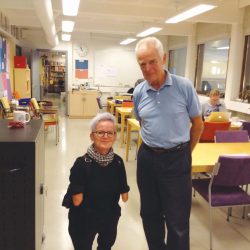
Tara and Martin standing in a classroom
Tara with Martin, a “grandfather” at Granhultsskolan

The first thing to report from Finland is that it has all the elements required to deliver an inclusive education system, but sadly it is not fully inclusive. The law and constitution strongly support inclusion. Teachers and support staff are very well educated, trusted and respected – for example there is no OFSTED equivalent. The education system is well funded. In 2014, Finland spent $13,865 per student in lower secondary school, compared to the OECD average of $10,235. Total spending on education represented 5.7% of Finland’s GDP in 2014, compared to the average across OECD countries of 5% in 2014. Funding has declined recently, but is significantly higher than in similar economies. Education at all levels is free and genuinely young person focussed. Schools have complete autonomy over the curriculum and how they assess pupil learning. Children don’t start formal education until 6/7 years with a year of kindergarten before starting school. Class sizes are smaller (average 20 pupils per class) and in all the schools I visited, teachers and support staff focus on getting to know every child to understand their strengths and challenges.

I was disappointed to discover there are still six special schools, but all of those are part of a decade long initiative to become Development Centres with a focus on building the capacity of their local mainstream schools to be more inclusive. Unfortunately because this transition isn’t monitored and there is little political leadership, limited progress has been made. In fact a number of parents I met felt progress towards greater inclusion was actually in decline. This is despite the Finnish Government ratifying the UNCRPD in 2016 and having a new UNCRPD Action Plan with a clear goal for the education system to become fully inclusive of all pupils & students. Finland has around 0.5m pupils & students in full time education and around 43,000 Disabled pupils & students in education (defined as receiving special support), 10% of whom are in special school (Source: Education Statistics Finland).

I spent a day at the Granhultsskolan in Grankulla, a Swedish speaking school with 367 1st to 6th grade pupils. I was struck in all the schools I visited by the welcoming environment. Staff and pupils wear socks or slippers rather than shoes. Finnish schools seem very community focussed and Granhultsskolan has a volunteer programme for retired people, known as “grandparents”, to help children in the classroom and provide a family feel.

I visited five schools in and around Helsinki and found a strong focus on culture, the arts, handicrafts, community and nature. I found an ethos of learning not for school, but for life. Headteachers all talked about their love for teaching and for their children. Marja Perkkiö, Headteacher, Westendinpuiston koulu in Espoo said “We don’t see difference as a big deal so the children pick up on this – we see all diversity as a good thing – it is just the ethos of the school – children and teachers respect each other”.

I was also impressed with the non governmental sector in Finland: it’s incredibly vibrant, well organised and well resourced. Disabled person led organisations, parent led organisations and service providers seem to work well together, but many talked about frustration with government officials and politicians who are complacent after years of political consensus. Some national NGOs recently set up an Article 24 action group and are lobbying the government to commit to full inclusion.

Despite some of the excellent practice I saw in Finnish schools, I arrived in New Brunswick (NB) feeling a bit deflated about the gap in Finland between the vision for educational inclusivity and the reality of Disabled pupils being marginalised due to misconceptions about additional cost and a lack of will across the teaching sector to see they should be teachers of ALL children.

New Brunswick has had a commitment to inclusion since the passage of Bill 85 in 1986, a vision maintained by successive provincial governments. Bill 85 effectively outlawed segregated education, with the closure of all segregated provision and a programme to build the capacity of “regular” schools. This was driven by long time advocate for inclusive education and Director of Inclusive Education Canada, Dr. Gordon Porter, with Julie Stone, Ken Pike, Krista Carr, leaders and parents.
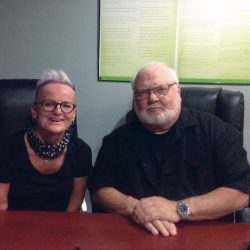
Tara with Dr Gordon Porter

In NB I visited a children’s centre, two elementary schools (kindergarten to 5th grade), 1 middle school (6th – 8th grade) and 1 high school (9th – 12th grade) and in every school I met staff who spoke with real passion about inclusion and a belief that every student at the school had a right to be there and get the support they need to learn and participate in all aspects of school life. They were honest about the challenges which inevitably include not enough money, but also the need for good practice to be shared and spaces for staff to share ideas, learning and practical assistance. For example I met a 7th grade student (14 years) in Devon Middle School with labels around communication, autism and ‘challenging’ behaviour who was spending most of her time outside the classroom because she finds the noise and movement of others difficult and it was clear she felt more comfortable learning if able to move around or stand. Teachers and resource staff (resource staff are qualified teachers whose role is to capacity build the staff team and provide additional learning support for pupils & students with Individual Learning Plans) were working together but struggling to find solutions. Yet on the other side of Fredericton, I visited Park St Elementary where all the classrooms had a range of seating/standing options, including an exercise bike for students needing to work off extra energy.

Universal accommodations (adjustments) are at the heart of the NB education system: inclusion is about ALL pupils and students – Disabled, First Nation, LGBTQI. Practically this means any student can take time out of the classroom to study elsewhere in the school; any student can request additional time for assessments. It also indicates a trust in self-directed learning for students.

Realising inclusion in secondary school in the UK is notoriously difficult and the same is true in NB. I spent the day in Fredericton High School which has 1,900 students (not that big by UK standards), where they provide a combination of immersive and individualised learning for a diverse group of learners. The Principal, Nathan Langille, and his team recognise inclusion isn’t perfect at the school and they have initiatives to help build friendships between all students. He was clear that it wasn’t appropriate to have separate programmes for Disabled students as this would “build bigger barriers between students”.
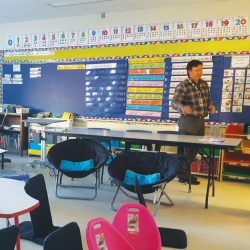
Large classroom and teacher
Park St Classroom

In NB I had the opportunity to meet senior civil servants at the Department of Education & Early Childhood Development. This was an extraordinary meeting because of the clarity of their commitment to realising inclusive education and their continuing work to develop their understanding of how to support schools as ‘common learning environments’ (Policy 322). Kim Korotkov, Head of Education Support Services said: “We have had an inclusive education system here for 30 years now. We would never go back to a time where we would separate out certain groups of children. It’s not perfect here but it’s the right thing to do.”

I am still writing up my report for the WCMT, but thought it would be timely to share some of my early thinking about what I saw in Finland and New Brunswick and what we can learn from their systems. My report to the WCMT will include ideas for how we put the brakes on Government’s plan to reverse the “bias towards inclusion” and restart progress towards a fully inclusive system.

So where do we need to start, or at the very least refresh our work In the words of Gordon Porter we need to “normalise inclusion”. We need to shift focus away from individualising Disabled pupils & students and take a whole school approach which seeks to construct community in our classrooms. We need to move away from competition and elitism. We need to acknowledge that inclusion isn’t easy and we are unlikely to reach a point where we can sit back and say we’ve done it! Inclusion is a process of continued learning, challenge and evolution AND that’s OK.

We need to provide the training and professional development climate that supports teachers to be teachers of all students. We need to ensure families are confident their local school will not only welcome their child, but have the resource and knowledge to support the child to participate in learning. We need to find new ways to mobilise the voluntary and community sector to challenge their local education providers to become inclusive and to better reflect the diversity of their community.
For me the Finnish education system sets out what we know must change in terms of valuing ALL children whatever their learning ability or style and that equality and love must be at the heart of any education system. New Brunswick affirmed what ALLFIE has said for many years – that inclusive education requires an end to segregation. New Brunswick is not only the example that proves this, but also the real time case study that shows how inclusive education is possible for ALL pupils & students, is sustainable and anything but static.

Tara Flood

Director, the Alliance for Inclusive Education

Ava’s Inclusion Story

Ava’s mum, Lesley Gearing, talks about Ava’s life and what they learned about inclusion as a family.

Ava was born in Feb 2012 and was diagnosed with Down Syndrome. We were informed of all the things Ava might not achieve, things she might not be able to do and things about her appearance we should be aware of – well clearly they had met their match with Ava. She had the most beautiful thick hair and gorgeous skin. Although the age related targets took a bit longer to achieve, Ava got there in her own time which was also down to her sassy attitude.

When Ava was diagnosed my first thought was: I’m not listening to what she can’t do or won’t do, I’m going to encourage and push her to achieve everything she is capable of. I never thought she won’t be able to access mainstream schooling, I just thought there might be a few obstacles in her path.

Ava’s first challenge was to socialise with other children. Ava was very happy in her own company. I took her to lots of baby classes and found we got mixed responses from people and that lots of classes do not cater for children with additional needs – they would rather you go to a special SEN class specially for SEN children. I did attend SEN classes put on by the hospital but I wanted Ava to know she didn’t have to be surrounded by special needs children. I knew as she got older she would know she is different but wanted her to know it shouldn’t make any difference.

Ava in a bunny suit grinning

I enrolled Ava in the local preschool, a massive step for me as I hated leaving her. She always needed a 1-1 support worker and they provided this. I shouldn’t have worried – she took the whole experience with a pinch of salt. I had nurtured a confident and I would say stubborn little lady. One day turned into 5 days at preschool with no worries apart from the fact Ava wanted to do her own thing, she did have this strong willed side where if she said no you know it’s a no.

She made lots of friends and was very popular; she enjoyed all the same experiences as any child at that age. She couldn’t walk but this didn’t stop her getting around. This was my only concern for mainstream school as the preschool was a big open space and classrooms are smaller. I didn’t want her to be trampled on, then not like school and not want to go. As usual Ava decided when she was ready to walk – the term before she was due to start school. I had a contingency plan where she could attend a dual placement; I soon changed that to just mainstream as I knew she would have no problem socialising and she was very confident and extremely nosey so all the able children would be a massive bonus as Ava would want to know and see what they were doing.

First day in reception went without a hitch. First thoughts from the teacher were about her needing slow integration even though I said I didn’t want it too slow as she needs to get into the routine as quickly as possible. After some persuasion Ava was in full time school within two weeks and she loved it; all the children were amazing with her. They knew she was different but because she would get on with it they made her feel part of it.

Ava’s confidence grew daily and her desire to try new things. I encouraged lots of activities at home and worked closely with the 1-1s in what was happening in school so I could help prepare Ava. She started swimming, which was provided by the special needs school I was going to send her to as part of a dual placement. That went well although again she was stubborn and only seemed to enjoy it when she had the pool to herself.

The benefits of mainstream for Ava were huge. It opened up a whole new world. I think children with additional needs, not just physical needs, can benefit from inclusion as it encourages them to try things maybe they wouldn’t get in a special needs environment. Friendships are a big thing too; they encourage engagement and speech also sharing and understanding. Being surrounded by 30 children instead of 8 helps them learn to wait and share. Ava was getting used to this idea in year 1.

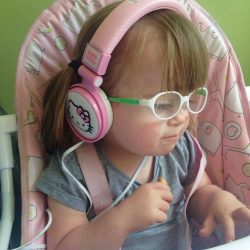
Ava wearing pink headphones

Ava was like a little celebrity in our area. I couldn’t walk through Sherwood without hearing a little voice saying “there’s Ava” or a hello from a parent – I have no clue who they are but they know Ava from their child telling them what she gets up to.

When she passed away I had never seen such an outpouring of grief before from so many people of all ages and parts of the community. We were sent hampers of various things, cards pushed through the door from people I have never heard of, unicorn (her favourite) related items left outside, bags of shopping left on the doorstep – it was endless. The most heartbreaking part of this apart from the loss of Ava was reading all the cards and messages form her school friends from all the different year groups – not just her class.

Donations towards her headstone were pouring in and money was being donated to the Sepsis Trust. But at this time we didn’t want anything from anyone so it was hard. Ava would have loved the attention which I know now she got from everyone she met, and anyone that met her knew she had left a lasting impression.

I have worked with SEN children for a long time and already knew the benefits of inclusion but when you have your own special needs child it becomes much more. I learned anything is possible with the right encouragement and guidance. I learned to understand that patience is key. Things might take that little bit longer or need to be taught in a different way.

We as a whole family learned about bravery and that you should never give up no matter how hard it seems. If there’s a will there’s a way. A lovely quote was sent to us on a poster “though she be but little she is fierce”: that was Ava.

Just before Christmas Damien Hinds, Secretary of State for Education, allocated an extra £125 m to Local Authority Higher Needs Budgets for 2018/19 and a similar amount for 2019/20. Unfortunately this is a sticking plaster which will not address a double perfect storm of a funding crisis for SEND and a crisis of anti-inclusion brought about, often unintentionally, by Government policies in England. This followed an autumn of effective campaigning by parents and education unions.

The drivers of this twin crisis are identified in a number of reports including by the Select Committee on Education and the Local Government Association. Reforms in 2014 extended the age covered by the new Education Health and Care Plan (EHCP) from 0 to 25 replacing the 3 to 19 Statement. Despite lip service to the presumption of inclusion, it placed no accountabilities or incentives on schools to be inclusive. Instead a raft of measures have created disincentives: a more rigid national curriculum moving away from creative subjects; tougher tests; the loss of National Curriculum levels and P scales for those working below National Curriculum levels; the introduction of Progress Eight measures that understate progress of pupils from lower levels of achievement; freedom for schools to introduce zero tolerance behaviour policies; growth of free schools and academies with their own admission policies; real terms reductions of school budgets by 9%; pressures and reductions in Higher Needs Budgets; reduction in powers of local authorities to nake provision forcing them to rely on independent providers; reductions in local authority advisory and educational psychology services; inadequate CAMHS provision; and lack of training for schools.

Some statistics indicate the scale of the problem. The number of children and young people with Education, Health and Care Plans or Statements has increased by 35% in five years, 2014-2018 from 237,111 to 319,819[2]. The number of children and young people being educated in specialist schools and colleges went up by 24% during the same period[3]. The number of parents taking Local Authority decisions on EHCP to SEND Tribunal has increased from 3,147 to 5,697 registered appeals from 2014/15 to 2017/18 and of those that go to a full appeal 89% are found in favour of parents.[4] In January 2018, 4,152 children deemed to have special needs had not been found a school place (up from 776 in 2010). Latest exclusion data for 2016/17 show 46.7% of all permanent exclusions (6x the rate for non-disabled pupils) and 44.9% of fixed term exclusions (5x the rate for non disabled pupils) are pupils with identified SEN (14.3% of school population).[5] A NAHT survey of 600 primary Headteachers showed 94% found it harder to resource SEND than 2 years ago and only 2% said top up funding was sufficient to meet EHC Plans [6].

The Secretary of State’s intervention, which includes £100m for LAs to build extra provision such as mainstream resource bases or more free schools and setting up an advisory panel, are too little too late to alter the imbalances in the education system. These go back to New Labour turning its back on inclusion in 2007, when Andrew Adonis, the architect of academies, told the Select Committee, ‘Labour did not have an Inclusive Education Policy’. This followed the introduction in 1997 by Labour of an inclusion policy that led to 60% of children with statements attending mainstream schools and strong LA support for inclusion. The flight from inclusion was magnified by the Coalition and Tory governments opposing the ‘bias to inclusion’. The Select Committee (July 2018) say government measures inadvertently affected inclusion. The notion of inclusion challenged the medical/special needs label model of the status quo and its vested interests, such as special school heads and proprietors, medical professionals and entrepreneurs moving into SEND provision.

These vested interests have been allowed to develop and market their segregative services to parents, who increasingly feel the mainstream offer is not meeting their child’s needs. Yet when we ask most Disabled children and their parents, they want their child to be happy, not bullied, to have friends and be included, to make progress on what they can do rather than be penalised for what they can’t do and to be valued with support and adjustment so they can thrive.

Children’s learning is continually assessed by their teachers through activities such as class work, homework, reading, and tests. There are also external assessments at specific points of a child’s education, Year 1 Phonics, Year 2, Year 6 etc. The OECD Programme for International Student Assessment (PISA) league tables compiled every three years have exercised politicians more than inclusivity. Pressure to compete internationally has led to many measures that act as barriers to children with disabilities. This is reinforced by narrow floor targets enforced by OFSTED and schools not being rewarded for the often great progress children with SEND make below the normative tests.

The main pressure on Higher Needs Budgets is from parents abandoning mainstream and seeking often expensive independent placements through the tribunal system. 6% of pupils with EHC Plans in independent schools took 14% of the Higher Needs Budget in 2017/18. The LGA studies identify that if the trend is not reversed with a big boost to inclusion in mainstream (down to 46% of those with EHCPs in 2018), this will lead to the Higher Needs Budget of English Local Authorities being between £1.2b and £1.6b overspent by 2020/21. School budgets are also seriously affecting school SEN support as teaching assistants and mentors are cut to make up the shortfall. The government need to understand the negative implications for SEND and inclusion and go into reverse.

Labour are committed to a fully inclusive National Education Service with restoration of budget cuts and full adoption of Article 24, but even if they form a government change will still be needed in attitudes, practice and policy. However, a Labour government is the best chance of re-establishing an effective inclusive education system . [7].

Richard Rieser

World of Inclusion


[1]Education Select Committee (July 2018) ‘Forgotten children: alternative provision and the scandal of ever increasing exclusions’ https://publications.parliament.uk/pa/cm201719/cmselect/cmeduc/342/34202.htm and ISOS Report on SEND Funding for Local Government Association, Dec. 2018 http://www.isospartnership.com/uploads/files/LGA%20HN%20report%20published%2012.12.18.pdf

[2] https://www.gov.uk/government/statistics/statements-of-sen-and-ehc-plans-england-2018

[3] https://www.gov.uk/government/statistics/special-educational-needs-in-england-january-2018

[4] https://www.theyworkforyou.com/wrans/?id=2018-11-21.194228.h

[5] https://www.gov.uk/government/statistics/permanent-and-fixed-period-exclusions-in-england-2016-to-2017

[6] NAHT September 2018 Empty Promises :The Crisis in Supporting Children with SEN https://www.naht.org.uk/news-and-opinion/news/funding-news/empty-promises-the-crisis-in-supporting-children-with-send

[7] Angela Rayner MP September 2018 https://schoolsweek.co.uk/labour-party-conference-angela-rayners-speech

For people subject to discrimination and reliant upon human services, the short answer to this question would be a clear, No.

When a government cuts billions of pounds from local authorities and human services, it is naive to think this would not adversely affect those people reliant on human services. What is unforgivable is that the systematic reduction of services, as a political strategy, is resulting in the segregation of greater numbers of people away from ordinary living and presenting those people as “less than”.

It is important, however, to recognise that the majority of people in Britain do not feel discrimination and are not reliant upon statutory services to live their lives. It is this population who need persuading that particular groups of people in Britain are indeed treated unfairly, by one of the richest countries in the world.

The Equality and Human Rights Commission (EHRC) reports every three years on how different groups of people are treated in Britain. This report is underpinned by carefully analysed data, providing evidence of unfairness and discrimination against particular groups of people. Although there were some improvements in some areas for some groups of people, there continues to be worrying evidence of discrimination, which for some groups has significantly increased in recent years.

The report included data on equality and human rights across society: in education, work, justice, security and the living standards of its citizens. It was disturbing that child poverty in Britain is increasing; this one indicator alone will have corrosive consequences for many children now and in their future. This trend is even more troubling for disabled children and those from ethnic minorities.

Poverty for disabled people is also increasing, which is made worse as disabled people are denied opportunities of paid employment, and denied access to ever diminishing statutory supports and benefits. Poverty results in worsening of living conditions and poor health. Even when people have been denied benefits unfairly, or have been maltreated, their right to a remedy through the judicial system has also been blocked by severe restrictions to legal aid.

Women and girls continue to be disproportionally affected by sexual and domestic violence. Gypsy, Roma and Travelling people experience discrimination across all areas of living. The level of hate crime for these groups of people and other “identity-based” groups is an increasing concern and further evidence that equality and human rights are being eroded in Britain today.

The EHRC made a number of recommendations to remedy discrimination and in particular for disabled people and education: “Government should remove its reservations to Article 24, the right to inclusive education, of the UN Convention on the Rights of Persons with Disabilities.”

The evidence that exposes inequalities will continue to be contested. It is, however, our institutions, the professions, the statutory and voluntary services of Britain who are, by association, implicated in the deterioration of equality and human rights in Britain.

Britain is debasing human rights, selling them to the highest or lowest bidder as if they were commercial transactions. This disturbing analysis of discrimination requires those who reject a segregated and a “less than” model of society to use their collective power, ingenuity and reason to work for an inclusive society that will serve to enhance us all.

Joe Whittaker

Day of Action – Report

Wednesday 21 November 2018 saw the UK’s first ever Day of Action for Disability Equality in Education. Mike Lambert reports back.

The event brought together trade unions, disabled people’s organisations (DPOs), teachers and students for a programme of activities around the country. In the evening, it culminated in a lively and well-attended reception inside the Houses of Parliament, hosted by Marsha de Cordova MP, Shadow Minister, Work and Pensions, Disabled People.

The driving force behind the day was Elaine Heffernan: a former student counsellor in further education and now chair of University and College Union’s (UCU) committee of Disabled members. She described how the idea came to her during the National Disabled People’s Summit in November 2017 where she attended a workshop on inclusive education co-run by Tara Flood from ALLFIE and Richard Rieser from World of Inclusion. “Someone at that workshop made a throwaway suggestion about having a national day of action”, she explained, “and I went straightaway and wrote a motion to my NEC.”

Heffernan’s commitment to inclusive education comes from her own experiences as a Disabled Student Counsellor and through her involvement with UCU. Like so many other teachers and education professionals, she found herself having to battle with her employer in order to obtain essential reasonable adjustments. “Too often, employers don’t seem to understand that, if you request reasonable adjustments, it’s because you seriously do need them – and they’re not just some icing on a cake that you can either choose to make a fuss about or not.” Heffernan sees a clear connection between such failures to adequately support staff and the fact that, “Disability has now taken over as the main equality area receiving legal casework support within UCU”.

Following her attendance at the Disabled People’s Summit, Heffernan held meetings with UCU colleagues, activists from other relevant trade unions and DPOs, to form a coalition of organisations keen to participate in such an event. At the same time, she contacted office Marsha de Cordova MP’s office to explore the possibility of hosting a Parliamentary Reception.

Ahead of the day, participants identified four key demands:

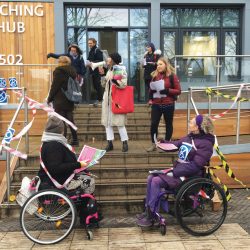
Protestors at Liverpool University with inaccessible entrances taped off

On the day, around 30 universities and colleges staged some sort of action. These ranged from small, “know your rights” and networking meetings, to larger, more dramatic events. At the University of Liverpool, which has a particularly poor record of providing access to students and staff with mobility impairments, there was a rally jointly organised by disabled students and members of UCU. To illustrate their point, protesters barricaded inaccessible areas of the campus, using the same coloured tape that police employ to cordon off a crime scene. As a result of these actions in Liverpool, management have now approached the local UCU branch to discuss improvements to accessibility in their buildings.

At the University of Cambridge, a full day of activities kicked off with the release of a report on wheelchair and step-free access around its component colleges, entitled “To Boldly Go Where Everyone else Has Gone Before”. The author was Emrys Travis, the local student union Disabled Students’ Officer who explained: “The vast majority of the colleges don’t actually have a clue how inaccessible they are… Putting out that report in the morning, I thought nobody’s going to care, because it’s very easy for people to ignore these sorts of things. But, actually, so many people read it. Lots of people were messaging me and it was exciting to see that people had hooked onto it and cared about the issue.”

At Cambridge, the day’s activities focused on trying to build staff-student networks and included: a “know your rights” session; a bring-your-own lunch, where staff and students had an opportunity to socialise; and an Art for Mental Health event in the evening. Cambridge students also joined a vigil outside the town hall organised by Disabled People Against Cuts, where candles were lit in memory of those who’ve died as a result of benefit reforms.

At the University of Sheffield, the local UCU branch prepared a written briefing for all its members, and there was a lecture and other events based on disability equality in education and Disability History Month. The Further Education sector was also well represented, with events at many colleges, including Newcastle, Cambridge Regional, Halesowen, New City and Lewisham Southwark.

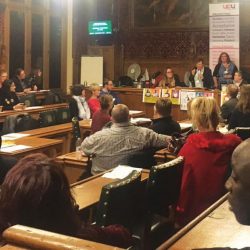
Committee room 10, a wood panelled room, at the House of Commons, full of attendees at the day of action

The Parliamentary Reception took place in Committee Room 10 in the House of Commons, and was attended by around 80 people. First to speak was Marsha de Cordova. The MP expressed her commitment to inclusive education and her continuing gratitude to her mother, who fought successfully to keep Marsha at their local, mainstream school. She was followed by speakers from University and College Union, National Education Union, Trades Union Congress, National Union of Students, Disabled People Against Cuts, World of Inclusion and the Alliance For Inclusive Education.

In addition to Marsha de Cordova, three other MPs attended the reception: Ellen Smith (Labour); Dr Lisa Cameron (SNP, Chair of Health and Social Care Committee); and Tonia Antoniazzi (Labour).

Importantly, this Day of Action served to strengthen bonds between various groups and organisations who all want to see a more inclusive education system but who sometimes approach the issue from different angles. Rachel O’Brien, NUS Disabled Students’ Officer, noted it had been “particularly encouraging and heart-warming to see Disabled students, Disabled staff and their respective unions working together so closely”. Everyone agreed the event had been a great success and that we should continue working together for an even bigger and better Day of Action in 2019.

Simone Aspis, ALLFIE’s Campaigns and Policy Coordinator, said: “I think it’s great that inclusive education is getting such solid and unequivocal support from relevant trade unions. Hopefully, we can now build on this support, make this Day of Action an annual event and, in 2019, all unite behind a single, written manifesto for inclusive education.”

Mike Lambert

Children attending schools in England and Wales may be able to get free transport to school, depending on how far they live from their nearest school and also whether they have special needs and if so, what those needs are.

All children between 5 and 16 qualify for free school transport if they go to their nearest suitable school and live at least:

The above distance criteria does not apply to children with special educational needs. They are entitled to transport if they cannot reasonably be expected to walk. This includes by reason of mobility difficulties such as them being wheelchair bound but also other needs. Something we do see in situations like this is children with autistic spectrum disorder who do not have physical needs but cannot use public transport and/or travel at peak times because of various reasons including a lack of awareness of danger, challenging behaviour and/or sensory difficulties. In such cases, Local Authorities should be providing transport. There is no distinction between whether a child attends a special school or a mainstream school in law. The key question is whether they can be reasonably expected to walk.

Different rules apply to those under 5 and over 16 years old and we would recommend securing advice on an individual basis for children outside of compulsory school age as the situation is complex and often highly dependent upon the facts.

How to challenge

All Local Authorities must have their own appeals processes in place which parents can follow if their child is refused school transport. This is often a two stage process. Your Local Authority should provide you with details of this process in any decision letter refusing transport. This is a process for which legal advice can be helpful. Should such an appeal not resolve matters, there may be further challenge. This would often be by way of judicial review proceedings for breach of the Local Authority’s duty to provide transport to those who should be considered eligible in accordance with legal provisions contained within the Education Act and the relevant statutory guidance (Home-to-school travel and transport).

Legal aid is still available for judicial review proceedings, and assessment for these types of cases is based on the child’s finances rather than that of the parent. If judicial review is appropriate, action must be taken quickly and it is therefore important for parents to contact a solicitor as soon as possible for advice.

Sarah Woosey

Partner with Simpson Millar specialising in education and community care law.

Inclusion Now 52 Spring 2019

Read about Tara Flood’s travels through Finland and Canada, the National Day of Action against Disability Discrimination in Education, illegal off-rolling, Seven Sisters Primary School, find out how you can challenge school transport decisions and more…

Welcome to the 52nd edition of Inclusion Now. Audio and text versions are in the articles below.

To receive three issues of Inclusion Now a year on publication date, you can subscribe here. Subscribing supports our work and helps us plan for the future.

Inclusion Now is produced in collaboration with World of Inclusion and Inclusive Solutions

On the 23rd January in the High Court a severely visually impaired pupil will claim that the local authority is breaching her rights in the way it arranges specialist teaching assistant support in mainstream schools.

The local authority has decided to give individual schools the responsibility for the recruitment and employment of Teaching Assistants for their Disabled pupils. This means there is no central pool of specialist support staff (specialist teaching assistants) available when a Disabled child wants to join a particular school.

The court is being asked to make a decision on whether the local authority’s policy to delegate responsibility to schools for the recruitment and employment of TAs is lawful under the Equality Act 2010 Public Sector Equality Duty, European Convention on Human Rights and UN Convention on the Rights of Persons With Disabilities around promoting Disabled pupils’ right to participate in mainstream education free from disability discrimination.

Currently, there is a presumption of mainstream education for Disabled pupils under the Children and Families Act. However, there is no requirement in law that local authorities should arrange SEND provision that will maximise parental choice of mainstream schools or promote Disabled pupils’ full participation in the curriculum.

“This is a very important case because for too many Disabled pupils, failure in mainstream schools arises when local authorities do not arrange SEND provision in a timely manner and in a way that guarantees high quality support to enable Disabled pupils to follow the entire school curriculum at all times, ie without any gaps. This leaves Disabled pupils being treated in a discriminatory way, as they are denied full participation in the school curriculum and all aspects of school life because they are Disabled and require assistance. We therefore want the court to issue guidance and rule that leaving Disabled pupils without appropriate assistance to engage in mainstream education is disability discrimination and a breach of Disabled pupils’ human rights,” says the Alliance for Inclusive Education’s Policy and Campaigns Coordinator Simone Aspis.

Anthony Gold Solicitors are representing the client and Steve Broach of Monckton Chambers is instructed counsel.

For more information please contact Simone Aspis:

Phone: 0207 737 6030 / mobile: 07856 213 837

Email Simone


January 2019 Briefing: Human Rights Legal Challenge

Come and join us at the High Court on Wednesday 23rd January as we support a court case around the provision of support for Disabled pupils in mainstream school.

A Disabled pupil and her mother are bringing a legal challenge around inclusive education practices which will be heard in the High Court on the 23rd and 24th January 2019. The judge is being asked to decide whether a local authority’s policy around arranging SEND provision complies with their duties to promote advancement of equality of opportunities in the classroom between Disabled and non-disabled pupils under the Equality Act 2010, or is discriminatory contrary to the European Convention on Human Rights and the United Nations’ Convention on the Rights of Persons with Disabilities (UNCRPD).

Under the local authority’s SEND policy, individual mainstream schools are responsible for the recruitment and employment of support staff. There is a risk as a result that Disabled pupils are left without qualified teaching assistants during lessons, if support staff are not recruited in time or are on sick leave, leaving the school for career progression or otherwise absent. They may also be directed by the head to attend to another pupil with different SEN. In the case of the Disabled pupil whose mother is bringing the claim, almost all schools said that they were not suitable for her needs because of a lack of specialist teaching assistants employed by the local authority.

The court is being asked to decide whether the local authority’s policy to delegate its responsibility for the recruitment and employment of visual impairment teaching assistants to individual schools is lawful.

What can you do?

If you are interested in supporting the family’s legal challenge, please feel free to come and join us at the High Court. You can join us:

Address: Royal Court of Justice, Strand, London WC2A 2LL (map)

Contact ALLFIE: phone: 0207 737 6030 / mobile: 07856 213 837.

Email: simone.aspis@allfie.org.uk

ALLFIE’s Policy and Campaigns Coordinator Simone Aspis says, “The problem about the presumption of mainstream education is that even though Disabled pupils have the right to be included in mainstream school, there is nothing in law that guides local authorities and schools on arranging SEND provision that enables them to participate in mainstream education on a par with their non-disabled peers.

“The legal challenge comes after the UNCRPD committee found that the UK has systematically violated Disabled pupils’ human right to mainstream education, as set out in UNCRPD Article 24. The committee recognises the fundamental role of SEND provision in promoting Disabled pupils’ human right to mainstream education without discrimination.”

Why is the court case important?

As it stands, the presumption of mainstream education in law provides no guidance on how local authorities should arrange SEND provision for Disabled pupils with education, health and care plans (EHCPs) within mainstream schools. There is no requirement for local authorities to arrange their SEND provision in a way that maximises the participation of Disabled pupils in all aspects of school life.

Why has ALLFIE become involved?

A family approached us to support their court case after visiting our website during the 2018 summer holidays. The court hearing centred around a Disabled pupil with severe visual impairment on an EHCP. There had been real difficulty in recruiting qualified teaching assistants with braille experience for this pupil and in the support which was provided to her by those teaching assistants. As a result, the pupil had not been able to participate in the curriculum on a par with her non-disabled peers. As the family are fully committed to inclusive education, we decided to support their case because the court have been asked to consider whether the local authority’s policy around arranging SEND provision for Disabled pupils with EHCPs is lawful in terms of having regard for:

What has ALLFIE’s contribution been?

What would ALLFIE like to achieve from the court case?

The presumption of mainstream education in the Children and Families Act must be interpreted to include participation in the mainstream curriculum. We would like the court to provide useful guidance on how local authorities can both comply with their duties and advance equality of opportunity between Disabled and non-disabled pupils participating in mainstream school curricula, and how they can do so free from disability-related discrimination under the Equality Act, ECHR Protocol 1, Article 2, ECHR Article 14, and UNCRPD Article 24 duties and obligations.


I am a Disabled researcher with experience of both special and mainstream education, within and outside the UK. After acquiring impairments due to a head injury, I was forced to leave mainstream high school because of various accessibility issues such as being expected to climb two sets of stairs to my classroom and to read from the blackboard. No adjustments were made for me as a Disabled teenager with mobility, visual and other impairments. As a result I was eventually forced into home education, but this was not successful – I missed my friends and being part of the school community, which had a lasting effect on my mental health.

I was overjoyed when an opportunity came up to re-start my education at the Royal National College for the Blind (RNCB) in Hereford, England. Although leaving my family and moving to a new country at 19 was not easy, I was hopeful that the college would give me a new chance to learn and grow. As with most special education schools/colleges, the RNCB proved to be socially protective and restrictive – but it did give me the academic confidence to move on to complete a BA, MA and PhD in two mainstream UK universities.

Having experience of being excluded from mainstream school– and living with the damaging effects it has had on me to this day – I was delighted when an opportunity arose to work with ALLFIE, researching the effectiveness of school Accessibility Plans.

Anecdotal evidence suggests schools are rarely meeting their duty to have an Accessibility Plan, and where they are it is often just a paper exercise with no action plan for reviewing progress. It is unclear whether families are even aware of Accessibility Plans at their children’s schools. Only 18% of the local authorities we contacted provided information to us about plans in their area.

I am looking at the gap between theory and practice by talking to parents, professionals and young people on the ground about their experiences of Accessibility Plans. Because many parents have found it difficult to attend focus groups, I have set up an online questionnaire for them and another for professionals. These have had a high response rate so far and we hope for more – please do take the survey if you are a parent or an education professional.

In my focus groups with professionals so far, the participants have been very frank about their experiences of working in schools and local authorities. One participant talked about cuts to SEND support services in their area and how this has resulted in some schools not wanting Disabled children in their school, “because they don’t feel they get the appropriate funding to deal with them properly and effectively”. The same participant explained how their local authority does not even have an Access Officer any more. Similar to other localities, the role of Access Officer has been abolished due to cuts in funding, with detrimental results for Disabled children’s education.

In my individual interviews, parents of Disabled children have explained how schools’ exclusionary practices have been traumatic for their whole families. One parent described how their son was mistreated at school, despite the headteacher promising the parent that the child would not experience any repercussions for missing homework or not doing it well enough. The detention “broke him completely, because he couldn’t trust us, because I’d promised him everything had been sorted”. This had a damaging effect, leading to the child being unable to return to school. According to his parent, he completely shut down, staying in his room, and then he “wouldn’t go out of the house for months and months at all”. Ironically, the family chose the school because it had been held out as an inclusive school. Yet, some teachers were driven to bring up standards with little consideration of children’s diverse needs and possible impairments.

Lack of trust was also reflected in Disabled young people’s points of view. A focus group participant had not received support with their reading in college for two years due to miscommunication and staff changing. As a result of the mistrust, the young person had developed skills to survive on their own. They talked about times where they used this self-reliance to benefit their peers and expressed their frustration about lack of commitment and support from college staff.

Stories like this of Disabled young people’s hopelessness in the system and parents battling for their children’s right to education motivate me to delve deep and make a real difference through this project. Over the coming months, I will continue running focus groups and interviews. The data collected through this field work and through online questionnaires will then be compared with local authorities’ responses to my FOI requests. All this will help to produce a report outlining findings and recommendations for solutions to any gaps that emerge between what should be happening – according to the Equality Act and international legal requirements and recommendations – and what is currently happening in the delivery of Accessibility Plans in English secondary schools.

We hope to contribute to Accessibility Plans’ potential to work as a driver for the development of inclusive education practice. We also hope to improve the implementation of plans, to foster a change in attitudes and aspirations. This can then lead to greater confidence in, and demand for, inclusive education and training – which in turn, I sincerely hope, will increase opportunities for independent living and inclusion in mainstream society.

Armineh Soorenian

Contact Armineh

logos for the DRILL project and National Lottery community Fund

Today OFSTED publishes its Annual Report for 2017/18 which highlights their concerns about the poor quality of Special Educational Need provision for Disabled pupils & students in mainstream education. The Alliance for Inclusive Education (ALLFIE) welcomes the OFSTED report and shares the same concerns about the lack of coordinated 0–25 strategies which is leading to the large numbers of Disabled pupils & students with SEN being forced out of mainstream education through increased exclusions and the growing insidious practice of ‘off-rolling’.
ALLFIE also shares OFSTED concerns about the negative impact that the poor implementation of the EHCP assessment process is having on the development of inclusive education practice. As well as the difficulties for Disabled pupils & students and their families caused by delays in diagnosis and the lack of specific services such as CAMHS.

ALLFIE is pleased that OFSTED want to investigate the reasons behind the decline in the numbers of Disabled pupils & students in mainstream education, particularly in Year 10 and 11 where GCSE courses take place. We also welcome OFSTED’s call for research into SEND provision in mainstream schools including working with Disabled pupils & students with behaviour that challenges.

However ALLFIE believes OFSTED should have gone further in its challenge of poor and unlawful practice – ALLFIE believes that OFSTED must look at how their current inspection framework has negatively impacted on the ability of mainstream schools to become inclusive.

“At the moment mainstream schools are feeling under huge pressure from OFSTED and the Government to hide or exclude their most ‘challenging’ pupils; many of those pupils will be disabled with challenging behaviour labels. OFSTED need to move away from the current inspection regime that places too much value on SATs and GCSEs results if they are going to encourage schools to become more confident about including a diversity of pupils and students. We need OFSTED to be brave in challenging the Government’s obsession with GCSE and SAT as a measure of success and instead work with schools to incentivise real inclusion as defined by Article 24 of the UN Convention on the Rights of Persons with Disabilities“ says Tara Flood (ALLFIE’s Director).

Click here to read the OFSTED report.

Rt Hon Robert Halfon MP Chair, Education Select Committee, House of Commons, London, SW1A 0AA 26th November 2018

Dear Mr Halfon,

SEND Inquiry

I am writing to thank you for the opportunity to give oral evidence to Committee members last week; however it is important to share our very real concerns about restrictions the Committee have placed on the parameters of the Inquiry.

I am extremely concerned that the current Terms of Reference and therefore Committee members are ignoring the UK Government’s blatant disregard for its obligations under the UN Convention on the Rights of Persons with Disabilities (UNCRPD) and in particular Article 24: the Right to Inclusive Education. Evidence for this includes:

In July this year, the Secretary of State, Damien Hinds, acknowledged the decline in inclusion in his inaugural speech. He said:

“We know there has been a steady movement of children with special educational needs out of mainstream schools and into specialist provision, alternative provision and home education…… And I want to be clear right now: this is not okay. SEND pupils are not someone else’s problem. Every school is a school for pupils with SEND; and every teacher is a teacher of SEND pupils”

And yet the Education Select Committee is missing the opportunity to include the declining numbers of Disabled pupils & students with/without SEN included in mainstream education in the Terms of Reference of your SEND Inquiry.

When the UK Government ratified the UNCRPD in 2009 it committed “to continuing to develop an inclusive system where parents of disabled children have increasing access to mainstream schools and staff, which have the capacity to meet the needs of disabled children”. However since UNCRPD ratification, policy and legal changes, including the SEND reforms, have done nothing to realise this commitment.

In 2017, the UN Disability Committee reviewed the UK’s progress on implementation of the UNCRPD. The UN Disability Committee concluded the Government’s approach to Disabled people of all ages is causing a ‘human catastrophe’. With regard to education the Committee expressed objections to the UK’s growing reliance on special schools and claimed that little had happened to implement inclusive education in mainstream settings. According to the UN, the UK should commit to ensuring all Disabled children receive an inclusive education and at the very least the Government should be considering how to embed the recommendations for Article 24 implementation as set out in its Concluding Observations document.

We are deeply disappointed that the SEND Inquiry is ignoring the impact of austerity on Disabled pupils & students with/without SEN and the impact of endless cuts to SEN support services at a local level, which is driving Disabled pupils & students with/without SEN out of mainstream education, resulting in increasing numbers of Disabled pupils & students with/without SEN being out of education entirely. Instead the SEND Inquiry seems to only want to focus on highlighting tweaks to the current SEND reforms rather than shine a bright light on the ideology behind the reforms that is focused on the Coalition Government’s 2010 commitment to ‘reversing the bias towards inclusion’ – a bias that was proved not to exist.

When you became Chair of the Education Select Committee you were quoted as saying the Committee ‘should be more effective in considering social justice issues of disabled pupils and students with SEN in education system when scrutinising Government’s education policy and legislation’. If you still believe this you should stop this sham of an Inquiry and broaden the Terms of Reference to include an investigation into the Government’s shameful disregard for the human right to an inclusive education for ALL Disabled pupils & students with/without SEN.

It is our belief that unless there is a fundamental shift in the focus of the SEND Inquiry to include the Government’s UNCRPD obligations, the Education Select Committee is failing in its role to ‘monitor the policy, administration and spending of the Department for Education…’ and in this case the impact on Disabled pupils & students.

I look forward to your response.

Yours sincerely

Tara Flood, Director

Supported by

ALLFIE’s campaign for Inclusive Education as a human right is backed by funders and donors who reject the systemic segregation of Disabled people from society.