Please ensure Javascript is enabled for purposes of website accessibility Skip to main content

So this is my last issue of Inclusion Now as its editor! After four years I’m taking the battle for inclusion into the field of technology, but I won’t forget my years as ALLFIE’s Communications Officer.

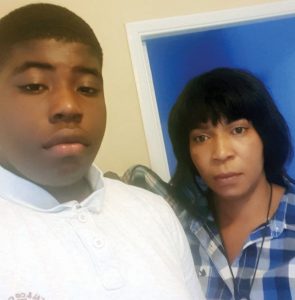
What have the last four years brought us? Well although the situation for disabled children and young people in schools is pretty dire, both the movement for inclusion and ALLFIE itself are in a stronger position than they were when I arrived. The campaign has been reinvigorated by a huge influx of families up in arms about the lack of support their children are receiving in school – see the article from a Communities Empowerment Network (CEN) advocate on page 6.

ALLFIE’s recent 38 Degrees petition called for an end to disabled children being forced out of mainstream schools because of cuts. The fact that it received a massive 86,000 signatures demonstrates that this message is now striking a chord. Parent power is becoming a real force to be reckoned with. Not only that, people are increasingly recognising that this is an equality and human rights issue and that children deserve full inclusion from nursery through to college and into adult life.

CEN’s work focuses not just on SEN/disability but also on race and other equality issues, and on page 16 Zahra Bei looks at the intersection of these factors in more detail. And on page 8 Richard Rieser looks at progress (or lack of it) on the Sustainable Development Goals, and rightly points out that inclusive education is one of the keys to the planet’s future sustainability.

The fearless, rights based campaigning approach reflected in the pages of Inclusion Now is one that I won’t forget. Nor will I forget the consistency with which ALLFIE’s work is based on the social model of disability, or the power of working for an organisation led by disabled people. I hope Inclusion Now and its generous sponsors, Inclusive Solutions and World of Inclusion continue to go from strength to strength.

Jessica Cahill

Advancing School Transformation from Within

David Towell and Gordon Porter look at how good schools are transforming culture, organisation and practice to ensure all students are present, participating and achieving.

In his great book, Creative Schools, Sir Ken Robinson invites us to consider afresh the fundamental question: ‘What is education for?” His answer is that the aim of education is to enable students to understand the world around them and their talents so they can become fulfilled individuals and active, compassionate citizens. If our schools are to achieve this goal, we must promote schooling with 1) a broad and flexible curriculum, 2) creative and personalised approaches to learning, and 3) a culture which celebrates the full range of diversity among youth. Inclusion Now readers know this!

But we also know that to deliver this vision in practice is challenging and very few places across the globe have achieved what we can understand as an inclusive education system. Over thirty years, the Canadian province of New Brunswick has developed a very supportive policy context for advancing inclusion (see Inclusion Now 47). In many other places the context isn’t so supportive. But either way it is the schools themselves that have to do the serious work of transforming culture, organisation and practice to ensure all students are present, participating and achieving. To complement our previous study, we have produced a new guide to how good schools are doing this.

We invited leaders (parents and advisers as well as teachers and principals) in eight such schools that we know to tell us their story. We chose these case studies from a divergent range of political and cultural contexts: three from New Brunswick; three from countries in South America and two from London. Of course the level of resources of all kinds available in London is considerably different from those in La Paz, Bolivia. But we think there are many common features both in the values and the processes involved in transformative change.

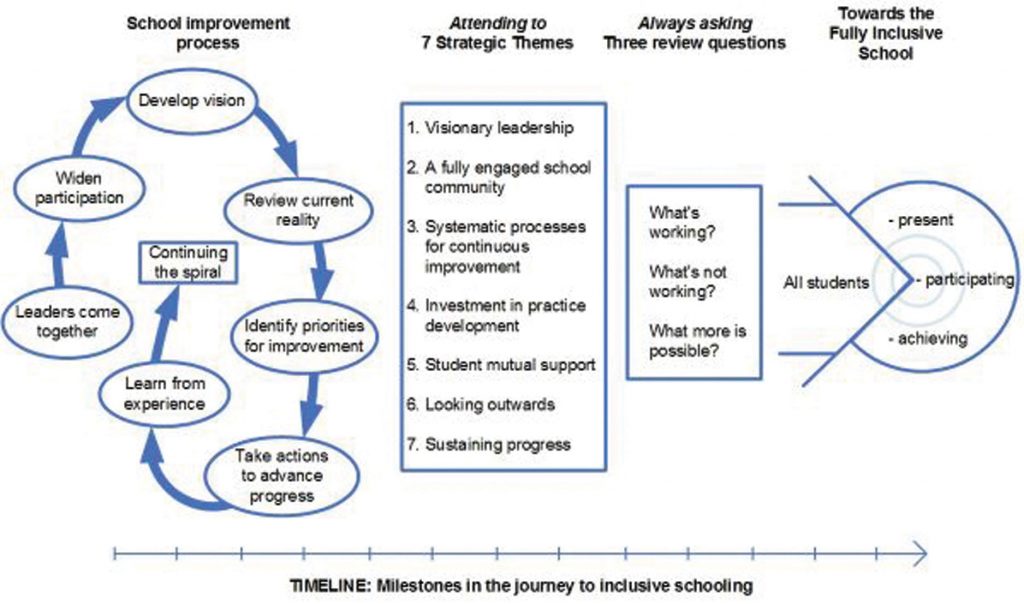
We have summarised these common features in the form of the diagram below. Our guide elaborates on all of these with examples from the case studies. Here we can highlight five key elements.

Schools are small – and sometimes not so small – communities embedded in wider networks and communities, especially the larger education systems and localities from which students, families and many staff come. School transformation requires the active engagement of the whole school community. Inclusion is everybody’s business and fellow students are the critical resource.

There are many possible drivers for change. Some initiatives start outside the school, for example in new legislation or the organised pressure of families; others start inside, for example, in new leadership articulating inclusive values or the need to respond to more diversity in student admissions. In all, transformation involves a lengthy and more-or-less systematic process of school improvement which we represent as a spiral in the model. Leaders of various kinds come together to take responsibility for shaping the future and invite wide participation in exploring opportunities for change, clarifying the school vision and taking actions, small and large, to close the gap between ideals and current experience.

Click for diagram description
Click image for diagram description


To advance this spiral, the vision needs to be expressed in concrete ways like the 16 indicators of whole school and classroom performance in UNESCO’s Reaching Out To All Learners.

Many things may need to be done to improve the school’s physical accessibility, provide teaching assistance and obtain necessary aids to learning, but the critical investment is in practice development, focused on class teachers. We are talking here about flexibility in the curriculum, Universal Design and self-directed learning as much as differentiated instruction and individual adjustments. This is not so much a question of teacher training but rather of creating a continuous learning community among school participants.

David Towell & Gordon Porter

Case study: developing inclusive education in Newham

The borough of Newham in East London is the most ethnically diverse local authority in the UK and one of the poorest. Despite widespread “disadvantage” children in the borough’s schools achieve above national averages based on the government’s measures of attainment.

In 1986 the local council adopted a policy of inclusive education and over ten years closed six special schools and set up a system to support all schools to include all children and young people. The main thrust of the policy was that children would attend their local school from the early years. Most of the children transferring from the special schools moved to their local schools and in addition, “resourced schools” were established.

Resourced schools were a response to some parents’ concerns about children being separated from friends and also from teachers who knew them and their support needs well. So, gradually as the special schools closed, some resourced schools were set up. Resourced schools receive a budget allocation for a specific number of children (between 10 and 15 in a primary school and around 30 in a secondary school) with high support needs. They employ additional teachers and support staff. Today fifteen resourced schools support around 250 children and young people with complex autism and profound and multiple learning difficulties and the overwhelming majority of children and young people attend their local schools.

The policy was developed on the basis of a human rights approach to education. The council realised that it was bizarre to continue to segregate children and young people on the basis of impairment labels. By the early 1980s there was enough evidence of the negative outcomes of segregation that the council was very keen to make sure all children were included in their communities and that the whole population became aware of the benefits of learning and living together. Segregation had led to social isolation and unfulfilled lives and the local community was not benefitting from the contributions of learning disabled citizens.

Each school had to learn how to include previously segregated children and young people and they rose to the challenge brilliantly. The most common comments were that it was just about good teaching and learning and person-centred practice. It soon became clear that inclusion led to better, more humane schools which also improved when measured against government attainment targets.

Cleves primary school and Eastlea secondary school are both inclusive schools resourced to include children with “profound and multiple” learning difficulties in addition to local children with the whole range of impairments.

Eastlea was covered in Inclusion Now 45. Cleves primary school was newly built and specifically designed to be accessible for all. Children are empowered to support and care for each other and it is a real privilege to witness how very young children are naturally inclusive and giving when adult attitudes do not get in the way. The first head teacher was specifically appointed to run an inclusive school and of course then all of the staff knew that they were coming to work in a school which included children with complex additional needs. Cleves is one of the highest achieving primary schools in the country proving that an inclusive school in a “disadvantaged” area can be excellent on every measure and dispelling the myth that including disabled children has a negative impact on other children – quite the reverse.

Cleves school

At the time of writing inclusion is under threat as the UK government’s policies are not supportive. There is now an enormous emphasis on academic attainment and nationally it seems to have been forgotten that academic content accounts for a minority of learning in schools. Children learn a lot from the other young people they spend time with as well as from teachers. We learn the skills of friendship and social relationships and our moral values are challenged and shaped. We learn about sex and hopefully, we have fun. But we also learn about power and control and how to have a voice when things are not right. Children and young people with additional needs have the human right to be included in the rough and tumble of ordinary life. Schools don’t have to be perfect before disabled children are allowed in. They simply need to be good and to have an ethos that everybody belongs and be willing to find out what works from people who have trodden the path before.

Linda Jordan


Don’t cut our children out!

SEND Advocate Lucy Bartley and two parents joined SEND Action and ALLFIE at the Royal Courts of Justice for the case: Disabled children v Secretary of State for Education and Chancellor of the Exchequer.

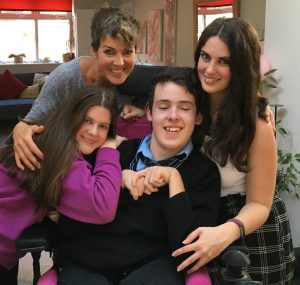
Lucy Bartley with son Samuel and two daughtersSEND Advocate Lucy Bartley and two parents of Disabled children, Iffy and Delphine, that Lucy is supporting joined SEND Action and ALLFIE at the Royal Courts of Justice for the case: Disabled children v Secretary of State for Education and Chancellor of the Exchequer on 26th and 27th June.

This case was about whether underfunding of SEND support is unlawful. Unfortunately as Inclusion Now goes to press we have heard that the court case has been lost. But the surrounding upsurge in public feeling and parent activism has been noticeable. Lucy, who works for Communities Empowerment Network (CEN), had this to say; “I attended this historic court case, both in my capcity as SEND Advocate and as a parent of a disabled child to support disabled pupils’ human rights to mainstream education.

“At the Royal Courts I was joined by two of my clients who have first hand experience of the discriminatory impact of the current education system on their disabled sons and who spoke movingly of their desire to see their children thrive and be included rather than excluded from school and of the need for the government to support the right to inclusive education in both legislation and funding. I spoke of my disabled son Samuel’s experience of being included in mainstream school throughout his education and of his progress now to college and I suggested that even now other children are unlikely to experience inclusion like Samuel because disabled children are routinely being segregated and excluded. I spoke of the impact of this segregation upon society.”

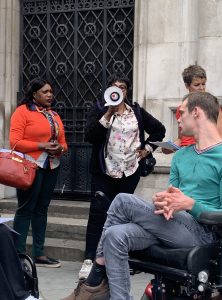
Lucy Bartley with Iffy and Delphine outside the Royal Courts of JusticeOne of Lucy’s clients, Iffy, whose son Samuel attends mainstream secondary school and is constantly being threatened with exclusion said:

“Mainstream schools use the slightest opportunity to exclude children with special educational needs and disabilities (SEND) or learning difficulties from school. Due to lack of adequate resources or funding to cater for their special needs, these children are being pushed out of mainstream classes and abandoned with an inadequate education. This has led to frustration both for the children and parents. When a child is excluded from school, there is a tendency that he/she will begin to hang on the street because of the feeling of rejection by society. It is from this kind of thinking that they begin to form gangs and get involved in knife, drug and other types of antisocial behaviours. At the end of the day, a child’s school is responsible for their education. Mainstream schools use exclusion as routine for a child with complex needs or disability because there is no adequate funding from the government to support the child at school, and this will lead to frustrating the child.

Iffy and Samuel“My son (and also my friend’s son) was diagnosed with ASD and speech and language disorder, and has continuously been excluded from school and this affects him and myself. It is not easy for a child to be out of school and all manner of stupid things go through their minds. I am worried that mainstream schools use the pretext of lack of sufficient funding to exclude children with special educational needs. Rather than funding special schools, it will make sense if more money is allocated to mainstream schools so they can provide adequate support to SEND children. Special schools do not help at all. Children who went to special school end up worse. Both government and mainstream schools should demonstrate moral accountability and duty of care for these children. Excluding them from school is counterproductive because it isolates them from society and they resort to self-help by hanging on the streets and misbehaving.

“It is immoral to exclude a SEND child due to his/her disruptive behaviour. I do not support disruptive behaviour but it is important to understand that a SEND child is most likely going to have challenging behaviour, and this is as a result of that child’s disability. It will make more sense for the children, their parents and society if schools make adjustments to support these children to achieve and behave normally rather than exclude them. Disruptive behaviour from a SEND child should be considered from the angle of the child’s condition rather than a choice.

“Every child should be able to go to school without the fear of being discriminated against for actions beyond their control. I believe that government should make more money available to mainstream schools so they can stay pro-active in their engagement with SEND children’s high level support needs. Exclusion can disrupt a child’s life and so it makes no sense to use a disruptive exclusion policy to disrupt a child’s life.”

Lucy said of the court case:

“In summary, the court case itself was complex and detailed, in the hands of competent barristers and a very humane and often humorous judge. The case highlighted the interplay between legislation and disabled children’s rights and whether the government had given due consideration to its statutory responsibilities under the Equality Act, the PSED (Public Sector Equality Duty) and the UN Convention on the Rights of Persons with Disabilities Article 24. It was an education for me and for my two clients – well they were simply glad to be there and to be finally able to tell their story which was important.

“Both CEN and ALLFIE hope this case will evidence the impact that the funding cuts are having for disabled pupils in or wanting mainstream education and the importance of investing in a fully inclusive education system and implementation of the UNCRPD Article 24 – and that it will result in a change in government priorities.

“CEN and ALLFIE will continue together to campaign for a fully inclusive education system. If you would like to show your support please sign the petition below and do get in touch with CEN to see how you can work with us.”

ALLFIE’s petition:

www.you.38degrees.org.uk/petitions/don-t-shut-disabled-people-out-of-mainstream-education

Communities Empowerment Network:

www.cenlive.org

Intersectionality & Inclusion

Secondary school teacher and researcher Zahra Bei reflects on the intersection and construction of race and SEND.

The term intersectionality was coined by American legal scholar Professor Kimberlé Crenshaw in the late 1980s. Crenshaw highlighted how Black women experience interlocking and thus even more harmful structural forms of exclusion and bias in employment. Black women, she argued, stand at the intersection of both “race” and gender bias or rather racism and patriarchy and are “likely to get hit by both”. Intersectionality examines this compounded experience of discrimination, which results in even greater marginalisation and inequity.

“Intersectionality reminds us of the importance of coalitions and allyship; it reminds us to be humble and to look for who is missing in the room” (Zeus Leonardo and Angela Harris, 2018, p.20)

Intersectionality is a theory not of identity but of multiple, intersecting systems of oppression focusing on power relations, on the multiple social and structural ways people are marginalised. In UK education it is not yet a commonly used term. It is routinely applied in sociology as well as in trade union and activist circles, frequently as a welcome lens for understanding the multiple overlapping forms of discrimination a person can suffer because of their race, disability, gender, sexuality or class for instance – most of which are protected characteristics under equality legislation.

Kimberle Crenshaw

17 years too late

I first heard the term intersectionality at an Institute of Education seminar in 2016 when I had been a teacher for 17 years. It was a transformative moment in my career and has moved me significantly closer to inclusive education.

Over two decades I planned hundreds of lessons, marked thousands of books and exam papers, and attended what seems like a million staff meetings. As a teacher I have been tasked with the enormous responsibility and privilege of directly impacting the lives of around 10,000 children and young people. Each came to my classroom with a myriad of histories, cultures, languages, needs, wants, strengths, fears and dreams. As a “good teacher” I strived to serve each of those pupils. I wanted to know who they were and who they could be. Over time however, I became frustrated in mainstream education where the focus was increasingly on exam results, Ofsted inspections, data collection, and rigid uniform and behaviour policies instead of young people’s growth. I grew tired and exasperated with “not having the time”. I also became ill.

A few months later someone suggested I try teaching at the local pupil referral unit. “Smaller class sizes, a greater focus on pastoral care and the needs of the child”, I was told. Soon after I started at the PRU it became clear the curriculum, facilities and resources were seriously substandard compared to the average mainstream school, but I felt hopeful again and relieved from the pressure-cooker conditions that had almost driven me out of the profession in less than 10 years.

Noticing is not dismantling

At the PRU I soon noticed each year around four out of five students happened to be boys and virtually all were on free school meals. Two thirds were also racialised as Black, Mixed or Asian. I later learnt all students referred to the PRU are coded as SEND (even if what led to the exclusion or referral may have been a one-off incident). I was alarmed to learn this is not routinely communicated to the students themselves or their families. There was little talk (and I suspect understanding) of pupils’ individual needs. The focus was on fire-fighting, the PRU functioning as a “holding pen” in many cases: excluded Black and mixed-race boys with SEND have a higher chance of going to prison than of successfully returning to mainstream education.

Noticing is however not enough. Teaching some of the most vulnerable, racialised, economically disadvantaged and marginalised children in the nation, I worked hard on inclusion given the extreme exclusion on multiple levels the students faced. The lack of SEND training and absence of a school SENCO (astonishingly, PRUs are not legally required to employ one) were significant barriers. Still, I did not adequately and critically work to dismantle some of the inequities, disparities and injustices staring me in the face. In the main I accepted this was just “how things were” for us and our students.

Intersectionality-minded practice

An intersectional analytical lens would have required me to ask questions such as why are Black and Brown boys disproportionately excluded? Which schools/policies/processes are responsible? Are Black boys appropriately assessed for SEND and by whom? What is the child’s view, and the parents’? What are we doing to address wider educational inequities? How do we explain ethnic disproportionality in the identification of SEND and how will we address it?

In the case I described, it would have facilitated targeted and powerful interventions at school level by acknowledging multiple axes of difference and their impact. There is a specificity to the Black male experience in education and the microaggressions they suffer which warrants focused attention.

  1. The profile of excluded black children does not match the profile of excluded white children.
  2. Black students receive harsher punishments.
  3. There is a long history of Black youth over-represented in special education and segregated low-status educational settings
  4. Black students have been over-represented in school exclusions for the past 20 years or more.
  5. Black students are under-represented in so-called high-ability sets, which we know caps their achievement and disadvantages them.
  6. Black Caribbean and Mixed White & Black Caribbean pupils are substantially overrepresented for SEMH (social, emotional and mental health needs).

A 2018 Oxford University study is the latest in a long line of research attempting to shine a light onto the over-representation of Black boys in SEND. For instance some labels such as SEMH and MLD (moderate learning difficulties) are open to significant interpretative variance, as well as stigma. Too often these labels do not translate into specialist support, compounding disadvantage. Black children have been historically overrepresented in special education and research has told us for decades that routine misidentification of Black children’s ability, biased assessments and a lack of Black practitioners all contribute. The Oxford study suggests the data may point to “inappropriate interpretation of ethnic and cultural differences including teacher racism, low expectations and a failure of schools to provide quality instruction or effective classroom management”.

An intersectional lens sets out to problematise raced, classed, ableist and gendered patterns of inequality and disparities. It arms us with critical tools of analysis as well as resistance: intersectional educators must do both.

Conclusions

I often talk about how I believe I/we as teachers collude with oppressive systems, language, policies, processes and cultures. We are a product of our own socialisation and societal notions of ‘normalcy’ after all. I admit I/we often end up compounding bias, discrimination and negative outcomes suffered by those we are trying to help. Our good intentions are neither here nor there.

We can however work to reverse the distortion: when we deliberately choose intersectionality frames we cannot help but notice who is missing from the room. What must follow is daily commitment to become intersectionality-minded educators, constantly checking our own biases, working to dismantle our own deficit, majoritarian thinking as well as the wider cultures, structures and barriers that prevent true inclusion for all. This is a perpetual conscious process for ourselves and everyone in education so that together we can tear down the walls of the room in education.

Zahra Bei, with Helen Knowler and Chris Bagley

Zahra is a secondary school Black teacher, academic researcher and Co-founder of No More Exclusions: www.nomoreexclusions.com

Sustainable Development Goals

How are the UN goals shaping inclusive education?

According to UNESCO globally half the 57 million primary children not in school are disabled. At least a third of the 243 million children who have not completed primary school are disabled, and education for most children in school is poor.

In July 2019 a High Level Political Forum was held on the Sustainable Development Goals (SDGs). It examined progress in “Empowering people and ensuring inclusiveness and equality”. It reviewed six SDGs, including Goal 4 on inclusive education and lifelong learning for all. 47 countries presented voluntary national reviews, 2,000 Non-Governmental Organisations (NGOs) attended, including Disabled People’s Organisations (DPOs) along with 100 countries and other international agencies. Three key messages that came out were:

  1. The international community is not on track to achieve the SDGs. A more ambitious and transformative response is urgently needed;
  2. The 2030 Agenda and the Goals remain the best roadmap to ending poverty and achieving sustainable development. The international community must swiftly move out of its comfort zone to pursue new ways of collective action;
  3. Inclusive and equitable quality education for all is critical to achieving the 2030 Agenda. Platforms for cooperation, new partnerships, more support for teachers and increased investment in universal quality education and lifelong learning are imperative.

The main issues identified around implementing inclusive and equitable quality education were:

  1. Increasing access to quality education for all is essential to address challenges like climate change, empower people with new skills and opportunities for employment and economic growth, and uphold peaceful, effective societies;
  2. Shortcomings in equality and inclusiveness are among the biggest barriers to achieving Goal 4, in particular for girls and for children in areas of conflict. Countries climbing the development ladder cannot afford to leave one child behind and must identify and break down barriers;
  3. Goal 4 requires a revolutionary reimagining of education in the modern world. There must be platforms for cooperation, new partnerships, greater support for teachers and investment in universal education and lifelong learning.
  4. Education is central to achieving the 2030 Agenda and preparing for the future. Accelerated action in higher education and lifelong learning can enable people to engage in highly skilled jobs and improve their livelihoods, apply new knowledge and innovative thinking to challenges and attain stability and peace.
  5. A realignment of education systems is required to meet the learning needs of individuals, reflect the modern world while ensuring that traditional knowledge is passed down through generations, tap into learning technologies and digital infrastructures, change mindsets around the value of education and ensure no one is left behind. Learning must focus on building proficiency in reading and maths, and the Goals should be incorporated into education.
  6. Educational barriers to girls, youth in rural areas, persons with disabilities, refugees and migrants, and children in areas of conflict must be urgently addressed. Infrastructure is required in rural areas and lower income countries to ensure children can go to schools with electricity, sanitation and clean water, and to break down digital barriers.
  7. Current investment in education and in supporting teachers falls far short of what is needed to achieve Goal 4.

Following the Global Summit on Disability (see Inclusion Now 51) a programme is under way, coordinated by Sightsavers ,to address key disability development issues, including inclusive education, in Nigeria, Kenya, Tanzania, Bangladesh, Nepal and Jordan. £30m of Department for International Development (DFID) money has been earmarked. Following consultation conferences in each country, at which more than half the attendees were disabled people and their organisations, priorities were developed and then NGOs must develop projects. Once approved by a very bureaucratic system the projects are carried out. Eleven international disability NGOs are the partners.

There are problems with this approach. We as DPOs already know what will work in developing inclusive education from our experience as disabled people and many micro projects over the last 30 years in developing countries. The barriers are clear. No DPO can bid for a project, as there are too many complex accountability measures built in. The projects are being implemented by non-disabled professionals. The argument is that DPOs do not have the capacity to run these projects. But surely the solution is to develop their capacity as part of the project. Otherwise there will be a danger of a continuing NGO charity model. The complexity is there because of hostile press reaction to development funding which can be threatened by corruption. The best remedy to this is to get funding down to community level and give them collective oversight of their resources.

It is vital DPOs engage with this agenda and a good start was made when representatives from 60 attended a seminar in London in June hosted by Reclaiming Our Futures Alliance, of which ALLFIE is a member, and DFID. Now we need to find ways to link DPOs in the North and South and develop joint capacity. The relaunch in New York last June of the Commonwealth Disabled People’s Forum will be useful to this. This was a well-attended event, supported indirectly by DFID through the Disability Rights Fund. Representatives from 25 Commonwealth countries elected an executive committee, adopted a revised constitution and developed a work programme. (www.commonwealthdpf.org)

The World Bank has identified up to $1billion to develop inclusive education over the next three years. We need to find ways of using this resource to develop inclusive education so that it is more than just developing reading and maths, important as these are. Most important is that disabled children have high self-esteem. The need is urgent for us all to raise our game. The developing climate crisis, growing inequality and growth of bigotry and prejudice threaten to engulf us all. Now is the time for more international collaboration to solve our planet’s problems including the full involvement and inclusion of disabled people and effective inclusive education around the world. We have a mountain to climb, but humanity’s survival depends on us!

Richard Rieser

General Secretary Commonwealth Disabled People’s Forum and World of Inclusion

My first article for Inclusion Now about my visits to Finland and New Brunswick, Canada focused on some amazing practice I saw in schools, as well as challenges for education in both countries. In this second article I talk about my Charter for Change based on learnings from my trips. Why a Charter for Change? Because in my view the time for tweaking around the edges of what is a fundamentally broken education system in England is over. The current system is based on the requirements of an industrial past where the job of schools was to create a workforce ready for large scale industry. The view was that Disabled people didn’t fit that model and there was no value in giving us an education so we were hidden away at home or in institutions.

In the 21st century a very different education system is required, one which is aligned with inclusivity and human rights and supports and encourages creativity, flexibility and personal and collective resilience. 21st century pupils and students need the skills and knowledge to work collaboratively in diverse and inclusive workplaces, as well as participate in multicultural communities. There must be a fundamental shift in how education is understood, its purpose and how it practically supports teaching staff to be teachers of all children – and how it supports and facilitates the learning of all pupils and students.

The charter sets out the changes required to create a fully inclusive education system. I want it to start a revolution in education – a shift from singling out certain pupils and students for ”special” segregated services to laying the foundations of a truly inclusive education system. I hope ALLFIE is able to use my report in its vital campaigning work and though I am no longer ALLFIE’s Director, inclusive education is in my DNA so I will continue to be a huge supporter and ally!

Tara Flood

Charter for change

1: Legal and regulatory frameworks that genuinely support the development of a fully inclusive education system:

2: A whole school approach to inclusion:

3: Build parental confidence and demand for inclusion:

4: Support and funding for advocacy organisations:

5: Resourcing inclusion:

Tara’s full report is at https://bit.ly/2mfoGtn


Some of the accounts have been truly shocking and have highlighted why this research and the role of ALLFIE is so important. The findings suggest that schools are in breach of national and international laws on human rights. The report sets out recommendations which could help to address some of the educational, social and physical inequalities in schools, delivering vast improvements in experiences and outcomes, and ensuring the rights of Disabled young people are not only protected but fully realised.

So what are Accessibility Plans? An Accessibility Plan sets out how, over time, the school is going to increase access to the curriculum for Disabled pupils, improve the physical environment of the school to increase access for Disabled pupils and make written information more accessible to Disabled pupils by providing it in a range of different ways. This is a key document that seems not to be well publicised. According to our online survey almost 80% of parents who responded were not aware of Accessibility Plans at their school.

Since 2010, according to figures from the Department of Education, the number of children and young people labelled as having special educational needs via an Education, Health and Care (EHC) Plan, has increased from almost 230,000 to over 350,000. That is a 55% increase and does not include children who have no formal diagnosis yet. Given such a substantial rise, knowing about Accessibility Plans and how effective they are is vital. Participants told us that delivery of written information was variable. Disabled young participants generally agreed that provision of accessible information was poor and most participants experienced long delays before requested accessible information was provided.

Education professionals taking part recognised that the delivery of information in alternative formats was reactive and unpredictable in their schools, with many stating that accessible documents would only be provided if specific requests were made, rather than as standard practice for Disabled pupils. In general, the professionals did not take responsibility for this shortcoming themselves or assign responsibility to their institutions; instead, they felt factors such as lack of funding and insufficient uptake by pupils were more significant.

From responses to our online questionnaire, the majority of parents reported that in the absence of accessible information they were often forced to scour a school’s website hoping they had not missed news regarding school activities. Some said they had to ask staff or other parents repeatedly for the information; for others, news would often come as a surprise or be found out by chance.

Participants identified similar physical access barriers in schools. A parent shared her experience of visiting the secondary school her son wanted to attend: ‘And then there was certain parts of the building we couldn’t get into … it just got worse and worse and worse.’ She added that they were not prepared to adapt the school environment. Some parents discussed sensory barriers such as noise, smell, visual clutter as well as inappropriate social cues faced by their children. For most parents, barriers were often exaggerated by professionals’ inflexible and unhelpful attitudes. In relation to access, it was evident that Accessibility Plans did not always comply with legal requirements.

Disabled young participants felt there was no level playing field in respect of their ability to participate in classroom activities and the school curriculum, particularly when it came to assessments. Their experiences in the classroom showed that the support they received from teaching staff was ad hoc. Parents were frustrated with professionals’ insensitive attitudes in making reasonable adjustments to meet their children’s impairment-related needs. Whilst it was recognised that some staff were supportive, others lacked the ability to consider students’ diverse needs; they were unable to make appropriate adjustments and instead encouraged independent studying. The education professionals, for their part, felt that an effective and fully implemented Accessibility Plan would be useful to promote and ensure equality in teaching.

Overall, the Disabled young people and parents felt let down by schools and unhappy about prejudiced attitudes amongst staff and a lack of understanding of their individual needs. Although some professionals were aware of the shortfalls and put them down to cuts in school budgets, others refused to recognise gaps in access and support services. Whilst there are increasing pressures on schools with excessive accountability measures and increased stress and bullying amongst staff, discrimination against Disabled young people and their families is unacceptable. One mother wrote: ‘It has broken us as a family. So many breakdowns, tears and I’m a lot older than I should be.’

By embedding positive inclusive practices in schools, all children will learn what inclusion is and aspire to a better world where social justice, equality, citizenship, participation and human rights, as well as friendship, are celebrated. The necessary changes in the current education system will benefit all learners and help to create an inclusive environment for everyone. As one of the parents said: ‘… an inclusive school is a great benefit to everybody – not just children with disabilities and additional needs, but it’s a great benefit to all of us, to share in our humanity … it just makes us into better people, doesn’t it?’

Dr Armineh Soorenian

The Being Seen: Being Heard project has been co-produced with RIP:STARS and ALLFIE. The RIP:STARS (Research into Practice/Policy: Skilled Team with Ambition, Rights and Strength) are a group of disabled young researchers from Coventry. The group were trained by academics Anita Franklin and Geraldine Brady to co-lead research. They previously examined quality and rights in Education, Health and Care Plans and presented this evidence to the Education Select Committee SEND Inquiry.

The project brings together the RIP:STARS with twelve leaders of the Disabled People’s Movement to provide a space:

Together young people and leaders will reflect on their lived experience and identify their values and passions, strengthen their skills and better understand the qualities of a leader. These intergenerational exchanges will address the disconnect in deep conversations, uncovering the importance of what makes a leader and the need to create new leaders.

As Tom, a RIP:STAR says:

“It is important that disabled young people learn about the history of the disability movement. Until we became RIP:STARs we had not heard of it. That made us angry. It is good that we can now turn our anger into learning skills and working with these important people to make a change for all disabled young people – we can’t wait to make and share our graphic story.”

The leaders will bring to life the history and principles of the Disability Rights Movement and encourage and support their successors to become the next generation of leaders. The project will create an online graphic story communicating the history and unique role of the movement.

There will be opportunities for participants to lead sessions on areas related to their interests. Disability rights leaders have developed skills in conveying their messages, and this project offers an opportunity to share those techniques.

The project will look at how current leaders in the movement have influenced others. One of the most influential figures in the UK movement is Baroness Jane Campbell, who worked her way up from grassroots activism to promoting the messages of the Disability Rights Movement in Parliament. Baroness Campbell used her skills and experience to create a story that would influence others to take action. We also have Richard Rieser, a lifelong campaigner for inclusive education and the instigator of Disability History Month. This is exactly what the Being Seen: Being Heard project is about: turning talk into action.

Leadership is necessary to help change and challenge perceptions but also to ensure the continuation of the principles and values of the Disability Rights Movement. This project will remind others of the many achievements by activists at the heart of the movement and the importance of leadership in increasing influence, conveying messages and achieving action.

In September 2019 the National Audit Office (NAO) produced a report examining the level and effectiveness of support for pupils labelled as having ‘special educational needs and disabilities’ in mainstream schools.  The report was written with the realisation that appropriate support can have a dramatic effect on the well-being, educational attainment and long-term life prospects of Disabled young learners.

The report indicates that the funding arrangements for 2018-19 incentivised mainstream schools ‘to be less inclusive, by making them reluctant to admit or keep pupils with SEND who can be costly to support.’ (NAO, 2019: 7).  The report also acknowledges that such measures could be considered simply reactive.  The document estimates that in 2017-18 ‘the cost per pupil in an independent special school was £50,000, compared with £20,500 per pupil in a state special school, and up to £18,000 per pupil with an EHC plan in a mainstream school.’ (NAO, 2019: 8), demonstrating that pupils attending mainstream school in fact require less funding than those attending special school.

In the report the NAO argues that the Department for Education (DfE) did not fully assess the likely financial consequences of the 2014 reforms, the most significant of which was the Children and Families Act (CFA, 2014).  Despite new legislation, more pupils are attending special schools than ever before, and the NAO believes that the DfE and local authority response to overspending on high-needs budgets is not making the system sustainable.  In addition, the number of cases taken to tribunal increased from 3,147 in 2014-15 to 5,679 in 2017-18, an increase of 80.5%.

Moreover, the NAO has revealed another worrying trend, pupils labelled with ‘SEND’, particularly those without Education, Health and Care (EHC) plans, are more likely to be permanently excluded from school than pupils without the label.  In 2017-18, the former group accounted for 44.9% of permanent exclusions and 43.4% of fixed-period exclusions, increasing the risk of disruption to their education.  The NAO also reports survey evidence from 2019 which indicates that pupils with SEND are more likely to experience ‘off-rolling’ than other pupils.  In this context off-rolling refers to the practice of removing a pupil from the school roll without a formal, permanent exclusion or by encouraging a parent to remove their child from the school roll, when the removal is primarily in the interests of the school rather than in the best interests of the pupil.

The key finding of the NAO report is that most Disabled pupils are not being supported effectively, and that pupils labelled with SEND who do not have EHC plans are particularly disadvantaged.  The current system for supporting pupils labelled with SEND is not financially sustainable.  Pressures such as incentivising mainstream schools to be less inclusive, increased demand for special school places, growing use of independent schools, and reductions in per-pupil funding are, in fact, making the system less, rather than more, sustainable.  There was a 2.6 per cent real-term reduction in funding for each pupil with high needs in the four years between 2013-14 and 2017-18, and many local authorities are now failing to live within their high-needs budgets and meet the demand for support.  NAO strongly argues that the DfE needs to act urgently to secure the quality improvements and sustainability; this is specifically important to ensure equality and inclusion for Disabled pupils.

The Alliance for Inclusive Education (ALLFIE) recently received funding from ‘Disability Research on Independent Living and Learning’ (DRILL) to conduct a project into the effectiveness of Accessibility Plans within English secondary schools.  The project is near to completion.  ALLFIE’s project has drawn similar conclusions to the NAO report and the findings will be shared through various platforms when the project report is launched in January 2020.

Dr Armineh Soorenian

Researcher, ALLFIE

Leadership, culture and resistance

Disability History Month 2019 is nearly upon us. Our theme is Disability: Leadership, Culture and Resistance. We hope more and more schools, colleges, community groups and workplaces will learn about the transformation of thinking about being disabled, which heralded fundamental positive changes in disabled people’s lives in the 80s and 90s. Unfortunately, we have gone into reverse since 2000, with marketisation and austerity.

Over the last 150 years, the radical history of disabled people, leading to improvements in the conditions of our existence, has been shaped by handfuls of individual disabled people, their thinking and movements which challenge the status quo. This status quo is shaped by the system’s requirements for employment, profitability and needs of an increasingly globalised market, mediated by humanitarian and charitable impulses and occasionally the outcomes of the self-advocacy of the disability movement.

Ben Purse was a blind piano tuner who had trained at Henshaw’s Blind Asylum, Warwick Road, Old Trafford. Purse was born in 1874 and had lost his sight completely by the age of 13. After failing to get work for two years Purse decided to form a radical organisation of only blind and partially sighted people. Purse and the newly formed National League of the Blind (1899) argued the need for an entitlement to direct state aid and the abolition of all charities. Purse was a strong advocate of self-representation and using parliamentary and direct action, arguing a trade union was required in order to represent workers who were being exploited both in private industry and in the charity sector. The NLB joined the TUC in 1902 and the Labour Party at its first Conference in 1906, which endorsed the NLB policies including adequate education and training for blind students in mainstream institutions. In 1920 the NLB organised three marches on Parliament from the South West/Wales, Newcastle and Manchester to converge on London to win a guaranteed minimum wage. They organised many strikes, one for 6 months in Bristol in 1912. Organisations such as the NLB and its influence in the TUC and Labour Party helped frame the Beveridge Report and the instigation of the Welfare State.


The introduction of the Welfare State ironically led to an increase in segregated provision for disabled people in long stay mental deficiency hospitals, asylums and care homes and a rapid growth of segregated education. The 1944 Act was based on selection by ability for Grammar, Secondary Modern and Technical schools, with increased selection for disability with 14 new categories of special schools. This was matched by the growth and increased professionalisation of special educators and rehabilitation professionals.

A very useful and readable resource is ‘No Limits’ by Judy Hunt (2019) which recounts the historical transformations for physically disabled people from institutional care to independent living. Being married to Paul Hunt, one of the pioneers of the Disabled People’s Movement, Judy can draw on Paul’s journal and papers and has interviewed the dwindling number of Paul’s contemporaries*.

In the 1950s those with significant physical impairments were placed in hospital wards for the chronically sick and elderly, as there were too many obstacles to them living their life in the community. The root cause of their problem was seen as their impairment, but Paul came to think the social and physical barriers to his integration were the key problem. These barriers were underlain by deep and age old prejudicial oppressive attitudes and thinking. Le Court was set up by Leonard Cheshire as his first alternative home for ‘the disabled’. There was an easy-going attitude with residents being fairly free to pursue their interests and relationships. There was also a democratic residents’ committee, controlling a publication ‘Cheshire Smile’ and a film-making unit. However, as local authorities were paying for places at the growing number of these residential homes, they increasingly exerted pressure to have stricter management with petty rules and to medicalise these institutions. At Le Court, Paul and the other residents resisted these pressures collectively over a long period, even being threatened with expulsion back to hospital. Out of these many local struggles Paul and others produced the important book ‘Stigma. The experience of disability’(1966), analysing their experiences and arguing for a different approach to the ‘medical model’, self-representation and control of their lives. In 1972 Paul, having married Judy and moved to his own adapted home in London was to write a letter to the Guardian which led to the formation of the Union of the Physically Impaired Against Segregation (UPIAS).

“I am proposing the formation of a consumer group to put forward nationally the views of actual and potential residents of these successors to the workhouse. We hope in particular to formulate and publicise plans for alternative kinds of care”.

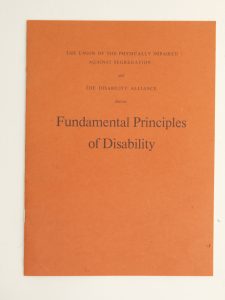
Paul and Judy met Vic Finkelstein and his wife and ideas cross fertilised. Vic had been imprisoned in South Africa for anti-apartheid activity after he was paralysed. Vic was one of the key thinkers credited with developing the idea of disability as a social oppression and positing the social model**. In an article before his death he says that this thinking took much from the struggle for race equality in South Africa. UPIAS went on to recruit disability activists from across the UK and formulated the Fundamental Principles of Disability***. This led to the setting up of the British Council of Disabled People and the formation of Disabled People International, in which Finklestein played a key part.

“In our view, it is society which disables physically impaired people. Disability is something imposed on top of our impairments, by the way we are unnecessarily isolated and excluded from full participation in society. Disabled people are therefore an oppressed group in society. It follows from this analysis that having low incomes, for example, is only one aspect of our oppression. It is a consequence of our isolation and segregation, in every area of life, such as education, work, mobility, housing, etc.”

Ken and Maggie Davis, two leading members of UPIAS, pioneered independent living, commissioning their own housing scheme in Sutton in Ashfield. After four years including buying the land, working with architects and bringing in adapted fittings from Sweden, they moved in 1976.

The Disability Liberation Network were more influenced by the Women’s Movement. Following their initial meeting at Lower Shore Farm outside Swindon in 1980, they focused more on breaking down isolation by finding ways to communicate with each other whether deaf, blind or physically impaired. Many of the ideas that were developed by Micheline Mason and others in their ‘In From the Cold’ magazine helped later form the Alliance for Inclusive Education. Work on self-representation, social model and disability as an oppression were brought together to transform education at a founding conference of the Integration Alliance in 1990****.

Pamphlet front cover reads "Union of the Physically Impaired against Segregation and The Disability Alliance discuss: Fundamental Principles of Disability".

Some principles of the Disability Liberation Network

Our movement needs more than ever to go back to these insights to find new ways of struggling for inclusive education and equality. There needs to be a recognition that on paper and in law we have made progress, but that our experience of the deeply ingrained oppression towards all disabled people requires us to be directly and collectively involved in a transformation of society and the world. We can make a start by challenging the growth of exclusions and special free schools being promoted by the government.

Richard Rieser

World of Inclusion

Resources:

www.ukdhm.org

References:

*https://www.gmcdp.com/sites/default/files/No%20Limits_%20Judy%20Hunt_%20book%20%2812ptTimesRoman_%20270pg%29.pdf

**https://disability-studies.leeds.ac.uk/wp-content/uploads/sites/40/library/finkelstein-Reflections-on-the-Social-Model-of-Disability.pdf

*** https://the-ndaca.org/resources/audio-described-gallery/fundamental-principles-of-disability/

**** https://disability-studies.leeds.ac.uk/wp-content/uploads/sites/40/library/LNPD-cold-issue-1-part-2.pd


Inclusion Now 54 Autumn 2019

Intersectionality, UN Sustainable Development Goals, Disability History Month and more.

Inclusion Now magazine | published by disabled people, for disabled people
a unique voice for disability rights in UK education

Welcome to the 54th edition of Inclusion Now. Audio and text versions are below or you can read it in magazine format on Issuu

Your ongoing support is fundamental to our charity’s work and greatly appreciated.
ALLFIE campaigns for children and young people to be supported to manage disability within the UK education system.

Inclusion Now is produced in collaboration with World of Inclusion and Inclusive Solutions

Families lose SEND funding crisis case

ALLFIE’s Interim Director on the implications of this landmark court case

This week we have received the bad news that three families with disabled children have lost their landmark court case. The judge found that government underfunding of SEND was not unlawful. Despite this very disappointing verdict we give huge respect and gratitude to the three families and their disabled children for their persistence and tenacity in taking on the government over  SEND cuts. The three families have rewritten the history books and done what could have easily been considered “the impossible”. The SEND campaign was enormous: it put pressure on the government, and sent a serious message about the failure of the system for disabled children and young people.

The families brought their challenge over the SEND cuts on four grounds but the High Court concluded there was “no unlawful discrimination” by the government.  The court did not feel that the SEND cuts had created differential treatment for disabled children or had placed them at a disadvantage, nor that the cuts had created any effect on the well-being or welfare of these children. It is concerning that there was plenty of evidence to demonstrate the crisis in SEND funding and also that the government was well aware of the scale of the problem. Nevertheless, the High Court is of the view that the government “did not act irrationally” around the provisions for funding and no decision was made to change the funding formula, leaving disabled pupils in the same dreadful predicament.

The case further demonstrated the weakness of our Public Sector Equality Duty. It is supposed to reinforce equality of opportunity but in this instance it did not offer any meaningful outcomes for disabled people.

This case threw up some contradictions. Recognition was given to the financial pressures on local authorities. Nevertheless, a local authority is obliged to ensure all SEND provisions specified in an EHCP are provided, regardless of availability of resources. Since the case the Education Secretary Gavin Williamson has committed to “providing an extra £700 million next year, an 11% increase, to make sure these children can access the education that is right for them”. This is still insufficient and does not address the current problems.

The outcome of this case is a huge disappointment for us all. The families and their disabled children have raised the profile of the failings of our education system for disabled children. With the support of others, the case helped to further draw attention to the injustice and inequality within the education system, and was successful in gaining the attention of the media and the wider public.

In addition to this case, this year we have seen the publication of a number of similar reports showing the devastating and shocking experiences of disabled learners. The Timpson review of school exclusion reported very disturbing findings, highlighting the deep level of inequality. It showed the profile of children who are more likely to be excluded: “children with identified SEN accounted for 46.7% of all permanent exclusions and 44.9% of fixed period exclusions” (p36). Last month the National Audit Office published their review of support for pupils with SEND. It identified the “main reason why local authorities have overspent their high-needs budgets is that more pupils are attending special schools” (p8).  Last week the Local Government & Social Care Ombudsman described the severity of the problem with the Education and Health Care Plan process and cases brought to them. Their examination revealed that they “upheld nearly 9 out of 10 of investigations last year. This is exceptional and unprecedented.” (p1)

This case and series of reports demonstrates the unfairness of an education system that allows for the separation of disabled people – a separation which ultimately goes beyond the classroom. To end this practice we must desegregate our education system with the removal of the dual education system which allows for the segregation and inequality of disabled people in education.  We saw in this case that our domestic law is inconsistent with international law, ie UNCRPD Article 24, and that therefore Article 24 could not be used to offer assistance. We need full implementation of Article 24, with no reservations and with progressive realisation and a recognition that the education of all disabled people is a human rights matter.

We continue the fight and demand for a fully inclusive education system for all disabled learners.

Written in solidarity,

Michelle Daley


Supported by

ALLFIE’s campaign for Inclusive Education as a human right is backed by funders and donors who reject the systemic segregation of Disabled people from society.