This briefing addresses concerns the UK Government is trying to suspend rights for Disabled people in education amidst Coronavirus outbreak and covers:
UK Coronavirus Bill
What ALLFIE is doing
What you can do
Coronavirus resources
1. UK Coronavirus Bill
The Government wants to suspend various rights Disabled people have under current legislation. ALLFIE is very concerned that Disabled people’s rights to be supported within mainstream education will be suspended for up to two years under the Coronavirus Bill.
The Bill suspends various duty in the Care Act 2014, including the duty to meet the eligible needs of disabled people and their carers. Under the #CoronaVirusBill, local authorities will only have to provide care ‘if they consider it necessary’ for the purposes of avoiding a breach of the European Convention of Human Rights (ECHR). There is no human right to social care or positive obligation under the ECHR to meet care needs.
The Secretary of State for Education will have powers to amend the 2014 ACT so there is no longer a requirement to name a school in the child’s Education & Health Care Plan (EHCP).
The Secretary of State will have powers to amend the Act so that a local authority only have to use reasonable endeavour in discharging its duty in securing SEND provision for disabled pupils. This will mean that local authorities will not have an absolute duty to arrange SEND provision for disabled pupils.
The Secretary of State for Health and Social Care will have the powers to amend Sections 18 and 20 of the Care Act so local authorities will no longer be required to meet the eligible needs of disabled adults and carers.
The Secretary of State will have the powers to close state-funded schools.
We are very concerned that there is a real possibility that:
Disabled children with EHCP support could have that support withdrawn, reduced, removed or not replaced if current staff is needed elsewhere by NHSE or even special schools
Disabled children with EHCP could be transferred into special schools so that SEND provision can be pooled as fewer schools are open. Local authorities and schools will not have the funding to pay for additional staff if existing staff are in self-isolation or ill
Disabled children with EHCP could be left without a school placement, particularly a mainstream school placement.
Disabled young people may not get the education, health and care support they require to flourish in mainstream education. The threshold will be lowered so that disabled people will only get support to meet the basic needs of being dressed, fed and showered.
If these changes to the Care Act go through disabled children and people in education may not get the support they require because education is unlikely to be considered a basic need to aid survival.
It is totally unacceptable that the rights of Disabled people, the only group of people with protected characteristic rights under the Equality Act, will be suspended. For many Disabled pupils and students the education, health and care provision required is necessary to support both their emotional and physical wellbeing. Many of the health and social care practitioners are undertaking tasks that will help to maintain stable health, including reducing the risk of developing infections and viruses.
The education and care provisions in the Coronavirus Bill are an attack on Disabled people’s human rights to education, health and care.
2. What is ALLFIE doing?
ALLFIE is reacting to education provisions for UK Disabled people in the fast moving Coronavirus Bill.
We have published various blogs about the Government’s policy on school closures.
We have written a briefing for both MPs and the Joint Committee on Human Rights about our concerns that disabled people’s rights to be supported within mainstream education are being suspended.
We will be discussing amendments to the Bill with MPs and Peers.
Tweet your MP
Here are some suggested @, key messages and #
@10DowningStreet
@GavinWilliamson
@vickyford.uk
STOP using #COVID19 to remove disabled pupils right to SEND provision within mainstream education #CoronavirusBill
STOP using #COVID19 to suspend disabled pupils rights to named school in education, health and care plans #CoronavirusBill
Offer to write a blog outlining the concerns you have.
Disabled People’s Human Right to Mainstream Education and Government Position on Coronavirus
The Government has an obligation to promote disabled pupils’ human right to inclusive education under UNCRPD Article 24. An interpretative declaration included the Government’s commitment to enhancing the capacity of mainstream schools to include disabled pupils of all abilities. Additionally, the Government has incorporated the European Convention on Human Rights (EHCR) into domestic law through the enactment of the Human Rights Act, including both Protocol 1 Article (2) and ECHR and Article 14 – the right for disabled students to mainstream education free from disability-related discrimination.
ALLFIE recognises that this is a highly challenging time during which the Government must balance the resources needed to fight the coronavirus, COVID-19, whilst simultaneously ensuring that the nation functions as normally as possible. When the Government considers relaxing the duties of public bodies to provide services, it must not adversely affect disabled people. It is therefore not only disabled adults but also disabled children’s right to both education and health and care services that must be protected to ensure they have every opportunity to remain both physically and emotionally well whilst being educated within mainstream educational settings.
Clause 35 Regulation 15 Temporary closure of educational institutions and childcare premises
The Government has finally announced the closure of state schools for the overwhelming majority of children.[1] However, schools will remain open for ‘vulnerable’ children such as those whose parents are key workers, children who have social workers and children with education, health and care plans.[2] The Government has also announced that special schools are expected to follow governmental COVID-19 advice and remain open for all disabled children.[3]
How has the Government made the decision for disabled pupils with EHCPs to continue attending their special schools. This seems to conflict with the Government’s own professional advice to the general population to stay at home if an individual is at higher risk from COVID-19.[4] We expect that many parents will not want their disabled children to be exposed to COVID-19 whilst in special school and therefore want the option to withdraw their child from school; indeed, many parents are “immensely frustrated at the lack of specific guidance coming from the government relating to” disabled children, in addition to the potentially “catastrophic consequences”.[5], [6] However, many of these families will not have the structured support offered in many special schools and therefore may be forced into accepting the extra risk of being exposed to COVID-19. If this Government wants to ensure that all children minimise their risk of contracting COVID-19 then they need to provide the necessary funding and infrastructure to allow disabled children to continue to receive the support and routine they require within their own homes.
Clause 36 Regulation 16 Temporary continuity: education, training and childcare
The Government wants to suspend Disabled childrens’ rights to special education needs support within educational settings.
The Government wants to give the Secretary of State for Education the power to vary, disapply or modify the protections afforded to disabled children under the Children and Families Act 2014. In particular, the Secretary of State for Education will have the power to amend the Children and Families Act 2014 s(43) and s(42) to allow local authorities to arrange the education, health and care provision specified or to name a school in the child’s EHCP. The proposed amendment will allow the local authority to use reasonable endeavour in discharging the local authority’s duty in securing SEND provision for disabled pupils.
Over the past decade, there has been a steady decline of disabled pupils with EHCPs being educated within mainstream schools.[7] Disabled children are increasingly either being educated outside mainstream education or are not in receipt of any form of education, including structured home education. This can be explained by mainstream schools repeatedly reporting they possess insufficient resources to arrange the SEND provisions required for disabled students; this will become more acute if local authorities no longer have a legal duty to secure and arrange such SEND provision. We fear that without local authorities being required to secure the SEND provision in mainstream schools, the numbers of disabled pupils being excluded, off-rolled and segregated will increase fourfold. Furthermore, education, health and care provision is often necessary to preserve disabled pupils and students’ life.
For many disabled children with lifelong and life-threatening conditions, the health and social care support they require is necessary to not only maintain and stabilise their conditions but also to reduce the risk of contracting infections and viruses such as COVID-19. Some examples are as follows of how health and social care support in schools are necessary to reduce their risk of contracting COVID-19 to protect both themselves and others.
Disabled children with Cystic Fibrosis (CF): Many children with CF will need physiotherapy, assistance with taking medication and looking after by qualified health and social care professionals alongside other reasonable disability-related adjustments. The assistance provided in schools may prevent expensive inpatient hospital care for complications associated with CF, including risks from viruses and infections. This physiotherapy and medical attention substantially reduces a life-threatening condition such as CF.
Disabled children with profound learning difficulties or physical impairments requiring assistance to maintain health and wellbeing: Social care support would include assistance with dressing, feeding, toileting and personal hygiene. Given the NHS prioritises advice around personal hygiene, it is more important than ever that social care workers are employed to assist disabled pupils who need extra assistance with tasks such as washing their hands and avoiding touching door handles to reduce the risk of COVID-19.
Disabled children with OCD or autism: These children may well need assistance with adapting or changing routines to minimise their exposure to COVID-19.
Disabled children with epilepsy: Some types of epilepsy are less controllable and more life-threatening and so require prompt intervention by trained health and social care staff.
The Government wants to give the Secretary of State for Education the power to vary, disapply or modify the duty of the local authority to name a school within the child’s EHCP under the Children and Families Act 2014 s(43)
The Government wants to suspend disabled children rights to mainstream education.
There is ample evidence confirming that mainstream schools are increasingly reluctant to admit disabled students[8], thus it is necessary for local authorities to maintain this duty. Our fear is that as more and more schools are facing tighter budgets, they are less likely to admit disabled pupils. Indeed, it is not only mainstream schools; special schools are increasingly refusing to admit disabled pupils.[9] If local authorities no longer have an absolute duty to name a school, we fear that many disabled pupils will have no school to attendat all. Furthermore, we are concerned that local authorities will be able to move disabled children into segregated education if SEND provision for whatever reason is unavailable to them within mainstream education. We know once disabled pupils transfer into segregated education, they are less likely to return to mainstream education.
ECHR Protocol 1 and ECHR Article 14
Disabled pupils students have a right to be educated in mainstream education. The education system’s compliance with these articles is not simply just admitting disabled pupils into the institution; there are requirements for education institutions to take active steps such as making the building accessible and employing qualified personnel to assist disabled pupils with personal care, carrying books and equipment and alike. It is not only schools, but local authorities and the Government that must take responsibility for ensuring the necessary infrastructure is in place to facilitate disabled students’ right to mainstream education.
Clause 13 NHS and local authority care and support
The Government wants to suspend disabled peoples entitlement to community care
The Government wants to amend the Care Act section (18) and section (20) to replace the local authority’s duties with powers to meet adults’ social care eligibility needs unless there is a fundamental breach of human rights. Similar with relaxing local authorities’ duty around arranging SEND provision in schools, we are deeply concerned that disabled young people, when making the transition from children’s to adult services, may well lose out on the social care necessary for them to thrive within mainstream education settings.
To conclude, ALLFIE is concerned that disabled pupils and students’ requiring education, health and care services will either not get it or may only receive the provision within segregated and institutionalised settings if the Local Authority’s duties are suspended. The proposed changes to the Children and Families Act 2014 should be around strengthening of disabled pupils and students’ right to education, health and care support within mainstream educational settings.
The purpose of ALLFIE’s Day of Action on 23rd January was to highlight the failings and inequality for Disabled people in access to mainstream education. ALLFIE’s wide aim is to get a response from the Government and develop strategy, with an emphasis on the failure to meet UN CRPD Article 24, to achieve a fully funded and supported inclusive education system.
ALLFIE would like to extend a huge thanks to all who got involved and urge your continued support- let’s keep up this tremendous comradeship and solidarity and momentum for change!
The purpose of the petition was to draw attention to the crisis in SEND caused by education funding cuts and ALLFIE has been completely blown away by the enormous support. This marks a significant milestone for inclusive education, with by far the greatest response we have had for a petition:- over 107,800 signatures when we handed it to the Government at Downing Street and 108,479 at last count.
The day began with a march down Whitehall to the gates of Downing Street with our supporters, where we were joined by Marsha de Cordova MP, Shadow Minister for Disabled People. As a Disabled person who benefitted from mainstream education herself, Marsha gave an impassioned and rousing speech.
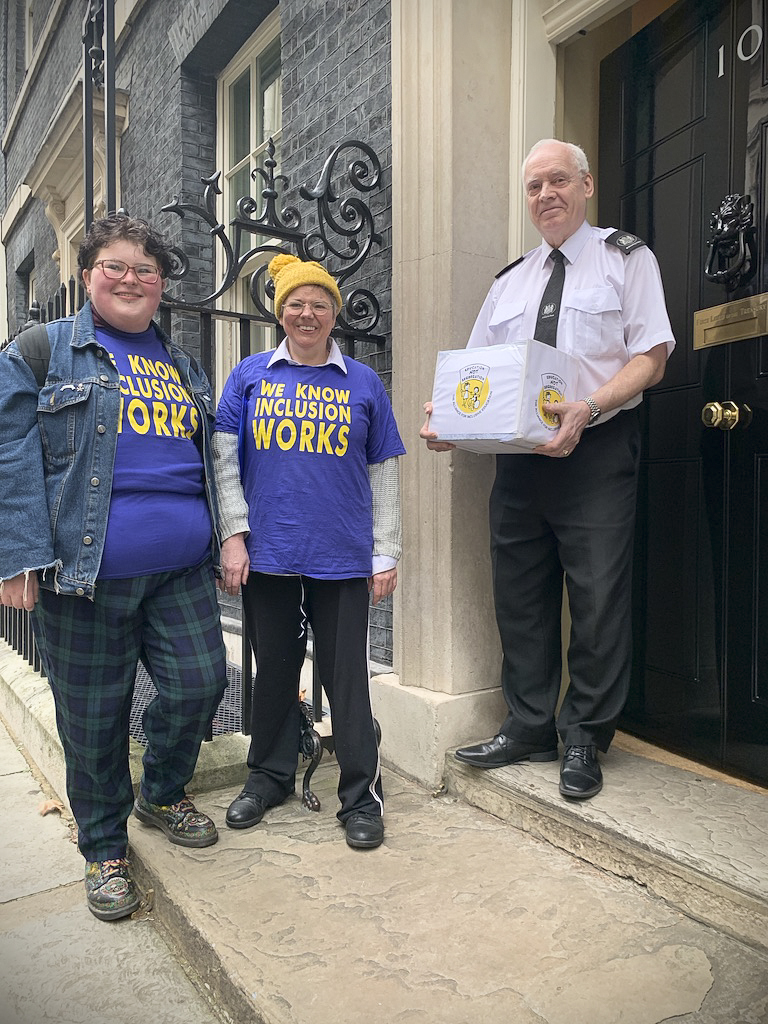
Shortly after midday, ALLFIE representatives entered the gates of Downing Street with our (substantial!) petition box. Simone Aspis and Martine Harding knocked on the famous door of Number 10, accompanied by Michelle Daley, Lucy Bartley, Marsha de Cordova MP, Hilra Vinha and Dr Armineh Soorenian. They handed the signatures to a Government Official, while the gathered crowd outside the gates chanted: “what do want- INCLUSION, when do we want it- NOW!!”
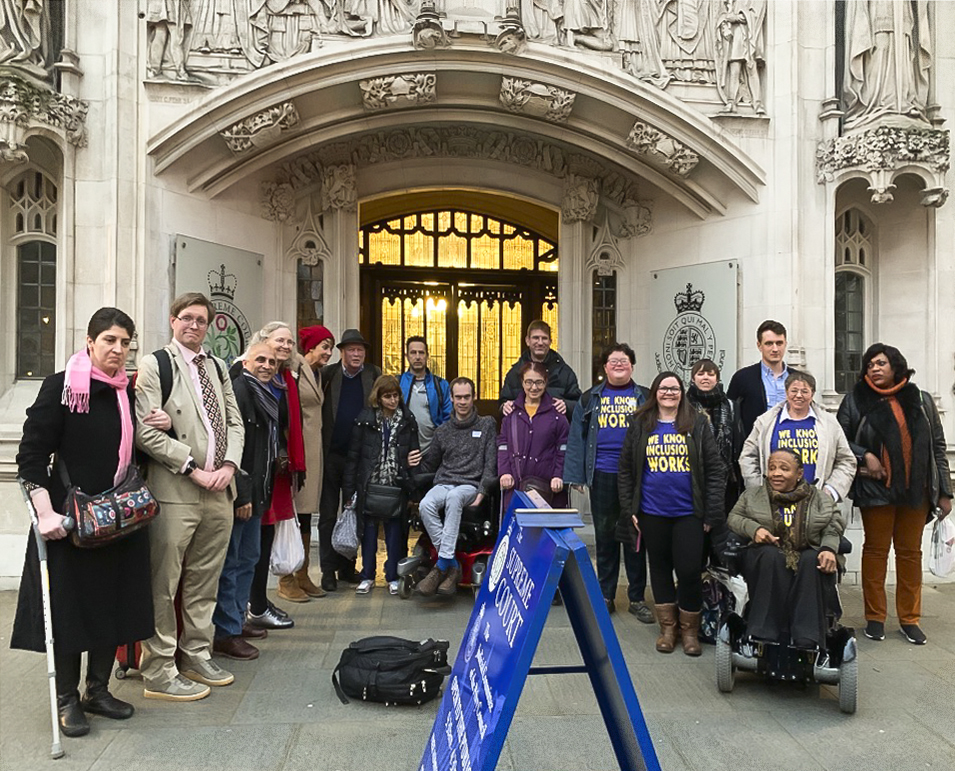
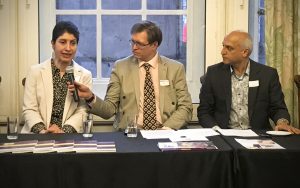
Next it was on to Lawyer’s Suite at the Supreme Court in Parliament Square for our launch of ALLFIE’s long awaited research project report- another momentous landmark for ALLFIE and Inclusive Education. This important piece of research evidences major failings in access to mainstream education for UK Disabled youth, including through many heart-breaking personal accounts. The venue was specifically chosen because of the gravity of the research and report and we were impressed with the attendance, which included young participants and parents who had taken part in the research.
The agenda included: opening statements by ALLFIE’s Joe Whittaker and Dr Navin Kikabhai; a summary of the Project findings by research author Dr Armineh Soorenian; and an open Q&A discussion a panel including ALLFIE Directors and project participants Martine Ifhardinmr and Hildja Vinhah. There were numerous passionate speeches and questions from the floor, including from young people who had participated in the research, alongside disturbing stories shared by parents and Disabled people.
This turned out not to be the ideal timing to deliver important report, petition and manifesto and negotiate a meeting with Secretary of State, Gavin Williamson MP. Staff were unprepared for our arrival and keen to go home. Different staff were sent to talk with us but none of them were in a position to assist with arranging a meeting with the Minister so were sent away. We finally meet with a Secretariat for Gavin Williamson team and are now in the process of organising a meeting.
The success of the Day of Action and the number people that spoke out in support of education for Disabled people must be regarded a human rights matter. People have spoken out- they want inclusive education done and they want it now.
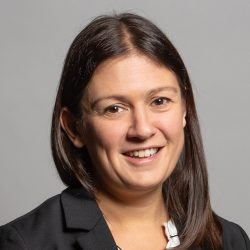
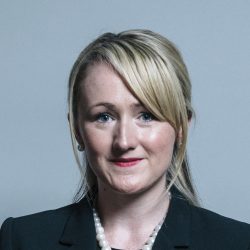
We are very disappointed that Labour Party leadership candidates Keir Starmer, Dawn Butler and Rosena Allin-Khan, have not provided a statement that would assist our members in deciding who they would vote for in the forthcoming ballot. After all the Labour Party shadow Government have signed and ratified the UN Convention on the Rights of Persons with Disabilities (UNCRPD), of which Article 33 clearly sets out the Government’s obligations to engage with civil society, in particular disabled people and their representative organisations. How can we trust that a future Labour Government would uphold disabled people’s human rights when they are already failing to engage with disabled people and their organisations on how to uphold our UNCRPD rights?
Disabled people have been failed by the education system, from early years through to the school system and beyond to higher and further education. We have a system that too often segregates people with disabilities, denies them choice and control over their education, and reduces opportunity and quality of life.
The Conservative Party have consciously created this system by raising the barriers that block disabled people from inclusive education rather than supporting them. They have sought to divide children with SEND through the creation of a dual education system rather than ensuring every child gets the inclusive education they have a right to. And they have failed to ensure that these separate schools are funded adequately. The National Audit Office has found that education spending has not kept up with the increase in the rise of pupils with high needs, forcing overstretched local authorities to spend more. We are failing children with SEND twice: placing them in separate, special schools, and then refusing to fund these places adequately. It is time to end the incentivisation of school segregation where mainstream schools are expected to cover the first £6,000 of support for a child with SEND from their existing budgets. Because of this, cash-strapped schools are at risk of going under for doing the right thing: creating a nurturing environment where every child, but especially those with additional needs and requirements, receives the support and care they need to thrive.
But getting the school funding right is just one part of the much bigger reforms required to create a truly inclusive education system. Too often we require disabled people to conform to the education system, rather than ensuring the education system can accommodate and support them. We have a curriculum that is inflexible, and often denies the opportunities for students to learn the subjects they want to. This is especially true for deaf pupils who are still denied the opportunity to learn British Sign Language at GCSE. I support efforts by campaigners such as ALLFIE to create an inclusive curriculum, one that represents disabled people and enables them to fully participate in the education system.
For many disabled people, the physical fabric of our education system – the actual space it occupies – is inaccessible. It is deeply revealing of how our education system fails people with disabilities when, for example, a wheelchair user cannot access a lecture theatre or when the accessible toilet is used as storage, or when the accessible areas on a campus are kept separate, while the rest of the buildings remain unusable. We cannot be serious about creating a truly inclusive education system if the actual buildings occupied by the system are inaccessible.
All of this points to one overarching problem in our education system: the lack of control and agency experienced by people with disabilities over the decisions that affect them. ALLFIE has powerfully written about this, with one parent saying they were told that “there were no options and that he would have to go to a special school, even if we didn’t want it”. Giving parents of disabled children and disabled people themselves the choices they deserve to access inclusive and high-quality education requires us to embed within schools a wider culture of support as well.
But this needs more than a set of promises, it also needs a Leader of the Labour Party and a Prime Minister willing to work with campaigners on this issue to identify the real solutions. That would be my intention as Prime Minister because a truly inclusive education system isn’t something that can be built in Whitehall; it requires all of us to work together.
This is a cause worth fighting hard for. It is a campaign to create an education system that works for all by taking into account the needs of all. It is a campaign for a better and decent society, one where everyone gets the best start in life and the chance to thrive and succeed. It is a campaign for basic human rights. It is a cause that I am proud to support.
After a decade of Conservative-led cuts to our education system, I am committed to making an open, accessible, inclusive education system a central tenet of the Labour party’s vision for the country. We need to address the disability education gap and the special educational needs and disability (SEND) funding crisis by providing the necessary funding to support children and young people who hold Education, Health and Care Plans and those who receive SEND Support. Investing in the early years workforce and ‘Special Educational Needs Co-ordinators’ (SENCOs) will also play an important part in ending the disability educational gap.
Disabled children and young people are particularly at risk of exclusions within schools. This leads to a continued cycle of inequality within our education system. I believe we need to end the perverse incentives for schools to let pupils fall out of the education system by making schools more accountable for the outcomes of pupils who leave their student rolls.
As a Labour Prime Minister I will also place a duty on all higher education institutions to ensure that their courses are accessible to all disabled students. I will maintain our commitments to scrapping tuition fees and bringing back maintenance grants and to restoring the Educational Maintenance Allowance – ensuring fair and sustainable funding for further education as well as higher education.
As Labour leader and Prime minister I will honour our commitment in the 2019 manifesto to incorporate the United Nations Conventions on the Rights of Disabled People (UNCRPD) into law. We will do this by incorporating the UN CRPD into UK law, working with disabled people every step of the way.
Over the past decade we have seen the creation of a hostile environment for disabled people, created as part of driving through their agenda of cuts and austerity by the Conservatives, and the Lib Dems when in Coalition. Cuts, whether outright or disguised as ‘necessary reform’ to public services and our social security system have systematically denied disabled people the support, respect and ability to fully participate in society they deserve.
It is shameful that the United Nations report, in 2016, labelled austerity as responsible for “grave” and “systematic” human rights violations against disabled people and last year the UN rapporteur on Extreme Poverty likened the Department for Work and Pensions to a 19th century workhouse. That policies, such as sanctions, are implemented despite the Government’s own impact assessment acknowledging physical harm will be caused to claimants is the mark of a cruel and inhumane government.
I’m proud that Labour now stands up to the use of stigmatising and dehumanising language when social security is being discussed and in the 2019 campaign were clear we would end Universal Credit and replace it with a better system and end sanctions. As Labour leader I want to work in partnership with disabled people’s organisations to hold this government to account, and force them to reverse on their reactionary agenda.
As Labour leader, the Labour party would campaign to reverse the hostile environment created by Conservative and Liberal Democrat governments over the past 10 years. We would immediately reverse the cruel austerity program imposed on communities, disproportionately affecting disabled people and rebuild our services and society with advancing equality at its heart, in education and beyond. The elected Senate I have proposed to replace the House of Lords would be tasked with scrutinising the impact of all legislation towards our goals of improving well-being, environmental sustainability and equality.
I was proud that our party was the only party in 2019 with a manifesto developed by and for disabled people, with the principle of ‘nothing about you without you’. As the next Labour leader and Prime Minister, I will ensure we embody that principle across the party, empowering disabled people and enhancing their voices and increasing their representation. Every policy decision and every pledge will be co-produced by, with and for disabled people to ensure dignity, equality and independence at every stage of people’s lives.
The ALLFIE manifesto is all about respecting differences and ensuring that from an early age, children appreciate that our community is diverse and that such diversity is worth celebrating. The statement that we should ‘educate, not segregate’ is one I not only agree with but have consistently advocated myself: the UK’s education system, as well as wider public services and public life, should be inclusive of disabled people. As Shadow Education Secretary, I have seen time and time again, how under the Conservatives, our education system has been driven to breaking point, with such chronic underfunding that progress on inclusivity and modernising Britain’s education settings has been neglected.
I was proud that Labour committed to protecting the rights of all people in our education system, by committing to enshrine the UN Convention on the Rights of the Child in to domestic law; this would have protected the rights of all children, but particularly those who most need it, and are least likely to have their rights protected and upheld, such as disabled children.
In order to ensure that the education system is as inclusive as possible all school buildings must be genuinely accessible and the layouts and designs of such buildings should be inclusive and sensitive of the needs for all students who learn there. Many schools are still located in old buildings where the little funding received under the Tories is being spent on patchwork maintenance rather than on facilitating a truly inclusive 21st Century education. I was proud that Labour committed to a major programme of capital spending to improve existing school buildings, to ensure that they are safe, accessible, and fit for purpose; this included an additional £7 billion in capital funding to invest in existing school buildings, starting with those most in need of repair and refurbishment – as many that I visit so desperately are.
Labour is also committed to an independent review of both the assessment system and the curriculum. Such commitments, which I absolutely want to uphold in the future, will help us ensure a move towards a more inclusive curriculum, without letting individual politicians simply change the curriculum according to their individual whims.
Of course, a genuinely coordinated system, including ensuring that disabled children are integrated amongst their peers, begins in the early years. That’s why Labour committed to over £1 billion in additional funding for Sure Start Plus, which would offer integrated health, education, and family support, with a focus on families with children aged 0-2; I remain committed to a review of the care system as a whole, and this would have included looking at ways to ensure that the system is fully integrated and able to support all those who need it.
Finally, the staffing and training of said staff to promote inclusion has to be a priority, and that is why Labour committed to giving schools the resources they need, to stem the decline in support staff, who play a vital role in supporting disabled students. We all know that the number of teaching assistants and other pastoral staff has declined in recent years, with a particularly sharp decline in secondary schools. We also know that an inclusive workforce, able to support pupils with different needs, is essential at every stage of their education. That is why Labour’s plans for the early years included having specialist staff to support pupils with higher needs.
I completely support ALLFIE’s 24 principles as set down in the excellent manifesto and, if elected as Deputy Leader, look forward to continuing to champion inclusive education policy around the Shadow Cabinet table.
As Deputy Leader of the Labour Party, I will have two clear goals: to ensure that our party becomes a more inclusive environment for members; and to campaign loudly for a more inclusive society.
Members should have a greater voice in policymaking. Not until we have the voices of disabled people in policy-making decisions around the health and social care sector, education, and workers’ rights, will we truly have inclusive policies, and be able to start the process of forming a manifesto that returns us to government.
There is evidently an issue in the Labour Party regarding how accessible our party meetings are. There are still too many situations in which Labour group meetings are not organised in accessible and inclusive environments which allow everyone to contribute to the workings of the party, and the decisions that we make. The Labour Party should be doing much better than this, including more accessible literature and resources, and as Deputy Leader I will work to ensure that the needs of disabled people are heard and adhered to.
We should also reconsider the pressure we put on activists in campaigning. While the party owes a lot to those who go out door-knocking in all weathers and at all times of year (the 2019 winter election was particularly testing for all those who spent so many hours on the doorstep), there are many different ways that members can campaign and help out during elections – and I do believe the party should do more to encourage other ways of campaigning.
As Deputy Leader, I will work on opening up our campaigning methods so that our party is accessible to as many different people as possible with differing needs.
I agree with the commitments the last Labour manifesto set out in relation to the development of the education system into an inclusive system based on human rights and equal opportunities. My job as Deputy Leader will be to ensure that we have an environment within the party that enables those with lived experiences to have an input into what decisions we make. When the Labour Party returns to Government, the policies we implement will have been written and contributed to by those who it will affect.
As you are aware, not one, but two UN reports have accused the Tory Government of ‘systematic violations’ of the rights of disabled people. On top of that, cuts to social care by the Tories in England and the SNP in Scotland have driven families to despair. Enough is enough.
In line with the UNCRDP Article 24 principles, I fully endorse ALLFIE’s campaign for an inclusive education supported by human rights law; a coordinated education, health and social care system; an inclusive learning environment and curriculum; an inclusive assessment system; and ensuring our education workforce is committed to inclusive education practice. I commend you for the work you have done to promote this, and look forward to working with you on these objectives, regardless of the outcome of this contest.
The right to education is a human right, and anything that impedes disabled people from getting an education that is inclusive and tailored to their needs must be changed.
As the party that created the NHS, and which used the power of government to invest huge amounts in education and the health service, the Labour Party is the only party that is committed to the widening of participation in society and the development of inclusive education that meets the needs of disabled people. As Deputy Leader of the Labour Party, I commit to campaigning on these issues, and ensuring that those with lived experience have the opportunity to help shape policy in the future.
I am more than happy to sign up to all of the Alliance For Inclusive Education’s pledges
Whether or not I am elected as Deputy Leader, I look forward to working with you and to supporting your important work in the future, to tackle the discrimination faced in our education system.
Schools are failing to meet their legal duties around ‘Accessibility Plans’ that should set out how they will meet the needs of disabled pupils and their parents, research published today warns.
This failure, together with other serious shortcomings amounting to illegal discrimination, has a shocking – and often devastating impact – on many disabled children and their families.
The report recommends action, including from Ofsted and local authorities, to monitor how schools are developing and implanting plans – which schools have been legally required to produce since 2002.
The research included focus groups, interviews and surveys with Disabled pupils and their parents and with education professionals.
Accessibility Plans were intended to
improve access
provide parents with sufficient information so they could be involved in decision-making about their Disabled children – including choice of school
ensure teaching and assessment approaches meet the needs of disabled pupils.
However, the report concludes few parents are even aware Accessibility Plans exist.
Unsurprisingly, the report says, this means that none of the parents had used them to challenge physical barriers or discriminatory practices during the admissions process or after their child had secured a school place.
Dr Armineh Soorenian carried out the research. She said: “Schools should involve parents in developing and reviewing their Accessibility Plans. They should promote them rather than hiding them away in the furthest reaches of their website. Crucially, schools clearly need to turn the fine words often set out in those plans into meaningful support for Disabled pupils and their parents.”
The Alliance for Inclusive Education (ALLFIE) oversaw the study, which was funded by the £5 million DRILL programme (Disability Research on Independent Living & Learning) – the first user-led disability research programme in the world.
Michelle Daley, director of ALLFIE said: “Accessibility Plans must focus not only on the removal of physical barriers in schools, but on challenging attitudinal, systemic and other obstacles within the admissions process so Disabled learners can attend their preferred school and achieve their full potential. That is an internationally-recognised human right.”
“The report highlights the need for strong national guidelines on Accessibility Plans.”
The report says that physical barriers and discriminatory attitudes and practices mean many schools are breaking laws under the Equality Act and Children and Families Act. The illegal discrimination many disabled pupils face means they cannot realise their full potential.
The report also highlights that the UK is breaching the United Nations Convention on the Rights of Disabled persons, although the Government entered a ‘reservation’ to the right to mainstream education with appropriate support when it signed up in 2009. The report suggests “the UK remains out of step internationally on equal access to education”.
Many Disabled pupils, the report says, are unable to take part in the full range of school activities – including school trips or PE lessons – amounting to segregation that breaches the Convention.
Some parents worry that the various pressures and discrimination around access, learning and social inclusion could ‘break’ their children socially and emotionally.
One mother said the behaviour of education professionals towards her son was ‘barbaric’.
She asked: “How are these people who are caring for our children behaving horrendously?”
For many parents, the battle to ensure their child received the same educational opportunities as non-disabled children begins during the admissions process. They often meet prejudiced and discriminatory attitudes and obstacles that deny them real choice and the ability to make informed decisions regarding their children’s education.
The study found parents sometimes choose a special school or home schooling due to fears about inadequate support levels for their child’s educational, social and emotional needs.
Sue Bott from DRILL added: “Programmes should be put in place to adequately support Disabled young people, ensuring a consistent and rights-based approach to education. Teaching and assessment procedures must be responsive to – and support – each child’s needs.”
The report’s recommendations include
Comprehensive national guidelines to support schools in producing robust Accessibility Plans
Regular impairment-specific disability and inclusion training for teachers, headteachers and senior managers should be included in Accessibility Plans
The Department for Education needs to monitor, promote and enforce the positive and continuous development and implementation of Accessibility Plans
Teaching staff should adopt appropriate teaching methods such as multi-level instruction, co-operative learning, individualised learning modules, activity-based learning and peer tutoring to ensure they meet the needs of Disabled pupils
Accessibility Plans should commit schools to the provision of more opportunities for Disabled pupils to socialise with other children in fully accessible settings, including accessible playgrounds and include anti-bullying strategies.
Despite legal protection, the report points out, the percentage of pupils with special educational needs or a disability in mainstream schools has fallen by 24% since 2012 – while the number in special schools has risen by nearly a third. However, instead of funding inclusive and improved support and resources in mainstream education, the Government is planning costly new special schools
Notes to editors:
The report includes analysis of over 400 respondents, including around 100 education professionals. Methods included interviews, focus groups and online surveys. Case studies are available.
DRILL (Disability Research on Independent Living and Learning) is a 5 year programme funded by The National Lottery Community Fund and led by disabled people. It aims to build better evidence about approaches to enable disabled people to achieve independent living, which is used to inform future policy and service provision, as well as give a greater voice to disabled people in decisions which affect them. It is managed by Disability Rights UK, Inclusion Scotland, Disability Wales and Disability Action Northern Ireland.
ALLFIE is a disabled people’s organisation which campaigns for inclusive education for disabled learners. ALLFIE is a unique voice. Formed in 1990, we are the only organisation led by Disabled people focused on campaigning and information-sharing on education, training and apprenticeship issues. We campaign for the right of all Disabled pupils and students to be fully included in mainstream education, training and apprenticeships with all necessary supports. ALLFIE believes that inclusive education is the basis of lifelong equality. Children who learn and play together will grow into adults who can understand and respect each other’s differences.
I have been conducting research, on behalf of the Alliance for Inclusive Education (ALLFIE), funded by DRILL, into the effectiveness of Accessibility Plans in secondary schools when it comes to reasonable adjustments and driving inclusive education.
For the field study element, I travelled across England and conducted 12 focus groups consisting of Disabled young people, parents of Disabled young people, and education professionals. Participants shared their experiences relating to the impact of Accessibility Plans on a range of school practices. Interviews were held with a small number of parents. Alongside the field study, I ran two sets of online surveys, accessing almost 350 parents and professionals. Finally, I collected quantitative data to support the findings, which involved sending out freedom of information requests to OFSTED/local authorities and gathering official statistics.
What are Accessibility Plans?
In short, they are legal documents that set out how, over time, a school plans to increase access to the curriculum and the physical environment for Disabled pupils, and to make written information more readily available in a range of different formats.
Our findings
In our online survey, almost 80% of parents were not aware of the existence of their schools’ Accessibility Plans. Field study participants told us that they were not given information regarding the documents, and were hardly ever involved in their production, development or review. They saw them as ‘worthless pieces of paper’ if schools lacked the drive to adhere to their basic principles and foster a culture of equality and inclusion.
A major outcome of this project has been to highlight the negative, sometimes devastating, impact that ineffective school Accessibility Plans can have on Disabled children and their families. The shocking discrimination and segregation experienced by our young participants is firm evidence that the UK is persistently in breach of Article 24 of the United Nations Convention on the Rights of Persons with Disabilities.
The young participants reported that they were denied full participation in their school communities. Regular barriers included inadequate transport, lack of trained staff, access issues, and prejudicial attitudes. The Disabled young people felt isolated and shut out.
Adam explained how transport issues had restricted his son’s social inclusion: ‘My son is taken in a taxi and the timing can’t be varied, so he can’t join in any after-school clubs. Also, we don’t meet the other parents or families, so that excludes us to a certain degree. Normally you’d stand outside the school gate […], but we’ve not had that experience. We mentioned it to one of the schools and they set up a parent liaison club during the day, but because of work or other commitments it’s not really practical.’
In the focus groups, parents were critical about the lack of trained staff available for social activities and events. One parent was told, for example, that the matter of their child going to the toilet, for which they needed support, became a ‘care’ issue after 3:30pm rather than an ‘extra education’ one. Parents were generally concerned about the impact that similar experiences were having on their children’s emotional and social health.
‘Access’ is often perceived by schools and education authorities as relating almost entirely to pupils with physical impairments, rendering those with learning and sensory impairments invisible and putting them at an unfair disadvantage. One parent explained how their child’s sensory issues were totally overlooked: ‘Too much distraction. Walls and some windows are covered with text, photos, pictures, drawings, info. Desks are filled with stationery pots. The acoustics in the dining area are bad, making it extremely noisy at lunch and break times.’
Staff attitudes played a significant role in the levels of inclusion experienced. Our young participants and parents felt that if a teacher liked or disliked them, it made all the difference: ‘The head was new to start when [my son] was there and she took an instant dislike to him because she just saw him as naughty. She didn’t think that he had any special needs or anything. So, we stumbled across a lot of hurdles until she got put into the position where there was no SENCO at school, there was no deputy head, and she had to take the responsibility. Then she realised that there might possibly be something different about my child and not necessarily just naughty. But in spite of that, she still didn’t want him in the school, so she was working at getting him out. I think by the time it came to his exclusion, his permanent exclusion, I figured that if that was her attitude and her approach to him being at the school, it’s not in his best interests to be there…’
Separating Disabled learners from their non-disabled peer group is discriminatory. It limits life opportunities and produces an unjust society. Young people’s experiences of exclusion and isolation are likely to have a lasting and damaging effect on their mental health and self-esteem. One mother talked about her daughter: ‘She still, now, gets very angry and frustrated when she feels she’s not being taken just like the other children […] What I find is that teachers want to resolve an issue and they don’t listen to my daughter first. There is a lack of comprehension for the need to validate what my daughter is experiencing …’
The key to reversing the effects of segregation is a fully inclusive system. As one parent expressed: ‘I think we’ve had a generation where they’ve forgotten the “not seen.” They know they’re there, but they just don’t know what to do with them. It’s [about] bringing them back out into the forefront of how brilliant these kids can be and what they can achieve and what they can do.’
Our full report sets out a comprehensive list of recommendations, not only for the removal of physical barriers within schools, but also to challenge attitudinal, systemic and other obstacles within mainstream environments. Our launch event takes place on Thursday 23rd January, 1.30pm–4.00pm at The Supreme Court, Parliament Square, London SW1P 3BD.
At 12 noon on the 23rd January, the Alliance for Inclusive Education (ALLFIE) will deliver a 100,000+ signature petition to the steps of 10 Downing Street, calling on our Government to stop shutting disabled people out of mainstream education. We also see the launch of our ground-breaking school accessibility plan report.
Michelle Daley, ALLFIE’s Director, comments:
“People have spoken out in support of ALLFIE, demanding the government stop shutting disabled people out of mainstream education. Our voices will not be ignored any more – we must get inclusive education done and fully implement the UNCRPD in our domestic law.”
Member of Parliament and Shadow Minister for Disabled People, Marsha de Cordova MP stresses the importance of our petition, as a disabled person and former mainstream school pupil herself:
“I personally know the value of inclusive education for both disabled and non-disabled students. It is vital that the Government listens to the demands of this important petition, as more and more children are being shut out of mainstream schools.”
ALLFIE’s Day of Action also includes the launch of our ground-breaking research report “Accessibility Plans as Effective Tools for Inclusion in Schools: Are They Working?” The report concludes that many mainstream schools are still failing in their Equality Act 2010 duty to develop effective school accessibility plans, to promote inclusive education practice.
Schools failing to implement effective accessibility plans often leads to disabled pupils being excluded, off-rolled or home educated. For many young people and their parents, there is no other option than to take up a segregated educational placement in a special school, alternative education provision or a pupil referral unit. The Department for Education has reported that the majority of disabled pupils with education, health and care plans are now being taught in segregated schools, which is in breach of the Government’s duties to promote equality and inclusion under both the Equality Act 2010 and UN Convention on the Rights of Persons with Disabilities Article 24 provisions.
The report will be available on our website from 23rd January.
About The Alliance for Inclusive Education
ALLFIE is a unique voice. Formed in 1990, we are the only organisation led by Disabled people focused on campaigning and information-sharing on education, training and apprenticeship issues. We campaign for the right of all Disabled pupils and students to be fully included in mainstream education, training and apprenticeships with all necessary supports. ALLFIE believes that inclusive education is the basis of lifelong equality. Children who learn and play together will grow into adults who can understand and respect each other’s differences.
ALLFIE began the new decade and year with a range of campaign activities to build political support for inclusive education, which we need our friends to help us undertake.
We look forward to working together on these to develop a stronger voice for inclusive education. We need to send this Government a clear message – let’s get inclusive education done together, with deadlines. If the Government is a one nation party that claims to support everyone, then we must demand ONE fully inclusive education system that welcomes all.
We need you to take action for inclusive education now! This briefing explains what you can do to support our current campaigns:
ALLFIE’s Day of Action for Inclusive Education
Support ALLFIE’s Manifesto
The Government’s plan for education and writing to new MPs
13.30 Launch event for ALLFIE’s ground-breaking project report: Accessibility Plans as Effective Tools for Inclusion in Schools: Are They Working? Location: Supreme Court, Parliament Square, London SW1P 3BD
Attend one or all parts of the event. The more of us there are, the louder our voices can be heard by Boris Johnson and his Government- feel free to make and bring your own banners to the gates of Downing Street. Please let us know in advance if you are attending.
If you are unable to attend any events, please use social media to get your voice heard- share ALLFIE’s social media posts on Twitter and Facebook alongside the reason you support inclusive education. Feel free to share photos, artwork, music or anything else on the benefits of inclusive education. Tags:
@GavinWilliamson
@BorisJohnson
@10DSofficial
@ALLFIEUK
#ALLFIE
#INCLUSIVEEDUCATION
#ONENATIONEDUCATION
#EDUCATENOTSEGREGATE
2. Support ALLFIE’s Manifesto
ALLFIE ended 2019 with the publication of our revised manifesto for inclusive education, boldly setting out what needs to change to make inclusive education a reality.
Whilst we are delighted to have over 100 supporting organisations, we are aiming to increase and broaden our supporter base. So, if you or your organisation have not pressed that ‘sign our manifesto button’ then please do so here. We need to show politicians that there is a swell of support for disabled pupils’ human rights to inclusive education coming from all directions, including education providers, disabled people, education professionals, parents, unions and other allies.
In the Queen’s speech, the Government said that a great education is fundamental to the success of children, their families and our communities, as well as the success of our country. Whilst we all know that a great education system can only be an inclusive one, the Government has increasingly pushed for more segregated education with dire outcomes for everyone. Over the past decade, the DfE’s statistics have reported an increase in the percentage of disabled pupils excluded from mainstream schools and being placed in special schools. The 5% increase in segregated education enrolments do not comprehensively reflect the dire picture of disabled pupils’ experiences. Disabled pupils are six times more likely than their non-disabled peers to be excluded from education. These exclusion figures do not include internal exclusions (i.e. isolation booths), pupils being placed on segregated courses or pupils spending most of their time in SEND units whilst being enrolled in a mainstream school or college.
There is growing evidence that increased segregation is not only harmful to individuals but their families as well as the wider communities, as set out in a technical report and study by the Children’s Commissioner.
The government’s latest destinations data, focusing on pupils finishing their GCSEs, shows that nearly half (45 per cent) of young people leaving PRUs were not in education, employment, or training six months after the end of their compulsory schooling, compared to only 6 per cent of students leaving mainstream schools, and 11 per cent leaving special schools. Furthermore, 50 per cent of disabled young people with learning difficulties entering the criminal justice system said they had attended a special school at some point in their education, and similar numbers had been excluded from school.
Just last year, the All Party Parliamentary Group on Knife Crime reported the dangers of grouping together children (the majority of which will have SEND) educated outside mainstream education. Such children are more likely to be exposed to gang culture and violence, putting them on the pipeline from segregated education to prison-type institutions. Similarly, children outside mainstream education are increasingly being detained in psychiatric hospitals and Assessment and Treatment Units. The number of children in these settings has more than doubled from 110 in March 2015 to 255 in July 2019.
Clearly, the Government is not listening to the evidence of the harm that children and young people experience when excluded or placed in segregated education or in any other form of institutionalised settings, as stated in a series of critical reports about SEND published by the National Audit Office’s Education Select Committee, as well as the Local Government Association, Department for Education, Association of School and College Leaders and National Association of Head Teachers. We can expect similar evidence of the broken and inhumane SEND system being reported in the Government’s major review into support for children with special educational needs once published.
What we need in the next decade is for the SEND system to be fixed and this can only be achieved through co-production with disabled people, parents and allies working together to develop a fully inclusive education system, as proposed by the UNCRPD Monitoring Committee. This Government cannot get out of its UNCRPD obligations, including promoting disabled students’ human rights to inclusive education under Article 24.
New Politicians Sign-up
MPs elected for the first time will want to quickly prove they represent disabled constituents and support an inclusive education.
Your support is urgently required as the Department for Education are reporting increasing percentages of disabled children being excluded or entering into segregated education and inpatient settings, which we know creates harm to themselves and our communities. Disabled children and young people educated outside of the mainstream education system are substantially less likely to be engaged in employment or training later in life. These young people are at substantial risk of being exposed to grooming and exploitation by criminal gangs and entering into the criminal justice system.
The general election is fast approaching and the leading political parties are campaigning for every vote they can secure from us. We have set out the Conservative, Liberal Democrat, Labour and Green Party education policies and approaches to securing disabled pupils’ human rights to inclusive education, alongside ALLFIE’s six manifesto demands for inclusive education.
Given that all the main political parties have acknowledged in their manifestos that there is a crisis in special educational needs funding and provision for disabled pupils and students, we are very surprised by the lack of specific policies to implement change.
All of the main political parties have so far remained silent on proposing changes to the Children and Families Act, which forced disabled children and young people into segregated educational settings. Whilst the Labour Party will incorporate the social model of disability into the Equality Act, this initiative will nevertheless have a limited scope for improvements in disabled people’s rights to inclusive education because education segregation on the grounds of disability is permitted. Further, the Labour party’s national education service remains silent on implementing an inclusive education policy despite it appearing in their “Breaking Down Barriers” disability manifesto.
Labour and the Green Party simply rely on the UNCRPD and neither has made any commitment to ending segregated education, meaning that disabled pupils continue to experience a lottery on whether they will secure a well-supported educational placement. As long as segregated education is an option, the state will require an oppressive administrative process for deciding who does and does not fit the criteria to receive a mainstream education.
Education, health, care and transport services and support
Only Labour and the Liberal Democrats provide specific proposals on what they would provide for disabled pupils and students in mainstream education. However, both parties focus on providing pupils and students with mental health services, including school counselling, mental health, first aid and the like. Other than mental health, there is no mention of increasing the provision of speech and language therapy, occupational therapy and physiotherapy, these and other services that many families have complained are just not being provided in mainstream educational settings. Similarly, the provision of social care for disabled children and adults in mainstream education settings is absent, whilst priority is given to securing free social care for the older generation in all the political parties’ policies.
Given that all the political parties have cited the SEND provision crisis in their manifestos, there is a curious lack of policies in all manifestos except Lib Dems on the funding of SEND services such as specialist teachers for disabled people with specific impairments, educational psychologists and other professions which education providers can use to support inclusive education practices. The Lib Dems are the only party that specifically said how they would target additional funding, through providing additional monies for schools to cover the costs of their pupils’ education, health and care plans.
Given the struggle that many disabled students and families have in securing coordinated services and support, we are very surprised that no political party has provided any specific proposals to ensure that education providers are able to secure what is required to enable disabled students to thrive whilst learning.
Inclusive learning environment
Not only are the education buildings in need of repair and maintenance, many of them are not designed to be inclusive of all. Further, pupils and students have less control over their learning environments as a result of the relaxing of school building regulations and the use of private investments in developing new education facilities. The Green Party is the only party with a policy to make schools more accessible, whilst Labour and the Liberal Democrats have focused on funding a back-log of school building repairs which does not guarantee inclusion or full access.
Inclusive curriculum
The Conservative Party are offering to fund enrichment activities whilst retaining the national curriculum’s focus on academic subjects. The other three parties want to broaden the curriculum’s offering to include personal and social education, as well as vocational and non-academic subjects. Whilst a broader curriculum offering will mean that pupils and students, including disabled ones, are better catered for in educational settings, this alone will not promote inclusive education practices. Other than the Green Party, none of the political parties have proposals to make the curriculum content suitable for disabled people with different abilities and access requirements, not to mention a better representation of disability in course curriculums.
Inclusive assessments
All the political parties except the Conservative Party have policies to scrap the existing performance measures, which only report students’ performances in SATs and academic qualifications. Whilst these are good policies, they mean very little if what counts, namely the assessment systems of GCSEs, A Levels and other qualifications, remain inaccessible for disabled pupils and students. None of the political parties are planning any reforms to the qualification systems which disadvantage disabled students.
Workforce development
The political parties that have focused on the workforce have confined themselves to either increasing the number of SENCOs in schools or training in mental health. Without mandatory inclusive education training, which must be embedded into continuing professional development courses educational practitioners, the struggle for inclusive education will continue.
After reading and analysing the Conservative, Green, Liberal Democrat and Labour Party manifestos, we have concluded that none of them are offering any credible plan for the development, funding and implementation of an inclusive education service. Whoever forms the next Government, we will have to demand that they work with ALLFIE and our allies to co-produce and co-implement a fully inclusive education system.
You can listen online below, or if you want to download the audio files, right click each article and choose “Save Link As”.
Since September 2019, a series of publications have highlighted the Government’s failings in providing support for Disabled children and young people. Firstly, The National Audit Office (NAO) report Support for pupils with special educational needs and disabilities in England found that even though the Department for Education (DfE) has increased school funding, it has not kept up with increasing pupil numbers. The NAO report was followed by a study carried out by the National Deaf Children’s Society, which found that more than half of local councils and health authorities in England had failed Ofsted and Care Quality Commission (CQC) inspections of their joint services for children labelled with SEND. In October, the Local Government and Social Care Ombudsman published Notgoing to plan?Education, Health and Care plans two years on, outlining concerns that included severe delays when issuing Education, Health and Care Plans (EHCPs), and difficulties in communication and meeting preparation. Included in the set of reports is the Ofsted publication Exploring moving to home education in secondary schools, published in October, which identified that children moving from school to home education often have complex needs. The findings of these reports are consistent with much of the evidence that we collected for our piece of work on the effectiveness of Accessibility Plans in English secondary schools, to be published in January 2020.
Another helpful publication that complements our project is the report by the House of Commons Education Committee on special educational needs and disabilities, published this week. This damning report describes Government failures directly impacting upon Disabled children and their families, focusing specifically on the lack of proper implementation of the 2014 reforms, which resulted in ‘confusion and at times unlawful practice, bureaucratic nightmares, buck-passing and a lack of accountability, strained resources and adversarial experiences, and ultimately dashed the hopes of many.’ (p.3).
According to the report, local authorities (LAs) were overly focused on meeting the deadline of 1 April 2018, to have all SEND Statements transitioned to EHCPs, often with little regard to quality. Despite this, not all LAs met the deadline, and even in cases where they did, quality was poor. Some were copied and pasted, or not based on needs assessments. Others did not have health or social care input, and many resulted in parents taking the LA to court. The process proved to be so complicated that Special Educational Needs Co-ordinators (SENCOs) and other staff were forced to take time out from supporting Disabled children and advising teachers in order to focus on the EHCP transfer process. The report states that the reforms brought an increase in students, assessments, paperwork, bureaucracy and in the level of need to be met. The intense focus on EHCPs and the transition date has led to children on SEN support being unable to access appropriate assistance, which has led to a lack of early intervention and an increase in parents applying for EHCPs ‘because they appear to be the only way to open doors for access to support that has become rationed and difficult to access’ (p.15). This has led to an increase in the number of applications, which has further strained a system already under pressure from the introduction of EHCPs and a transition process that was much more complex than expected. Unlawful and exclusionary practices such as rationing, gatekeeping and failing to identify and meet the needs of Disabled children and young people are in direct breach of the Children and Families Act (2014).
According to the publication, within a system that regards an EHCP as ‘no more than a Statement by another name’ (p.4), ‘a child’s access to support should not be determined by a parent’s education, their social capital or the advice and support of people with whom they happen to come into contact.’ (p.19). The report goes as far as saying that in some cases, parental empowerment has not materialised. It also documents that many young people are ineligible for help because they do not have an EHCP in the first place. The report suggests that due to significant funding shortfalls, poor implementation and the inability to access the right support at the right time, there is too much tension between the needs of the child and the support available.
The House of Commons report did not reveal any new information. However, it reminded us how utterly unforgiving the education system can be for many of our Disabled children and young people, and of the endless battle for their parents to secure their right to inclusive education. Families require a high level of knowledge and social capital to navigate the system, and even then they are often left exhausted by the experience. Those with fewer resources, in terms of personal or social capital, are confronted with yet further disadvantages. The report also revealed that there had been instances where parents were forced to take a case to tribunal in order to get appropriate support, and to navigate and exhaust an LA complaints system before being able to take their complaint further. The LAs often failed to meet their statutory duties, and schools, deliberately or otherwise, practised ‘off-rolling’, which means the exclusion of pupils and even the active discouragement of parents enrolling their children.
The report recommended that CQC and Ofsted work more closely together. This will only be effective if there are clear guidelines for reviewing performance that are based on principles of inclusive education to measure good practice. The report recognises the need for professional development of SENCOs, but it does not go far enough in terms of looking at a whole school approach to inclusive education. Importantly, the report recognised that Departments ‘avoid accountability and pass the buck’ (p.13) and shirk their responsibility in supporting Disabled children and young people. Therefore, they ‘should develop mutually beneficial options for cost- and burden-sharing with the health and social care sector.’ (p.13). It is inappropriate, however, to refer to support needs as a ‘burden’, perpetuating the notion that Disabled children and young people are a financial strain to society. With this in mind, it is not surprising that instead of advocating for inclusive mainstream schools, the report recommends DfE should enable LAs to create segregated provisions. It considers this a fair approach.
Finally, the report argued that lack of support for Disabled young people in education, denying them meaningful and independent living opportunities, is letting down an entire generation of young people, putting greater pressure on the benefits and adult social care system, and creating long-term costs that are unsustainable and unpalatable. ALLFIE support the co-production of EHCPs with Disabled children and their parents. However, to ensure families are supported to do so, the Government needs to invest in Disabled People’s Organisations. The House of Commons report, along with the previous publications, contributes to an ever-growing evidence base that gives a clear message to the Government that it must act. We hope our forthcoming publication provides further fuel for the fire of action.
Dr Armineh Soorenian
The diagram is a timeline of milestones in the journey to inclusive schooling. This starts with “School improvement process”, going through the following steps:
Leaders come together
Widen participation
Develop vision
Review current reality
Identify priorities for improvement
Take actions to advance progress
Learn from experience
Continuing the spiral.
Next area of the diagram is “Attending to 7 Strategic Themes”. These are:
Visionary leadership
A fully engaged school community
Systematic processes for continuous improvement
Investment in practice development
Student mutual support
Looking outwards
Sustaining progress
Next area: Always asking three review questions
What’s working?
What’s not working?
What more is possible?
Final area: “Towards the fully inclusive school”. All students are Present, Participating, Achieving.
ALLFIE’s campaign for Inclusive Education as a human right is backed by funders and donors who reject the systemic segregation of Disabled people from society.
![ALLFIE [logo]](https://pedantic-shannon.91-238-163-161.plesk.page/wp-content/themes/allfie-2025/assets/img/allfie-logo-original.svg)
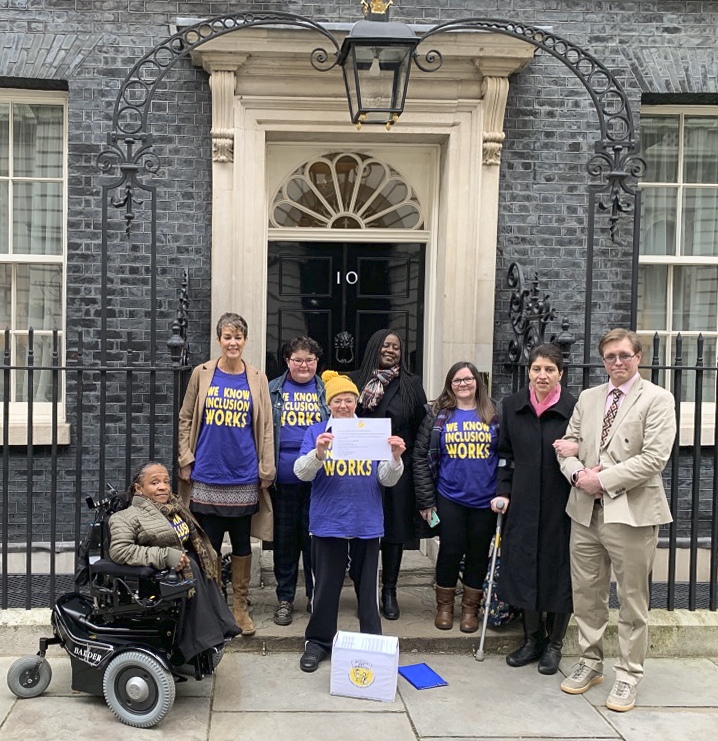
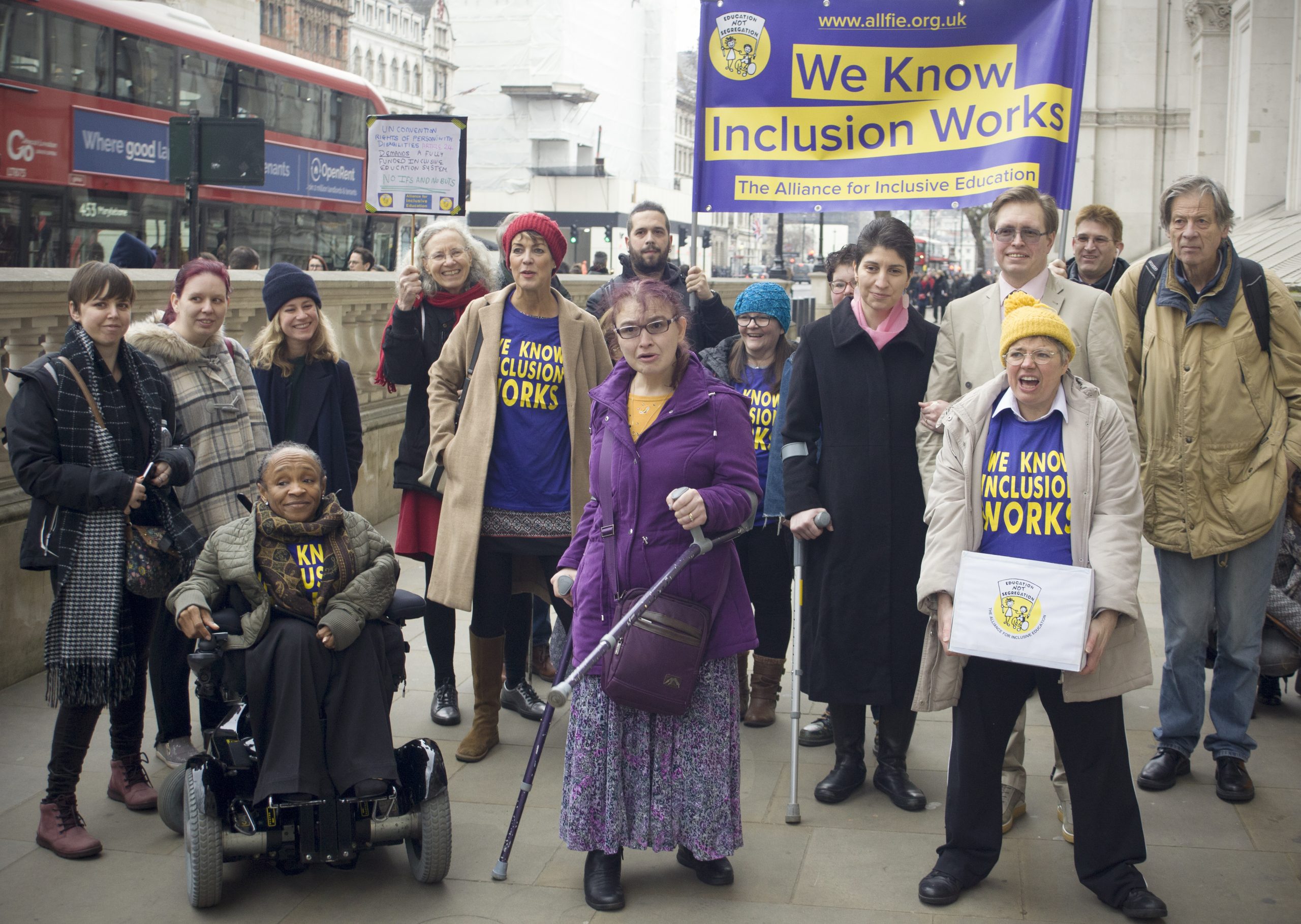
 The purpose of the petition was to draw attention to the crisis in SEND caused by education funding cuts and ALLFIE has been completely blown away by the enormous support. This marks a significant milestone for inclusive education, with by far the greatest response we have had for a petition:- over 107,800 signatures when we handed it to the Government at Downing Street and 108,479 at last count.
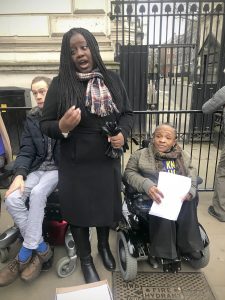 The day began with a march down Whitehall to the gates of Downing Street with our supporters, where we were joined by
 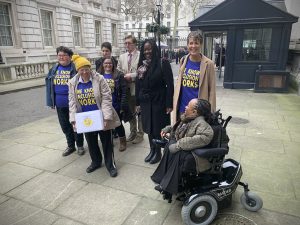 Shortly after midday, ALLFIE representatives entered the gates of Downing Street with our (substantial!) petition box. Simone Aspis and Martine Harding knocked on the famous door of Number 10, accompanied by Michelle Daley, Lucy Bartley,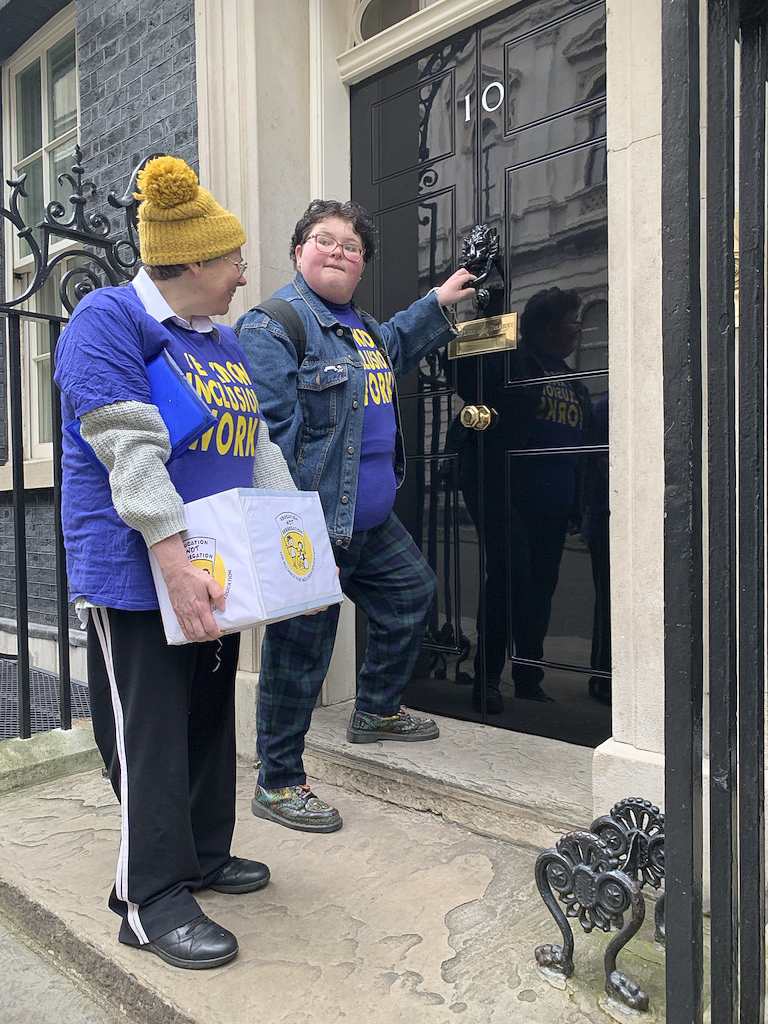
 Next it was on to Lawyer’s Suite at the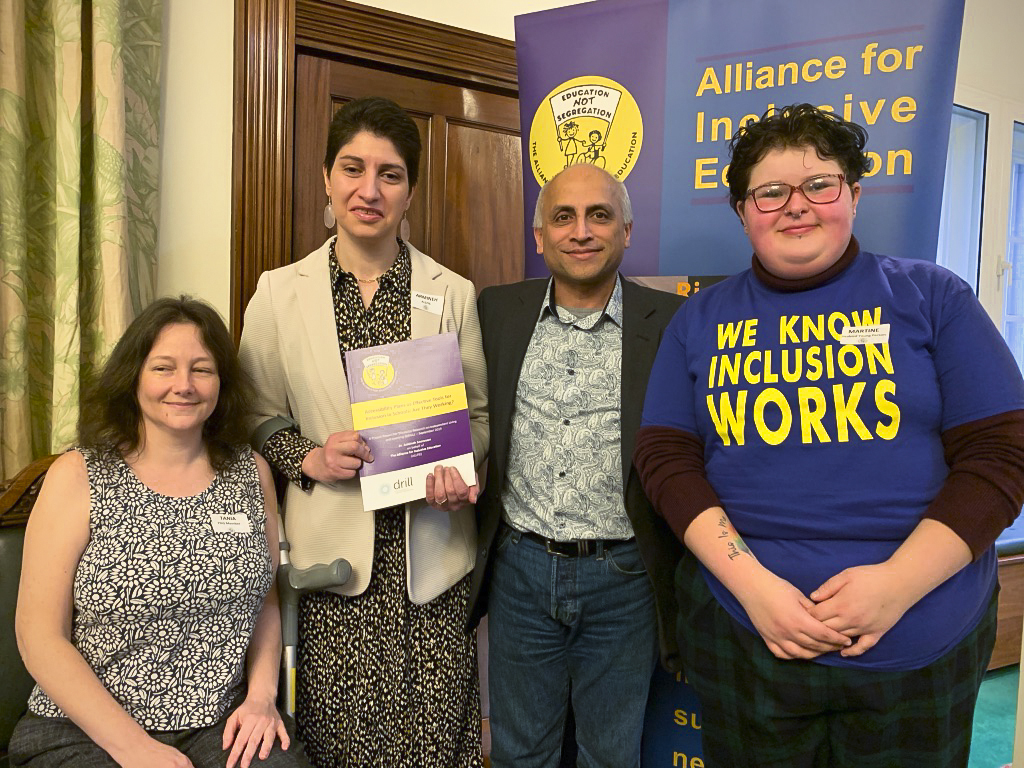
 The agenda included: opening statements by ALLFIE’s Joe Whittaker and Dr Navin Kikabhai; a summary of the Project findings by research author Dr Armineh Soorenian; and an open Q&A discussion a panel including ALLFIE Directors and project participants Martine Ifhardinmr and Hildja Vinhah. There were numerous passionate speeches and questions from the floor, including from young people who had participated in the research, alongside disturbing stories shared by parents and Disabled people.