Please ensure Javascript is enabled for purposes of website accessibility Skip to main content

ALLFIE Website Resources

ALLFIE is continuing to add resources to our website, and the latest is an article aimed at education students on some of the key issues around inclusive education.

In “Current Debates: Part 3”, Academic and ALLFIE trustee Dr Miro Griffiths MBE concludes a three-part series, exploring key arguments surrounding the purpose of education and the ways in which existing, exclusionary education systems can be resisted: www.allfie.org.uk/inclusion-resources/debates-part-3

Current Debates: Part 1, Understanding Disability and the problem with “Special”

Current Debates: Part 2

Education, Health and Care Plans

Coventry based disabled young person’s collective, the RIP:STARS, report back on giving evidence to the Commons Education Select Committee.

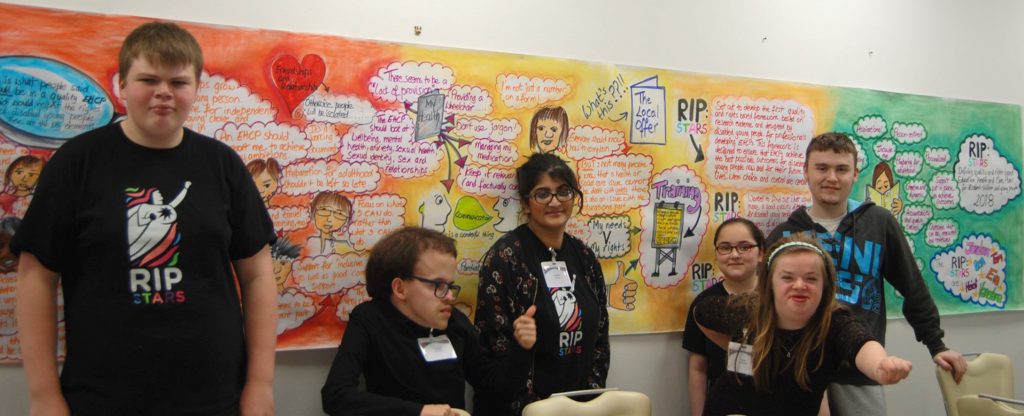
Coventry based RIP:STARS disabled young persons collective

A generation of children and young people with special educational needs and disabilities (SEND) is failing to receive the support it deserves, say the Education Committee in its report on SEND. We know that – we feel it – we see it happening in our schools and colleges and we researched it. We are the RIP:STARS, a group of disabled young researchers aged 16 – 23 based in Coventry. We were funded by DRILL/Big Lottery to undertake disabled young people-led research into quality and rights in Education, Health and Care Plans (EHCPs).

In December 2018 we published our research findings, based on interviews and discussion groups with disabled young people, parents and professionals from across the country. Since then, we have been travelling the country disseminating our research, and our person-centred, rights and quality framework for SEND practice to nearly 1000 professionals. We haven’t yet met anyone that doesn’t agree that change is needed in how we view disabled children and young people and how we support them, especially if we are to achieve inclusion. The report and framework for practice can be downloaded for free from the RIP:STARS website

Back in early 2019, we received a call from the Education Select Committee inviting us to present our research evidence as part of their SEND Inquiry. We jumped at the chance as we thought this might be a way to really achieve change.

We know that our experiences of the education system have been poor, we have experienced many moves in education, not received the support we should have and have felt excluded, isolated, voice-less, powerless, angry, and sad. We know that we can’t ever get that time again – but if we can change just one child’s experience then we will.

So on March 19th 2019, we went to Parliament. We spoke about our rights, as human beings, to an inclusive education that meets our needs and supports us to achieve a full life, now and in our futures. We felt welcomed and listened to by the MPs, we enjoyed our day at Parliament and came away hopeful that maybe – just maybe – somehow we might have made a difference.

On October 23rd 2019, the Commons Education Select Committee published their report:
Education Committee Report: Education, Care and Health Plans

It was long but we ploughed through it, looking at every recommendation. We were proud that our voices, our research evidence was in there – we had been heard and so it appeared had the other two groups of young people who had presented that day. Ok, so they didn’t go so far as to acknowledge our rights arguments, but there we were in black and white:

“There should be someone there to ensure that this child and children like this get what they deserve and what is needed for them to have the best future, and are not tossed aside and forgotten about in the system.” Jordan, RIP:STARS

We agreed with the report that there needs to be a change in the culture of schools and colleges to meet the needs of disabled young people, and also recognise their rights to involvement in decisions about their lives – to stop viewing the EHCP as just another paper document, but see it as a stepping stone for the young person’s life. This way disabled young people will get what they deserve. We feel that professionals need to adopt person centred practice and put the young person at the centre of their plan or support, it should be the young person’s plan with the professional’s advice not the professionals plan.

We were pleased to see that the report recognised the hundreds of thousands of children and young people without an EHCP but who also need SEN support. We argued that if people do not require an EHCP then they should be told why and still be given the support needed in order for them to succeed in life, otherwise we feel that professionals are setting disabled young people up to fail.

We were excited to see that they had listened to us, and we are sure many others, who said there had been too much emphasis on the young person’s educational achievements and not what they would like to get out of their lives. We argued that there needs to be more support for disabled young people to achieve their dreams and ambitions, and professionals need to take more time to discuss these instead of looking at their achievements from an educational perspective.

Our own experiences of SENCOs has been hit or miss, so we agreed with the recommendation that all schools should have a properly trained SENCO to support students. We feel that it is fairly obvious to have this in every school, because students need and deserve to have a member of staff who is especially trained to support those with SEND. Schools should have a designated professional for disabled young people to speak to should they have any concerns regarding their EHCP or school in general.

We could go on… the report was over 100 pages long with 38 conclusions and recommendations. Robert Halfon MP stated:

“We need to end this major social injustice, one which affects children and their families, particularly those who are not as well equipped to navigate this bureaucratic maze. Of course, extra funding for SEND announced in the spending round is welcome but the truth is that more cash will fail to make a difference to children with special education needs unless there is a radical change of approach throughout the system. The DfE cannot continue with a piecemeal and reactive approach to supporting children with SEND. Rather than making do with sticking plasters, what is needed is a transformation, a more strategic oversight and fundamental change to ensure a generation of children is no longer let down.”

We learned about parliamentary process and that the government has 60 days to make a response to the report. We understood that this was delayed by the General Election in December. We understand that the government has called for a further review of SEND and set up a SEND System Leadership Board, we understand that they have released some money for children who need high levels of support. But we also understand that this is a cop-out, kicking the issues into the long-grass, call it what you want. Many of the recommendations of this Inquiry, and many, many other reviews and reports have stated what needs to change and how. We as the generation who have been failed still feel failed as we note on the SEND Inquiry website – ‘Awaiting Government Response’ some five months later. Please do not fail those who are coming now behind us.

Follow us on Twitter @stars_rip

Eva, Heidi, Vandana, Ben, Jordan, Tom

www.ripstars.net

Inclusive Education in Malta

In the late 90s Malta began to move towards a more inclusive, community-based education system. On a recent visit Richard Reiser met Education Officers and representatives of the Malta Federation of Organisations of Persons with Disabilities (MFOPD), to visit and research education facilities including University of Malta and Dingli Sccondary School – here’s what he discovered.

Malta is a small country of three islands in the Mediterranean, 80 miles south of Sicily. It was a British Colony for 250 years and retains some cultural similarities but also differences: being Maltese speaking and more religious, with a strong national pride and focus on family and conservatism. Malta has a traditional single gender education system based on streaming and selection, with a school population of 55,000 (493,500 total population).

Education in Malta is well resourced with 5.1% of GDP spent on education and an average secondary class size of 20. Education is largely delivered through the compulsory system comprising: 150 state schools; 34 church schools; 18 independent schools.

Three resource centres act as special schools for full or part-time students. These looked likely to die out at one point but, more recently, student numbers have greatly increased. While some children attend these resource centres full-time due to parental choice, others have no choice. Unfortunately, centres have retained the role of special schools and investment “geared to their new and expanded role of providing professional support to regular schools in meeting special educational needs” (Salamanca Statement 1994), has not taken place.

Since 2010 state schools have been organised geographically, through pyramidal colleges comprising: one secondary school; one or two middle schools; six to ten primary schools.

In church schools the state pays for teachers’ salaries and support services, with parents asked for a voluntary contribution. In recent years state schools have become co-ed. The independent schools are fee paying.

In 2014, a ten-year ‘Framework for Education Strategy for Malta’ was launched to increase participation, community involvement and inclusion, and support educational achievement and retention. A system of “banding” was reintroduced at the end of year 4 (age nine), with benchmark exams in English, Maths and Maltese replacing the equivalent of the 11+ exam and students being ‘set’ according to marks obtained in these exams.

Recent figures from the European Agency for Special Needs and Inclusive Education Report show over 96% of students statemented in Malta attend mainstream inclusive classes – the equivalent for England is 47.8%. The level of Statements is around 5.5% in Malta, compared to 3.5% in England – this figure is rather high.

Nearly all of the school population attend their local school and age appropriate classes, with only 160 attending special school. There are, however, also resource bases developed around nurture group principles in primary schools and learning support zones in secondary, with specially trained teachers for social and emotional issues – currently one for primary and four for secondary schools (including Dingli Secondary school, featured below). In addition, 32 children with significant autism attend a specially commissioned foundation two days a week with Learning Support Educators (LSEs) to undergo a group TTEACH type programme. The effect of this provision is very low exclusions.

Rather than implementing inclusive pedagogies in class teachers tend to expect help from outside class usually in the figure of an LSE. The provision of LSEs is provided by a Statementing Board that schools and parents apply to for either full-time, shared, or shared in the same class support.

The Board is appointed by the Minister of Education and made up of SEND professionals, mostly those working within the education directorate. The LSEs are encouraged to attend University of Malta’s Department for Inclusion and Access to Learning for training to gain a diploma, recently upgraded to a degree. Other institutions also offer training courses. One particular course is of dubious quality. Many of the older teachers have not undertaken effective training in inclusion. In recent years there has been a big increase in LSEs to 2800 for 3800 children, using the bulk of increased the SEN budgets, despite rolls falling. The LSEs protest there is not always the necessary teamwork between them and teachers to facilitate the inclusion of all students. A student with a statement of needs is considered to be the responsibility of the LSE.

One issue with this system is that school students ‘become dependent’ on their LSE but are only allowed one year with each, rather than transferring through phases with the same one. Additionally, informal communication and planning between teachers and LSEs causes a disconnect which undermines whole school’s collaborative approach. There seemed a willingness from teachers to learn what was necessary, not with a coherent pedagogy of inclusion but piecemeal around particular students needs. There is an Inclusion Manager from the Directorate of School Support who coordinates LSEs in several schools and is part of leadership in schools, monitored practice, and ensures Individual Education Plans are constructed, monitored and annually reviewed.

The IEPs are, in practice, designed by LSEs using a software package, and according to diagnosis, based on the medical, deficit model of disability.

Case study

Dingli Secondary School in northern Malta has 486 students, of which 30 recieve LSE support. This includes 13 students receiving 1:1 support.
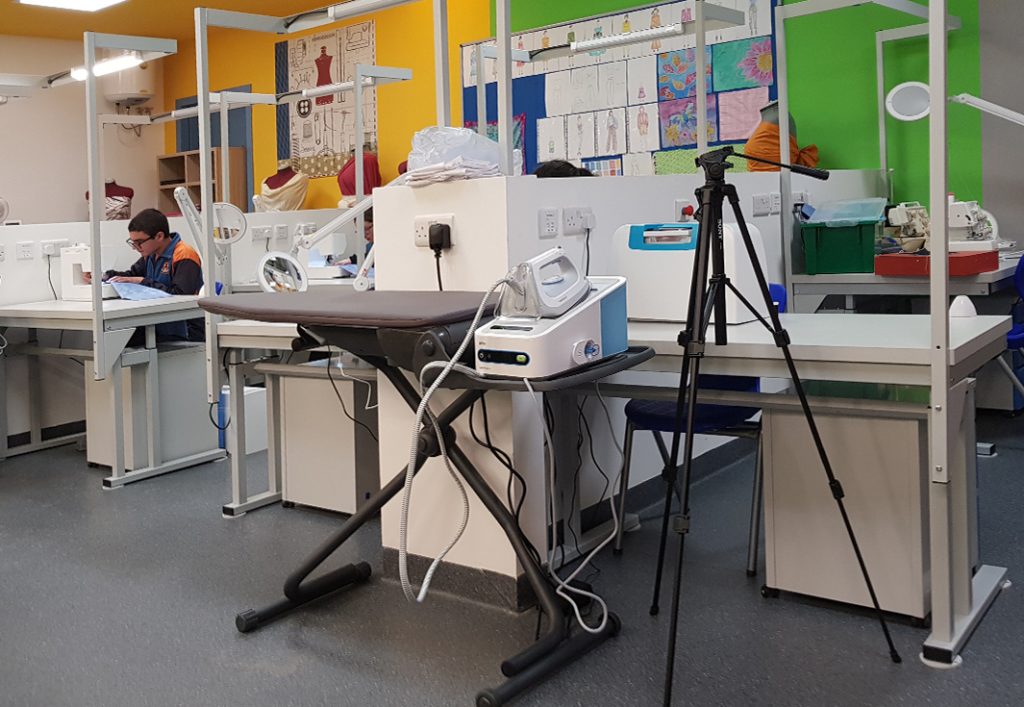
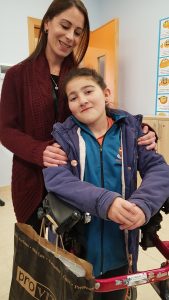
It is a spacious new build campus with lifts and wide corridors. The Principle explained that in the last two years they have introduced (as all secondaries), a vocational/practical based curriculum for those more suited to it, alongside the academic. Training takes place alongside a meeting with middle school teachers to sort out a lap top and raised diagrams, with class teachers giving notes on a pen drive.We met Sheranice, a girl who uses a rollator and the lifts to get about. She liked the school, had two best friends and seemed to have an ambivalent attitude to her LSE as she wanted to be more independent.

We saw very well resourced specialist areas, including a hospitality suite comprising restaurant, kitchen and accommodation, a food lab, and areas for video/photography and communication, textiles, craft, electronics and engineering. Other than streamed Literacy, Maths and Science, all other subjects in Year 9-11 are mixed ability, though we think banding still applied. Different weight is given to assessment through course work, projects and exams varying from 60% /40% to 40% /60%.

In the Learning Support Zone (LSZ) children attend ongoing 2×2 hour sessions per week, with progress measured via Boxall profile. Focussed groups are run on appropriate behaviour, friendship and anti-bullying, with strong evidence of improved behaviour dealing with social and emotional issues. A favourite was a ‘punch bag’ that was well used for getting rid of aggression.
My conclusion coincides with the 2014 European Agency Audit, the issues of which largely remain, despite subsequent initiatives to improve inclusive approach:

That said, Malta has many examples of good inclusive practice, accessible schools and a willingness to improve, which should embarrass the former colonial power – the United Kingdom, whose Government seems determined to reverse Inclusion in England.

Richard Rieser

Richard is General Secretary of the Commonwealth Disabled People’s Forum and Director of World of Inclusion

Nic CrosbyFor children and young people with complicated health support needs that mean they receive Continuing Health Care funding, there are ways to address ensuring they are healthy and able to take part in school activities. A well-known example from West Sussex, during their work as an SEND Pathfinder, pointed the way some years ago. There are small numbers of similar joined up packages of support in place now elsewhere in the country (although there should probably be a lot more).
In some parts of the country, despite the fact there has been a Right to Have a Personal Health Budget for Continuing Healthcare since 2014 (and to choose to receive this as a Direct Payment), families are still being denied information and the opportunity to think about how they may use one. This means many children and young people missing out on the opportunity of support like that in Amy’s story.

Amy was a young woman attending a mainstream school. Funding for her support was split between school and home where Mum managed a direct payment that funded Amy’s out of school support. However due to Amy’s complicated health support needs Mum was never confident in the support being offered at school; this often meant if Amy was having a bad day then Amy would stay at home. In the end it became a very combative relationship between school, services and family. Turning all the funding into an integrated personal budget, enabling Mum to manage this as a direct payment package of support that meant the same skilled support in the classroom as at home, changed everything radically. Amy’s attendance went up and general health improved, Mum relaxed as her worries had been listened to and acted upon and she was much more comfortable knowing what support Amy was having, and the difficult relationship between school, services and family improved greatly.

The potential of integrated personal budgets to deliver joined up support has never been given the attention it should, not only for young people with complicated physical health support needs but those with mental health challenges, autism and complicated home and family lives. It is continually trumpeted as part of the solution to the rising numbers of children and young people with learning disabilities, autism and/or mental health support needs being placed away. Yet across the country there has been slow (if any in some places) uptake of the opportunities supported in the Children and Family Act 2014 being driven by NHS England’s move to more personalised care.

For example, a young person allocated a number of hours social care Direct Payment and also a greater number of hours of Continuing Healthcare Support but denied information and possibility of taking the CHC funding as a Direct Payment. The potential pot of hours could have offered a young person with very complicated life support needs the possibility of consistent, familiar and skilled support.

Personal budgets in education, health and social care are only one way of supporting better lives for children and young people with complicated health support needs. It is one way that often shines a light on the local area’s approach to thinking of the ‘whole life’ of a child or young person or if they continue to think solely about their service or departments responsibilities.

I believe that, whether its about integrating funding at individual level using personal budgets or at a commissioning level delivering jointly commissioned support shaped by the local Health and Well-being Board, the key is working together to deliver ‘whole life outcomes’. Doing so challenges social care and education to stop thinking about outcomes linked to their specific stream of funding and understand that their work/funding and provision should all interact to deliver a combination of support, opportunity and provision that enables the child to participate in learning and achieve, as well as maintain a happy and welcoming home life and the best health possible. For example, if you want to be able to make the best of learning opportunities you need to be healthy so you can participate, or you will do better at school if things are happy and welcoming at home.

The over-riding frustration for so many people is that all the laws, guidelines and permissions exist to offer children and young people really good, joined up, personalised and skilled support and yet there remains a paucity of examples of this working in anything other than ‘one-off’ situations. Supporting children and young people to be in the best health they can be is not only the role of health services but of all those involved in their lives. If inclusion is to be really meaningful to each child or young person then all services need to step up and play their part alongside families and partners in enabling children and young people to Be Included and to Be Healthy.

RESOURCES
NHS England www.youtube.com/watch?v=9nG1822k83U

Personal Budgets and the School Day, In Control also cited in a number of evaluation reports produced during the SEND Pathfinder programme 2011-2014

www.england.nhs.uk/personal-health-budgets/personal-health-budgets-in-nhs-continuing-healthcare/

Nic Crosby is the Director of www.gatherbuildwork.net

ALLFIE’s Day of Action

College student Martine Harding reports back on ALLFIE’s national Day of Action.

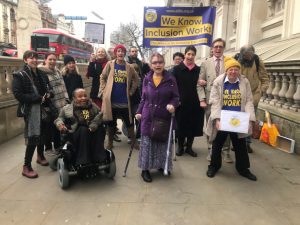
On January 23rd 2020 I travelled to Westminster, London, the heart of British politics. Here I met a group of ALLFIE campaigners and supporters for a national Day of Action. We marched together through the political district to 10 Downing Street, singing “education, not segregation.” This showed me we are powerful when taking action together to help disabled people who want to learn. Which I can relate to.
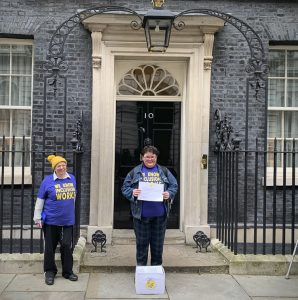
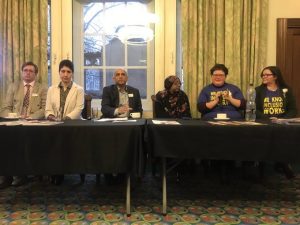
Delivering a 108,000 signature petition to 10 Downing Street

The petition ‘Don’t Shut Disabled People Out of Mainstream Education’ demands disabled people have their right to be educated in the mainstream realised.

I believe everyone should be in mainstream schools, so they can all learn the essential skills needed in society. Walking up to Number 10 Downing Street and knocking on the famous door, handing over the petition, I feel I am finally getting to have my say on my own education. Having Marsha de Cordova MP, Shadow Secretary of State for Women and Equalities, join us on the doorstep of 10 Downing Street highlighted the importance of the petition and of addressing problems in the education system for disabled people. It also shows the Government need to review education in mainstream schools and colleges for disabled people.

Launching the Accessibility Plans Report

Next we walked to the Supreme Court building for the launch of the research report which I was a participant for: ‘Accessibility Plans as effective tools for inclusion: are they working?’ The high profile location fitted the gravity of the research, to debate and discuss the problems in mainstream school for disabled people. Everyone listened intently as the speakers introduced the report and its findings.

The report powerfully and effectively shows the problems in education for disabled people. A the launch it was emotional to hear personal stories read aloud and some people cried while listening to the negative experiences disabled children face in UK education. The report is important to me because the education system has affected me. My struggles with learning now are because I did not get enough support as a child. I hope this report can help others learn how they can change education to help Disabled people.
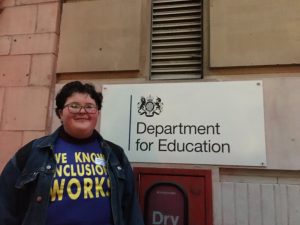
I was on the Q&A panel because I was one of the participants of the research so I was able to answer questions and show, from my own perspective and experiences, points that need to be improved in the education system. I shared my struggles as a disabled student in mainstream schools and how having support has helped me in college -so much that I now have offers to go to university. I found out I was helping others by showing disabled people can go to university and aim for their dream job. It takes courage and hope to keep fighting to reach my life goals.

Lobbying the Department for Education

Finally we walked to the Department for Education to deliver ALLFIE’s manifesto for inclusion and negotiate a meeting with the Secretary of State for Education. We argued with his secretary, who could not give a written promise a meeting would take place. We showed how real people can fight for their rights in society, some are not listening and we need change to improve. The Day of Action showed me the Government need to improve and how politics works in real life. It has given me courage to continue fighting for human rights for all.

Martine Harding

What we learned from our project about Accessibility Plans

In 2018, ALLFIE was given funding from the ‘Disability Research on Independent Living and Learning’ (DRILL) programme to lead a project that examined whether Accessibility Plans were effective in driving inclusive education in English secondary schools post Equality Act 2010.

The Equality Act (EA) 2010 and Children and Families Act (2014) made it compulsory for all education and training providers to develop and publish Accessibility Plans outlining how they intended to make their settings more accessible over the course of time. As the project researcher, I travelled across England conducting 12 focus groups, five semi-structured interviews and two sets of online questionnaires to glean people’s experiences and perspectives about different topics based on the three key areas that Accessibility Plans are legally required to focus on:- information delivery, physical access, and curriculum. Disabled young people, parents of Disabled young people, and education professionals took part in the project, and made up three separate participant groups. Quantitative data gathered from various sources were also used to support the field study. Here are some of our project findings.

Read the full report (pdf)

Read the easy-read version of the report

Delivery of written information

In our project, Disabled young participants generally thought that the provision of accessible information was poor. Parents’ responses were more diverse. The majority of parents reported that in the absence of adequate provision of accessible information, they had no choice but to scour a school’s website hoping they had not missed news regarding school activities. Some said they had to ask staff or other parents repeatedly for the information; for others, news would often come as a surprise or be found out by chance. The professional participants admitted that in their schools, the delivery of information in alternative formats was inconsistent. Many talked about accessible documents only being provided if pupils or parents made specific requests, rather than as standard practice throughout school. Instead of assigning responsibility to their school, the majority of the professionals felt factors such as lack of funding and not enough uptake by pupils were more important reasons.

Physical access

All of the project participants highlighted very similar physical access barriers within their schools. These included physical organisation of school buildings, an excessive number of steps, broken lifts, and inadequate provision of accessible toilets. Some parents pointed out how their children’s sensory issues, which were clearly causing anxiety, were being totally unsupported and misunderstood in their schools. In the online questionnaire, one parent wrote:

‘Too much distraction. Walls & some windows are covered with text, photos, pictures, drawings, info. Desks are filled with stationary pots. The acoustics in the dining area are bad, making it extremely noisy at lunch & break times.’

For most parents, barriers were often amplified by professionals’ inflexible attitudes when they needed help with removing the obstacles. In relation to access, it was clear that Accessibility Plans did not always comply with legal requirements.

Curriculum

In terms of teaching, learning and assessment, Disabled young participants felt that there was no level playing field in respect of their ability to participate in classroom activities and the school curriculum, particularly in relation to assessments. Parents were also frustrated with professionals’ insensitive attitudes in making reasonable adjustments to meet their children’s impairment-related needs. In one parent’s words:

‘The teacher disregards my daughter’s medical needs and diagnosis and makes no concessions, which is now impacting on her confidence, mental health, enthusiasm to learn and not wanting to go to school. Other students have been put down in front of the class and I’m not sure if this has happened to my daughter, as she doesn’t want to talk about school at all.’

Other parents revealed concerns that the adjustments they had requested for their children had not been honoured by their school, and that their children were being taught in corridors every day and being punished for behaviour that was consistent with their diagnosis, such as shouting out for not being able to follow a particular teaching style. The education professionals, for their part, felt that an effective and fully implemented Accessibility Plan would be a useful tool to promote and ensure equality in teaching.

Social inclusion

Even though social inclusion in its own right is not one of the key areas that an Accessibility Plan is required to focus on, I was interested to learn about participants’ experiences and views in this area. In their focus groups, Disabled young participants explained how they were denied full participation in their school community. They faced a number of barriers, including prejudicial attitudes, inadequate transport facilities, lack of trained staff during social time, limited finances, and inaccessible school activities, which led to them feeling excluded. Many Disabled young people experienced bullying which had a long-term impact on their confidence and self-esteem. Disturbing were also incidents involving the use of isolation booths, and as a result, reports of mental health difficulties being experienced by Disabled young people.

The professional participants agreed that inclusive practices to help with Disabled children’s social inclusion were ad-hoc and inconsistently implemented. All these accounts from the project make clear that social inclusion in school communities should be a key part of any Accessibility Plan, as opposed to a side issue, in order to help prevent the frequent bullying and exclusion of Disabled young people and promote a culture of equality among peers.

Our project research highlighted systematic gaps in Disabled young people’s education, providing a stark contrast to the requirements of not only national but also international legal instruments such as the United Nations Convention on the Rights of Persons with Disabilities (UNCRPD). It is essential that government leaders, policy makers and society at large, in discussion with strategic thinkers and those who deliver front-line education and training services, recognise and address these structural and institutional barriers in an urgent and comprehensive way. We believe through the implementation of our project recommendations, effective and fully implementable Accessibility Plans can be developed and nationally enforced. This can then lead to more inclusive schools, where Disabled and non-disabled young people learn and play together and grow into adults who can understand and respect each other’s differences.

More information can be found in the report ‘Accessibility Plans as effective tools for inclusion: are they working?’

This report is also available in an easy-read version: Accessibility plans as effective tools for inclusion: easy-read

Dr Armineh Soorenian, Project Researcher and Author

Hilra VinhaAs a professional educator and educationalist my focus is promoting inclusive education and alternative provision, delivering tailored support for further education (FE) college students and, to an extent, teaching staff.
My education career began in my home country, Brazil, where I spent many years working in senior management roles in mainstream educational settings, collaborating with teaching and support staff. The idea of inclusion in was not introduced to the education debate in Brazil until the 1990s. Following this, my interest in learning about inclusive practice motivated me to leave Brazil and study abroad where I believed, perhaps naively, that inclusion was already happening.

In 2011 I completed a doctorate on the topic of ‘Inclusive Practices in Education’ and have since immersed myself in learning more about this. Inclusive practice has subsequently become a crucial part of my work providing learning support within the mainstream Further Education (FE) sector in the UK. Prior to this I worked in a UK secondary school as part of the pastoral team, where I gradually migrated to a SEN focused role. In both settings, supporting students with learning difficulties and other special needs, I’ve witnessed a mixture of good inclusive education practice, alongside more questionable approaches.

A common thread I’ve encountered along the way is the pressure placed upon teaching staff to deliver measurable, results-based teaching practices, which aren’t as inclusive as they’d personally like. A significant proportion of teachers seem to find themselves at a crossroads when it comes to inclusion, as accountability on other aspects of their role is immense, including attendance, exams results and progression. All of which have real educational value, but result in completely diverse outcomes for students with disabilities in comparison to, so-called, able students. Although teachers are expected to design lessons incorporating differentiation, the success of this is not always measured to account for the different ways of learning or differences in abilities learners have. This causes barriers to learning for many children and young people, who struggle to fit into the requirements of a system primarily focussed on exams and grades.

In my current FE setting I have been involved in implementing measures to address this. For example, the college have adopted an increasingly inclusive approach to learning support including more integration of support staff into the whole college culture – with positive impact. Providing learning support to the wider college community has resulted in a blurring of boundaries between what is considered SEN and mainstream support. I am hopeful such initiatives can inform inclusive education debate and go some way to reduce the limitations faced by educators who advocate and work to progress inclusion. Unesco states the aim of their ‘Futures of Education’ initiative is to: “catalyse a global debate on how knowledge and learning can shape the future of humanity and the planet”. While it is a continuous work in progress, as is the nature of education, I believe inclusion is the right of every child and young person and that it is our job as educators to improve our practices and make it happen.

Hilra Vinha

Disabled pupils’ and students human right to inclusive education is at the heart of our demands, under Article 24 of the UN Convention on the Rights of Persons with Disabilities alongside the transition from a segregated to inclusive education system.

Sign our Inclusive Education Manifesto | Read the full ALLFIE manifesto

We believe disabled people have the right to:

Our revised manifesto focuses on the challenges in our education system faced by disabled people, education providers and society as a whole. The challenges of education include being a vehicle for social cohesion whilst preparing students for the future workplace, accountability and measuring success, and the inclusion of children with a broader range of impairments, support and access needs. All whilst providers are expected to do more with fewer resources.

Further, we have adopted a more holistic view of inclusive education that doesn’t focus only on what support disabled people require to flourish in mainstream education. We have also considered whether closing segregated education provision is sufficient, or whether we need to spell out how to achieve this goal. During turbulent times, parents are worried about their children receiving no education, when mainstream providers still lack the short-term capacity to be inclusive of all. We have focused on special schools becoming community resource hubs where mainstream education providers can go for specific advice, equipment and resources to support their inclusive education practices. We would like to develop this further, so please do contact us with any specific ideas.

We worked with our trustee board to develop our manifesto. We decided ALLFIE’s six manifesto demands remain relevant, however we have updated the content to reflect both positive factors and shortcomings of current legislation and policy, and connecting thinking between education, health and care services.

We have moved our focus from an individualistic to a systematic approach to developing and promoting inclusive education practice. We have focused on changes in laws and systems around education, health and care and transport services, building design, qualification assessments and workforce development that would support inclusive education practice. Our demands are therefore focused on what needs to change in education, health and care organisational support in order to implement an inclusive education system.

We intend to increase our outreach so that our manifesto is not only supported by our allies working in the area of inclusive education practice. We are making headway; the SEND Community Alliance, a coalition of parent campaign groups including Special Needs Jungle and SEN Action, have incorporated a specific demand around inclusive education. We are keen in building more on what we have in common rather than what divides us.

We are also asking mainstream education and children’s campaigns and organisations to support our manifesto. We are pleased to include the Children’s Rights Alliance for England, Comprehensive Future and the Anti-Academies Alliance amongst mainstream education campaign groups pledging their support for ALLFIE’s inclusive education manifesto for the first time.

We are keen to build on our success so if you or your organisation has not yet pledged its support, please do so here: www.allfie.org.uk/support-us/sign-the-allfie-manifesto/

Simone Aspis

Campaigns and Policy Co-ordinator www.allfie.org.uk

Prime Minister Johnson, like his predecessors Theresa May and David Cameron, has promised to “level up” school funding across the country. But, if you fast-forward to the highest point in the Prime Minister’s plan, in three years’ time UK schools will be reeling from a £1.3bn funding shortfall in 2022/23 compared with 2015/16 — the biggest in a generation. In real terms, the Government is not levelling up historically poorly funded areas to the level of the best funded (and usually most deprived) areas, but cutting the best.

The numbers just don’t add up, accounting for rising school costs and number of pupils the budget has to cover:

This has been met with a widespread negative response and coverage:

“The government has pledged to invest an extra £7.1bn in schools in England over the next three years up to 2022-23, including an increase of £2.6bn to the core schools budget in 2020-21, but the unions say there will still be a shortfall of £2.5bn in the coming year after years of devastating cuts.” Guardian 30.09.19

NEU joint General Secretary Kevin Courtney stated:

“Johnson has made lots of empty promises on school funding – but his numbers don’t add up. The latest funding announcement falls well short of settling the shortfall for every child. And crucially it fails to reverse the cuts schools have suffered since 2015.”

Unison’s Head of Education Division John Richards commented:

“Schools are so cash starved that staff are buying equipment like pens and stationery with their own money. Valuable teaching assistants are also being axed by schools as they struggle to balance budgets. The government keeps promising resources but schools need money now.”

This means all pupils with SEND in mainstream schools with no Education Health Care Plan (EHCP), who receive funding from a “non-ring fenced” SEN Support budget, lose out. Which puts increasing pressure on parents to get an EHCP for their child.

The Government’s Higher Needs Block funding which pays for EHCP provision is not keeping up.

It is estimated the £780 rise million rise, added in September 2019, will not prevent a £1.3billion deficit by 2021. Until recently, Local Authorities have taken money from other funding to bridge the gap. However, the Department for Education has now stopped this ‘robbing Peter to pay Paul’ approach, meaning more cuts in EHCP provision. Ironically the ability to switch budgets was the main reason the courts found in favour of the Government in the Judicial Review last year. This is now closed down.

Currently 8,000 children with SEND are out of school awaiting placement. The reasons more mainstream schools say they can’t meet the needs of children with SEND referred by Local Authorities (LAs) are complicated. If parents demand a mainstream school, the only legal reason a school can give for not accepting them, provided the school is non-selective and has places, is interference with the efficient education of other children. The pressure on schools to meet raised attainment targets on national tests is high. Many schools claim they do not have the expertise or practice to meet the child’s SEND needs. But schools and teachers are legally expected to admit the child and make reasonable adjustments so they can thrive. Local Authorities are not prepared to place children with EHCP Plans in schools, even though they have the power to do so. The fact an increasing number of academies and free schools have reduced the numbers of pupils with SEND at a faster rate than maintained schools has had a big impact on this.

When Michael Gove introduced the new national curriculum, discarding curriculum levels, no thought was given to how this would work with for the bottom quartile. Then continuous assessment and course work was replaced with exams and curriculum content based more on knowledge and less on skills and understanding. Which made it far harder to maintain good inclusive pedagogy and a child centred approach. Alongside the rigid curriculum, increasing use of zero tolerance behaviour policies have impacted massively on disabled pupils, leading to 50% of school exclusions constituting disabled pupils whose impairments are social, emotional or mental, such as ADHD, Autism or anxiety.

All of which is far removed from the Government’s commitment to implement Inclusive education under Article 24 of the UNCRPD or the Children and Families Act 2014.

Instead the commitment is to a presumption of mainstreaming. The values and pedagogy our school system is based upon need reasserting, and the principles of inclusive education put into practice. Importantly, this includes changing high stakes testing and rewarding schools for the success of all their pupils, alongside implementing concrete measures to welcome all and challenge exclusion and bullying.

If this change does not occur Government will never be able to fund the growing demand for non-segregated education.

What Can Be Done!

Richard Rieser

World of Inclusion

There has been a lot of media coverage over the cuts to funding for SEND provision, so it’s not surprising that you have concerns. As you have concerns about SEN funding, there are a number of options available to you.

If your child is considered to have SEN, the school should follow a ‘graduated approach’. This is made up of four parts. Firstly, your child’s needs are assessed. Then a plan is put together to support progress. The plan is implemented, and then reviewed.

As part of this approach, specialists can be brought in to advise on any necessary intervention.

In general, schools must fund the first £10,000 of SEN Support identified through this four step approach. If this amount isn’t enough to cover the support, then top up funding can be requested from the Local Authority. You can ask the School to request this for you.

If your child’s needs are not being met under SEN Support and top up funding is not available, you could apply for an Education, Health & Care Plan, known as an EHCP. An EHCP outlines the needs of your child, what support must be implemented to meet those needs, and where your child will receive an education.

An EHCP is a legal document which places an obligation on the Local Authority to fund the education provision in the EHCP and to make sure it’s implemented. To have an EHCP put in place, your child will need an Education, Health and Care Needs Assessment (EHCNA) and for it to be decided that an EHCP is necessary after this assessment. You can ask the Local Authority to conduct an assessment in writing. The Local Authority must conduct an assessment if there is a possibility that your child may have SEN, and that special educational provision may be necessary.

If the Local Authority are not implementing the support in the EHCP, you should first contact them and ask that the support is implemented. If they still don’t implement the support, you could consider a complaint to the Local Government and Social Care Ombudsman. They can investigate and make recommendations about what the Local Authority should do. You must first go through the Local Authority complaints procedure without success.

Judicial Review may also be considered if the Local Authority are not meeting provision in the EHCP. A Judicial Review is where you take the Local Authority to court when they have done something unlawful.

To make a Judicial Review, you usually have to have pursued all other options first, but for urgent situations, such as your child missing out on their education because of a failure to implement an EHCP, an urgent Judicial Review can be considered immediately.

Funding cuts can also be challenged by Judicial Review.

In 2018, Simpson Millar successfully challenged Bristol City Council’s decision to reduce SEND spending. The Court decided that the process which led to the Council cutting funding was legally flawed, so it had to reconsider its decision.

Ultimately, Local Authorities can only cut funding if it’s done lawfully. If your Local Authority makes cuts to the funding available to meet the needs of children with SEND, you should seek specialist legal advice to see if you can legally challenge that decision.

Our Education and SEN Solicitors can help ensure that children and young people get suitable provision at school and that funding is in place.

Gillian and Hannah

Paralegals in the Public Law Team at www.simpsonmillar.co.uk

Sources

https://researchbriefings.parliament.uk/ResearchBriefing/Summary/SN07020

https://epi.org.uk/publications-and-research/high-needs-funding-overview/

https://assets.publishing.service.gov.uk/government/uploads/system/uploads/attachment_data/file/728273/National_funding_formula_policy_document_-_2019_to_2020_-_BRANDED.pdf

www.ipsea.org.uk/judicial-review

www.simpsonmillar.co.uk/media/special-educational-needs-and-disabilities-spending-reduced-by-5m/

Dear friends,

Graphic illustrating Parliament education lawThis special Coronavirus Act briefing is to update our members on what ALLFIE has been doing around this piece of legislation which gives the Government specific powers to deal with the Coronavirus outbreak that includes the:

Closure of schools

Graphic illustrating Disabled pupils being stopped from entering mainstream schoolThe Government have announced the closure of state schools for the overwhelming majority of children. However, schools will remain open for children of key workers and ‘vulnerable children’ including pupils with education, health and care plans (EHCPs). Although mainstream schools will be closed special schools are expected to follow Government Covid-19 advice and remain open.

Has the Government taken into account the fact that many of the pupils attending special schools will have underlying health conditions including compromised immune systems?

This conflicts with the Government’s own professional advice to the general population to stay at home if one is at higher risk of developing infections and virus.

We expect that many parents will not want their disabled children to be placed at higher risk of developing Covid-19 and will therefore have to consider whether to withdraw their child from school. However, many of these families will not have the structured support in place available in many special schools and may have to accept the extra risk of allowing their child to attend school, which is unacceptable.

If this Government wants to ensure that all children minimise the risk of developing Covid-19 they need to provide the funding and put in place the infrastructure needed to facilitate disabled children to continue to receive the support and routine they require in their own homes and within mainstream educational settings.

Qualifications

Graphic illustrating education qualificationClosing schools and colleges will obviously have an impact on pupils’ and students ability to sit their examinations and complete course work. The Government has announced that exams will be cancelled this summer to fight spread of coronavirus.
The exam regulator, Ofqual, and exam boards will work with teachers to provide grades to students’ whose exams have been cancelled this summer as a result of the coronavirus out-break. There will also be an option to sit an exam early in the next academic year for students who wish to.

If you want to know more about the decision making processes involved in awarding pupil or student’s grades follow: www.gov.uk/government/news/further-details-on-exams-and-grades-announced

University representatives have confirmed that they expect universities to be flexible and do all they can to support students and ensure they can progress to higher education.

Government’s Proposals in the Coronavirus legislation

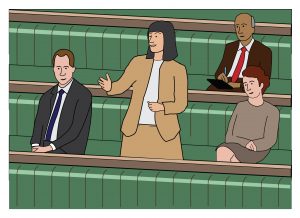
Graphic illustrating MPs debating in the House of Commons ChamberOn March 19th, the Government published the contents of the Coronavirus Bill, covering a whole range of powers including the following:
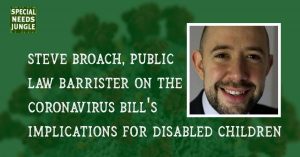
Photograph of Steve Broach alongside text: Steve Broach, Public Law Barrister on the Coronavirus Bill's Implications for Disabled ChildrenSteve Broach Public Law Barrister on the Coronavirus Bill’s implications for disabled children
www.specialneedsjungle.com/steve-broach-public-law-barrister-on-the-coronavirus-bills-implications-for-disabled-children/

If you are interested in knowing what else is in the Coronavirus legislation follow the Government’s weblink
www.gov.uk/government/publications/coronavirus-bill-what-it-will-do/what-the-coronavirus-bill-will-do

ALLFIE’s initial response

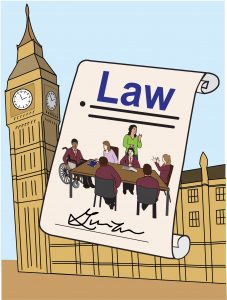
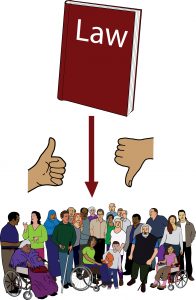
Graphic illustrating how a law affects groups of peopleALLFIE is very concerned that disabled people’s rights to be supported within mainstream education will be suspended for up to two years under the Coronavirus Bill. The Government wants to suspend various rights disabled people have under current legislation.
We are very concerned that there is a real possibility that:

It is totally unacceptable that the rights of disabled people, the only group of people with protected characteristic rights under the Equality Act, will be suspended.  For many disabled pupils and students the education, health and care provision required is necessary to support both their emotional and physical wellbeing. Many of the health and social care practitioners are undertaking tasks that will help to maintain stable health, including reducing the risk of developing infections and viruses.

The education and care provisions in the Coronavirus Bill are an attack on disabled people’s human rights to education, health and care.

ALLFIE’s Coronavirus Bill briefing

The Coronavirus Bill had a swift passage through both the House of Commons and House of Lords.   MPs and Peers had just three days   23rd-25th March to debate and amend the bill before it became law.

The published Coronavirus Bill and Parliamentary debates: services.parliament.uk/Bills/2019-21/coronavirus.html

See ALLIFE’s briefing: www.allfie.org.uk/news/briefing/coronavirus-bill-debate-march/

The Coronavirus Act enacted for a maximum of two years must be reviewed on a six monthly basis by parliament is the only key amendment accepted to the law by Government.

Coronavirus Guidance

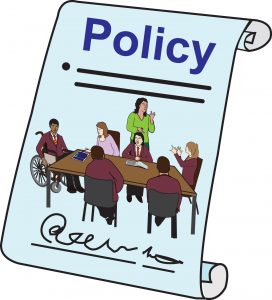
Graphic illustrating school policy on educationOn 27th March the Government issued Coronavirus (COVID-19): guidance on vulnerable children and young people.
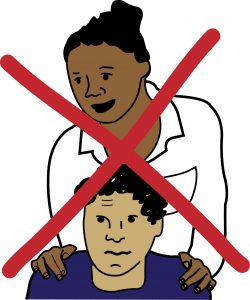
This Government’s guidance sets out what will local authorities are expected to provide for children with EHC plans.

“Local authorities will need to work closely with educational settings – and in particular, special schools and specialist colleges, and other specialist provision – to ensure sufficient provision is available across the local area. Local authorities and educational settings may need to redeploy staff (whether teachers, support staff or other critical workers) to ensure that specialist settings have sufficient workforce to operate safely; and may need to do this across the usual boundaries of maintained, academy, college or other status to ensure the right staff are in the right settings. Any changes made to a child or young person’s provision in their EHC plan would only remain in place temporarily. The full range of provision would be reinstated once the temporary notice expires.”

Paragraph 27 What about those with EHC plans who attend mainstream schools and colleges?

Many children and young people with EHC plans can safely remain at home. If a risk assessment shows that the needs of an individual with an EHC plan cannot be met at home, it is likely they will continue at their usual school or college, but there may be a need to attend a different setting, for instance due to insufficient staffing ratios which cannot be remedied by drawing on additional appropriately skilled staff.”

  1. What if there are not enough staff in educational settings due to COVID-19?

Local authorities will need to work closely with educational settings – and in particular special schools and other specialist provision – to ensure sufficient provision is available across the local area. Local authorities and educational settings may need to redeploy staff (whether teachers, support staff or other critical workers) to ensure specialist schools and specialist colleges have sufficient workforce to operate safely, and may need to do this across the usual boundaries of maintained, academy, college or other status to ensure the right staff are in the right settings.”

www.gov.uk/government/publications/coronavirus-covid-19-guidance-on-vulnerable-children-and-young-people/coronavirus-covid-19-guidance-on-vulnerable-children-and-young-people#children-with-education-health-and-care-ehc-plans

Proposals to suspend the Local Authorities duties in arranging care provision for disabled adults

Graphic illustrating care needs not being metDisabled students and pupils requiring adult care services can find their care packages being reduced because local authorities will no longer be required to meet all eligible needs which includes support whilst participating in education and training.

For more information follow Inclusion London’s web-link : www.inclusionlondon.org.uk/campaigns-and-policy/comment-and-media/coronavirus-update/

The Government’s Coronavirus Act: ALLFIE’s Statement

Graphic illustrating bad change to lawThe Coronavirus Act has been passed in three days flat with limited scrutiny of its provisions by Parliament.

Read the Coronavirus Act 2020

The Act gives Government an extraordinary range of powers to fight this pandemic. These powers deprive disabled people of their rights to community care; special education needs provision and access to justice. Already, days after school closures, we are hearing about disabled children without the education, health and care support they require while in self-isolation with their families. Many of these families need reassurance and support to help them understand what is happening and to create a structured programme of activities. What is NOT needed right now is for disabled pupils and students to lose their support in favour of the priority groups the Government has identified as more in need.   The Government’s guidance expects flexibility including disabled mainstream school pupils with ECH and their staff to be deployed into other education provision such as special schools and specialist colleges in order to maintain safe staff-pupil ratios within segregated education provision.

It does not need to happen like this. The Government could have used the economic package to not just bolster the NHS but also the education and social care sector by providing additional funding to ensure that all disabled people are given the support required to promote both their emotional and physical wellbeing during these very challenging times. This is no longer about austerity or a lack of money: the Government could have chosen to use the newly created money to implement a strong education, health and social care system that is needed to ensure that we all feel safe, secure and well. But instead the stark reality will be the only way that disabled people will get state-funded assistance is in a general or psychiatric hospital or if they accept provision in other forms of segregated or institutionalised settings. ALLFIE believes this is ideologically driven.

Call to action

Current Debates: Part 3

Exploring key arguments surrounding the purpose of education and the ways in which existing, exclusionary education systems can be resisted. Academic and ALLFIE trustee Dr Miro Griffiths MBE concludes his three part series for education students on some of the key issues around inclusive education.

Inclusive education is a complex issue, with considerable resistance emerging from political, economic, cultural, and social structures in society. There is substantial support for inclusive education with activists, scholars, policymakers, and public officials showing their commitment to developing, promoting, and implementing inclusive education practices. It is not possible to capture the entirety of the debate surrounding inclusive education; however, the aim here is to provide an overview of some of the central points. Please use this as an introduction, which, when combined with the list of suggested readings, provides you with substantial literature and points of reference to develop your own thinking on inclusive education.

Click here for part one of this series

Click here for part two of this series

Purpose of Education

It is impossible to imagine an inclusive education system without engaging with a complex, perhaps irresolvable, question: what is the purpose of education? The varied answers to this question provide insight of the issues affecting the realisation of a fair, accessible, and inclusive education system. Robinson (2014) argues the education system squanders children’s innovation and development of creativity. His analysis arrives at two pivotal conclusions: firstly, the education system is designed to prioritise subjects appropriate for engaging with the existing labour market, and secondly, the system establishes a link between academic performance and the notion of intelligence. This analysis is significant because it illustrates how the contemporary approach to educate is not reflective of the desires, interests, opportunities, and access needs of the diverse population engaged in the education system.

It is important that the link between the education system and the contemporary needs of the existing labour market become disrupted beyond repair. As Ball (2013) suggests, education is not to transmit information from one source to another, it is to support learners to engage critically with elements of discovery, innovation, analysis, and creativity. This is at the point where inclusive education emerges as a pivotal discourse to challenge the continuing practices of exclusion. Slee (2013) draws attention to the tolerance, indeed promotion, of exclusionary practices within contemporary social structures. The notion of exclusion is embedded within political, cultural, social, and economic contexts that it becomes unsurprising an education system would operate differently. Slee continues by suggesting disabled learners are considered surplus to the existing aims and objectives of the education system.

To resist the exclusionary approaches within the education system, there are two approaches available: firstly, there is the option to implement existing inclusive education policies and practices identified throughout the globe. Secondly, the collective action taken to realise inclusive education is focused on establishing alternative approaches – in other words, a different education system is possible and preferable.

How to Resist?

With the first option, there is extensive examples and literature to be explored. The United Nations Committee on the Rights of Persons with Disabilities provides commentary on embedding inclusive principles within existing education settings (United Nations 2016). Such as: recognising every person has the capacity to learn and develop skills, supporting teachers to develop flexible curricula that accounts for different learning styles and requirements, and creating learning communities that respect diverse backgrounds and experiences. Doolittle Wilson (2017) points to the imagination of inclusive education through promoting Universal Design for Learning, which aims to create materials and curriculum activities that can be accessed by learners with varying access requirements. The attitudes of practitioners, including teachers, are analysed to determine their approaches towards integrative schooling environments (Avramidis and Norwich 2002). This is to be welcomed, and remains a useful point of investigation for activists, policymakers, students, and intelligentsia. The UNESCO Salamanca Statement and United Nations Convention on the Rights of Persons with Disabilities remain essential for praxis – taking conceptual ideas of inclusion and accessibility, and translating it into actions within the classroom, college, or lecture theatre.

However, focusing time and resources on advancing existing policy within the area of inclusive education requires a level of caution. There is concern with regard to the issue of policy transference. Defined by Dolowitz and Marsh (2000, p.5), policy transference is a process wherein “knowledge about policies, administrative arrangements, institutions and ideas in one political setting (past or present) is used in development of policies, administrative arrangements, institutions and ideas in another political setting.” Transferring policy, strategies, and specific practices from one location to another does not guarantee success. Can it be said, with conviction, that there remains an ideal example of inclusive education at a national, regional, or even local, context?

The justification for the reluctance to embrace existing inclusive education policy is to return to Slee’s (2013) analysis of exclusion. Slee argues that exclusion has become an ordinary, accepted aspect of society. An essential component that establishes the order of ideas and practices. The development of communities, services, enterprises, even the labour market, rest upon the ideals of exclusion. With this, there is a risk of furthering policy discourse that fails to identify and challenge the wider political, economic, cultural, and social practices of exclusion – practices that transcend the school environment. Is it possible to demand inclusive education when environments outside of the school accept exclusionary practices, ignore data and evidence of marginalisation, and remain indifferent to the demands for change?

Instead, activities and strategies to promote inclusive education rest upon questions posed by Garland-Thomson (2004): “What would happen if our society fully recognised and validated human variation? […] How would the public landscape change if the widest possible diversity of human forms, functions and behaviours were fully accommodated? […] What would be the political significance of such inclusion?”. The value of inclusive education debates comes from producing action, and preferable alternative futures, within the broad environments of human activity. Radically transforming ideas and expectations of learning requires new forms of discourse, which question why and how exclusion is accepted.

This completes Part Three of a three-part series on unpacking the current debates within inclusive education.

References

Robinson, K. (2014) Do Schools Kill Creativity?. [Online]. [Accessed 28 February 2020]. Available from: https://www.ted.com/talks/sir_ken_robinson_do_schools_kill_creativity/transcript?language=en

Ball, S.J. (2013) Education, Justice and Democracy: the struggle over ignorance and opportunity. London: Centre for Labour and Social Studies.

Slee, R. (2013) How do we make inclusive education happen when exclusion is a political predisposition?. International Journal of Inclusive Education. 17(8), 895-907.

United Nations. (2016) General Comment No 4 – Article 24: Right to inclusive education. Geneva: United Nations.

Dolittle Wilson, J. (2017) Reimagining Disability and Inclusive Education through Universal Design for Learning. Disability Studies Quarterly. 37(2). [Online]. [Accessed 11 February 2020]. Available from: https://dsq-sds.org/article/view/5417/4650

Avramidis, E. and Norwich, B. (2002) Teachers’ attitudes towards integration/inclusion: a review of the literature. European Journal of Special Needs Education, 17(2), 129-147.

Dolowitz, D.P. and Marsh, D. (2000) Learning from Abroad: The Role of Policy Transfer in Contemporary Policy-Making. Governance. 13(1), 5-23.

Garland-Thompson, R. (2004) First Person: Rosemarie Garland-Thompson. Emory Report. 56.[Online]. [Accessed 3 February 2020]. Available from: http://www.emory.edu/EMORY_REPORT/erarchive/2004/July/er%20july%206/7_6_04firstperson.html

Supported by

ALLFIE’s campaign for Inclusive Education as a human right is backed by funders and donors who reject the systemic segregation of Disabled people from society.