Please ensure Javascript is enabled for purposes of website accessibility Skip to main content

Political Rhetoric and Inclusive Education

Part 2 of ‘Missing Voices’, a powerful 3-part series to mark Black History Month 2020. By Navin Kikabhai

Political Rhetoric and Inclusive Education

By Navin Kikabhai

Over several decades we have been witnessing the increasing educational segregation of disabled people, including those described as having Special Educational Needs (SEN), at every level of educational provision. It is probably surprising to most people to think that if a young person with an Education Health and Care plan wanted to attend their mainstream school or college or a disabled learner wanting to go to university – that this preference would be met by a barrage of individual, structural opposition and institutional discriminations. The current educational machine is predominantly set to sending such individuals to Alternative Provision, Free Schools, ‘special’ units/classes, discrete provision, under the prefix that ‘they’ would “get the support” ‘they’ need. On the contrary, this so-called ‘special’ provision is by definition discriminatory and certainly not inclusive.

For decades disabled people and their allies have been highlighting this discriminatory practice. Not only are disabled people often locked out of the education system, they are also often locked out of decision-making processes and from working in the very profession that tend to exclude us. Political rhetoric about inclusive policy and practice is a sham, full of well-meaning phrases that lack political teeth, and legal protections. In recent times it seems incredible that four decades after the Warnock Report (1978) little has changed for disabled people (not that Mary Warnock was ever going to promote the rights of disabled people to non-segregated education).

Disabled people are not a homogenous group or people with single identities, we are gendered, we cross different age groups, we come from different social, and ethnic backgrounds, we identify with different sexualities, and so on.

Another political rhetorical tool is parental ‘choice’. When parents find themselves in this machine they are often at loggerheads with Local Authorities. Parents usually those who have the social, cultural and financial wherewithal have the means to seek legal advice and redress, even if this now called ‘specialist’ provision (different name, same outcome, same dirty trick: segregation). Not all parents have the social, cultural and financial wherewithal or can articulate their educational rights. Give some thought to under-resourced families on low income or those parents from different ethnic groups who are routinely excluded and overrepresented in segregated provision – why? Disablism, racism, social class discrimination; that is why!

What is for sure: no parent would ever have thought that so-called parental ‘choice’ would mask such a cruel and callous education system that prizes mythical norms, standards, individual achievement, promotes negative cultural images of disabled people and shuns difference and perpetuates rejection. No educational practitioner too would ever have thought they would be instrumental in this discriminatory educational machine. Many disabled learners are expected to reveal their personal identities for institutional consumption with the expectation that such institutions will make reasonable adjustments. How about a different question: What discriminatory barriers would the university need to remove to enable you to have a successful higher educational experience? Surely, this alternative question would begin to remove some of the educational rhetoric around university education! It is not a political will that is the problem but legal and enforceable protection for disabled people to a fully inclusive education system at every level that is at stake.

Include Us: Disabled Black People and People of Colour Academics and Disablist Academia

By Armineh Soorenian

Include us: Disabled Black People and People of Colour academics and disablist academia.

By Armineh Soorenian

Disabled students, researchers and academics of Disabled Black People and People of Colour academics are frequently confronted with multi-layered and multifaceted barriers which ignore the intersectionality of their identities in a neoliberal British higher education system. Disablist, racist, homophobic and sexist standards are rife in education. In academia, work identification is so strongly related to personal identity that individuals continue to ‘live up’ to the arbitrary standards present in the academy. This often results in Disabled learners and academics internalising the toxic ideology of disablism at the levels of personhood, life, power and privilege. For example, such macro/micro-aggressions as performance standards that do not recognise the impairment-related experiences of Disabled people are often internalised in order to maintain employment.

Throughout their academic career, at times to the detriment of their mental and physical health, many Disabled academics perform like ‘super cripples’. The need for access and accommodations, including extra time and extensions are generally not welcomed in the current neoliberal and disablist academic environment where high productivity is expected in short time frames. Increased demands are placed on academics’ time, over the life of their precarious and often part-time contracts. In contrast, the non-disabled white heterosexual male academic (full-time) is generally the norm. Everyone else is almost diminished and considered not as desirable. Discrimination against Disabled Black People and People of Colour in favour of non-disabled scholars is sadly all too familiar in higher education.

Added to disablism, discriminatory treatment on the grounds of being racially, culturally and ethnically different is also abundant in education. I’m of the view that the compounding discriminatory practices have become habit and not necessary law. Academics are expected to master a certain form of articulation and elegance when making an argument or writing their opinions. There seems to be little accommodation of language barriers for non-native speakers in academia, evident in some critical, discouraging or even hurtful feedback Disabled Black People and People of Colour academics regularly receive on their written work.

There is an unsatisfactory level of exclusion and inequality experienced by Disabled Black People and People of Colour, who are often isolated and have to develop a far greater level of personal determination to cope with the bullying inherent in academia that they attract simply by being Disabled and Black or a person of colour. Social conditions that disable many people are racially coded. The discipline of Disability Studies is in itself racial, gendered and class-based almost always in danger of reinforcing the message that Disabled people are a homogenous group of people which does little to address the intersectional inequality within the Disability Rights Movement. This is why advocates of the social model of disability, whilst campaigning for the removal of barriers in society, would benefit from recognising the multiple discrimination that intersect not only with impairment but also with other identity characteristics such as gender, ‘race’, age, sexuality and so on.

For decades, the side-lining of research conducted by Disabled academics and Disabled Black People and People of Colour activists has resulted in the exclusion and wastage of their experiences and skills. This is a very unjust system which ought to be thoroughly challenged by all those concerned with continuing disability rights and the fight for inclusion. The research environment should develop alternatives and voices of Disabled Black People and People of Colour must be prioritised in this process. The new system must provide opportunities to engage in politics and attend to the intersectional ethics of collective determination with everyday acts of resistance in academia.

Missing Voices: Stop Ignoring the Voices of Disabled Black People and People of Colour

ALLFIE’s Disabled Black Lives Matter pressure group presents ‘Missing Voices’, a powerful 3-part series to mark Black History Month 2020.

Black History Month 2020

Missing Voices: Stop Ignoring Disabled Black People and People of Colour.

ALLFIE’s Disabled Black Lives Matter group are using Black History Month as a platform to amplify the experiences of Disabled Black people and People of Colour.

The following contributions look at education, disability, ‘race’ and issues of intersectionality.

These articles are a reminder of the missing voices, insights into multiple discriminations, the deep-rooted cross-sector structural barriers, and a recognition of individuals with multiple intersecting social identities.

“We must address intersectional inequality, injustice and discrimination. We want to make sure that when we are discussing inclusion, diversity and equality that this recognises intersectional experiences.” (Disabled Black Lives Matter pressure group)

ALLFIE’s campaign: News and information

https://pedantic-shannon.91-238-163-161.plesk.page/campaigns/disabled-black-lives-matter/

Inclusion Matters to ALLFIE: Disabled Black Lives Matter

Black Lives Matter raised fist logoTo mark the start of Black History Month, we have published this insightful article by Katouche Goll, ALLFIE volunteer and member of our Disabled Black Lives Matter pressure group, set up to address racial and intersectional inequalities.

When examining the experience of Disabled Black students, an understanding of intersectionality is important. Coined by scholar Kimberle Crenshaw in 1989, intersectionality allows us to understand how multiple identities can exist at once in a person. Being Black and Disabled is a unique experience that has more oppression and stigma. In the context of school, this leads to a greater number of exclusions. The Timpson Review of School Exclusions reveals that 78% of excluded children are Disabled. It also reveals that Black pupils are more likely to be excluded than their non-Black peers. This likelihood increases when the child is both Black and Disabled. The high incidence of exclusion for Black Disabled children at school, speaks to the educational environment. Is it a conducive environment that prioritises the wellbeing and learning of all children? Or does it isolate Black Disabled students to the point of exclusion?

I speak from a place of privilege having attended a grammar school which in of itself is a form of segregated education. Nonetheless, the difficulties I experienced as a Black Disabled student speak to the widespread issue of barriers faced in education.

I still remember my first day, walking into the assembly hall with my three-pronged sticks and everyone looking at me like I had two heads. I attended mainstream schools. For most of that time I was one of the only Disabled students. I went to a girls’ grammar secondary school in Kent, where unlike my diverse primary school in London, I was one of three Black girls in my year. Being the only visibly disabled student in the entire school, I stuck out like a sore thumb.

Making friends proved very difficult. Despite my efforts it was clear most people were not interested in being my friend as much as they were interested in being friends with each other. Being one of the only Black students definitely played a part. As a minority at school you are expected to be a ‘digestible’ version of yourself for your white peers’ convenience. Not because of a particular difference in behaviour, but because we are scrutinised by our non-Black peers since being Black is considered inherently ‘threatening’. The pressure to conform at school exists for every student not least if you are visibly different from your peers because you’re Disabled or Black. Or in my case, both.

I had a learning support assistant (LSA) who helped me move around the school, which further differentiated me from everybody. Though I needed the help, having constant adult company meant that I wasn’t able to freely talk with my peers. Kids who perhaps didn’t mind my friendship were put off by their presence. I was not allowed to move around the school independently without my LSA. If I was taken to a particular place e.g. the canteen, I would have to stay there for the entirety of lunchtime even after others had left. Needless to say, I spent a lot of time alone.

In terms of my impairment I spent most of my time travelling from class to class than I probably spent in lessons. I would often miss important parts, e.g. homework tasks, and was always catching up on the work. Despite not taking any technical subjects for GCSE or A level I was forced to trek across campus with my two sticks. When I started to experience severe lower back pain and took time off school, my return was demanded plus the use of a wheelchair. Despite explaining that a wheelchair does not work with my impairment because it induces joint stiffness, I was very brazenly told that I should “swallow my pride and use a chair rather than make excuses.” Whilst using a wheelchair until my back recuperated, all my classes magically were on the same corridor and I could now learn in the once completely infeasible rooms.

I missed numerous school trips because the itinerary wasn’t accessible. I think the one that upset me the most was that I was not able to go on the exchange trip to Spain even though it was my favourite GCSE subject because activities were not inclusive.

Issues of participation and inclusion continued right up till sixth form. By this time, it was a little bit easier to interact with my peers due to smaller classes and an influx of new students. However, a moment that stands out was when my A2 Politics class organised a school trip to Switzerland that involved an exchange with a host family. I was told by my teacher that I would be staying in the teacher’s accommodation because they’d made an exception and added me as ‘number 17’ to the planned 16 places, therefore, a host family couldn’t be allocated. I was devastated and confused because I knew I had applied and received my place fair and square. I felt like the pattern of exclusion from what my peers were doing was going to continually follow me throughout life. It was eventually revealed none of the families agreed to host me because I was Disabled. For some reason, it was easier to tell me they’d accommodated my presence on the trip rather than pushback against blatant discrimination.

Reflecting on these experiences, I had no agency, my voice was not respected, and I could not make the decisions my peers could. My voice as a Black child had less value. I know now that the way I was made to feel in that environment was a reflection of the medical model, I had impairments so I was not an appropriate fit for the school and should pay for that every day. The barrier all along was their understanding of inclusion. It is the responsibility of the establishment and schools to implement the social model of disability by removing the attitudinal and environmental barriers disabled students face. Without this the belief that Black Disabled students belong outside of the mainstream learning environment will persist and there will be no equity.

By Katouche Goll, ALLFIE

See our Disabled Black Lives Matter campaign homepage 

Inclusion Matters to ALLFIE: In Solidarity with Black Lives Matter Movement

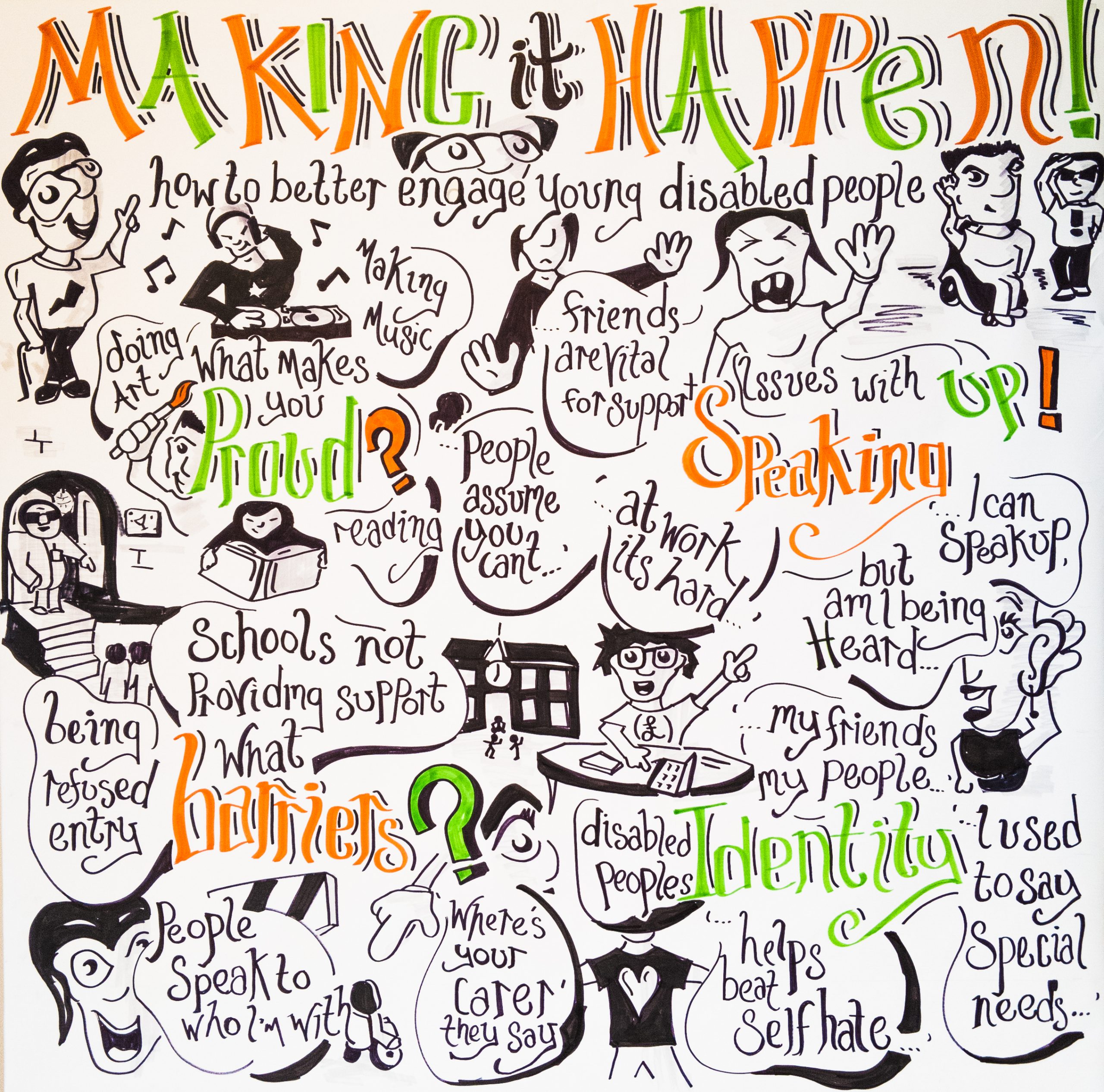
Thanks to the funding from #iWill we held five summer online workshops for eight Disabled Young People on ‘Speaking up, The Social Model of Disability, disability identity, barriers and understanding your rights’.

These were highly successful and got great feedback:

“I found these training workshops more accessible than other training. Giving people the time they need to express their thoughts effectively and not making assumptions about what they were saying. We really enjoyed the sessions, having facilitators and delegates share their lived experiences of disability to explain themes and creating an environment where people were happy to share their experiences and thoughts” (Lisa, workshop attendee)

Self Advocacy organisation, My Life My Choice, Tweeted:

“Our Young People are loving the workshops! If anyone is looking for workshops about making change happen for young people with disabilities then look no further! We really recommend this course, thank you @ALLFIEUK

If this training sound like something you would  like to  attended or know a group of Disabled Young People who would benefit from these workshops, contact Justine.jones@allfie.org.uk

Coming soon: ‘Making Things Happen’ report: Check the website in the coming months for an in-depth insight into the learnings and outcomes of this project.

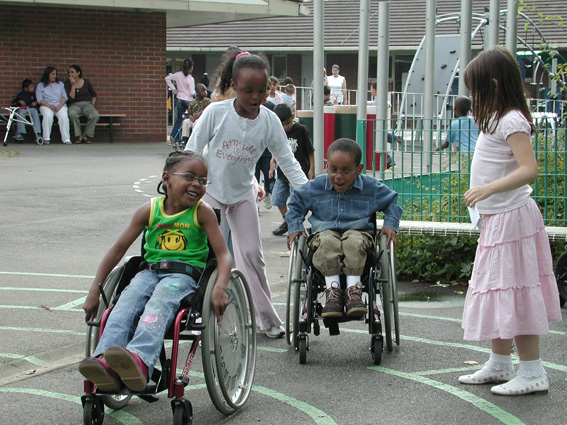
Welcome to ALLFIE’s Coronavirus Campaign update for October covering:Children playing together, some in wheelchairs, some not

Coronavirus Act amendments

We are pleased to report that the Coronavirus Act’s directions have been amended so that schools will be under a statutory duty to provide remote education for compulsory school-aged children affected by Covid-19 from October 22nd.  The direction will be in place until the end of the school academic year 2020-21. This is a fundamental change because the Secretary of State for Education will have the legal power to force schools to provide remote education for their pupils.

What does the law say?

The Covid-19 temporary continuity directions surrounding education, training and childcare provisions state that:

The regulation does not impose a duty upon further and higher education institutions to arrange remote education when on-site education cannot be provided for their registered students.

The Department for Education have published their own guidance that includes good practice, online resources and case studies alongside financial assistance to support online learning, including distributing devices to individual students

The Disabled Students Allowance scheme has also published guidance on making an application for support during the Covid-19 pandemic.

The Secretary of State for Education’s remote education direction is available here.

Specific guidance around remote education for Disabled students

There appears to be minimum specific guidance regarding disabled students, including good practice around making remote learning accessible and inclusive of disabled students within schools, further education (including apprenticeships) and higher education institutions.

We have called for the following:

For all Covid-19 news and updates see our Coronavirus Campaign homepage

Children playing together, some in wheelchairs, some notThe Coronavirus Act 2020 debate begins on 28th September in the House of Commons. As part of our ongoing Coronavirus campaign, ALLFIE is working with Inclusion London, Disability Rights UKLiberty and other organisations to push the government to restore Disabled people’s rights taken away by the Coronavirus Act, including easements to the Children and Families Act.

We have published a joint parliamentary briefing and urge you to email your MP to get rid of the easements once and for all!

This briefing provides details and covers:

Find out more information about the campaign

Coronavirus campaign news

ALLFIE are pleased to report that  the Government has reinstated disabled children and young people’s entitlements, as set out in the Children and Families Act 2014. This decision will help us to mount a strong case for the Government to make a permanent commitment to withdraw the Secretary of State’s power to suspend local authorities’ duties around education, health and care (EHC). It will help to secure education, health and care provision as set out in the child or young person’s EHC plans.

On 1st September BBC Panorama’s “Fighting for an Education” programme exposed the deep levels of injustice in our education system experienced by disabled children during lockdown. The programme featured families with very distressed children and young people whose disturbed behaviour, including self-harm, was the result of local authorities’ failure to provide any form of provision that allowed continued engagement in education.

Although the Government has reinstated disabled students’ entitlements under the Children and Families Act, there is nothing to stop them from making changes again in the future. So the campaigning must continue.

We will be using the Coronavirus Act 2020 debate, which begins in the House of Commons on the 28th September 2020, to raise the severe detrimental impact that education, care and mental health easements has had for disabled students and their families. ALLFIE has joined forces with Inclusion London and Disability Rights UK to raise our concerns about the dire situation that millions of disabled people are facing as a result of weakening local authorities’ duties.

For more Coronavirus legislation and campaign news visit ALLFIE’s Coronavirus (Covid-19) Campaign homepage

What is ALLFIE doing?

We have written a joint parliamentary briefing, which will be used to lobby MPs and peers to secure a permanent commitment to remove the detrimental education, care and mental health legal easements.

What do we want you to do?

Please act now and email your MP to get rid of the easements once and for all!

1. Submit the form on this page – it will find your MP
2. Edit our template letter as much or as little as you want on the next page. If you have been affected by the pandemic, please add a paragraph about your experience. MPs need to hear directly from Disabled people
3. Send it and share this action on social media!

You can listen online below, or if you want to download the audio files, right click each article and choose “Save Link As”.

Children playing together, some in wheelchairs, some notIn April 2020 the Alliance for Inclusive Education surveyed Disabled students, their parents and education practitioners, to discover emerging effects of the Covid-19 pandemic following the closure of educational institutions.

This report explains our survey findings and covers:

Introduction

Who is ALLFIE?

The Alliance for Inclusive Education (ALLFIE) is the only national organisation led by disabled people working on educational issues and, in particular, working to promote the rights of disabled students (including those with SEND) to be included in mainstream education, as set out in Article 24 of the UN’s Convention on the Rights of Persons with Disabilities (UNCRPD).

ALLFIE uses the term ‘disabled children and young people’ because many will fall under the definition of disabled persons in the Equality Act 2010.[i]

Why has ALLFIE undertaken this research?

ALLFIE wanted to know how disabled students’ education has been affected as a result of the Covid-19 pandemic after the closure of educational institutions. Whilst statutory education-related services are facing an unprecedented time, we wanted to find out whether decision makers and staff are working within the spirit of the law to ensure that, as far as possible, disabled students’ rights to mainstream education are upheld during lockdown.

The survey

ALLFIE’s survey encompassed three individual surveys: one for disabled students, one for parents and one for education practitioners. We wanted to identify:

Coronavirus Act 2020

The Coronavirus Act 2020[ii] temporarily modified the Children and Families Act 2014[iii] in the following ways:

For many disabled students (over the age of 18), there have been temporary modifications to the Care Act 2014[iv] around securing care provision that might be needed to access mainstream education.

Equality Act 2010 duties

The Equality Act 2010 duties remain in place without temporary modifications by the Coronavirus Act 2020. As such, education institutions are still under public sector equality, general anticipatory and individual duties to make reasonable adjustments for disabled students. Furthermore, schools are also required to publish an accessibility plan covering increasing accessibility of the curriculum and information for disabled students.

Remote education and specific legislation

The Public Sector Bodies (Websites and Mobile Applications) (No. 2) Accessibility Regulations 2018[v] requires uploaded content on the websites and mobile applications of publicly funded education institutions to comply with European accessibility standards such as Web Content Accessibility Guidelines (WCAG) 2.1 between September 2020 and June 2021. Education institutions ought to be well on their way to having accessible online learning platforms and as such the Coronavirus Act 2020 would have no impact because the Public Sector Bodies (Websites and Mobile Applications) (No. 2) Accessibility Regulations 2018 remain in place.

UNCRPD Article 24

The Coronavirus Act 2020 does not allow the Government to put aside disabled students’ human rights under their international treaty obligations. The Government is under a positive duty to develop a fully inclusive education system that welcomes all regardless of impairment, health condition or ability under UNCRPD Article 24 and Comment 4.[vi] The UNCRPD Monitoring Committee has published Covid-19 and the Rights of Persons with Disabilities Guidance[vii] with a specific emphasis on remote education.

Disabled pupils and families denied access to mainstream education

Disabled pupils and their families have been particularly adversely affected by the lack of education provision during the closure of schools.

Survey findings

ALLFIE has surveyed its members and invited Facebook posts to enlist disabled pupils, university students, parents and educational professionals’ experiences of the provision of education services throughout the Covid-19 pandemic. Survey respondents identified online learning and assistive technology, accessibility of virtual platforms, in-person support and coursework assessment arrangements as being major barriers that disabled students experienced in participating in mainstream education during lockdown.

Online devices and assistive technology

During lockdown, our survey revealed to what extent disabled students have access to the technology and internet access required to complete school, college and university work. Whilst some parents reported that they had the necessary online devices and internet connection to enable their disabled children to engage in remote education, we were informed this is not the case for all, especially for those with a lower socioeconomic status, as this specialist teacher observes:

 “Many of [our] learners are without the equipment needed to access Microsoft Teams which is where [the] school is currently setting work. We’ve got 400 laptops in the ICT suite sitting [there] idle. Let’s give them to the children. Let’s give them whatever they need so they can access learning.” (Specialist Teacher ALLFIE Professional Survey April 2020)

Many disabled students are only able to use computer facilities involving expensive assistive technology and hardware provided on-site by the education institutions, as reported by Disabled Students UK:

“A large proportion of disabled students report to us that they have not been given the same tools, software or adapted furniture which they had used and relied on at university…”

The ownership and expense involved in having the same ICT set up at home and on-site has become a real barrier for both disabled students’ ability to learn and complete coursework after the closure of many education institution facilities, including access to computer rooms and labs.

Accessibility of virtual platforms including curriculum

We found that most schools are using virtual remote education platforms so that students can continue with their course learning and work during lockdown. A few disabled students and parents told us of education institutions that have been working tirelessly to make the remote learning experience as inclusive as possible.

“We have a means of video contact with Communication Support staff for planned contact time using BSL [British Sign Language]. Work is set online and accessed daily via an app…Fortunately we have not had any problem so far as my child has good literacy skills and I am also a fluent BSL signer so can explain things if required. School have been good; work set has been realistic and there is [a] means of contacting subject teachers and specialist staff if needed.”

However, for the overwhelming majority of families and disabled students their experience of remote education has been one of exclusion. Some parents have generally commented that the “online learning materials are for neurotypical children only” or “online activities are for other rather than their own disabled children”. These parents share similar views of those articulated by disabled students’ experiences of remote education:

 “[There are] Virtual Learning Environments (Blackboard) but the content isn’t accessible 90% of the time. Curriculum content and learning platforms haven’t been changed except more material added – the average accessibility of that online content has actually decreased as speed/readily available content has been prioritised above access.” (ALLFIE Disabled Student May 2020)

Some respondents provided us with examples of their uploaded curriculum. Study materials and lessons are inaccessible for disabled students:

“Many of the core readings for my modules are unavailable online, which adds even more worry to this particularly difficult time. I fear that the university will fail to understand why the quality of my assignments will not be equal to that of my previous work. Circumstances have changed drastically, however, the university does not seem to have grasped this.” (Disabled Student Survey, April 2020)

“The challenge for us is accessing online resources, lots of content isn’t captioned and there is very little in BSL. Tried using BBC Bitesize today and had [the] same problem with clips not being captioned which is frustrating.” (ALLFIE Parents Survey, April 2020)

Aside from the accessibility of online materials, parents have reported that the course curriculum and schoolwork is not inclusive of disabled pupils, as articulated by this parent:

“Every two or three days, a teaching assistant sends us five or six maths worksheets and her art teacher sets work for the whole art class but not [work that is] differentiated for my daughter. Pretty much, that is all that’s being sent..” (Parent Survey, April 2020)

Parents have said that the Oak Academy online lessons and content does not include accessibility features such as BSL interpretation.

Rather than differentiation, schools with remote education facilities have decided to create a segregated curriculum, targeted at disabled pupils with profound learning difficulties.

“The Oak Academy has developed a segregated curriculum for disabled children with profound learning difficulties which [is] not a good example of inclusive remote education. This is not a solution for many disabled children who have benefited from the differentiation of the mainstream curriculum. Parents have told us that they have to source the curriculum themselves without assistance from their school’s teachers and SENCOs.”[viii]

Parents’ experience of remote education is that it will not work for all disabled students because they prefer to learn in a more tactile manner. Whilst most education institutions provide no alternatives, a couple of parents reported how schools are helping to set appropriate school work for their disabled pupils. For example, this parent explains:

“Learning grid with some ideas for simpler learning tasks at home, some actual sums and spelling especially for him. Simpler learning tasks and sent home materials such as cubes, number board and reading books [the] day before lockdown. Not doing online learning, [his] teacher thinks of tasks for me to do with him at home and I submit them through Microsoft Teams.” (ALLFIE Parent Survey May 2020)

Disabled students reported that Higher Education institutions have not undertaken an Equality Act’s Public Sector Equality Duty equality impact assessment around the impact of remote education upon disabled students’ ability to complete their courses. Disabled students reported that higher education online learning platforms have been designed with non-disabled learners in mind, with little consideration paid to the accessibility of the curriculum, study materials and lessons. Similar sentiments have been made by parents who are reliant on individual schools to decide for themselves if and how remote education will be delivered for their pupils within the spirit of Government legislation and policy.

“Parents are at the mercy of individual interpretation of Department for Education advice by headteachers. Some local authorities are more equipped to support schools than others due to austerity cuts. This leads to variable provision.”

Whilst some schools are delivering inclusive remote education, this is not the case for all. Despite the Public Sector Website Accessibility regulations being in place, universities are still failing to make their virtual platforms accessible for disabled students. We have found that virtual platform providers may not be complying with making their online learning opportunities inclusive of all.  Whilst virtual platform providers cannot take full responsibility for differentiating the curriculum without prior knowledge of individual students, education institutions have nevertheless failed in their duty to complete this work as required under the Equality Act’s reasonable adjustment duties.

In-person support 

The Government permitted NHS England (NHSE) staff to be deployed from their NHSE day-to-day jobs to administrative and health care assistance roles needed to staff the Covid-19 wards. To facilitate this, the Government modified the Children and Families Act s(42) so that local authorities are required to use their reasonable endeavours to secure the SEND provision. The Department for Education are aware that the social distancing guidance could leave disabled students without any support at home during the closures of schools. Consequently, the Department for Education published guidance providing education providers with an extensive list of ideas on how SEND provision can still be arranged remotely for many disabled students.

Research respondents have reported concern over the support that disabled students received during lockdown. Education professionals are aware that families will be at home without any guidance as to how to support their children with their education.

“I am very concerned about young people and families not being supported in relation to [their] emotional, social, and cognitive development.” (ALLFIE Professional Survey May 2020)

“Braille materials [have been] provided for key subjects for [my] eldest child, although this may be withdrawn due to staff redeployment. Currently had no contact regarding [my] youngest child.” (ALLFIE Parent Survey May 2020)

Parents are telling us that they are not in receipt of therapy because therapists have been deployed from working with disabled children in schools to working in support roles on NHSE Covid-19 wards.

Whilst virtual therapy works for some disabled students, this may not be the case for all of them. Education practitioners, parents and disabled students highlight the importance of the continuation of in-person assistance during the Covid-19 pandemic.

“I think the Department for Education comment that education practitioners can be delivering therapy online is far removed from the reality of what we are being asked to do and it is not helpful. We should be ‘out there’ virtually helping parents and schools manage the situation.”

“Non-Medical Help support has become non-existent, with very little left being distanced [including] ‘Skype’ like calls and support which does not really work.” (ALLFIE Disabled Student Survey, April 2020)

“I have to sit with him the whole time he is learning to keep him on task, rather than Google Classroom some kind of FaceTime with an learning support assistant or teacher would help, we need proper support to teach new concepts.” (ALLFIE Professional Survey May 2020)

For various disabled students, there is no replacement for the quality of in-person support provided on-site. Some disabled students learn better face-to-face where the practitioners are providing assistance on-site either within the school or home environment.

“Very much responding to our needs and capacity. Online eye gaze via Zoom and Skype from Speech and Language Therapist  Same for physiotherapy [and] mental health support via Zoom, i.e. we meet up with the rest of the class.” (ALLFIE Parent Survey May 2020)

“Online support and contact newsletters, with additional resources and ideas. Much more practical ideas for learning, and Occupational Therapist, Speech and Language Therapist ideas etc. Mental health [and] well-being has been at the forefront of the thinking of our school.” (ALLFIE Parent Survey May 2020)

Strong emotional support comes from the development of personal relationships between practitioners and families or disabled students. Negative impact of social isolation during lockdown has taken its toll on disabled students, as highlighted by these parents:

“Students are finding it difficult at home, lack of motivation, [not] understanding the work being set and not being with their friends. Seeing high levels of anxiety and there [has] been a rise in some of our very vulnerable students self-harming.” (ALLFIE Parents Survey May 2020)

“Being isolated in lockdown during the final months of a university degree is difficult for most but [for] those with disabilities, in particular [those] on the autism spectrum, this has been a massive barrier to learning and has severely affected their mental health.” (ALLFIE Disabled Students Survey 2020)

 Education aside, education professionals and families have expressed concern over the social isolation their disabled children are experiencing without school intervention. Schools have failed to set up WhatsApp groups as a way of reducing the social isolation experienced by disabled pupils, particularly if they are not in any school friendship groups.

Education practitioners and parents have expressed concern over the lack of appropriate schoolwork, SEND provision and school routine for prolonged periods of time and its impact upon disabled pupils. Education practitioners have warned that five months without formal education will have a profound impact upon the education progression and attainment gap between non-disabled and disabled pupils and their life chances. Indeed, practitioners have warned:

“I am Speech, Communication and Language Therapist -based within a mainstream junior school. My pupils are not in school and some are struggling to access online learning opportunities. [I am] concerned that [the] existing gap will widen further and that pupils will need an extended period of readjustment on [their] return to school.” (ALLFIE Education Professional Survey April 2020)

Despite local authorities being required to use their reasonable endeavours to secure SEND provision, we have found that the majority of disabled children are at home without any assistance that would enable engagement in remote education and completing schoolwork.

Local authority assistance

Local authorities are still under a duty to arrange both SEND provision and educational placement for all young people up to the age of 25 completing courses up to A Level (Level 3) course standards. Apart from social care provision, local authorities have no duty to provide educational provision for young disabled people completing higher education courses.

School attendance       

Schools that remained open during lockdown have been expected to prioritise providing education for disabled children with EHCPs alongside the children of key workers. During this period of time, many parents accepted that their disabled children will be educated at home.

“The focus needs to be on keeping children and young people safe, but far more could be done to support families. Systems, including in my own service, have been too reliant on families’ [schooling]. There needs to be much more holistic support for families with better communication across agencies. Services need to fit families flexibly rather than the other way round. This is particularly so for support for social, emotional and mental health – fixed pathways and venues are not what is needed.”

There are parents who felt that sending their disabled children to school would be too risky.

“Local authorities should have [provided] full support during [lockdown] and not force us to send my child to school while my husband and I are in the at risk category.” (ALLFIE Parents Survey May 2020)

Similarly, some parents decided it was in the best interests of their disabled child to attend school.

“I have fought for her to go back to school and can only send her in two half days because they say the teaching assistants have to have five days in between working with her. The other kids are in school every day though.” (ALLFIE Parents Survey May 2020)

Families reported that, in general, there has been either none or insufficient engagement between themselves and the local authority’s SEND department, who have a responsibility to arrange therapy, mental health and social care services and the provision of specialist equipment such as play equipment. From many families’ perspectives, it appears that local authorities have interpreted the “reasonable endeavours” to mean no endeavours to secure the SEND provision for disabled pupils with EHCPs.

“Plans have been modified to ensure reasonable endeavours are legally shown but the reality is if they’re not in school [then] we’re relying on parents delivering mostly, not a lot.” (ALLFIE Practitioner Survey 2020)

“The local authority is appalling. Social care support and the behaviour of the leadership of the SEND department is an utter disgrace. A national scandal.” (ALLFIE Parents Survey 2020)

Except for a few, families experiences have been that the local authorities are not working in the spirit of the Children and Families Act modified s(42) duties.

Conclusion

Whilst a few disabled students have been well-supported in continuing with their mainstream education at home, this has not been the case for the overwhelming majority. There has been little-to-no forward planning of the continuation of disabled children’s education at home. The Children and Families Act’s easements and school closures have meant that the majority of disabled children and young people have been without SEND, Health and Social Care provision and a curriculum for over five months.

Moreover, the majority of schools have not provided any differentiated online or alternative off-line curriculum for disabled pupils, despite NHSE and school staff remaining on the payroll. This is not helped by school online platform providers failing to consider the incorporation of accessibility features into their virtual lessons and uploaded curriculum.

Disabled university students’ experiences are similar to those of disabled school students; they have reported being unable to continue with their courses online because of the inaccessibility of the curriculum and alternative provision to remote education. Whilst the non-availability of non-medical support and assistance is not such an issue, disabled students have expressed their preference of support provided on site rather than remotely.

Similarly to schools, higher education disabled students’ services have not been available for disabled students. Whilst families and disabled students and practitioners know that providing education provision for disabled students during lockdown will be challenging, what has surprised us is the thorough lack of any education being arranged for disabled students, leaving them with no or very limited access to mainstream education despite the Department for Education’s Covid-19 SEND guidance and the Equality Act 2010 still being in place.

The Coronavirus Act 2020 and subsequent education and social distancing guidance have not only provided insufficient protection against disabled students being denied mainstream education, but we also believe that the Government are in breach of their UNCRPD Article 24 obligations in arranging inclusive education provision even during lockdown.

“It is without [a] doubt a travesty of our time that non-disabled people are struggling to make adjustments to [their] everyday life due to Covid-19. And yet for far too long disabled people have been denied equal rights to mainstream education. No other group has been systematically excluded from mainstream education because of their personal characteristics, i.e., their impairment.” (ALLFIE Practitioner Survey 2020)

References

[i] Equality Act. (2010). Retrieved from https://www.legislation.gov.uk/ukpga/2010/15/contents

[ii] Coronavirus Act. (2020). Retrieved from https://www.legislation.gov.uk/ukpga/2020/7/contents/enacted

[iii] Children and Families Act. (2014). Retrieved from https://www.legislation.gov.uk/ukpga/2014/6/contents/enacted

[iv] Care Act. (2014). Retrieved from https://www.legislation.gov.uk/ukpga/2014/23/contents/enacted

[v] The Public Sector Bodies (Websites and Mobile Applications) Accessibility Regulations. (2018). Retrieved from https://www.legislation.gov.uk/uksi/2018/852/contents/made

[vi] Convention on the Rights of Persons with Disabilities. (2008). Retrieved from https://www.un.org/development/desa/disabilities/convention-on-the-rights-of-persons-with-disabilities/article-24-education.html

[vii] United Nations. (2020). Covid-19 and the Rights of Persons with Disabilities: Guidance. Retrieved from https://www.ohchr.org/Documents/Issues/Disability/Covid-19_and_The_Rights_of_Persons_with_Disabilities.pdf

[viii] Special Needs Jungle. (2020, May 4). What’s wrong with Oak Academy’s specialist curriculum? Retrieved from https://www.specialneedsjungle.com/whats-wrong-oak-academy-specialist-curriculum/

Children playing together, some in wheelchairs, some notDue to Covid-19, Ofqual have decided to put a different system in place to award GCSE and A-Level candidates with grades in lieu of all examinations being cancelled as a result of school and college closures. This briefing covers:

GCSE and A Level Grades: What We Understand is Happening Now

On 13th August, Ofqual published the 2020 A Level examination grades. It did not take long before students voiced their anger over the results, many of them being awarded grades well below their predicted ones. Significant fury resulted with Ofqual releasing and withdrawing guidance on how they were going to fix the grading system. On 17th August, the Government announced a remarkable U-turn on how students were to be awarded their GCSE and A Level grades. The qualifications regulator Ofqual issued a press release stating that:

“..students [are to] be awarded their centre assessment for this summer – that is, the grade their school or college estimated was the grade they would most likely have achieved in their exam – or the moderated grade, whichever is higher.”

ALLFIE supported the anger expressed by students, parents, schools and colleges impacted by Ofqual’s A-Level grading arrangements. Many students found out, to their horror, that their final A-Level grades did not reflect their teacher-assessed grades. According to the national press  40% of A-Level teacher-assessed grades have been downgraded by one or more grades by Ofqual, so it’s no surprise that they took their protest to the Department for Education offices and Gavin Williamson, the Secretary of State for Education. Within days, students began a crowdfunding campaign to mount a legal challenge against Ofqual’s A-Level grade allocation system.

An explanation of this year’s Ofqual A-Level and GCSE Grade Awarding arrangements

To ALLFIE’s disappointment the public have been led to believe that this year’s GCSE and A-Level grades would have been the ones awarded by their subject teachers. However, since the publication of the A-Level results, we have learnt that Ofqual have been using a computer algorithm to allocate individual students their A-Level grades. We also understand that Ofqual planned to use the same computer algorithm to award students their final GCSE grades due to be published on 21st August.

The Computer Algorithm

Individual students’ A-Level and GCSE grades will be based on the following:

Disabled Students and Reasonable Adjustments

Disabled students’ A-Level and GCSE grades must reflect their academic performance after taking into account any reasonable adjustments such as the use of a reader, scribe or other access arrangements as agreed by the examination board.

What are the Consequences of Ofqual’s Grading Arrangements?

Students attending private schools, grammar schools or highly selective schools have been awarded their teachers’ assessed A-Level and GCSE grades, particularly higher ones because there would have been   similar attainment patterns in previous years.

Students with a traditional intake of children from lower socioeconomic backgrounds are very unlikely to be awarded their teachers’ assessed A-Level and GCSE grades, particularly higher ones if there have been no similar attainment patterns in previous years which negates underlying reasons.

Disabled students and children from working class backgrounds, regardless of ability, are more likely to attend non-selective than selective schools and therefore would be placed at a substantial disadvantage in being awarded teachers’ A-Level/GCSE assessed grade, particularly higher ones if there has been no similar attainment patterns in previous years.

The DfE’s published GCSE league tables shows that Disabled students attending special schools, alternative provision and pupil referral units are much less likely than their peers to be awarded their teacher-assessed GCSE/A-Level grades; particularly higher ones if there have been no similar attainment patterns in previous years.

What are the current A Level Grading Arrangements

ALLFIE welcomes OFQUAL’s decision to use teacher-assessment rather than the computer algorithm generated A Level and GCSE final grades. However, we recognise that some teachers will underestimate Disabled pupils’ achievements without independent moderation to ensure the assessment is fair.  ALLFIE wants to hear from disabled students and parents experiences – do contact us.

What to do if you are unhappy with your GCSE/A Level results

OFQUAL has published a booklet explaining the revised GCSE and A- Level grading arrangements. The booklet includes an appeals process and can be found here:  Student Guide to Post-16 qualifications results: Summer 2020

ALLFIE’s View

Ofqual’s proposed GCSE and A-Level grading allocation arrangements would have re-enforced intersectional inequality, that is overlapping of elitism, racism, classism and ableism prevalent throughout our public examination system. Disabled students including Black Disabled students, Disabled students of colour, Disabled travellers etc., are more likely to attend under-resourced schools situated in poorer communities. Therefore students attending schools in under-resourced communities, will have their grades capped simply because they attend schools within poorer areas; this is nothing more than outrageous discrimination. Ofqual’s suggestion, in their defence, that they were trying to be fair to all students by taking into account schools and colleges’ previous exam performance to avoid grade inflation is unjustifiable. ALLFIE does not believe for one moment that Ofqual was ignorant of the substantial advantage afforded to students attending selective school using the proposed computer algorithm to allocate GCSE and A-Level grades. Similarly, we do not believe that Ofqual were unaware that many disabled students attending schools with patterns of “low” GCSE/A-Level grades would also be placed at a substantial disadvantage under the proposed computer algorithm. ALLFIE believes the assessment process has been nothing more than a complete shambles – where students’ grades reflect the institution rather than students’ achievements. Our education system and associated social mobility should not reward white upper and middle class students and families who attend selective institutions, which do not welcome Disabled students and Disabled student from intersectional backgrounds and communities.

It is worth saying that the Ofqual and examination board algorithms for allocating GCSE and A-Level grades will remain oppressive and discriminatory as long as the aim of our public examination system is to avoid the “all must have prizes” notion and that there will always be winners and losers. Of course, we need formal assessments that reflect individual students’ achievements, but this must be done independently of current or previous students’ performances, whatever their educational setting.

BTEC Students

BTEC students have not received their BTEC grades on the same day as their GCSE grades. The BTEC boards are now reviewing students’ grades. These are due to be published on 28th August 2020: Read the update on BTEC grade award timings.

Further reading on Ofqual’s assessment system

CrowdJustice. (2020). Challenge the Ofqual arrangements for summer 2020 exam grading. Retrieved from https://www.crowdjustice.com/case/challenge-Ofqual

FE Week. (2020, April 3). Coronavirus: An explainer on how GCSE and A-level grades will be awarded this summer. Retrieved from https://feweek.co.uk/2020/04/03/coronavirus-an-explainer-on-how-gcse-and-a-level-grades-will-be-awarded-this-summer

Ofqual. (2020). Student guide to post-16 qualification results: summer 2020. Retrieved from https://www.gov.uk/government/publications/student-guide-to-post-16-qualification-results-summer-2020 https://Ofqual.blog.gov.uk/2020/08/06/fairness-in-awarding

The Guardian. (2020, August 13). England A-level downgrades hit pupils from disadvantaged areas hardest. Retrieved from https://www.theguardian.com/education/2020/aug/13/england-a-level-downgrades-hit-pupils-from-disadvantaged-areas-hardest

WhatUni? (2020). Coronavirus: How A-Level Grades will be Awarded in 2020. Retrieved from https://www.whatuni.com/advice/coronavirus-covid-19-updates/coronavirus-alevels-grades-awarded-in-2020/87371/

Children playing together, some in wheelchairs, some notAlliance for Inclusive Education’s submission to the Education Select Committee inquiry: The impact of COVID-19 on education and children’s services.

Information about the inquiry

Contents

Download pdf: Written evidence submitted by The Alliance for Inclusive Education (CIE0332)

Introduction

The Alliance for Inclusive Education (ALLFIE) is the only national organisation led by disabled people working on educational issues and, in particular, working to promote the right for disabled pupils and students (including those with SEND) to be included in mainstream education, as set out in Article 24 of the UN’s Convention on the Rights of Persons With Disabilities (UNCRPD).[i]

ALLFIE uses the term ‘disabled children and young people’ because many will fall under the definition of disabled persons in the Equality Act 2010.[ii]

Back to contents

Covid-19 and disabled people’s equality in mainstream education

ALLFIE welcomes the Education Select Committee’s inquiry into the impact of the Covid-19 pandemic on education services, including those used by disabled students in order to participate in mainstream education. The Covid-19 pandemic is deepening pre-existing inequalities between disabled and non-disabled people through exposing the extent of ableism within the state education system.[iii] There has been no similar research into exposing the impact of the Covid-19 outbreak upon disabled students, many of them without any special education needs provision and disability-related reasonable adjustments[iv] and no education for a prolonged period of time, as this education professional observes:

“I am SLCN-based within a mainstream junior school. My pupils are not in school and some are struggling to access online learning opportunities. [I am] concerned that [the] existing gap will widen further and that pupils will need an extended period of readjustment on [their] return to school.” (ALLFIE Education Professional Survey April 2020)

ALLFIE is concerned that disabled students are a low priority for the Government.  So far, the Government has done nothing to respond to the growing numbers of disabled pupils we are coming across being denied access to mainstream education.

The Covid-19 pandemic does not allow the Government to set aside their obligations under UNCRPD’s Article 24 to promote and develop inclusive education practices. Similarly, the emergency legislation does not allow local authorities or education institutions to put aside their duties around the presumption of mainstream education and the requirement to make disability-related reasonable adjustments for disabled students participating in mainstream education under the Children and Families Act 2014[v] and the Equality Act 2010.

Back to contents

The Secretary of State for Education’s notice to modify the Children and Families Act provisions announcement on 30th April 2020

In normal times, the operation of the Children and Families Act 2014 has failed to work properly for disabled children and young people. The Government‘s Coronavirus Act 2020[vi] notice to modify the Children and Families Act s(42) so that local authorities are only required to use reasonable endeavour to secure SEND provision specified in their education, health and care plan (EHCP) from 1st May has been a disaster for many families where their disabled children unable to participate in online learning platforms are being left without any form of education for months despite local authorities and schools still having staff on the payroll.

The Government has failed to undertake an equality impact assessment of the impact that the Secretary of State for Education’s notice, SEND and general health and safety guidance will have in providing education during the closure of education institutions for disabled students under the Equality Act’s Public Sector Equality Duty.

The UNCRPD Monitoring Committee has published Covid-19 and the Rights of Persons with Disabilities Guidance.[vii] In the preamble to the section around education, the introduction says:

“To reduce the impact of disruption in education, some States are adopting remote learning practices. In these cases, however, students with disabilities are facing barriers on account of the absence of required equipment, access to internet, accessible materials and support necessary to permit them to follow online school programs. As a result, many students with disabilities are being left behind, particularly students with intellectual disabilities.”

Over the past three months, ALLFIE has become highly concerned about the violation of disabled peoples’ human right to access mainstream education during the closures of schools and further education. In practice, the Government’s guidance emphasis on local authorities and education providers using their reasonable endeavours to arrange special education needs provision in a flexible manner has left many disabled students without any support. Indeed, “reasonable” endeavours has been interpreted as meaning “no endeavours” in securing special education needs provision for disabled pupils. As such, there is an urgent need for the Government to remove the Children and Families Act’s easements so that disabled pupils’ right to education, health and care support are reinstalled. This needs to be done by September now that the Government is expecting that all schools will be open and ready to educate their pupils again in a Covid-19 secure environment.

Back to contents

Disabled pupils needing support

Since education institutions closed, the failure to provide any form of education or secure any form of SEND provision for disabled students has worsened substantially since the Covid-19 pandemic.[viii]

ALLFIE has surveyed its members and invited Facebook posts to enlist disabled school pupils, university students, parents and education professionals’ experiences of the provision of education services throughout the Covid-19 pandemic.  We have found that since schools and colleges closed that:

Our survey results are similar to those published by the Disabled Children’s Partnership reporting that:

The few families who are able to support their disabled children’s education have a background in teaching or therapy and are able to navigate the system.

“She gets speech therapy, which is once a fortnight for an hour of direct therapy. We have known the therapist who delivers that since my daughter was three, so we have – in fact, she was our private therapist before she became our school therapist. I contacted her as soon as we went into lockdown to say, ‘What could this look like for my daughter?’ She’s been delivering sessions by Zoom fortnightly.” (ALLFIE Parent’s Survey June 2020)

“His respiratory physiotherapy is carried out at home by mum and I’m following [the] speech therapy plan and occupational therapy plan in his home-schooling but he isn’t having the professional input he has at school weekly or any assessment of progress.” (Disabled Children’s Partnership Parents Survey June 2020)

Clearly, the Government is violating disabled students’ rights to mainstream education which is unacceptable as these parents have highlighted:

 “One of [my child’s SENCO’s] comments was to tell him he didn’t need to do the work set but this doesn’t address his right to learn..” (ALLFIE’s Parent Survey April 2020)

“There’s a shocking lack of offer of support… There was no offer from [the child’s] school or local authority. Speech and Language Therapy as part of his mainstream SEND unit provision, nothing.” (One parent posting on Facebook April 2020)

Approximately 66% of health employees are in teams where some had been redeployed; this has affected the provision of advice regarding specific children or the whole school and direct contact work (NAPLIC May 2020). We are being told that disability support staff such as speech and language and occupational therapists, learning support assistants and learning mentors are either being redeployed elsewhere or furloughed when they should still be working with their disabled students continuing with their home-based education. We never expected that dedicated staff working with disabled children and young people could be moved to work in administrative and healthcare assistant roles within hospital settings; this is unacceptable.

Back to contents

Remote education

For many disabled students, the online lessons, lectures and learning materials are not inclusive of disabled students.

The Department for Education commissioned Oak Academy School to launch an online platform providing over 160 lessons[ix] that are not inclusive, factoring in the needs of disabled children. For instance, online lessons fail to include BSL interpretation or audio description for disabled pupils with sensory impairments.[x] Furthermore, the online curricula are not differentiated for disabled pupils with special educational needs, as this parent says:

“[The] local authority should provide differentiated learning and also provide it further in advance, currently materials are uploaded in the morning giving me zero time to look through and work out what he can and cannot access…” (ALLFIE Education Professional Survey April 2020)

Families are expected to differentiate the curriculum and provide the support that their disabled children require to participate in remote learning.

“Every two or three days a teaching assistant sends us five or six maths worksheets and her art teacher sets work for the whole art class but [that is] not differentiated for my daughter. Pretty much, that is all that’s being sent. So, I go onto the Twinkl website on a Sunday and I spend two or three hours looking at Key Stage 1 and Key Stage 2 worksheets thinking about how I can move my daughter on..” (ALLFIE Education Professionals Survey May 2020)

Providing online learning is not simply about having appropriate computer kit and software uploaded for learning. Disabled students often require personal/learning support assistance to structure their learning opportunities and keep their focus on tasks, among other hurdles.

“I have to sit with him the whole time he is learning to keep him on task. Rather than Google Classroom some kind of face time with an [learning support assistant] or teacher would help, we need proper support to teach new concepts.” (ALLFIE Parents Survey, April 2020)

Not all disabled students can continue with their learning online for a wide range of reasons. Indeed, 89% of ALLFIE’s respondents said no alternative provision has been arranged if online learning is not accessible for the disabled students.

“They’re trying to put them on this Microsoft Teams setting where the work isn’t being differentiated so it’s not really accessible for those children. But no one seems to care. It’s just like it doesn’t matter, and it does matter because these children are going to forget the quickest. These are the ones that have problems with their memory, retaining learning… A lot of our children don’t have that independence… The parents can’t help because they don’t understand the kind of methods that we use in schools.” (ALLFIE Professional Survey June 2020)

We believe that the Department for Education’s online accreditation scheme standards do not comply with the Equality Act 2010 and Public Sector Bodies (Websites and Mobile Applications) (No. 2) Accessibility Regulations 2018 requirements.[xi] The standards only require online providers’ written curriculum policy, plans and schemes of work to take into account the ages, aptitudes and needs of all pupils, including those pupils with an ECHP.[xii] The Department for Education’s guidance on remote education does not provide comprehensive advice and support for how disabled students can participate in online learning where they can.[xiii]

Back to contents

Conclusion

Our survey is highlighting the extent of ableism in our education system. Our respondents’ experiences are that the design of the learning platforms, the lessons, curriculum and learning styles employed are those most suited to the neurotypical student cohort. Consequently, too many disabled students who cannot access standard online learning opportunities with minimum adjustments are being denied their basic right to mainstream education. Parents are telling us that they are not receiving any support or alternative provision that could help their children retain and develop their skills. Furthermore, our survey found that many disabled children without EHCPs are no longer getting the level, quality or quantity of special education provision, which has resulted in high levels of exclusions despite SEND staff remaining on the school payroll.

If local authorities and education institutions are not providing SEND provision, disability-related reasonable adjustments or offering a suitable differentiated curriculum using a range of learning methods then disabled students cannot engage in mainstream education alongside their non-disabled peers within a home or an educational setting. ALLFIE’s work has revealed that the longer the period that disabled students are not participating in mainstream education in a meaningful manner, the wider the potential educational, life changes and achievement gap will be between disabled and non-disabled people.

ALLFIE’s evidence so far is that the Coronavirus Act’s changes to SEND legislation will no doubt lead to greater segregation and exclusion of disabled students from mainstream education.

“For far too long, disabled people have been denied equal rights to mainstream education. No other group has been systematically excluded from mainstream education because of their personal characteristics, i.e., their impairment.” (ALLFIE Education Professional Survey April 2020)

Back to contents

What do we want the Government to do?

Short term

Schools and colleges reopened on 1st June with changes in the organisation of learning and classroom sizes. Given that education providers have kept their staff on the payroll, there is no reason why the Government and education providers cannot implement good practices as set out in the Covid-19 and UNCRPD guidance, including:

Post Covid-19 pandemic – Long term

What the Covid-19 pandemic has highlighted is that the Government must take urgent steps to strengthen the legal framework that supports disabled students in participating in mainstream education both within mainstream educational settings and from home due to health and impairment-related issues.

ALLFIE’s inclusive education manifesto consisting of six demands would move us from the present situation to a fully inclusive education system, as recommended by the UNCRPD’s Monitoring Committee. We believe disabled people have the right to:

A full copy of our manifesto can be viewed on our website.

As the UNCRPD’s Monitoring Committee has recommended, the Government should work with organisations of disabled people like ALLFIE to develop a fully inclusive education system. The Government must fulfil its Article 24 obligations around inclusive education by working with ALLFIE.

We would also welcome the opportunity to provide an oral submission.

Simone Aspis | Michelle Daley

July 2020

Back to contents

References

[i] Convention on the Rights of Persons with Disabilities. (2008). Retrieved from https://www.un.org/development/desa/disabilities/convention-on-the-rights-of-persons-with-disabilities/article-24-education.html

[ii] Equality Act. (2010). Retrieved from http://www.legislation.gov.uk/ukpga/2010/15/contents

[iii] Times Higher Education. (2020). Emergency flexibility for online learning is what disabled students have been seeking. Retrieved from https://www.timeshighereducation.com/blog/emergency-flexibility-online-learning-what-disabled-students-have-been-seeking

[iv] Times Higher Education. (2020). How can disabled students look after themselves during the coronavirus outbreak? Retrieved from https://www.timeshighereducation.com/student/advice/how-can-disabled-students-look-after-themselves-during-coronavirus-outbreak

[v] Children and Families Act. (2014). Retrieved from http://www.legislation.gov.uk/ukpga/2014/6/contents/enacted

[vi] Coronavirus Act. (2020). Retrieved from http://www.legislation.gov.uk/ukpga/2020/7/contents/enacted

[vii] United Nations. (2020). Covid-19 and the Rights of Persons with Disabilities: Guidance. Retrieved from https://www.ohchr.org/Documents/Issues/Disability/COVID-19_and_The_Rights_of_Persons_with_Disabilities.pdf

[viii] Times Higher Education. (2020). I’ve got autism and I feel abandoned by my university during this crisis. Retrieved from https://www.timeshighereducation.com/blog/ive-got-autism-and-i-feel-abandoned-my-university-during-crisis

[ix] MSN. (2020). Oak National Academy: how to access online school lessons for home learning during the coronavirus lockdown. Retrieved from https://inews.co.uk/news/education/oak-national-academy-lessons-online-school-home-learning-coronavirus-lockdown-schools-closed-420137

[x] Special Needs Jungle. (2020). What’s wrong with Oak Academy’s specialist curriculum? Retrieved from https://www.specialneedsjungle.com/whats-wrong-oak-academy-specialist-curriculum/

[xi] The Public Sector Bodies (Websites and Mobile Applications) (No. 2) Accessibility Regulations. (2018). Retrieved from http://www.legislation.gov.uk/uksi/2018/952/made

[xii] Department for Education. (2019). Online schools accreditation scheme. Retrieved from https://www.gov.uk/government/consultations/online-schools-accreditation-scheme

[xiii] Department for Education. (2020). Supporting the wellbeing of primary pupils with special educational needs and disabilities (SEND). Retrieved from https://www.gov.uk/government/consultations/online-schools-accreditation-scheme

NAPLIC (2020 Survey of National Association of Professionals concerned with Language Impaired Children members

Back to contents

Alliance for Inclusive Education’s submission to the Joint Committee on Human Rights inquiry on the Government’s response to COVID-19: human rights implications

Information about the inquiry

Contents

Download pdf: Written evidence submitted by The Alliance for Inclusive Education (COV0160)

Introduction

The Alliance for Inclusive Education (ALLFIE) is the only national organisation led by disabled people working on educational issues and, in particular, working to promote the right for disabled pupils and students (including those with SEND) to be included in mainstream education, as set out in Article 24 of the UN’s Convention on the Rights of Persons With Disabilities (UNCRPD).

ALLFIE uses the term ‘disabled children and young people’ because many will fall under the definition of disabled persons in the Equality Act 2010.[i]

Back to contents

Disabled students’ human right to mainstream education

ALLFIE has surveyed its members and invited Facebook posts to enlist disabled school pupils, university students, parents and education professionals’ experiences of the provision of education services throughout the Covid-19 pandemic.  We have found that since schools and colleges closed that:

The Disabled Children’s Partnership reported that:

Back to contents

Children and Families Act 2014 easements, the Equality Act 2010 and the relevance of human rights

The Coronavirus Act 2020[ii] gives notice to modify the Children and Families Act 2014’s s(42)[iii] so that local authorities are only required to use reasonable endeavour to secure the SEND provision specified in the child’s education, health and care plan (EHCP) from 1st May and has been a disaster for many families; it has meant that disabled children are left unable to participate in any form of mainstream education including engagement with online learning platforms. We strongly believe that the practical outcome of the Children and Families Act easements and non-implementation of the Equality Act’s reasonable adjustment duties has resulted in many disabled students’ human rights to mainstream education being violated by the state.

Back to contents

United Nations Convention on the Rights of Persons with Disabilities Article 24

The Government is under a positive duty to develop a fully inclusive education system that welcomes all regardless of impairment, health condition or ability under the United Nations Convention on the Rights of Persons with Disabilities (UNCRPD) Article 24 and comment 4.[iv] The UNCRPD Monitoring Committee has published Covid-19 and the Rights of Persons with Disabilities Guidance.[v] The Committee’s observation includes:

“To reduce the impact of disruption in education, some States are adopting remote learning practices. In these cases, however, students with disabilities are facing barriers on account of the absence of required equipment, access to internet, accessible materials and support necessary to permit them to follow online school programs. As a result, many students with disabilities are being left behind, particularly students with intellectual disabilities.”

Back to contents

ECHR Article 2 Protocol 1

The Government accepted they had a responsibility to provide online devices and internet connections for children from financially disadvantaged backgrounds to avoid the state discriminating against accessing education based on socio-economic background under European Convention on Human Rights (ECHR)[vi] Article 2, Protocol 1 and ECHR Article 14 when read with the Education Act 1996[vii] s(19).[1] Disabled children going without or being denied access to ICT equipment has meant they are unable to participate in compulsory education; this is a similar breach of their human rights under the same duties. A specialist teacher highlights:

“Many of [our] learners are without the equipment needed to access Microsoft Teams which is where [the] school is currently setting work. We’ve got 400 laptops in the ICT suite sitting there idle. Let’s give them to the children. Let’s give them whatever they need so they can access learning.” (Specialist Teacher ALLFIE Professional Survey April 2020)

Article 14 prohibits disability discrimination as grounds for denying disabled people the right to participate in mainstream education. Similarly to the Equality Act 2010 provisions, the ECHR Article 14 makes it clear that the Government, relevant public bodies and education providers are expected to make reasonable accommodations for disabled students. (Enver Şahin v Turkey 2018 Ceyda Evrim Çam v Turkey 2016)[2]

Since the closure of most education institutions, learning has transferred from face-to-face to virtual online platforms. The Department for Education sponsored Oak Academy School’s online platform providing over 160 lessons that are not inclusive, factoring in the needs of disabled children. For instance, online lessons fail to include BSL interpretation or audio description for disabled pupils with sensory impairments. Furthermore, disabled university students have experienced barriers in accessing online learning platforms provided by higher education institutions.

 “The Virtual Learning Environments (Blackboard) but the content isn’t accessible 90% of the time. Curriculum content and learning platforms haven’t been changed except more material added – the average accessibility of that online content has actually decreased as speed/readily available content has been prioritised above access. The learning platforms are unchanged in their structure, but the content/university led design of them hasn’t been adapted or adjusted to account for access features/designs.” (ALLFIE Disabled Student May 2020)

“Continued online assessment, exams moved online. Doesn’t make a difference though, can’t access the learning materials properly so the exams are just pointless and discriminatory.” (Disabled Student Survey, April 2020)

Providing online learning is not simply about having appropriate computer kit and software uploaded for learning but also accessing the curriculum. Not all disabled students can continue with their learning online for a wide range of reasons.

Indeed, 89% of ALLFIE’s respondents said no alternative provision has been arranged if online learning is not accessible for the disabled students. This parent highlights:

“I have to sit with him the whole time he is learning to keep him on task. Rather than Google Classroom, some kind of face time with a [learning support assistant] or teacher would help, we need proper support to teach new concepts.” (ALLFIE Parents Survey, April 2020)

We believe the Government, local authorities and education providers are breaching disabled students’ right to mainstream education by providing no alternative curriculum or uploading inaccessible course content onto the website.

Back to contents

ECHR Article 8

ECHR Article 8 covers individuals’ personal development, autonomy, physical and psychological integrity under the right to family and private life. The Government has a positive duty to adopt specific measures, including the provision of an effective and accessible means of protecting the right to respect private life. Various therapeutic interventions are used to maintain disabled students’ physical and emotional integrity. Without physiotherapy and occupational therapy, for many disabled students their physical health deteriorates.

“We now have no respite and have no break from 24/7 care needs plus we are expected to home school two children, including modifying home-schooling work for [a] visually impaired child. We now have no therapy intervention at all. This has been detrimental to my SEN child’s progress and health.” (Disabled Children’s Partnership, June 2020)[viii]

Similarly, disabled students often require personal/learning support assistance to structure their learning opportunities and keep their focus on tasks, among other hurdles in order to assist with their personal development. Disabled students without in-person support to learn will be denied opportunities for personal development through their engagement with education.

“One of [my child’s SENCO’s] comments was to tell him he didn’t need to do the work set but this doesn’t address his right to learn..” (ALLFIE’s Parent Survey, April 2020)

 “Non-medical help support has become non-existent, with very little left being distanced “Skype” like calls and support which does not really work.” (ALLFIE Disabled Student Survey, April 2020)

One of the central goals of education is to facilitate individuals’ personal growth and the development of their personality. For many disabled people, they need a variety of support to facilitate their learning whilst maintaining positive emotional and physical wellbeing.

Back to contents

Conclusion

We are therefore concerned that overwhelming numbers of disabled students’ human rights to mainstream education under ECHR Article 8, Article 2 Protocol 1, and Article 14, as well as UNCRPD Article 24 are being violated by the Government, local authorities and education providers.

Back to contents

Recommendations

The United Nations’ Covid-19 Response[v] suggested that States and other stakeholders should take the following actions:

We would also welcome the opportunity to provide oral evidence.

Simone Aspis | Michelle Daley

July 2020

Back to contents

References

[1] S19 of the Education Act 1996 is a “longstop”. Its purpose is clear; to ensure that all children of compulsory school age receive suitable education at school or otherwise.

[2] https://pedantic-shannon.91-238-163-161.plesk.page/news/briefing/march-2018-briefing-judgements-european-court-human-rights/

[i] Equality Act. (2010). Retrieved from http://www.legislation.gov.uk/ukpga/2010/15/contents

[ii] Coronavirus Act. (2020). Retrieved from http://www.legislation.gov.uk/ukpga/2020/7/contents/enacted

[iii] Children and Families Act. (2014). Retrieved from http://www.legislation.gov.uk/ukpga/2014/6/section/42

[iv] Convention on the Rights of Persons with Disabilities. (2008). Retrieved from https://www.un.org/development/desa/disabilities/convention-on-the-rights-of-persons-with-disabilities/article-24-education.html

[v] United Nations. (2020). Covid-19 and the Rights of Persons with Disabilities: Guidance. Retrieved from https://www.ohchr.org/Documents/Issues/Disability/COVID-19_and_The_Rights_of_Persons_with_Disabilities.pdf

[vi] European Convention on Human Rights. (1970). Retrieved from https://www.echr.coe.int/Documents/Convention_ENG.pdf

[vii] Education Act. (1996). Retrieved from http://www.legislation.gov.uk/ukpga/1996/56/contents

[viii] Disabled Children’s Partnership. (2020). #LeftInLockdown – Parent carers’ experiences of lockdown. Retrieved from https://disabledchildrenspartnership.org.uk/wp-content/uploads/2020/06/LeftInLockdown-Parent-carers%E2%80%99-experiences-of-lockdown-June-2020.pdf

Back to contents

Supported by

ALLFIE’s campaign for Inclusive Education as a human right is backed by funders and donors who reject the systemic segregation of Disabled people from society.