Please ensure Javascript is enabled for purposes of website accessibility Skip to main content

Amplifying the Voices of Disabled Young People

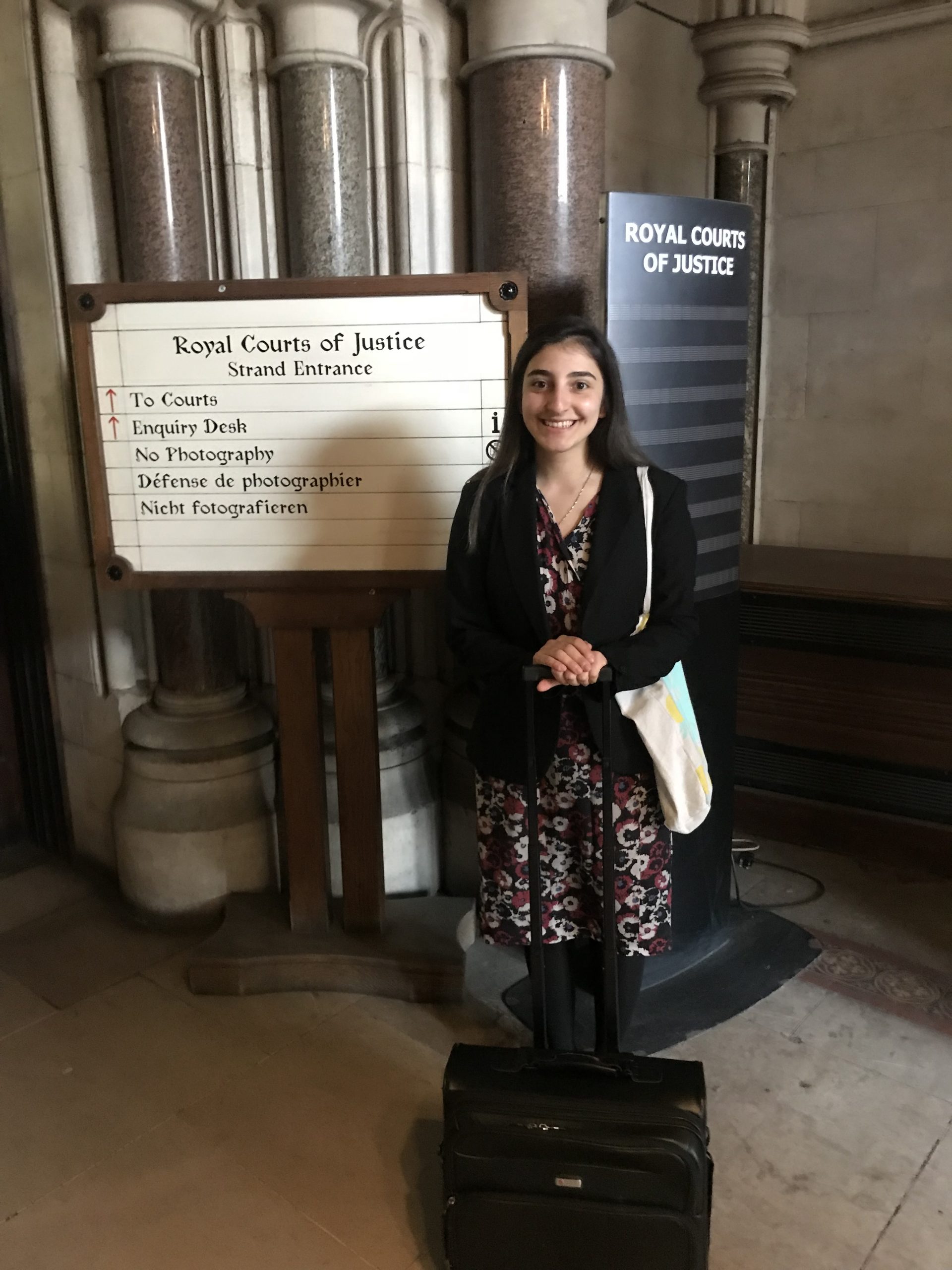
Yewande Akintelu-Omoniyi describes her involvement in ALLFIE’s projects to empower Young people.

I first became involved with ALLFIE in 2010, when I was 19 and part of the VIPER project. VIPER is short for Voice, Inclusion, Participation, Empowerment and Research. It was a 3-year project that taught Young Disabled people research methods, in order to find out whether they were getting the chance to participate in decision-making for the services that they receive. It was here that I was introduced to the Social Model of Disability and the idea of Disability Rights. This was an eye-opening experience for me. It changed the way I view disability and the way I view myself as a Disabled person.

Since 2014, I’ve worked as a volunteer for ALLFIE.

During this time, I’ve helped to design and deliver ALLFIE’s Knowledge is Power Toolkit, which was created so that Disabled People’s Organisations (DPOs) can help to empower Young people about Disability Rights, identity and decision-making. More recently, I’ve been involved in three further projects that ALLFIE has run for Disabled Young people.

In July 2019, ALLFIE began the Being Seen Being Heard project, which focuses on how Disabled Young people and older Disability Activists can learn from each other and how to bridge the generational gap. During this project, the Young people involved were the RIP:STARS group (which stands for Research Into Plans: Skilled Team with Ambition, Rights and Strength). I assisted in facilitating these sessions and shared my experiences of disability discrimination and trying to make my way in the Disability Movement. We looked at the differences and similarities between younger and older Disabled people. I really enjoyed being part of the sessions and hearing the different perspectives. However, it was sad to hear that Young Disabled people are still facing many of the same barriers I faced whilst growing up.

This August, ALLFIE ran the Making Things Happen project, helping Disabled Young people understand about Disability Identity, decision-making and campaigning. This involved Disabled Young people coming together for five workshops focusing on different topics. The facilitators were our Director, Michelle Daley, our Inclusion Champions Worker, Justine Jones, and our Campaigns and Policy Coordinator, Simone Aspis. Once again, I helped to facilitate and shared my experiences, alongside another of our young volunteers named Katouche Goll. We covered topics such as the social model, and language around disability and campaigning. I really enjoyed these sessions because they emphasised how important it is for Disabled Young people to understand Disability Rights from a young age.

The Being Seen Being Heard and Making Things Happen sessions, which were originally going to be face-to-face, took place online, due to Covid-19 restrictions. We also had a graphic artist who created illustrations around ideas discussed in the sessions, which made everything more accessible.

This summer, I’ve also joined in ALLFIE’s new group, Disabled Black Lives Matter (DBLM), set up shortly after the killing of George Floyd in the US. We are a group of Black Disabled people from different parts of the country, who meet weekly on Zoom. This group includes several young members. We discuss the barriers we face as Black Disabled people. The experience of Black Disabled people is often not understood in Black rights movements or in the Disability Rights movement.
We also celebrate our identity as Black Disabled people. The meetings are supported by ALLFIE Director, Michelle, and Chaired by Katouche Goll, who are Black Disabled Women.

Recently, we have been meeting with other organisations, to see how we can take the work of DBLM forward. I benefit a lot from the meetings, because there are many times in Disability Rights projects when I’m the only Black Disabled person in the room. So now that I am a part of DBLM, it is nice to talk to people that have been through similar experiences to me. Hopefully we can build on the awareness we have raised so far, continue to do good work, and further develop the voices of Black Disabled people.

Being part of these projects and being introduced to the Disability Rights movement has made me realise that Disabled people can be leaders, and can have choice and control in their lives. I’ve also learned that Disabled people have a rich history and have made valuable contributions to society. I am so grateful for the guidance and friendship that I have received from Disability Activists over the years. It is so important for ALLFIE to have the voice of Young people in its work. They are the next generation of Disability Leaders, and they are needed to carry on the fight for equality and inclusion.

However, I believe that there are some challenges currently which mean that not many Young Disabled people are involved in the movement. Many older Disabled people I meet tell me that Young Disabled people are “not interested” in campaigning and activism. I don’t think that is the case at all. Many Young people just haven’t had the opportunity to be introduced to the Social Model and Disability Rights or be involved in the work that DPOs do. Also, the way that Young people campaign is changing. Disabled Young people might not be involved in traditional ways of campaigning, like direct action, but they are raising awareness about the barriers they face on platforms such as social media and blogs. Perhaps, the Disability Movement and DPOs could be doing more to embrace social media and technology.

Recently, we’ve seen Young people coming together and being passionate about issues like the climate crisis and Black Lives Matter. It’s shown what’s possible when Young people are empowered and are allowed to use their voices. So, let’s keep believing in and amplifying the voices of Disabled Young people, so that we can continue to progress in the fight for inclusion.
By Yewande Akintelu-Omoniyi

Why It Is Harder Than Ever for Disabled Children to Attend Mainstream Schools

You would be forgiven for thinking that, by now, it would be more possible than ever before for a Disabled child to attend mainstream school or college of their choice. Well you would be very wrong.

You would be forgiven for thinking that, by now, it would be more possible than ever before for a Disabled child to attend mainstream school or college of their choice. Well you would be very wrong. Far from getting easier, it is actually harder than ever for a Disabled child to attend mainstream education.

You may ask how I know?

Well, I am parent of a Disabled Young man who has just turned 18 and is now in college. I was also until recently an advocate supporting, on a case by case basis, the educational (and human) rights of Disabled students. I am now managing all the SEND provision within a mainstream secondary school. So, I think it is fair to say that I have some insight into the challenges Disabled students and their families face in regards to accessing inclusive mainstream education.

And why is it getting harder?

Well it is far from simple, many factors contribute to education exclusion and in this short article I will attempt to briefly address some of them; Our current Government, under the mantra of choice, has actually systematically dismantled inclusive mainstream provision through underfunding, instead investing in more and more segregated, so called, specialist provision.

On 19th July this year the Government announced the creation of 35 new special free schools for 3,000 Disabled students at a cost of more than a billion – not exactly value for money at a time when mainstream school budgets have been slashed.

Then, there are the consequences of this expensive expansion of free special schools for the few. The reality for many will be little or no educational choice, forced into a segregated setting to fill quotas, with their local mainstream school underfunded and so feeling unable to meet their needs.

It is my experience that mainstream schools are increasingly refusing admission to Disabled students or moving them on and out, because they feel under resourced and inadequate to meet needs in comparison with the well-funded segregated provision that is being created. In fact, the Education, Health and Care plan (EHC plan, which replaced the Statement of SEND) is in danger of being viewed as an automatic passport to special school.

In addition, the increase in academies operating a one size fits all approach, resulting in inflexible policies such as admission, behaviour and exclusion, also make it so much harder for a Disabled student to attend mainstream education.

In my 6 years as an advocate, the majority of my cases were supporting Disabled students who were being excluded from their school because they had breached the school’s behaviour policy. In reality, the school (more often than not an academy) was imposing inflexible rules which discriminated against the student because they could not adhere to them due to their impairment and the lack of any reasonable adjustments.

If you think about it, a Disabled child who is unable to sit still for lessons of one hour due to the impact of their impairment was going to be labelled disruptive and fall foul of the behaviour policy. And this is happening more and more at a time when there is little support or recourse for these students and their families to challenge the exclusion- the system is legally complex, legal aid has been decimated and academies employ barristers! Not to put too fine a point on it – mainstream schools can be hostile environments for any child that does not fit in.

It is a massive irony when you compare what the Secretary of state for Education said on July 5th 2018:

“We know there has been a steady movement of children with special educational needs out of mainstream schools and into specialist provision, alternative provision and home education. At the same time, rates of exclusion have begun to rise after a period of having calmed down. And I hear too many stories about off-rolling. I want to be clear right now: this is not okay. SEND pupils are not someone else’s problem. Every school is a school for pupils with SEND; and every teacher is a teacher of SEND pupils.”

The reality is children with SEN support are more lightly to be excluded from school. For example, in 2018 the Guardian online reported on the disproportionately high number of Disabled children excluded from school and “being denied opportunities by a broken system.” The article revealed that in 2016-2017 fixed term exclusion was issued to 6.18% of pupils with SEND support and 6.44% with SEND statements or plans. However, children without SEND received just 1.63%. We also saw in 2019 a catalogue of damning reports published by the Government on the failure to support Disabled children in mainstream education. The 2019 Timpson review showed disgraceful findings that 78% of permanent exclusions were to pupils who had SEN. ALLFIE’s recent report on school accessibility plans reported how schools were using the plans to drive children away from mainstream schools. These statistics and stories confirm how difficult it is for Disabled children to attend mainstream school when there are so many barriers to their admission or inclusion.

The Covid-19 pandemic has exacerbated the deep level of exclusion for Disabled children in schools: The impact of Lockdown, social distancing, the difficulty of providing the close one-to-one support some students need. We are witnessing a massive crisis emerging where many children are being denied access to meaningful learning. The whole system has failed our children.

So what’s to be done?

For a start, let’s remind Gavin Williamson, and the government, of its stated intentions two years ago and let’s hold them to account for the future of our children. Let’s encourage, insist, that they put their money where their mouth is and invest in an education system that is fit and inclusive for all.

By Lucy Bartley

When Article 24 of UNCRPD was being framed at the United Nations (2001-2006) there was much disagreement between sensory impairment organisations and other Disabled People’s Organisations (DPOs), the former arguing for a right to segregation. This led to a weak and compromised wording. General Comment No 4 moved this on ten years later, but Disabled children have been largely left out in moves towards general Inclusive Education. The Cali Report UNESCO 2019 does represent progress, but at a time of globally reduced funding for education and massive disruption caused by school closures during the Covid-19 Pandemic, the real problem is one of political will to make inclusion a reality.

The International Disability Alliance (IDA) Inclusive Education Global Report is part of IDA’s Inclusive Education Flagship initiative, a component of the Disability Catalyst Programme funded by the United Kingdom’s newly formed Foreign and Commonwealth Development Office (FCDO) (now known as Department for International Development (DFID). Led by the IDA Inclusive Education Task Team and informed by the experience of national Organisations of Persons with Disabilities (OPDs). The Report has now been approved by the IDA Board. The four IDA members on the technical task team were: Diane Richler, Inclusion International (II); Ruth Warwick, the International Federation of Hard of Hearing People (IFHOH); Praveen Sukhraj the World Blind Union (WBU); Joseph Murray, the World Federation of the Deaf (WFD). Additionally, representatives from DPOs in Nepal, NGOs e.g. Leonard Cheshire, Humanity and Inclusion, and Paula Hunt.

The process to reach a cross-disability consensus position involved three technical workshops and exchanges with numerous allies and global, regional and national level DPOs. This global report presents the views of the International Disability Alliance on how to achieve Sustainable Development Goal 4 (SDG4):

The report includes recommendations of good practices supported by policies and legislation, leading to truly inclusive education systems. It puts forward measures required to build an inclusive education system, geared towards providing quality education for all children and youth equitably. A critical message is that an inclusive education system is the only way to achieve SDG 4 for all children including Disabled children and youth whoever and wherever they are. Inclusive education requires an educational transformation, which is unachievable if it is considered an add-on to existing education systems. (See Webinar of different parties involved with developing the report and Global Education Monitoring Report 2020 on Inclusive Education).

Points to emphasise from the consensus International Disability Alliance (IDA) reached on inclusion are:

a) Enforcement of non-discrimination and ‘Zero Rejection ’ policies are implemented where ‘Zero Rejection’ policies state explicitly, in part, that no child is refused access to their local school because of their impairment;

b) Significant investments (human, social and financial) are made in recruiting and training qualified teachers, including Disabled teachers, who can provide inclusive and quality learning for all learners;

c) Teacher education and curriculum reforms incorporate the principles of ‘Universal Design for Learning ’, including equal access and participation;

d) Significant investments (human, social and financial) are made in the accessibility of needed infrastructure, materials for teachers, students and parents, curricular and extra-curricular activities, and systems for engaging parents and the community, including the provision of assistive products and technology, and in the training of their use;

e) Well-resourced support services are made available at all levels, to assist all schools and all teachers in providing effective learning for all students, including those with impairments;

f) Special schools and other segregated settings are progressively phased out, while key human resources and knowledge assets are converted into support services for equal access, participation and inclusion by inclusive institutions, such as schools, colleges and community-based support centres;

g) A diversity of languages (including sign languages, tactile sign languages) and modes of communication (easy-to-read, Braille, etc.) are used throughout the system. Priority is given to teachers who are already fluent in their use (i.e., teachers who are deaf) with adequate support provided to ensure all teachers have opportunities to develop fluency;

h) Some learners – with and without impairments – may choose to attend an inclusive school or educational institution away from their community to benefit from quality support and services not yet offered in their community (e.g. bilingual education, braille instruction). Because of their critical role in language acquisition for children who are deaf or deafblind, deaf schools that provide an inclusive bilingual education in a national sign language(s) (visual and tactile) must be maintained and promoted as part of an inclusive education system. Inclusive bilingual education for learners who are deaf or deafblind involves teaching using the national sign language(s) (including tactile sign language) and teaching the country’s written language and the teaching of sign language and Deaf culture. Deaf schools that are not yet providing inclusive bilingual education will be supported in their transition into inclusive bilingual sign/national language schools. These bilingual schools can be open to children and youth who are deaf or deafblind and others wishing to learn and/or use sign language;

i) Phasing out special education settings is going to require civil society to engage with education systems in different ways, to support new practices.

j) In particular, DPOs will have new roles to play within schools (and systems): becoming advisors, providing expert advice to professionals; becoming mentors and role-models for Disabled children and youth – thus, supporting regular schools to welcome and ensure the participation of Disabled children and youth.

Apart from h) this list would have been agreed 20 years ago. As the UNESCO Global Education Monitoring Report shows there is remarkably little progress to system level change.

The IDA Report puts forward that including Disabled children and youth requires the following minimum conditions:

a) All children/learners have access to quality education in schools where their inclusion requirements are met;

b) All teachers are equipped to ensure that all their students participate in quality learning;

c) Well- resourced support services and resources are available to assist all schools and all teachers to provide inclusive effective learning to all learners including those with impairments;

d) All students succeed in reaching their full academic and social potential with learning outcomes measured against their own wishes, plans and benchmarks.

Whilst the IDA analysis presents a way forward, caution is needed. They argue that specific impairment DPOs should provide the advice to schools and governments on impairment specific adjustments (contained in the Annex of the Report). While these reasonable adjustments and support are needed, in a world where the large majority of Disabled children if in school attend special schools, this is a dangerous strategy that could play lip-service to full inclusion, while reinforcing segregation. The retention of special schools while they transition to inclusive schools is also a dangerous strategy, as the evidence shows they take the extra resources offered and remain an expanded version of themselves. Experience shows the management and accountability measures need to be changed for this transition to be successful.

It is much better if cross-impairment DPO Councils or coalitions, with parents, provide this support and advice drawing on the wealth of experience from their members to cover the full range of impairments. The IDA approach is likely to lead to separate silos, with some groups such as psycho-social left out, rather than full disability equality.

IDA opposes any education setting that does not provide inclusive education in its broadest sense.

IDA proposes that any other settings be phased out, with key human resources and knowledge assets converted – whenever possible – to support equal access and reasonable accommodation towards inclusion. However, sign language access for learners who are deaf and non-visual access to learners who are blind are both essential for meeting the right to education: this access cannot always be provided in local settings. Therefore they argue in h) a breach of the requirement for local provision in UNCRPD (24.2b), and b) Disabled people can access an inclusive, quality and free primary education and secondary education on an equal basis with others in the communities in which they live.

Given the lack of funding this sounds remarkably like keeping segregation going into the foreseeable future for a minority and no education for many, as it is not inclusive enough.

By Richard Rieser

UK Disability History Month 2020: Access

“We need to make every single thing accessible to every single disabled person.” Stevie Wonder

In our 11th year we are focusing on the theme of ‘Access’ and asking the questions: ‘How far have we come?’ and ‘How far have we got to go?’. UK Disability History Month runs from the online launch at 7pm 18th November, to Friday 18th December 2020.

A fundamental human right now is for Disabled people to gain ‘access’ and participation on an equal level with others, regardless of our impairments. Disabled people have struggled for many years to adapt society’s lived physical and information environment. The first International Human Rights Treaty to explicitly include ‘accessibility’ as a principle was the UN Convention on the Rights of Persons with Disabilities (UNCRPD), 2008.

There had been national laws, building codes and standards partially acknowledging the need for access in the previous 120 years. All of these were fought for by Disabled people, their organisations, and some non-disabled led charities. People with sensory impairments were in the vanguard, arguing for the teaching and use of Braille, Sign Language, and gaining concessions in a minority of mainly higher income countries. More recently, People with Learning Difficulties have fought for access to ordinary education. Direct Action Network (DAN) chained themselves to buses until the date for accessible transport was brought forward.

Disabled people were seen as a problem to be cured and made ‘normal’, a ‘medical model’ approach. Now the barriers Disabled people with a multitude of impairments face, need resolving. This is the ‘social model / human rights’ approach. Schools can do the following:

  1. Accessibility is at the core and Information Communication Technology has been much better at incorporating access and principles of universal design.
  2. In all subjects and levels, pupils can study the struggles, the barriers and their solutions.
  3. Pupils can map their school or local area/public transport, to identify barriers.
  4. Pupils can work with teachers on lesson objectives and plans, to find what needs to change so all can access and benefit.
  5. Local shops, offices, workshops and factories can be visited on-line or in person to identify barriers and solutions.
  6. Pupils can then start local campaigns to rectify injustices they find.

There are many more assembly, lesson and project ideas for different age groups with background and events information on www.ukdhm.org

By Richard Rieser, Coordinator, UKDHM

rlrieser@gmail.com

If the title of this article sounds like something from a horror movie, then it rightly depicts many of the experiences of families who have children and Young people with Special Educational Needs and Disability (SEND), when trying to access their right to mainstream schools and much needed provision that supports aspirational learning.

In 2015, in the final year of studying for my degree in special educational needs/inclusive education, whilst writing my dissertation, I came across the concept of ‘Gate Keeping’. As an undergraduate carrying out research, with no legal rights to access educational settings, it made sense that for me to gain access, I would be met with a ‘Gate keeper’. This person would be required to understand my research proposal and ensure that my access to the school would not pose any safeguarding issues or breach confidentiality policies.

In my experience as a special educational needs practitioner, advisor and now manager, supporting children/Young people with SEND and their families, I have witnessed this concept of ‘Gate Keeping’ being implemented in a way that, unlawfully, denies pupils access to their right to mainstream education. Conversations with parents, who have experienced arriving at the school gate with their child, only to be turned away by the SENCO, are becoming all too familiar. The sound of parents crying, because they have been told that the school ‘cannot meet their child’s needs’, is one that permeates too many families experiences of the education system. It is a heart-breaking and disheartening cry, one that illuminates a reality faced by children and Young people with SEND, which changes in law and statute have not been able to address.

The Children and Families Act 2014, coupled with the SEND Code of Practice 2015, were implemented to address the significant deficiencies within the previous laws and statute, that prevented parents, children, and Young people from being at the centre of change and having their voices heard.

The amendments to SEN Law, amongst many other processes, were designed to improve communication between families and professionals within a ‘person centred’ context, thus improving professional accountability.

However, these reforms have not initiated the culture change that is needed to provide children and Young people with SEND the support they need and are entitled to – only human beings can action what is written in law. A change in law, even one as significant as SEND reforms 2014, cannot teach respect or value for the lives and rights, of ALL children and Young people with SEND. We can only learn that through believing that we all have equal value.

There are many parents agreeing to placing their children in special schools or ‘alternative settings’, because the concept of inclusion feels like a fantasy of law, unwilling to be practiced and the rhetoric of ‘not being able to meet needs’, has thousands of families feeling like their children are unwelcome in mainstream schools and safer in ‘specialised’ settings. Perhaps there is a simple question that every head-teacher, teacher, and SENCO may find themselves asking, ‘what would I want if this were my child?’

I considered including statistics that highlight the increasing number of children and Young people, with a wide range of SEND, receiving their formal education in special schools, resource bases and pupil referral units compared to mainstream. I decided against this, because I believe that although we can use facts and figures to demonstrate good practice as well as highlight issues, it is this same quantitative lens that prevents the wider stories being unearthed, and hinders the need for more qualitative research that truly captures the voices of the people and their day to day experiences of injustice and discrimination at ground level.

I want to end on a positive note and encourage all families to, wherever possible, empower themselves with knowledge and understanding of SEN laws, processes and policies within your local authority. This may be a task that is more difficult for some than others, however, there are many accessible online resources that can support your endeavours, which shall be listed below. Lastly, talk to each other, share experiences and knowledge, build communities where you can give and receive support.

Online Resources and Services

It is a statutory duty for Local Authorities to provide families with a service that offers free, impartial, confidential, advice and support to children and Young people with SEND and their families. In most local authorities this service is known as ‘Special Educational Needs and Disability Information Advice Support Service’ (SENDIASS).

To find your local SENDIASS, please follow the link to the Information Advice and Support Network.

The Council For Disabled Children (CDC) has a wealth of resources aimed at supporting families.

Independent Provider of Special Education Advice (known as IPSEA) is a registered charity operating in England. IPSEA offers free and independent legally based information, advice and support to help get the right education for children and Young people with all kinds of special educational needs and disabilities (SEND). They also provide training on the SEND legal framework to parents and carers, professionals and other organisations.

The SEN Code of Practice (CoP 2015) is a document that must be utilised by local authorities when deciding on SEND policies and in decision making processes. I would advise downloading a copy, as use as a reference to support knowledge and understanding.

By Tessa Philbert, SEND Advisor/Manger

The Coronavirus Pandemic has resulted in 38 million people from around the world being infected, and to date over 1 million people have died. One significant area of disruption has been to our schooling systems. Professional and academics have made strong representations to the UK Government, detailing the negative ways school children have been impacted: being denied their schooling experiences and associated relationships during the months of lockdown.

Families have recognised that interruptions in schooling have seriously affected the friendship supports, peer group activities, and many other social relationships that result directly from school closures. The negative impact of disruption to the schooling experiences of millions of children has been recognised by all, and the UK Government has announced additional resources to minimise the impact of lockdown. Psychologists are already preparing Government for a potential epidemic amongst school children who will, it is suggested, experience adverse mental health issues resulting from those months of lockdown and disconnection.

It is, however, also recognised by many families around the UK that such dreadful consequences of disconnection and isolation have been a common experience of disabled children for the past five decades. As one Young Disabled person said:

“Our friends are the most important thing in life and being separated from our friends is like being cut off from life”

This pandemic has demonstrated to us all that disconnecting children from ordinary school activities, and the associated relationships, over several months has been traumatic. That experience should lead us to appreciate how the systematic segregation and disconnection from ordinary schooling and relationships of Disabled children, not simply for several months but for the duration of their school lives, is fundamentally damaging and should end.

The Systematic segregation of Disabled children into segregated special school or into segregated ‘units’ in ordinary mainstream schools is not Education, it is an injustice and a denial of a child’s human rights to belong and have the supports required to engage in educational opportunities with their non-disabled peers, and to participate and contribute in their local communities and schooling opportunities in a Post-Covid-19 future.

The potential damage we could witness to millions of non-disabled children from the lockdown has provided us with a collective glimpse into the systematic damage, built into the lived experienced of thousands of Disabled children, segregated from ordinary schooling and the diversity of life enhancing relationships.

This is now the time to plan for all Disabled learners to be fully involved and included in their local communities and schooling opportunities in a Post-Covid-19 future.

We should now listen to and include the thinking of Disabled people and their organisations, who have already experienced and lived their lives in decades of ‘lockdown’. Disabled children do currently have a legal right to Inclusive Education, and we should make such a Right a systematic assumption, for a different reality of equality and inclusion.

The voice of Disabled people who experienced segregation provides us with valuable insights for necessary change:

Quote from ‘T’:

“When excluded from school I felt unimportant. As dirt on the school floor that they sweep outside. It’s so humiliating, you cannot imagine. People like you repair my soul but no one can ever make it whole again. I live on, scattered and afraid to meet more rejections. Having written all this, I know that some people even survive concentration camps, so I go on.”

Quote from ‘B’:

“While we are in the moment of thinking of others more than we have ever done, let us take this notion of how we really see our own power, especially those who wield it aggressively. You could change someone’s world.”

Quote from ‘H’:

“I have sorrow in my heart for you not learning the proper inclusion of me”

Quote from ‘M’:

“I want to say that not being allowed to go to a school with your nearby friends feels like you are outside the society and I had all sorts of ideas of what they were doing when I wasn’t there. I felt really scared that I didn’t know how to be a real person but that’s how it was. I still feel that at times, like there are real people and not real people. I know it’s rubbish but that’s how it felt”

This is the time for the full inclusion of Disabled learners into ordinary schooling with their non-disabled peers all with the customised and appropriate supports they require. Let us consider teaching and learning in different ways, where Disabled and non-disabled learners share, relate, and interact with each other in the same spaces.

We should use the current resources more creatively.

A typical state school in the UK is available to the children who attend it for approximately 30 – 40 hours each week, 180 – 190 days in an ‘academic year’. There are approximately 37,000 schools (Primary, Secondary, Special & Colleges) in the UK. These valuable resources are locked away from the communities in which they are located for about 70% of the actual time they should be available in any one year.

There is an enormous unused capacity that could enable us to think and do teaching and learning in different ways.
We should not feel compelled to fit the ‘new normal’ into the restrictions and limitations of the ‘old normal’ of segregation and isolation of disabled learners, this old practice should now cease.

Learning does not have to take place between the hours of 9am and 4pm, Monday – Friday, between the months of September and July, nor is learning restricted to people between the age of 5 and 25.To have the resources from schools, colleges and universities, within any given community available 24 hours a day, 365 days each year, for Disabled and non-disabled learners to learn together, would unleash a much greater re-thinking power in how we do education, and not simply schooling populations.

This approach could radically change the way we experience teaching and learning. It could significantly change the way people learn, what people learn, why people learn, when people learn, how people learn and the significance of different relationships in the outcomes of learning.

The potential for a society for inclusive lifelong learning.

Let us imagine the number of computers, the abundance and range of e-learning resources, the number of musical instruments and art studios. The well-resourced laboratories for people to engage in scientific research and make real their solutions for a more sustainable climate. The sports facilities where people could take regular exercise as well as acquire new sporting techniques. The communal kitchens to learn about what we eat and doing it healthier and so many more diverse facilities. The millions of books and other rich literature accessible to people of all ages and diverse interests throughout the whole year. The number of well-equipped rooms for “thinking time”, “study time”, “discussion time” and “activity time”, and international Zoom meetings with people from around the globe.

Inclusive learning spaces

Education is too important to be left to teachers and educationists alone. Teachers do play a crucial role in supporting learners to learn and exploit instinctive desires for learning and understanding. Make Lifelong Learning a reality not a piece of schooling rhetoric that fits an existing timetable. Teachers do not have to be the gatekeepers to learning but facilitators of learning. We can do schooling differently; we must do schooling differently.

The aphorism familiar to many educationist: ‘I can’t teach anyone anything. I can only create an environment where people learn.’

There are clearly many organisational, management and administrative issues to be considered but the active engagement of Disabled children and their organisations, who have a huge experience on what we can do to make education happen for us all, will be an essential component – let us make inclusive education happen: We know Inclusion works.

By Joe Whittaker

Many outside the Special Educational Needs and Disability (SEND) community were shocked by BBC’s Panorama 7th September programme on the fight for education faced by Disabled children and their families. But for those within our community this was not news. ‘The tip of the iceberg,’ was a phrase that came up frequently in response to the programme.
The first half of the Panorama programme focussed on the trauma and distress caused not just by Covid-19 and lockdown, but the withdrawal of vital support. Without this, many Disabled children struggled to access education remotely. Their physical and mental health deteriorated, and they and their families became increasingly isolated.

The second half of the programme investigated some of the obstacles families face in accessing the provision to which their children are legally entitled. Two of the parents featured in the programme were solicitors. Yet even they struggled to navigate the ‘system’. What hope then for everyone else? Families entering the arena to access support for their children face a battle of epic proportions, weighted against them from the outset. What is truly shocking is the widespread, routine unlawfulness they encounter.

The SEND system is often presented as the problem. It has been described as ‘a treacle of bureaucracy’ and a ‘postcode lottery’, where only ‘sharp-elbowed parents’ can succeed. In fact, the real problem is lack of accountability, individually, locally and nationally. The absence of strategic national oversight of SEND is particularly staggering.

Far from elbowing others out of the way, parents go out of their way to provide information, support and advice to other families. They address imbalances of power, knowledge and resources by making other families aware of their rights and the support available to them. Few of them are paid for this. They do it because they care and because they want Disabled children to succeed.

Something is badly wrong when parents are forced to resort to complaints and legal action to uphold their children’s rights. More than nine out of ten complaints about Education, Health and Care plans (EHC plans) were upheld by the Local Government and Social Care Ombudsman last year. More than nine out of ten SENDIST appeals were won by families.
What they win is the right to an appropriate education for their child. What these families often lose along the way is precious family time, years of education, mental and physical health, savings and relationships.

Local authority reports frequently refer to SEND provision as a ‘burden’ on their resources. It’s an appallingly deficit-laden narrative that undermines equality, inclusion and the right to education. If they lack the funding to meet their statutory duties, then they need to take this up with the Government and evidence their difficulties.

Despite endless reviews, reports and inquiries nothing seems to change. There’s a sense that these ‘problems’ are too difficult, intractable and expensive to solve. Complexity has become an excuse for inaction and worse.

Last year the Education Select Committee completed its SEND inquiry and published a highly critical report. Instead of acting on its recommendations, the Department for Education embarked on its own SEND review. Then everything went quiet. The process and who is involved in it remains shrouded in mystery.

We were assured just a few weeks ago that the review was still happening but that it would be delayed, in order to factor in learning from the Covid-19/lockdown experience. Then this week we were told that it would be delayed until next year due to Department for Education resource being diverted into its Coronavirus response.

Given the disproportionate impact of Covid-19, lockdown and school closures on children with SEND, it seems extraordinary that rather being prioritised they are being shuffled to the bottom of the pile.

The faults in the SEND system have not changed in the last six months, but the cracks have opened up. The gap between what should happen by law and what happens in reality is growing steadily wider. It’s easy to blame Covid-19 as the catalyst, the earthquake that has caused the system to collapse, but the problems existed long before Covid-19.

In any case, this was more of an uncontrolled explosion than a natural disaster. From May to July 2020 the Government relaxed certain duties on local authorities under the Coronavirus Act 2020.Previously local authorities were under an absolute legal duty to deliver the provision in children’s education, health and care plans, but under the new legislation this was temporarily reduced to a ‘reasonable endeavours’ duty. This decision was not taken in the interests of Disabled children, but to protect local authorities from legal action.

All this happened in a context where most local authorities were already falling well short of their legal obligations. What came next was no surprise. Many Disabled children saw their provision dramatically reduced or removed entirely. Without support from teaching assistants, specialist teachers and therapists many struggled with work that often wasn’t differentiated, or that they simply couldn’t access.

Since the beginning of August EHC plan rights have been back in force. The government made it clear that the expectation was that ALL children would return to school in September. Yet we are receiving reports of Disabled children and Young people who are still unable to access education, refused admission to school, offered part-time timetables or denied the provision in their EHC plans.

Disabled children are being turned away by schools that say they cannot safely meet their needs due to insufficient space, staffing and Personal Protective Equipment (PPE). Among the children being refused admission are those with tracheostomies and other medical needs, those with personal care needs and those who can’t comply with social distancing requirements.
Others are being admitted but on significantly reduced timetables.

Of those children that are in school, many have seen their provision reduced to what is deliverable in the context of Covid-19 protocols. Of course, all EHC plan provision should now be back in place, but this isn’t the reality.

While many schools have legitimate concerns that need to be supported and addressed, there are also signs that Covid-19 is being used as a new excuse for “off-rolling” (more accurately described as unlawful exclusion). We have already had reports of home learning being used as a punishment.

Our partners at Special Needs Jungle have launched this survey to understand the experiences of Disabled children and Young people returning to education this term. It will help to evidence the main obstacles to return so that we can lobby for them to be addressed.

The first step towards putting SEND right is acknowledging the gap between political rhetoric and reality, listening to Disabled children and their families and recognising their experiences as facts, not feelings. The second step is to take action to address that gap. Not all children are back at school. Now what are we going to do about it?

By Gillian Doherty

A Dream Come True…

One Young woman’s journey towards inclusive education. An interview with Melissa Acar, by Lisa Murphy.

Melissa Acar is a Young woman with an Education, Health and Care plan (EHC plan), who attended Hackney mainstream schools from Nursery to 6th Form. I first met her and her family at Cardinal Pole School in 2017, when she was 17 years old, when she stated:

“My dream and aspiration is to study sociology at a Russell Group University.”

Melissa was awarded an SEN Statement of Need by Hackney Learning Trust (HLT) in Year 3. She transferred to Clapton Girls (Year 7), who said they were unable to meet her needs, so she went to City Academy for Year 8, where she achieved GCSE grades to go further. She applied to Cardinal Pole School (CPS) for 6th form but was refused because she had SEND. CPS stated her needs could not be met, thereby demonstrating their discriminatory attitude to Disabled students. She appealed this decision and her family requested HLT name CPS in Part I of her EHC plan. HLT named CPS who broke the Law by refusing to admit her. They turned her away from the school, even when accompanied by Special Educational Needs and Disability Information, Advice and Support Service (SENDIASS) Officer. The Head Teacher threatened the police be called.

The Local Authority (LA) consulted with another 6th form without Melissa or her family’s consent. They put pressure on them to accept the place, which they refused. Her older sister, Ozge, especially supported her when Melissa was collapsing physically and mentally under the strain. The family took the case to the Appeal Court which ruled she must attend CPS. They were forced to admit Melissa into their 6th Form. Melissa began there hoping to be allowed to study with the adjustments she needed.
Melissa worked hard to catch up the 6 months she had missed, while being continually obstructed by some staff and the Head Teacher. She was not given the adjustments she needed and was wrongly accused of copying others’ work by the Head Teacher. Her peers supported her throughout, including signing a petition to the Head Teacher asking her to stop the victimizing of their friend.

Melissa had no opportunity to defend herself. She was forcibly dropped from her course, stating: ‘’My integrity is damaged…blamed for plagiarism and removed unfairly. Pupils with EHCP should be allowed to study in nearest 6th form.’’

Melissa and her family went to the Tribunal for SENDIST. They won.

After a 2-day hearing where the school was legally represented, the Tribunal stated:

“The Tribunal found that Cardinal Pole Catholic School had unlawfully discriminated against Melissa by failing to make reasonable adjustments for her disability, despite knowing that Melissa was Disabled. The school was found to have acted unlawfully on four separate occasions between 5 March and 11 June 2018. This included a decision by the school to call Melissa into the Head Teacher’s office without prior notice for a meeting in which she was questioned about her schoolwork, which Melissa found very intimidating. The Tribunal also found the school to have discriminated against Melissa when it decided to terminate her place on a Level 3 Health and Social Care course in June, without any prior discussion or consultation with Melissa to explain that this was a possibility and what could lead to this decision. As a result, Melissa was shocked and in complete disbelief when her place on the course was suddenly terminated, which caused her to “lose trust in the school’s ability and willingness to support her.’’

Unfortunately, the Special Educational Needs and Disability Tribunal (SENDIST) can only order non-financial remedies with a view to ‘obviating or reducing the adverse effect’ on the person of the discriminatory conduct. The Tribunal ordered the following:

  1. The school to issue a letter of apology to Melissa in which they recognise that their conduct was discriminatory.
  2. The school to provide a positive academic reference for Melissa for the 2017/2018 academic year.
  3. All staff at the school to receive training on the Equality Act and the school’s duties to Disabled pupils.
  4. The school to send the Tribunal’s decision to the London Borough of Hackney and to the Equality and Human Rights Commission, which is the organisation responsible for monitoring public bodies’ compliance with the Equality Act.

During the hearing, the school indicated that it had learnt lessons from Melissa’s case and, in hindsight, it may have acted differently and taken different decisions. It is hoped that in the future staff at the school will be better aware of their duties under the Equality Act and will “pro-actively consider any reasonable adjustments they may need to make for pupils with a disability.”

Petchey Academy was prepared to take her to re-start her course, where Melissa gained L3 Health and Social Care with Distinction. Melissa tells me of her recent adventures now enrolled at Bristol University. She talks of the friends she has already made, the diversity of them, coming from all over the world. One young man, Joshua, on her course also has some special educational needs. They have talked about the support that is available at the University to assist them to be the best they can be. She loves that they are accepted here as being Disabled. People talk about and celebrate it.

“I learned from my sister Ozge that I must never give up. I must always follow my hopes and dreams. I learned from her that if people put obstacles in my way, I shouldn’t let them stop me…

I learned that because I came from a Turkish family and culture, I had learned that I must never challenge or go against someone that is older than I am. I must respect them and what they say to me and about me.

I now know that sometimes people who are older than me are not right and they must be challenged especially if what they say and do to me is wrong.
I want to use my experience to help others to be aware of the Mental Health Services that are available to us. To help others to feel no shame when they access these services. Which they must do if they need them. That is why these services are there. They must not feel shame…

All children and Young people should learn about the Law, their rights – from Primary school right through to 6th Form. We all must have good knowledge of the Equality Act. I believe that Knowledge is Power without it we are and remain powerless. My sister Ozge taught me this.

I met many adults who did want to help me. Some of my teachers at CPS helped me to study and improve my grades which improved my confidence and determination to keep going, to never give up.

There were professionals in my network who really helped and supported me and some who sadly did not. Dr Chris Kebbie and the team at Petchey Academy Hackney were amazing in how they helped me to regain my confidence, believe in myself and realise my dreams.

I will never forget their kindness and welcoming of me to their school. They made all the reasonable adjustments I needed, without me even having to ask them. They were always thoughtful and creative in their successful inclusion of me. I believe every school should be as inclusive as Petchey Academy was to me. I thank everyone who helped me on my journey to here… most especially to my big sister Ozge. I could never have got to here without her love and support.”

Some friends are knocking on her door for her to go out with them, excited to go to explore their new world. Melissa has made her dream a reality.

By Lisa Murphy and Melissa Acar

The impact of the lockdown and Covid-19 continues to dramatically impact on UK Society and is enlarging existing social inequalities, especially for Disabled adults and families with Disabled children. Death rates show the ultimate inequality for Disabled adults who the Office of National Statistics identify were 59% of all Covid-19 related deaths from March to July. This will be significantly underestimated as it is based on those who identified as disabled in 2011 census, 16% of the population. The figure is now 21% of population and so is likely to be 66%. When adjusted for other factors, Disabled Women were 2.5 times and Disabled Men 2 times more likely to die. The factors that led to this are well known.

The misapplication of ‘Do Not Resuscitate notices’, the lack of social care available for those who live independently, the returning of infected residents to care homes where their fellow residents had no escape from infection, the lack of Personal Protective Equipment (PPE) and testing, the lack of infrastructure to allow food and medicine to be delivered to those forced to shield at the start of lockdown, all show the neglect of Disabled people by those with the power and authority to protect us.

Behind this neglect is the notion of identifying those at more risk as ‘vulnerable’, rather than identifying the risk factors which are barriers to our lives and providing effective risk reduction. The idea of assuming some inevitability is based on a eugenicist idea of survival of the fittest.

The Family Fund carried out and published two surveys on the impact of Covid-19 and lockdown on low income families with Disabled and seriously ill children . The first survey was undertaken between 27 March and 3 April 2020. The second was between 30 April and 4 May 2020. The sample for the first consisted of 1,986 families, raising 2,700 Disabled or seriously ill children. The second survey consisted of 2,531, families raising 3,279 Disabled or seriously ill children.

Half of families had lost income as a result of the Covid-19 outbreak and more than three quarters are experiencing increased household costs. Nearly three quarters of families now have no savings to fall back on. Accessing essentials such as food and toiletries is improving, but many families are still going without. The availability of both informal and formal support for Disabled or seriously ill children has hugely reduced, with limited signs of improvements since the lockdown began. The mental health and wellbeing of the majority of Disabled or seriously ill children, as well as parent carers, was being negatively impacted, and showing signs of deteriorating. The biggest concerns for families were around educating and entertaining their Disabled or seriously ill children at home and their children’s health and wellbeing. The priority items they required were things to assist in educating and entertaining their children, as well as help meeting the cost of household essentials over the coming months. The Government gave the Fund an additional grant of £10m to provide play equipment and computers to families .

When looking at the formal support families were receiving prior to the Covid-19 outbreak, but are no longer receiving, the main types they talked about losing focused on educational psychologists [78%], occupational therapy [78%], respite [78%], speech and language therapy [77%], physiotherapy [76%], audiology / ophthalmology [76%].
Government advice on the re-opening of schools for Disabled children is well explained by Independent Provider of Special Education Advice (IPSEA).

The Government reissued its guidance for parents and carers and also updated their main guidance for the full re-opening of schools in September. It’s important to note that this is not statutory – but although there’s no duty to have regard to it, we expect all schools, colleges and other places of education will have used this to plan re-opening and how education will be delivered in the Autumn 2020 term. IPSEA give a very useful guide from the point of view of children and young people with SEND to this Government Guidance.

The Government dogged insistence on all students returning to education from September without robust protection measures has coincided with rising infection and death rates, all be it much lower than April.

The negative impact on children’s and Young people’s mental health, pressure on families, concern about loss of education and the need to get the economy going were all quoted as reasons for the necessary opening of education. The inequity in access to the internet. These are all valid reasons especially for Disabled Young people, as surveys have shown it is extremely difficult to provide at home the differentiated teaching and support required. But only if it is safe and increasingly it does not appear safe.

The lack of test and trace (only 10 tests per school), introducing a ‘bubble system’, usually 30 in primary or whole year group in secondary (120 to 300), inconsistent advice on wearing masks, the impossibility of social distancing and the extreme difficulty of meeting the needs of a range of Disabled children has led to increasing numbers of children being quarantined .The failure to involve Local Authority Environmental Health officers, who know their areas and insisting on Public Health England has made matters worse.

The failure to expand testing in NHS and Universities with the Government relying on the private sector such as Deloitte has led to the shortage of testing capacity. The Observer (03.10.20) reported how only 81% of children with Special Educational Needs and Disability (SEND) Education, Health, Care (EHC) plans were attending schools, due to rigid and unenforceable safety guidelines compared with over 88% of all children.

The National Education Union opened a new webmap where the level of infection in the surrounding community could be seen for every school. This shows increasing R rates in more than 40 Local Authorities with rates around some schools rising dramatically.

On 3rd October the National Education Union (NEU), representing nearly 500,000 teachers and education staff, held a Special Conference to develop strong policy to protect staff, pupils and communities while developing safe measures for keeping education going in Covid-19. The policies called on Government to develop contingency plans for wider school closure and measures to allow schools to stay open, recruit more staff to teach smaller groups, to invest in additional school buildings, much wider testing and weekly testing of school staff, ensure all children have access to computers and the internet and to recognise and rectify the inadequacies of current guidance for SEND children.

A separate adopted motion on building a fairer education system after Covid-19 recognised the crisis had exposed the weakness in the current systems of assessment and school accountability, had hit hardest children from under resourced families, Black and Asian people and those with SEND. This was shown most clearly in the Office of Qualifications and Examinations Regulation (Ofqual) algorithm to adjust teacher awarded A-Level, GCSE and BTEC grades. This had built in adjustments for private schools with smaller classes and against those from schools that had previously not performed well. It exposed widely that however well students do a 30% failure rate is built in. Due to action from students and legal threats, the Centre Assessed Grades were accepted. The Government wants to go back to the old system. The NEU called for the scrapping of SATS and Testing in primary due to the severe mental distressed to pupils, a mixed model of teacher assessment and moderated tests in GCSE and A level in 2021 and the setting up of a high level commission for a fairer assessment system. The motion called for the immediate scrapping of the Covid-19 Act (renewed by 325: 25 MPs on 1st October) that has removed the statutory power of EHC plans and replaced it with LAs using their best endeavours to meet the needs of Disabled children and Young people with EHC plans.

By Richard Rieser, World of Inclusion

A new law has come into force recently that places a legal duty on schools to provide online education for children of compulsory school age, if they are unable to attend school due to Covid-19. The law is temporary and doesn’t provide specific details on what they must do, but guidance has been published by the Department for Education on this. This confirms that for many children with SEND that teaching will need to be adapted. We would of course expect this to be the case, as there is duty on Schools under the Equality Act 2010 to make reasonable adjustments. If they do not make the required reasonable adjustments you could have grounds to a claim for disability discrimination which can be pursued in the First-tier Tribunal (Special Educational Need and Disability).

Exactly what reasonable adjustments should be made will depend on your son’s specific needs and will be different for different children but it is important that the school should work together with you to establish what adjustments should be made any issues with this.  If there are any issues such as it not being possible for staff to set up the computer because a risk assessment has determined it is not safe to, I would recommend that you consider if the risk assessment can be challenged. To do this I recommend checking if it is specific to your son and a visit to your house as if it is not, you could argue it is not an adequate risk assessment.

In addition to the duty on the School to provide remote education and make reasonable adjustments, the Local Authority may also be under a legal duty to provide support if your son is in receipt of an Education, Health and Care Plan (EHCP). This is because he is still entitled to the special educational provision and health care provision detailed in the plan whilst he is not permitted to attend school. This means that if Section F of your son’s EHCP contains the provision for an adaptive computer with assisted technology and he is not receiving this provision whilst at home then you may be able to challenge this through a Judicial Review.  This is because, he should still be receiving the special educational provision that he is entitled to despite being unable to attend school due to the Covid restrictions. If this is not possible following a risk assessment with the school then technically this does not exempt the Local Authority from their legal duty. However, a Local Authority may try arguing that it does.

If families find themselves in difficult situations like these then they can seek legal advice on their individual circumstances. It is important to remember that up to date advice on your specific circumstances will always be beneficial. Please also take into consideration that the legislation and guidance in relation to Covid-19 is frequently changing and this could impact on any advice given.

By Lydia Neill and Beth Holbrook.

Lydia Neill is a Paralegal in the Public Law Team at Simpson Millar.
Beth Holbrook is an Education Law solicitor based in the Lancaster office of Simpson Millar.
www.simpsonmillar.co.uk

Inclusion Now 57 Autumn 2020

Welcome to the 57th edition, packed with topical articles covering: Covid-19 and Inclusive Education; Disability History Month on the theme of Access; voices of Young Disabled people; plus much more!

Welcome to the 57th edition of Inclusion Now. Text versions are in the articles below (screenreader friendly) or you can read it in magazine format on Issuu. Audio will follow shortly.

To receive three issues of Inclusion Now a year on publication date, you can subscribe here. Subscribing supports our work and helps us plan for the future.

Inclusion Now is produced in collaboration with World of Inclusion and Inclusive Solutions

Why we must discuss the damage of segregated education and the erasure of ‘race’ and intersectional identity when addressing ‘disability’ inequality

Part 3 of our ‘Missing Voices’. By Michelle Daley, ALLFIE Director.

Why we must discuss the damage of segregated education and the erasure of ‘race’ and intersectional identity when addressing ‘disability’ inequality

By Michelle Daley

We know that segregation is the main mechanism by which children and young people are actively separated by characteristics such as: class, gender, religion, impairment, etc. I have always believed that segregated schools, college and other alternative provisions are the most damaging pathways in maintaining and perpetuating inequalities and injustice. For example, segregated schools and colleges create an environment which encourages cultural myths and reinforces stereotypes about Disabled people. Our differences are presented as negative and often as tragic.

Segregated schooling also denies Disabled children the varied exposure and the opportunities provided through social development. I further argue that social development in most situations can be more important than the formal aspects of teaching and learning. This is because the informal elements can provide unspoken nuances that develop our own political identity. The denial of these experiences is further exaggerated for Disabled Black children and Young people of colour, because our experiences are often not recognised, valued, or understood.

On reflection, as a Disabled Black Woman my own schooling experience entailed being sent to a segregated school for children with physical impairments. This was called the ‘Elizabeth Fry School’ in the London Borough of Newham. At a very early age I learnt that the education system is systematically designed to exclude Disabled people. My schooling years were increasingly isolated. I was also frustrated and angry about the lack of recognition to different experiences, which I believe would have helped me to develop and embrace my identity.

I attended school during the 1970-80s and the profile of the staffing and pupils was predominately from a white racial background, a reflection of its time. I found the experiences of Disabled Black children and young people of colour were not understood from an intersectional perspective and these aspects of our identities were dismissed. When this topic was discussed, it was rooted in prejudice and inequality which I have no doubt impacted on my own day-to-day life. Sadly, these experiences of intersectional inequality based on race, disability, gender remain in today’s education system, as noted in recent Government reports (refer to Timpson Review on school exclusion and SEND review).

My younger self resented being sent to a segregated ‘special’ school. I recognised that I was being treated unfairly and felt that I had been rejected and abandoned. I continue to remain deeply disturbed by the legitimising of segregated schools for Disabled children that are masked under the auspices of ‘special’ or even ‘specialist’ education. I, like many others, are a living testament, a survivor of this deeply disturbing structural system that is institutionally unjust, a system we call ironically ‘education’.

My schooling experiences were also compounded with challenges and blatant discrimination. At that time, I found other pupils had shared experiences in discussions around issues of disability and gender inequality. However, I found myself alone when engaging in conversations about ‘race’ because staff and pupils were emotionally uncomfortable or could not relate.

My experiences have taught me that segregated schools create damaging consequences, unequal educational outcomes and have restricted any progress towards inclusion. This is particularly evident within education, because it endorses schools that are segregated and exposes children and communities to injustices. This ultimately encourages discrimination within societies.

This is why we must “educate, not segregate”.

Supported by

ALLFIE’s campaign for Inclusive Education as a human right is backed by funders and donors who reject the systemic segregation of Disabled people from society.