Please ensure Javascript is enabled for purposes of website accessibility Skip to main content

The monologues were originally broadcast on BBC Four in November 2020 and are available on BBC iPlayer until October 2021, if you wish to watch them before reading this.

The CripTales films highlight the need for more disability representation in schools, not only for the benefit of Disabled pupils, but for all children and staff. Within each of the six episodes lies a common theme – the fact Disabled people often feel unlovable and inadequate. This is suggested to be because of society’s perceptions and negative associations of Disabled people’s differences, even though we, as humans, all have the same thoughts, feelings and life expectations. As a Disabled person myself, I know how alienating it is growing up without seeing anyone who looks like you or has similar experiences to you. It can be so isolating to not have anyone you relate to, to ask for advice or support.

The comedy within Audition and Hamish are great examples of how poignant and sensitive issues regarding disability and ableism can be discussed without making the audience feel sorry for Disabled people. Episode one, Audition, uses self-aware comedy that subtly makes fun of how people perceive disability as scary, whilst discussing the casual ableism often found within the work environment. Comedy is used with a more direct approach in episode four, Hamish, as the main character openly jokes about wanting to be a ‘dirty bugger’ in the woods. However, this episode still manages to accurately show how demeaning it can feel to constantly rely on others, and how there is often a desire for freedom in any form for Disabled people. This ability to shed light on important topics without belittling the minority being discussed is so important, and definitely a technique that would be beneficial for schools to adopt in order to reduce the feeling of segregation. This feeling of solitude and segregation is shown in Hamish, episode four of the series, where he is desperate to escape his house once he gains his independence, having been given an electric wheelchair.

Disability is seen as a taboo subject for most of the mainstream world, with many people wrongly assuming things about Disabled people as they are never corrected. The need to show society the real lives of Disabled people is apparent when watching episode two, The Real Deal, where Meg expresses the frustration that Disabled people often face as they don’t look ‘Disabled enough’ to fit the expectation.
In contrast, often Disabled people struggle to be seen as ‘normal’ enough for mainstream life too, which creates a feeling of alienation as you don’t seem to fit in any group.

Jackie in episode five, Paper Knickers, describes her fears of being treated differently due to becoming visibly Disabled, which draws attention to the issue humans have with assuming things based on how a person looks. Having a cross curricular topic week in schools regarding disability that talks about Disabled people’s achievements in history, has Disabled authors read their stories in Literacy and implements Paralympic style sports in P.E, would help normalise disability. This, in turn, would help society understand the realities of life for Disabled people and stop the world feeling sorry for Disabled people.

Another important message emphasised throughout the series is the lack of education around relationships and sexuality that is related to Disabled people. A great example of how Disabled people feel they are viewed in regard to romantic relationships is in episode five, Paper Knickers. In this episode Jackie is about to have her leg amputated and her biggest concern is that her crush will no longer find her attractive as “people love symmetry”, insinuating she will be unlovable once she loses her leg. Episode three, Thunderbox, is perhaps the most painful story, yet is one of the most important. It very authentically discusses how Disabled people are often viewed as unfit parents and sometimes forced to not have children in the first place. These stories help explain why there is a great need for a more inclusive Relationships and Sex Education (RSE) in the UK – we need to reduce the stigma around Disabled people’s sexuality and having children.

The suggestions made here will not be introduced into schools overnight, and will need lots of campaigning to achieve, however that doesn’t mean schools can’t begin representing disability in their classes now. All six of the CripTales monologues have important and educational messages that could influence so many people. This series would not only teach Young people about the realities of disability, but enable Disabled people to feel empowered by seeing themselves represented in an authentic way. Personally, I think The CripTales is a phenomenal series and something I wish I could have seen as a teenager so that I could have had a more positive sense of self.

Melody Powell
(She/Her)

What more can we achieve? A Critical Review of ‘Silenced: The Hidden Story of Disabled Britain’

‘Silenced: The Hidden Story of Disabled Britain’ is a recent BBC documentary which captures the challenges and the emergence of disability rights in modern Britain. The programme draws on how Disabled people were shut out of society, how they were treated with fear and prejudice, and the fight for basic human rights. ALLFIE’s Disabled Black Lives Matter group opens the conversation on intersectional erasure, to encourage discussion which can inform teaching on tackling disablism, racism and interlocking oppression within the school curriculum.

The documentary is presented by Cerrie Burnell, a white Disabled presenter who continues to fight against disablism. Burnell personally experienced this discrimination, after being horribly abused as a CBeebies presenter because of her impairment. This sets the premise of the documentary, which delves into the history and development of the Disability Rights Movement in modern Britain. It addresses critical issues of eugenics and segregated institutions, pinpointing shifts in Britain’s attitudes towards Disabled people. The documentary notably brings to light the origins and history of segregation, shedding light on how our modern-day attitudes to Disabled people are influenced by the workhouses of Victorian Britain.

While ALLFIE welcomes greater media representation of Disabled people’s exclusion to raise awareness, we believe more current debate is needed on how segregated education reinforces the manifestation of exclusion, and how the dreadful consequences for Disabled people and society continue today. One of the greatest strengths of this documentary is that it provides a much-needed insight to the UK Disability Rights Movement.

It outlines some of the shocking ways Disabled people have been abused and oppressed whilst also addressing the ways in which Disabled people have fought for equality. It is a good attempt to change the narrative around the invaluable contributions made by Disabled people to create an inclusive society for all. The programme tried to give recognition to Disabled campaigners as leaders of social justice, determined to fight persistent outright disablism.

Additionally, the show features the significant campaigns led by prominent Disabled Women activists, such as Baroness Jane Campbell, Alia Hassan, and the founder of ALLFIE, Micheline Mason, televised alongside her daughter, Lucy Mason, helping to tackle disability discrimination with our society. However, one of the shortfalls of the documentary is that it looks at Disabled people as a homogenous group.

ALLFIE’s Disabled Black Lives Matter (DBLM) group noted that the programme was not representative of Black Disabled people activists, such as Millie Hill, Saâdia Neilson, Dr. Ossie Stuart, and Nasa Begum, who have made major contributions to our Disability Rights Movement. It was clear that there was no room within the programme to give space to Black Disabled campaigners. The message for us and the future generation is its “ok” to do valuable work behind the scenes, but do not expect to get recognition.

Black Disabled people must deal with multiple barriers of disablism, racism, and the resulting intersectional and interlocking oppression in our everyday lives. We know the intersect of disablism, racism, sexism and other intersectional oppressions in schools continues to be a prominent issue that negatively impacts on our Disabled children’s performance, causing increased risk of exclusion from school and other areas of life.

The programme also under-represented many other groups the Disabled people’s movement is made up of. For example the experiences of Young people, or those with learning difficulties, were minimised. The focus remained predominantly on interviewees with physical impairments.

There remains an underlying assumption that the issue of segregated institutions is no longer a problem in today’s society. In fact, there exist current examples of institutionalisation and scandals (see Dame Christine Lenehan report and the Timpson Review).

In conclusion, we felt that the documentary was a good introduction to the Disability Rights Movement, but it touched on the various topics too briefly. Perhaps detailing the documentary in 3 or 4 episodes would have been more informative. We would have liked to see more explanation on the medical model and the social model, and how language around disability has evolved.

In depth discussion of topics such as racism and intersectionality of Disabled people’s identities, and experiences of people with various impairments, would no doubt have enriched the programme. It also missed a great opportunity to show the current barriers that Disabled people face today. For example, many Disabled people are still living in institutions today, and are still being segregated in schools and colleges.

From our point of view, the programme made it seem like the struggle of disability rights is now over, and Disabled people now have equality. We understand that major progress has been made, but we know from our work, that equality is still far from being achieved, and the battle still needs to be won. We still have a long way to go for the inclusion of Black Disabled people and people of colour within our movement.

In solidarity.

Disabled Black Lives Matter

Launched during UK Disability History Month, 2020, by the National Education Union, The Full Story, is a welcome contribution to developing a more disability inclusive curriculum through reading in nursery and primary classrooms. Mark Jennet, who previously produced the Union’s series- ‘Every Child, Every Family’ looking at LGBTQ+ identities, and ‘Breaking the Mould’ examining gender stereotypes, makes it clear that depictions of disability are still relatively rare. Where they do occur, they are often part of bullying narratives or feature people ‘overcoming’ their impairments. In the 21 titles recommended here, Disabled characters are depicted neither as victims nor heroes- but ordinary people getting on with the business of living:

“The books in this resource take a number of approaches. Some talk specifically about diversity in all its forms and can be used to ensure that disability is included in wider conversations about both our differences and the many things we have in common. Some feature Disabled protagonists (although their impairments are not what defines them) and many just include Disabled children as part of the action. All have value but, arguably, this last group are the most important. For some children, the first people they may associate with disability are Paralympians or someone like Stephen Hawking. Such high achievers are valuable in terms of how, for example, they challenge common stereotypes about disability – but their lives do not reflect those of most Disabled people.”

“Reading stories that feature familiar situations and in which disability is just one aspect of many people’s lives is one of the best ways of promoting disability inclusion…. Our suggested books also include a range of ethnicities, faiths, sexual orientations and other differences since Disabled people are as diverse as everyone else, and fictional depictions should reflect those intersectional identities.”

Starting with picture books suitable for Early Years and Key Stage 1, from publisher Child’s Play (International) and Barefoot Books, the illustrations are of a diverse population with a range of impairments doing ordinary things. Jennet provides a series of ‘Asks’ to discuss with children, to focus and generalise their thinking. The books selected here are not an exhaustive list, but rather a guide to the type of books likely to be most effective at promoting inclusion.

‘What the Jackdaw Saw’ and ‘Freddie and the Fairy’ are pointed to as examples of applying ‘social model’ approaches to issues in the story. Both are about overcoming communication barriers for Deaf characters. Chapter books for Key Stage 2 readers are also covered. “A Storm of Strawberries’ is told in the first person by 12-year old Derby who has Down’s Syndrome, while ’Running on Empty’ is about 11-year old AJ who loves to run and is a carer for his parents who have learning difficulties. Both raise a whole series of issues about disability and wider diverse relationships.

‘I am Not a Label’, featuring 34 Disabled artists, thinkers, athletes and activists from past and present, focused more on their achievement rather than their impairment, is recommended. This book, also available on NEU website, is a welcome addition to challenging disablism in the primary curriculum but, as it says, much more needs to be done to bring this approach into all parts of the curriculum.

World of Inclusion provides many examples and ways of doing this.

A24 (or Article 24), is a new organisation in Scotland, named after the section of the United Nations Convention for the Rights of People with Disabilities that aims to secure inclusive education. A24 wants to achieve inclusive education for all children and Young people in Scotland’s schools, and consider inclusive education a human rights issue. They believe that all children and Young people learn better in inclusive schools that take full account of difference.

The group formed after meeting on a Partners in Policy Making Course in 2019. They run a blog and use Twitter and Facebook to communicate with growing numbers. As their blog states:

“We are a group of parents of Disabled children, self-advocates, researchers, academics and practitioners. We are committed to supporting Scottish education on its journey towards a fully inclusive system. Inclusive education is a human right and needs systemic change in all our schools for all our children.”

Inclusion in Scotland

Scotland currently does well with inclusion in mainstream, and almost all Disabled children and Disabled Young people attend their local school with their friends. Seven authorities have no segregated schools, and several only have one. But A24 are concerned about plans to reduce the provision for inclusive education and increase the uptake in segregated schooling. They want to build on the successes of Scottish inclusion, not turn back the clock and institutionalise Disabled children and Young people. They believe inclusive education should be integral in Scotland’s national policy and legislation framework.

The Scottish Parliament have debated inclusion several times but never considered planning for inclusive education, or taken account of international conventions such as UNCRPD and the General Comment No.4. As a result of this lack of political leadership, Scotland is now being left behind by countries like Italy and Portugal, who have placed human rights and inclusive education at the centre of policy. A24 believes Scotland should do the same, and wants to see:

  1. Every education authority having a legal duty to provide inclusive education without exception.
  2. Specialist support being available to all schools rather than segregated provision and hoarding of resources in segregated SEND schools.
  3. Every school to plan and identify ways to improve their approach towards including all children.
  4. Teachers and support staff in every classroom confident and competent in the range of practice for inclusive education.
  5. All children to be supportive of each other in their school community.

Richard Rieser caught up with A24 to find out more:

Tell us why you’re interested in education rights.

Jennifer Rutherford:
“I am the parent of a five year old with cerebral palsy. My son is non-verbal and non-mobile. He is very bright and is learning to communicate using eye gaze. He started our local primary school in August and so far his mainstream experience has been brilliant. He is a valued member of the school where all the children are learning from each other. However, his inclusion feels precarious and at any moment could change. So many people asked me where he was going to start school. They do not ask this of parents of non-Disabled children. Why shouldn’t he go to his local mainstream school? His enrolment at mainstream school challenges people’s attitudes. We think our society is inclusive, but it is not.”

Fiona Couper-Kenney:
“Each of my four children has different needs. Two are autistic, and they have had very different experiences of education and schooling when compared to their non-autistic peers and siblings. All children have needs and require support as they develop, however some needs are met automatically in school and others require a lot of brokering. I would love to see more children included in the way mine are just now – with flexibility and understanding, and involving them in decisions about their education – however, I know not everyone experiences this. One of my children has had some time in a segregated school for a while after illness, this was our best option at that time. However, the curriculum and culture of the school did not accommodate their aptitude or potential. Perhaps more importantly, they were not able to have local friends, due to traveling out of our area to attend school. Learning about the rights of Disabled people at Partners, and about ALLFIE in England, was very empowering for me, enabling our family to seek full inclusion locally for all our children.”

What impact does A24 want to have?

Fiona:
A24’s Blog includes law and policy to share knowledge about rights and the Scottish education context. We hope these posts are used to empower parents, students, and school staff to create the best situations for each child, as is their right. We hope that policymakers use these posts to reconsider the caveats in the current system, which allow for exclusive practices to continue. Our most read posts, however, are stories. We are collecting and publishing stories about good inclusion as these are tangible ways for people to know what is possible. We try and get parents, children and Disabled advocates to talk about their experiences in a way that shows what is possible. A film would be an amazing way to share good practice.”

Jennifer:
“Article 24 goes back to the precarious situation we find ourselves in. Before my son started school, I took the opportunity when we had to move house to look around local schools and think what would suit him best. I found Jonathan Bryan’s documentary, ‘Locked-in Boy’ on CBBC and then read his book ‘Eye Can Write’ when my son was aged three and that provided a model for me as he was very similar in his communication needs. It inspired me.

In the end it was better for my son to stay in the place where he had his friends and where his sister already attended school. We have been really lucky but I have also seen parents really struggling with which school to send their child to. Do they choose the local school where their child is not going to necessarily get the attention they need; or do they send them to a special school away from their peers and friends, but they are going to get the support they need? It is a difficult choice for parents. I want to share the knowledge and experience of parents, children and schools who have achieved a school situation which did not require compromise between education, socialising and support – all are in the same place.”

What is next for A24, perhaps in a five year timescale?

Fiona:
“The Scottish Government are committed this year to fully incorporating the UN Convention on the Rights of the Child into Scottish Law and we can build on this, highlighting the additional rights that Disabled children and Young people have under the UNCRPD. As parents, we want to ensure that the right situation exists for our children now – which includes working together with school staff engaged with our own children – and also lobbying MSPs and the Government for law and policy change to impact schools for all children.”

Jennifer:
“In the next five years we are unlikely to remove segregation. We hope to have shared many stories and made many more connections. We aim to raise the profile of inclusion with Local Authorities (32 in Scotland that run all state schools), teachers, teacher trainers and law makers. We want to develop more work with researchers and academics. We need funding and a formal structure. The way is not marked, but through the developing network of A24 parents are already connecting over issues, such as transitions. In five years, we hope more children are well included at school rather than precariously.”

David Watt added this statement:
“A24 are keen to see the right to inclusive education implemented and established as part of Scotland’s journey towards being a more inclusive society. At present, the law only places a duty on the 32 education authorities to provide education not in special schools – the presumption of mainstreaming – except where a child’s ability is suited to mainstream school education, or where their education would affect the education of others and where the cost is unreasonable. These exceptions impact on Disabled children’s right to inclusive education with their peers. This law of presuming placement in mainstream education was passed in 2000 before Article 24 and the right to inclusive education was set out. It fails to take account of UNCRPD (2006), the concluding observation and concerns of UNCRPD in their report on the UK in 2017 and guidance from the Human Rights Council in 2019, which described Article 24 as a ‘multiplier’ right. At present, we are left with a divisive set of statues. In addition, the political landscape can seem unresponsive to claims for the rights of Disabled children. In 2020, UNESCO in their Global Education Monitoring Report, stated that debating inclusive education is to be seen as similar to debating the abolition of slavery or ending apartheid. In the last four years, the Scottish Parliament has debated the presumption of mainstreaming on three occasions. A majority of MSPs, from SNP and Conservative parties voted to see it as having only “laudable intentions” i.e. not a right for Disabled children. Then they compounded this by seeking to increase numbers in segregated special provision. In recent years in Scotland, numbers of children in segregated special schools has increased.

As well as debating the merits of inclusive education, MSPS have also shared their concerns about how well children’s support needs are being met in education in Scotland. Scotland’s legislation here is farmed through the Additional Support for Learning Act passed in 2004 and amended twice in 2009 and 2016. Most recently, a further report was published “All our Children”, which recorded the dissatisfaction of many parents teachers and Young people but also addressed their positive comments on the approach, which aimed to move from a child deficit model towards one that focused on changing the learning environment to meet the needs of all. Such a laudable intention has not been realised, mainly due to financial pressure and cuts to education authority budgets, leading to declining numbers of teaching and support staff offering additional provision. The “All Our Children” report identified all the problem but it seems has not persuaded the Scottish government to change the course of restoring the cuts to education authorities. The report also did not seek to change Scottish Legislation to bring it into line with best practice internationally regarding the legislation at present as sufficient.”

Italy’s Inclusive Education Background

In 2017, Italy celebrated 40 years of full inclusion. Research and experimentation on integrazione scolastica – ‘inclusion’ – were carried out after the first law that opened mainstream schools to Disabled learners in 1971. In 1975, the Falcucci Commission reported the conclusive results of these studies and the outcome was that the progress and development of Disabled children was significantly higher when they were attending regular school classes. Special schools and classes were abolished in 1977 (Law 517/77).

The aim was to overcome every form of exclusion of Disabled people, promoting change in school structure, in order to welcome every child and fully promote their personal development. Attendance in mainstream schools did not require Disabled children to achieve a set level of competence for each subject in the curriculum. The assessment for the school year was meant to consider progress in all developmental areas. The new legislation affirmed a more articulated concept of learning: to enhance all forms of expression through which pupils realise and develop their potential; and that inclusion is possible if accompanied by a change of environment and context. All school staff needed to learn and understand inclusion, and develop new didactic strategies, specific planning and teamwork.

Decades of inclusion contributed to changing society and there is still need for improvement. Today in Italy. less than 1% of disabled pupils are educated in segregated ‘special needs’ schools. The segregated schools that could remain open after 1977, were those specific for auditory/visual impairment. According to the Italian Ministry of Education, in 2020, special schools included: 2 pre-schools (total mainstream schools 27.797), 2 primary schools (total mainstream schools 17.369) and 8 high schools (total mainstream schools 17.665).

Definition of Inclusion

The word inclusion can change meaning depending on the culture and policies of a nation, but it must be defined with precision when we want to facilitate the inclusion of all learners. The observation, consequent goals and objectives must be pursued on the following different levels, to be considered in relation to the individual as well as the group:

  1. The structural level – related to barriers, environment and resources.
  2. The didactic level – related to the content of the topic/subject.
  3. The educational level – related to skills children need to learn to participate equally in society

We observe and assess each child’s strengths and what they need to develop. Additionally, we observe and assess when the group behaves in an inclusive manner, and what the group needs to develop to became more integrated and inclusive. The skills of the educational level are as important as the skills needed to achieve the highest grade in a class. Teaching inclusive values means working towards educating children to be open minded, and self-aware, to interrupt cultural patterns of prejudice.

Teachers can support this by helping each child to participate and contribute to the group, through the development of their abilities and potentials. Harmonising diversity in a group signifies planning an inclusive background, also called environmental facilitator, where diversity can be welcomed as an additional value. We can choose any subject to plan an inclusive background in classrooms. An inclusive background allows children to perceive themselves differently, express and develop their potential.

The case study below shows a section of initial observation and planning in which the inclusive background was created with music activities:

Case study background

Leo was six when he joined the first year of a primary state school. The neuropsychologist warned us to expect him to have the behaviour of a one-two year old child. He could not communicate verbally and used three – four spontaneous gestures to indicate his mother, father and primary physiological needs. The severe impairment was manifest in an insecure motor control and walk about, which was not entirely autonomous, this resulted in a tendency towards isolation. He did not allow any visual contact during communication, neither to people nor things.

The start of the first year of elementary school was very difficult for Leo, his family, classmates and teachers. The teachers were anxious – they had never had a child “so difficult to understand”. The majority of his classmates were afraid of him as he could explode in unexpected high pitch vocalisation. I imagine he was probably scared, too.

Information on the structural level

The class was on the first floor, with the children’s desks organised in a circle to allow each child to see everyone, plus the teacher and the board. A trolley with two trays, containing photos of all children, plus a board with augmentative visual communication was placed close to Leo’s desk and available for all children to share simple communication. One music room was organised with Orff instruments and mats.

In order to learn how to relate to and plan in the best interests of all children, the teachers had several meetings with parents and specialists who were working with Leo outside of school hours.

The plan

Aims for the year:

Specifically, for Leo, the term inclusion referred to the following aims:

Specific aims for Leo’s classmates:

The dedicated space of musical activities was chosen as the environmental facilitator. It was fundamental to help teachers, Leo and his schoolmates to get to know each other and trust one other.

Outcomes

Children became aware of Leo’s communication style and gestures, which they started to use with him during the school day. Leo started to make eye contact and look around. Children stopped fearing him and all of them would come close to Leo’s desk and engage in communication using the augmentative tools organised in the classroom. The group became very cohesive and supportive. All children, including those with difficult behaviours or different, specific needs, became more reflective, cooperative and active.

Beyond skills at an educational level, children developed many skills to perform better on a didactic level, such as attention, listening, global coordination, eye-hand coordination, concentration, memory.

Teachers started to create other inclusive backgrounds during the school day. The school created a supportive community, and the most significant evidence was visible out of school. For the following 4 years, Leo had a few close friends, families connected with each other and Leo was always invited to birthdays and celebrations. His birthday was also attended by all classmates.

Inclusive learning

Inclusive education works, for all children and all of society. It fosters empathy and cooperative attitudes, helps to reduce fear, exclusion, competition and isolation. Inclusive values support the development of tolerance and understanding of diversities, it helps to break patterns of structural discrimination, prejudice and intolerance. There is much to gain by such a path, walking together to explore what we need to let go of to truly achieve an inclusive education that enables the creativity and potential of both teachers and children. Something to remember as teachers is that inclusive values are the core-essence of education, to enable the expression of the full potential of educators and children.

Schools are under a legal duty to provide online education for children of compulsory school age, if they are unable to attend school due to Covid-19. This new legal duty is temporary and there is little detail on what schools need to do to comply with the duty. However, the guidance published by the Department for Education states that remote education should be suitably tailored for Disabled children and those labelled with Special Educational Needs (SEN), so any teaching will need to be adapted. If your daughter cannot access online education without the BSL interpretation, then adaptations should be made to ensure that her education is tailored in line with her needs and, if necessary, BSL interpretation be provided.

Schools are also required to make adaptations in any event as they are also required to comply with the Equality Act 2010, which includes a duty to make reasonable adjustments for Disabled pupils. If your daughter’s school do not make reasonable adjustments to her teaching then you could have grounds for a claim for disability discrimination, which can be pursued in the First-tier Tribunal (SEND). Exactly what reasonable adjustments should be made will depend on your daughter’s specific needs and will be different for different children but it is
important that the school should work together with you to establish what adjustments should be made any issues with this. A reasonable adjustment may include the provision of BSL interpretation to ensure your daughter can access her learning materials.

Local Authorities (LAs) are under a legal duty to make arrangements for the provision of suitable education for those children of compulsory school age who, by reason of illness or otherwise, may not receive suitable education unless such arrangements are made for them. If your daughter cannot access her learning materials without the BSL interpretation, then the Local Authority are under a responsibility
to ensure that arrangements are made so that she will receive a suitable education. This legal duty is found under Section 19 of the Education Act 1996 and the Local Authority’s refusal to provide your daughter with a suitable education may be challenged by way of Judicial Review.

In addition, the Local Authority may also be under a legal duty to provide support if your daughter is in receipt of an Education, Health and Care Plan (EHCP). This is because she is still entitled to the special educational provision detailed in the plan whilst she is not permitted to attend school. This means that if section F of your daughter’s EHCP contains the provision for a BSL interpreter and she is not receiving this provision whilst at home, then you may be able to challenge this through a Judicial Review. This is because, she should still be receiving the special educational provision that she is entitled to, despite being unable to attend school due to Covid-19.

Whilst the BBC also has duties under the Equality Act, it does not have any duties as an education provider so is not responsible for ensuring that BSL users are able access the education resources provided by their school.

If families find themselves in difficult situations like these then they can seek legal advice on their individual circumstances. It is important to remember that up to date advice on your specific circumstances will always be beneficial. Please also take into consideration that the legislation and guidance in relation to Covid-19 is frequently changing and this could impact on any advice given.

Lydia Neill is a Paralegal in the Public Law Team at Simpson Millar

Inclusion Now 58 Spring 2021

Welcome to the latest edition of Inclusion Now. As we head into spring there’s an air of positivity emerging from Young people’s Covid-19 education experiences. We are also delighted to celebrate International Women’s Day, by highlighting the voices of Young women writers within the Disability Movement.

Welcome to the 58th edition of Inclusion Now. Text and audio versions are in the articles below and you can read it in magazine format on Issuu.

To receive three issues of Inclusion Now a year on publication date, you can subscribe here. Subscribing supports our work and helps us plan for the future.

Inclusion Now is produced in collaboration with World of Inclusion and Inclusive Solutions

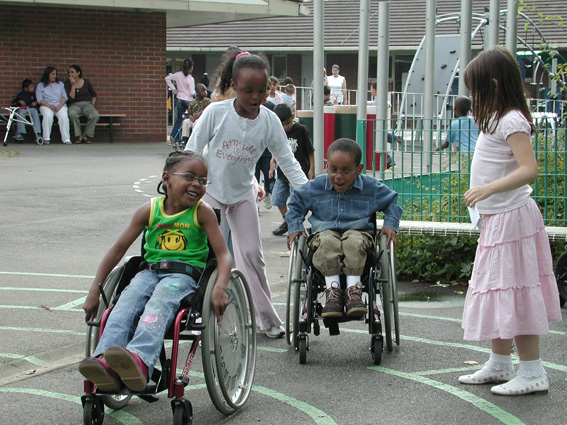
Children playing together, some in wheelchairs, some notDear friends,

We began the new year with a third lockdown, including another closure of the majority of education institutions. Within the first few weeks, the Secretary of State for Education, Gavin Williamson, made a number of announcements. This briefing is ALLFIE’s round-up in relation to Disabled learners, and covers:

  1. Coronavirus News: Additional funding; School closures; Remote education; Further education institutions; OFSTED Remote Education Report; Children and Families Act easements; Consultation on alternative arrangements for the award of vocational, technical, and other general qualifications in 2021; SAT, GCSE and A Level examination arrangements
  2. ALLFIE’s work in 2021: National; London Mayoral Elections; SEND Reform political update

1. Coronavirus News

Additional funding

In response to the continuing crisis caused by the Coronavirus pandemic, the Family Fund has received extra funding to support families on low incomes. They have received £3.5 million from the Department for Education to provide an additional 7,000 grants for families in England and Northern Ireland.

More information about the grants offered for families with Disabled children

School closures

Early Years provision remains open for all children. However, primary and secondary schools will only remain open for children labelled “vulnerable”, including those with education, health and care plans or those unable to access remote education because of home circumstances.

The Government has issued additional guidance outlining schools’ duties in delivering remote education, including:

Remote education

The Government has published further guidance on the minimum remote education provided by schools:

Further Education Institutions

Gavin Williamson’s oral statement in Parliament on Tuesday 6th January can be read here.

OFSTED Remote Education Report

OFSTED have published their report on remote education. Their findings have confirmed many of the concerns ALLFIE raised in our oral briefing with Vicky Ford (Minister for Children and Families), and highlighted in our Parliamentary Committee submissions and during Coronavirus Act debates.

OFSTED found that:

OFSTED have highlighted potential benefits of remote education for Disabled children where they are able to have greater control over the pace and environment that learning take places.

Read OFSTED’s full Remote Education report

Children and Families Act easements

As schools and colleges remain open for children and young people with EHCPs, there is an expectation that SEND provision will continue to be arranged. The good news is that no notice has been given concerning reinstating the Children and Families Act easements setting aside local authorities’ duties to arrange SEN provision as set out in the child/young person’s EHCP and 20-week completion period for EHCP assessments and plans. However, be aware that the Care Act easements are still in place that allow local authorities to put aside their duties arranging adult care.

SAT, GCSE and A Level examination arrangements

Statutory Key Stage tests, GCSE and A Level summer examinations have been cancelled. Ofqual and the Department for Education have now published their joint proposals on how GCSE, AS and A Level grades should be awarded in summer 2021. The main proposals cover:

The Department for Education and Ofqual have reassured stakeholders that they will not be using the discredited algorithms that previously awarded students their grades. A consultation is being held, as outlined in the Department for Education and Ofqual consultation document on how students will be awarded grades fairly

Consultation on alternative arrangements for the award of vocational, technical, and other general qualifications in 2021

Unlike GCSEs and A Levels, it will be for schools and colleges to decide whether vocational qualification examinations will continue or be cancelled.

Some vocational qualifications that require a practical assessment to demonstrate occupational competency or a license to practise should continue to take place wherever possible, subject to public health guidance.

Under Ofqual’s existing regulatory arrangements, the Extended Extraordinary Regulatory Framework (Extended ERF) has been introduced in October 2020; this provided awarding organisations with the flexibility necessary to adapt their assessments and qualifications to mitigate against the disruption the pandemic has caused.

The main proposals covered varying arrangements for students completing:

Separate arrangements are in place for vocational qualifications at Level 4 and above and Apprenticeship End Point Assessments. A consultation is being held, as outlined in the Department for Education and Ofqual consultation document on alternative arrangements for the award of VTQs and other general qualifications in 2021

2. ALLFIE’s work in 2021

National

Like the Government, we are very much expecting that, once the overwhelming majority of adults are vaccinated against Covid-19, there will be a return to some degree of ‘normality’, including education institutions being able to provide teaching and courses on site safely.

We are expecting a very busy year and will be arranging engagement events around making inclusive education a reality.

The Government will be publishing their response to the Special Education Needs Review together with a consultation containing further proposals. We expect the consultation to begin in the spring: ALLFIE’s submission to the SEND review.

The Government are reviewing the University Admissions System that will include options for change: ALLFIE’s Higher Education Administration Reform briefing

London Mayoral Elections

In 2019, the Mayor of London is responsible for the development and funding of adult education across the capital. They hold a vast budget to cover adult education provision across the 33 London Boroughs. This is our first real opportunity to ask for the Mayor of London’s commitment to develop an inclusive adult education plan and the funding of inclusive courses that are open to all, including Disabled and non-disabled Londoners.

Manifesto co-creation

ALLFIE, Transport for All and Inclusion London will be publishing a joint Disabled People’s Organisation (DPO) manifesto containing a range of policies that we want the Mayoral of London to implement whilst in office.

ALLFIE took part in the Inclusion London’s manifesto event where we ran a break-out session on inclusive education. A lively and informative conversation took place that will help us frame our policy asks. Additionally, we will be arranging an event with our Inclusion Champions members.

SEND Reform political update

We started the new year with a positive meeting with Vicky Ford (Parliamentary Under Secretary of State for Children and Families) in which she shared some of our goals in developing stronger inclusive education practice in mainstream schools. We were asked what needs to happen to make mainstream education a real possibility for the majority of children. Justine Tomlinson (Minister of State (Minister for Disabled People, Health and Work) during the All-Party Parliamentary Group (APPG) on Disability webinar on the Disability Discrimination Act, said that the Government would be looking for advice around Special Education Needs and Disability from the Education Select Committee and Education APPGs.

Given that the Covid-19 pandemic has highlighted the increasing inequalities between Disabled and non-disabled children and young people, we have been busy attempting to secure support from Dr Lisa Cameron (Disability APPG chair), Olivia Blake (SEND APPG chair), Kate Green (Shadow Minister for Education), Steve Reed (Shadow Minister for Vulnerable Children and Families), Daisy Cooper (Liberal Democrat Spokesperson), Vicky Foxcroft (Shadow Minister for Disabled People), and Siobhain McDonagh (Sponsor of Internet Access (Children Eligible for Free School Meals) Bill 2019-21; Private Members Bill) for cross party support for inclusive education and a major inquiry into good inclusive education practice and what needs to change to make inclusive education a right and not a struggle.

Our meetings with individual politicians are building on our existing written submissions to various committees.

In solidarity.

Graphic banner with the hashtag: # Nothing About Us Without Us

Dear ALLFIE supporters,

We ask you to once again step up for the rights of ALL Disabled people, to hold the Government to account for the erosion of our rights and living standards over the last decade!
This 2-part briefing covers:

  1. Call to Action: Take part in UK Disability Strategy Survey
  2. Our concerns: Deadline extension and Government engagement plan

1. Call to Action: Take part in UK Disability Strategy Survey

The Disability Unit in the Cabinet Office has launched a public survey to gather views and experiences for the National Strategy for Disabled People, to be published this year. The UK Disability Strategy Survey provides an opportunity for you to have your views heard – to hold the Government to account for the erosion of our rights and living standards over the last decade – and suggest ways they can implement the UN CRPD.

Click here to complete the UK Disability Strategy Survey

More information about the UK Disability Strategy Survey, including accessible formats

The survey itself is what you would expect from one produced by non-disabled civil servants and Disabled people who are not part of the disability movement (see our concerns below). The only opportunity for us to have our say is at the end in questions 111-113:

Please state answers to these question using 100 words maximum. These could include the following priority issues that we think any worthwhile disability strategy must include:

Complete the UK Disability Survey

More information about the UK Disability Survey, including accessible formats

2. Our concerns: Deadline extension and Government engagement plan

“There is a clear failure of the Disability Unit to demonstrate meaningful engagement with DPOs and take seriously the essential contributions they can offer.” Joe Whittaker, ALLFIE Trustee

ALLFIE stands in solidarity with Inclusion London and Reclaiming Our Futures Alliance (ROFA), requesting an extension and clear plan of engagement from Government.

The Disability Unit in the Cabinet Office claims it is:

“working with government colleagues, disabled people, disabled people’s organisations, charities and businesses to develop and deliver a National Strategy for Disabled People.”

However this is not the case. Last Thursday ALLFIE received notification from the Government’s Disability Unit of the UK Disability Survey – an online questionnaire going live on Friday designed to inform the National Disability Strategy (NDS). This is the first ALLFIE knew about this survey despite being on the DPO Forum with the Minister for Disabled People, Justin Tomlinson and the civil servants from the Disability Unit. The last 2 meetings of this group have been unilaterally cancelled by the Minister, without consultation.

One of the most concerning aspects of this survey is the ridiculously short timescale for Disabled people to respond:

“The survey will be open until 23 April 2021. Responses received before 13 February 2021 will inform the development of the National Strategy, while those received after this date used to inform its delivery”.

Our sister organisations have issued a letter to the UK Government, calling for a deadline extension and engagement with Disabled People’s Organisations. ALLFIE fully endorses this response, so clearly detailed by Tracey Lazard on behalf of Inclusion London below:

“I am frankly shocked and dismayed to receive this information in the light of the following:

  • At no point have we received any information, either in writing or at the DPO forum meetings, that the 13 Feb mentioned is the cut off period for feeding into the development of the strategy.
  • At no point have we received any written information about the NDS or how the government plans to engage Disabled people and DPOs in its development, despite assurances from the disability unit that they would do so and despite us repeatedly requesting this in writing and at the DPO forum meetings over late summer and autumn. We have received a couple of brief verbal NDS updates at previous DPO forum meetings but without any written information these updates have been totally inadequate as a way of enabling DPOs to engage in the development of the NDS
  • We have consistently requested that the DPO forum is organised and planned in a way that will facilitate DPOs strategic engagement in the NDS (as well as requesting basic improvements to the forum like minutes being taken which has to date not happened) but no changes have been made. This presents a huge lost opportunity for DPOs to feed into the strategy.
  • The decision to cancel the last two DPO forums in December and January without explanation were deeply frustrating but now in the light of this cut off period it is inexplicable that these meetings have been canceled so close to the Feb deadline given this is the only way DPOs can engage directly with the disability unit and the Minister.

The above can only be described as a failure to carry out the most basic engagement with Disabled people and our organizations in what will be the first disability strategy since 2011.

Considering we are still in an ongoing pandemic in which nearly 60% of COVID related deaths are Disabled people and given the significant body of evidence that shows Disabled people are now experiencing deeper structural inequality that is eroding our quality of life and putting back our rights and inclusion it is absolutely vital that there is real and meaningful engagement between DPOs and the Government in the development of the NDS.

Given the above I am formally requesting that the NDS development period is extended and that the disability unit draws up a plan for specific DPO engagement to take place in this extended development phase.”

Tracey Lazard, Inclusion London

We have not yet had a response to these concerns.  We urge DPOs to share and support our concerns and stand in solidarity. If you feel strongly about this issue please contact: mailto:ducitizenspace@cabinetoffice.gov.uk

We will keep you informed of any response we receive and other actions we intend to take. If you have any feedback or would like any further guidance please contact ALLFIE at: info@allfie.org.uk

In Solidarity

ALLFIE

ALLFIE celebrates 30th birthday!

To mark 30 years of campaigning for Disabled people’s education rights, ALLFIE hosted an online campaign ’30 years, 30 messages of inclusion’ in November. Highlights include these videos and blog articles.

To mark 30 years of campaigning for ALL Disabled people’s education rights, ALLFIE hosted an online campaign ’30 years, 30 messages of inclusion’ over 30 days in November 2020, to reconnect with those who have been part of the charity’s history, and amplify ALLFIE’s vision of:

“a world where inclusive education is a right not a struggle”

Press Release:

Press Release: Alliance for Inclusive Education Launches 30th Anniversary Campaign

Videos:


Blog Articles:

Celebrating 30 years of Campaigning for Inclusive Education: Why ALLFIE is Important

30 Years of Campaigning For Change: Past, Present and Future

Inclusive Education Research: Co-production in Practice

Disability History and Inclusive Education Campaigning

When will Disabled Black Lives Matter?

We ask you to join our 30th anniversary celebrations and support us throughout the year, including by sharing our messages with your followers on social media, using hashtag #ALLFIE30

Reflection on Steve McQueen’s ‘Small Axe: Education’ Film

ALLFIE’s Disabled Black Lives Matter pressure group reviews Steve McQueen’s new BBC film, highlighting the deep impact of systemic racism, disablism, intersectional and interlocking oppression in education.

“‘Small Axe: Education’ reveals the way the education system intentionally wanted Black and Disabled children to fail. The film has contemporary relevance today. It shows us how structural racism and disablism happened and still happens. It points to unfulfilled lives, lost talent and ignored potential. Young people are segregated into a system which leads to further segregation and exploitation in adult life.”

During our recent ALLFIE Disabled Black Lives Matter meeting we discussed Steve McQueen‘s ‘Small Axe’ film entitled ‘Education’. We also used the opportunity to apply the learning from the training sessions ALLFIE received on ‘race’, disability and intersectionality. This led to the writing of this reflective piece as a way of highlighting the impact of disablism, intersectional and interlocking oppression. It also led to discussing how these issues are experienced by Black Disabled people in the UK.

Shown on BBC 1, in a primetime slot, Steve McQueen’s ‘Small Axe’ film anthology series is set between the late 1960s to the mid-1980s. Small Axe tells stories of where we were, where we are and where we want to go, with regards to the lives of London’s Caribbean community. The film is based on real life events; showing how individuals’ lives were shaped by their own determination to succeed. It also highlights Black oppression and the cruel racial and disability discrimination.

The film takes a reflective look at the systemic racism prevailing in schools in the 1970s. Whilst disability discrimination was not the focal point of the film it did reveal, not only the deep impact of segregated education of disabled children and children labelled with ‘Special Educational Needs’, but also the link with segregated education today.

Twelve-year-old Kenyah Sandy portrays Kingsley Smith – a Black young boy with a fascination for astronauts and rockets who also struggles with reading. Kingsley was very conscious about the difficulties he had with reading and this was made worse particularly when he was asked to read aloud in front of the other students.  The teachers did not help the situation because they called him ‘blockhead’. This public humiliation and insult amplified Kingsley’s fears of reading which resulted in him being targeted and labelled as having ‘disruptive behaviour’. The film showed how such behaviour, often assumed to be innately belonging to Kingsley, was compounded by institutional racism which was further upheld and masked through using disability as the reason for Kingsley’s negative schooling experience.

Kingsley’s school was not representative of people from different backgrounds and difference was considered as problematic at the school. Kingsley, described as a Black boy with dyslexia from a Caribbean, working class background, had characteristics which were at odds with the school profile and society at large.

The film shone a light on the lived experiences of intersectional and interlocking oppression of ‘race’, disability, gender and social-class bias. Experiences of powerlessness, segregation, humiliation, deprivation, cultural prejudice and violence were, and are, common.  ‘Special schooling’ pollutes society and is used to support and mask ideologies to justify the division of groups of people and communities to uphold segregation.

Kingsley was labelled as ‘educationally subnormal’ because he has dyslexia. Both Kingsley and his family rejected the label of ‘educationally subnormal’ due to ramifications on education and learning.  Kingsley’s mother did not deny that her son required support but recognised that disability was used to mask racist practices and was used to justify removal from mainstream school. When Kingsley’s mother attempted to challenge her son’s exclusion with the headteacher she was treated as someone with no influence, importance and sent away.

Kingsley is moved to a school for students with ‘Special Educational Needs’, where the children were not valued and therefore were not being prepared to be contributors to society. Here the children are treated with the lowest of expectations and effectively taught they will never achieve anything in life. We further saw this institutional practice being repeated with a young Asian boy named Sajid played by Jairaj Varsani. Sajid shared his serious concerns about the long-term impact of Kingsley’s attendance at the segregated school and how it would have an impact on his future. Kingsley’s experience highlighted the lasting impact of segregated education on other areas of our lives; as pointed out by a Disabled Black scholars and activists, such as Millie Hill, Nasa Begum, and Ossie Stuart.

‘Small Axe: Education’ reveals the way the education system intentionally wanted Black and Disabled children to fail. The film has contemporary relevance today. It shows us how structural racism and disablism happened and still happens (refer to ‘Timpson review on School Exclusion’). It points to unfulfilled lives, lost talent and ignored potential. Young people are segregated into a system which leads to further segregation and exploitation in adult life.

The key message of the film is ‘If we do nothing, nothing will change’. It is important that we not only challenge the systematic exclusions of Black children but that we challenge the discrimination experienced by Disabled Black children.  This programme highlights the problems and weaknesses of policies and laws when they are used to support segregation.

This is why we must have solidarity for the progression of any human rights development.

ALLFIE’s DBLM group’s hope is that this programme will kickstart a conversation to:

We must educate not segregate

In power, unity and solidarity

ALLFIE DBLM

The Road to Inclusive Education: My Review of ‘Your Ideal School’ Project

To mark Disability History Month 2020, Yewande Omoniyi-Akintelu reviews Jess Starns’ research project 50 years on from the Education (handicapped children) Act, asking how inclusive do you feel the system is – what would your ideal school look like?

My name is Yewande, and I am an Office Volunteer for ALLFIE. I was asked by our Campaigns and Policy Coordinator, Simone Aspis, to review interviews which are part of a research project, ‘Education (handicapped children) Act 1970 – your ideal school?’, comparing the Education (Handicapped Children) Act 1970 with how inclusive and accessible the education system is today. The project is by a Disabled student named Jess Starns, and was done in July 2020. Several people were interviewed such as Disabled people of different ages, and parents of Disabled Young people.

Education (handicapped children) Act 1970 – your ideal school? – YouTube (please note, there is swearing in the audio)

I will be highlighting the key points and themes that emerged from the interviews.

The Act granted all children of compulsory school age the right to an education, where previously Disabled children with certain impairments had been denied that right. It transferred responsibility of Disabled children’s education from health authorities to local education authorities (LEAs). The Act is 50 years old in 2020.

One of the first points made is that it should be acknowledged that some changes have been made to the education system to improve the education provisions for some Disabled children and Young people since the Act was passed. However, many of the people interviewed said that there is still a long way to go until today’s education system is fully inclusive. An interviewee mentioned that pupils with diagnosis such as autism are at an increased disadvantage, because often their diagnosis gets missed and they do not get the support that they need. One of the main themes running through the interviews is what the participants’ ideal school looks like. The majority of the interviewees said that an ideal school would focus more on the arts, sports, and vocational subjects. Many people also said their ideal school would be smaller and more child focused, with no performance streaming and setting. An ideal school would allow people to follow their passions. One person mentioned that the National Curriculum does not give children space to grow.

Another common theme in the interviews is that Disability Rights and the Social Model of Disability should be taught in schools.

I definitely agree with this, as I believe that it creates a good foundation for schools to be inclusive. Another point raised was that schools do not encourage full inclusive practices because they hardly have any Disabled teachers and staff. One person mentioned it is important for Disabled children to see people like them represented in the education system. The lack of differentiation in the curriculum was also highlighted, and the exam system being too rigid. A Disabled Young person mentioned that they struggled with exams, and that there should be more opportunities to do coursework instead of exams.

The differences in special schools and mainstream schools was also talked about by various interviewees.

One person with learning difficulties spoke about the low aspirations that the teachers in special schools had for them. However, they are now studying for a PHD. Another theme that I noticed was that several people mentioned that they were bullied in mainstream school so they were moved to special school, in the hopes that things would get better. One person said that when they started attending special school in the year 2002, they had a good social experience, but not a good experience academically.

I have met many people that say special school is a better option because of issues such as bullying in mainstream. I believe that things such as bullying and lack of academic support happens because mainstream is not fully inclusive yet, not because inclusive education does not work. The point was also made that the resources available in special schools (such as sensory rooms) should be available in mainstream schools to make them more inclusive.

Another interviewee was asked about their experience of special school in the 1970s, and their lack of access to exams and qualifications at the time. They said that they can’t believe that the same thing is still happening to special school students today. They believe that the current ASDAN qualification is not good enough, and that there is no proper route to employment once someone leaves special school. They also mention their experience of not being taught sex and relationship education when they were at special school, and that they believe the same thing still happens to some students today. In their opinion, parents do not always realise the bigger impact of segregated schooling.

The theme of integration vs inclusion is talked about in the interviews, also the debate surrounding the definition of inclusive education.

The definition of inclusive education is constantly debated, and many people still confuse integration for inclusion. Jess mentions that the Centre for Studies on Inclusive Education (CSIE) has one of the more comprehensive definitions of inclusive education, but also mentions that we are not there yet with schools fulfilling that definition.

One person also said that attitudes towards inclusive education from educational professionals also need to change. Another person explained that it is too much of a legal fight to get inclusive education, which is why many people give up on it.

Transition to post-16 education and higher education was also discussed.

An interviewee said that Young Disabled people need more support when transitioning to post-16 and adult services. Another person said that many Young Disabled people are still not accessing higher education and, in their opinion, higher education is still based on the medical model.

Another interesting point from the interviews that stood out, is the issue of labelling and “special needs”.

One interviewee mentioned that 40 years ago when they worked in education, there were less labels. In their experience, pupils were treated more as individuals. There was more opportunity to participate in group work in the classroom, and people were rarely diagnosed as autistic. They also said that it was not common to talk about not being able to meet a child’s needs, like there is now. I do believe that the Special educational needs and disability (SEND) system can be disabling, because it focuses more on what a Disabled child and Young person cannot do. It can unintentionally make the child or young person feel like they are a problem, that needs to fit into the system, rather than addressing the barriers in the education system itself. To quote a participant from the interviews:

“Being different is great, being made to feel different is not okay”.

One of the interviewees said that segregated education means that people will not learn from each other. They said we need to learn that Disabled people experience oppression, but to also learn to celebrate us and our achievements.

Conclusion

In conclusion, I really enjoyed listening to the interviews by Jess. It was good to hear a wide range of views about Disabled people and education from people of different ages and backgrounds. The resource did a really great job of capturing the themes that always come up when talking about inclusive education, and the barriers that we face trying to make inclusive education a reality. It is true that things have progressed since the Handicapped Children’s Act in 1970s, but we still have a very long way to go. However, it is important that we keep having these conversations, regardless how uncomfortable they might be. Hopefully there will be one day in which inclusive education is a right, and not a struggle.

By Yewande Akintelu-Omoniyi

Supported by

ALLFIE’s campaign for Inclusive Education as a human right is backed by funders and donors who reject the systemic segregation of Disabled people from society.