Please ensure Javascript is enabled for purposes of website accessibility Skip to main content

Our Voice is Being Heard

Project news from ALLFIE’s Armineh Soorenian, ‘Our Voice’ Project Leader

ALLFIE has received the funding to create the ‘Our Voice’ project, so that Disabled Young people can have a say on what matters to them. This project addresses the isolation and intersectional exclusion experienced by Disabled Young people during the COVID-19 pandemic.
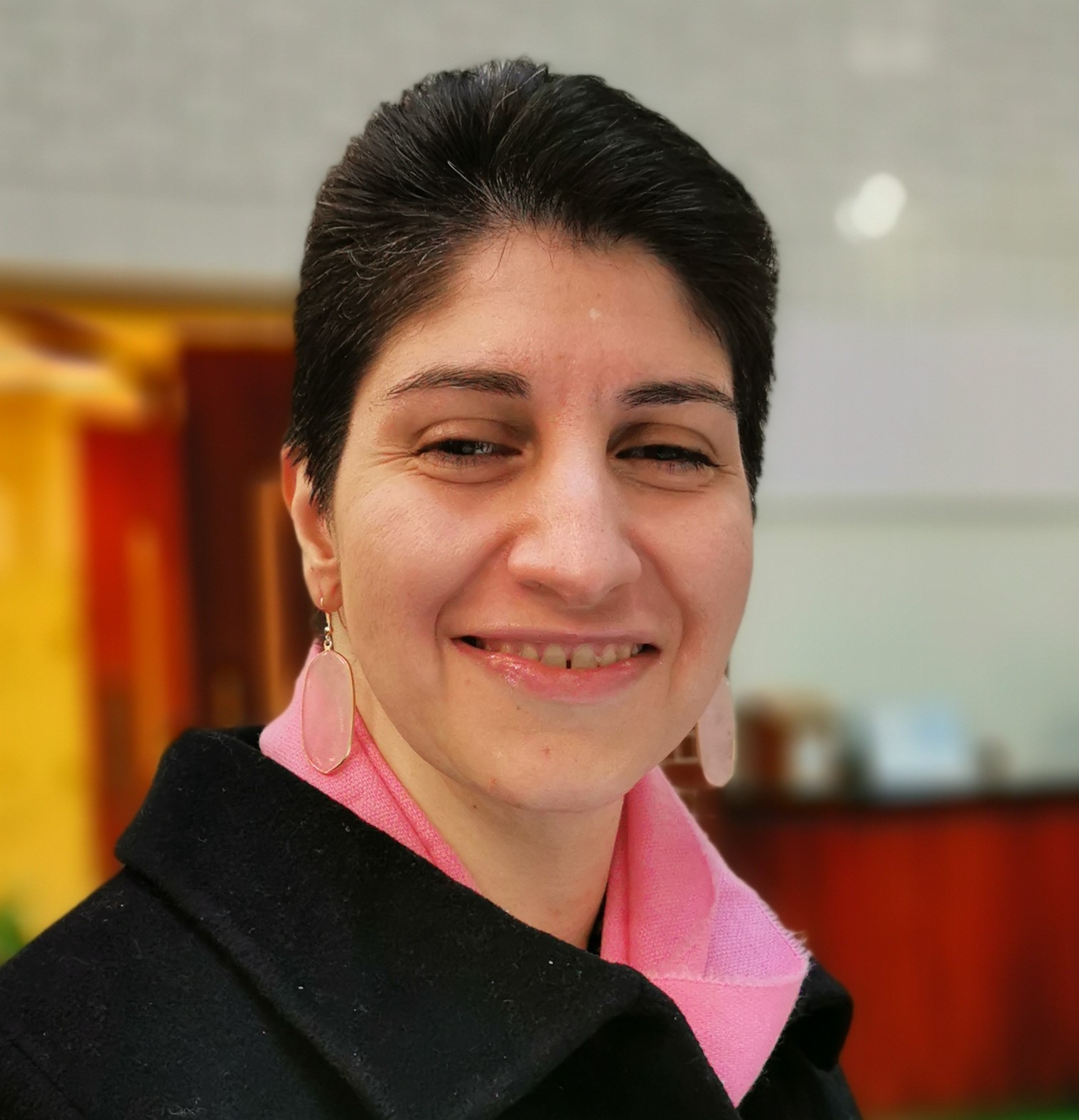
Head and shoulders portrait of Armineh Soorenian, 'Our Voice' Project Leader and author of the article 'Our Voice is Being Heard'. At ALLFIE, we feel that during the pandemic, Disabled Young people’s voices have not been heard. As a result, support for their Independent Living needs, and control over what support remains has worsened. This is why we applied to the DPO COVID-19 Emergency Fund, organised by National Emergencies Trust (NET), to start a COVID-19 national participation project for Disabled Young people.

What is ‘Our Voice’ project?

We have recruited 11 Disabled Young people, aged between 16 and 25. The participants meet with members of the ALLFIE team via Zoom for about 90 minutes every few weeks, to have conversations and share their experiences. We have also used the time for training, introducing the social model of disability and the importance of using the right terminology when talking about disability. We felt it was significant for the participants to be aware of their rights and increase their knowledge about disability politics, so that they can participate meaningfully in the future discussions and own the Our Voice meetings going forward.

Inclusive Education, Independent Living and Intersectionality

Over the past few months, the Disabled Young people have shared their experiences of inclusive education, Independent Living and intersectionality during the pandemic, as well as the impact of COVID-19 on their lives. The Young people have been involved in co-facilitating the discussions with ALLFIE staff and have brought their perspectives to the conversations. We intend to collect plenty of evidence and information on Disabled Young people’s experiences and the narratives will then help us, as an organisation, to plan future projects and activities for Young people.

Project Benefits

Our Disabled Young participants have found their participation in the project beneficial, with a growing sense of confidence in disability rights. They often tell us how much they enjoy meeting each other and sharing their experiences, knowing that they are not on their own in facing disablism.

The participation of ALLFIE’s staff in the meetings has allowed the sessions to have an intergenerational feel, and for the Young people to learn from those who have been involved in the fight for disability rights for many decades. The ALLFIE staff have also found the sessions informative and interesting, learning about some of the existing and emerging barriers for the younger generation and what is important to them. From the feedback we have received, we are very keen to continue with the discussion groups beyond the project, and let the Young people organise and lead their own meetings.

We hope that the Young people will go on to further leadership opportunities with the Disability Rights Movement.

‘Our Voice’ Outcomes

From the conversations we have had, participants have produced resources on their experiences that are being posted on ALLFIE’s webpage and in other publications. Look out for articles on social media with the #OurVoice, and if you want to know more, please contact Armineh Soorenian.

Returning to School After Lockdown

An interview with Kadijah Adam by ALLFIE’s Michelle Daley

In a follow-up to Kadijah Adam’s insightful article in our Spring magazine, Michelle Daley spoke to Kadijah, a Disabled teenager studying in her local mainstream school, about her experiences returning to school after the most recent lockdown. When we heard from Kadijah during lockdown, she was excited and enjoyed remote education, so we wanted to catch-up with her and see what she thinks of being back in school.

Returning to school

On 8th March 2021, the UK government reopened schools, as part of the easing of lockdown restrictions in the United Kingdom. For Kadijah, a year-10 Disabled student, this was a nightmare and she found going back to school stressful. Kadijah told ALLFIE:

“It [the school] is a bit regimented [because of the physical distancing] and they haven’t made the right adjustments and it is not accessible for people with learning difficulties.”

In Bubbles

COVID-19 guidance on physical and social distancing has also had an impact on Kadijah’s school experience. In class, for instance:

“When I don’t understand the question, I have to struggle on my own. I cannot see from one eye and have a learning difficulty and I need help with understanding questions and to access the subject material.”

The Teaching Assistant (TA), who supports Kadijah and teachers in many of her classes, has to remain socially distanced and wear a mask. Kadijah said that she found this distance hard, as her TA and teachers are now often unable:

“to sit next to me, help explain questions and diagrams to me because of the social distance.”

Additionally, the formation of bubbles in schools has meant that Kadijah is isolated from certain peers:

“I have a friend in year 11 I would talk to during breaktimes, but I’m not able to now because each year group is in a bubble.”

She added:

“I don’t like being back at school, it makes me stressed. I don’t like being in bubbles, I liked doing my schoolwork at home.”

When we spoke with Kadijah previously, she did not raise as many concerns around assistance received at school prior to the lockdown. For Kadijah, social distance has created further issues with how she receives support in accessing and engaging with her subjects. It has also created more separation and division, particularly as she already struggled socially in the school environment. Her return to school has exacerbated the negative schooling experiences and made her support even more inaccessible.

Ignoring Youth Voice

Kadijah feels strongly that the voices of Young Disabled people have not been considered in government legislation around sending children back to school, stating categorically:

“[the] government shouldn’t force us back to school.”

Additionally, she spoke about how, as a Young Disabled person, she has to take exams that are inaccessible for pupils with learning difficulties:

“I find the exam preparation too difficult and I get stressed.”

She feels as though she has been forced into a process that has not been fully supportive for pupils with learning difficulties. Kadijah told ALLFIE:

“If I had the choice, I’d prefer to study from home, rather than going to school because I finds it less stressful.”

Kadijah wants the government to listen to Disabled students and understand that some Disabled students should not only have access to support within school, but also have the choice of whether to attend school or continue to study remotely from home.

Final thoughts

Kadijah left ALLFIE with three key messages:

1. Exams should be made accessible to ensure that they don’t segregate Disabled students with learning difficulties

2. Students should have a choice as to whether to learn from home, at school, or a mixture of the two

3. The government should speak and listen to Disabled student’s voices, and include them in decision-making processes

Learning in Lockdown

Inclusion Now magazine hears from prominent Young disability rights campaigner, Daniel Jillings, about his experiences of COVID-19 learning.

Overall, I have liked being at home, but it has been hard work sometimes. My school normally sends work for me to complete via an app called Show My Homework and I complete it and send it online. Sometimes the teachers give us links to videos to watch for the lessons, but it has been harder if subtitles are poor quality. There are lots of online things that I can’t enjoy at all, as they aren’t captioned. It’s difficult and frustrating when things don’t have captions.

Since January, I have also had live lessons (on Microsoft Teams). For these, I need to use two screens so I can see what the teacher is sharing, as well as following my BSL interpreters. It can be tiring because I am focusing on my laptop all day. The technology is simple for me, but it needs a lot of energy to concentrate, especially if there are a few live lessons on the same day.

My Teachers of the Deaf have regular video conversations with me to ensure that I understand the work and to go through some topics, which is really helpful for me. I do prefer staying at home, as I have more free time and it’s easier for me to focus on work and get it done quickly. Overall, learning at home has been good for me, as I have people in school who make sure things are ok for me. I am worrying about returning to school mainly due to the face masks being used all day and the safety of school is one of the main concerns for me. Even with the support I have, it will be difficult to communicate with the other people with masks and things like that.

Also, check out Daniel’s recent blog and video on returning to school with face masks

Disabled people have a new advocate in the House of Commons

Q&A with Olivia Blake MP by Richard Rieser

Olivia Blake was elected as Labour Member of Parliament for Sheffield Hallam constituency at the 2019 election. During her 16 months in Parliament she’s been highly active and become a force to be reckoned with, including in her role as Chair of the SEND All-Party Parliamentary Group (APPG). Richard Rieser interviewed her for Inclusion Now Magazine and found out how her lived experience (Olivia identifies as Disabled and neuro-divergent, being Dyslexic and having a long-term metabolic condition) has impacted on her career.

The journey to Parliament

Olivia gained her A-Levels at secondary school in the 2000s, when one would’ve expected schools and teachers to be vigilant for specific learning difficulties. However, she didn’t receive the necessary support to achieve the very high grades required for medical school (“Chemistry let me down”). So, Olivia opted for Microbiology, later going into NHS research. Olivia was not identified as Dyslexic until University and so got no reasonable adjustments at school.

Meanwhile coming from a Labour family (her mother was the Labour Leader of Leeds Council), Olivia is a socialist and deeply committed on green issues, equality, workers’ rights and challenging austerity. Olivia ran for Sheffield Council and was elected as a Councillor in 2013. On the Council, she successfully pushed to bring services back in-house from poor privatised ones, pushed for a Local Living Wage, had the brief Children and Young People and became Deputy Leader with a Finance Brief, before being elected an MP.

1. Richard Rieser (RR): What led you to be a fighter for social justice?

Olivia Blake (OB): “In lessons at school I was always the one to speak up, though my written work was not great and teachers accused me of being lazy and in exams time ran out. Labour’s Literacy Hour with no flexibility and the loss of modular exams also adversely impacted upon my education.”

“My interest in SEND probably comes from my own school experience, which is why I joined the All-Party Parliamentary Group for SEND (APPG SEND) and was elected Chair. A post which I am very pleased to have just been re-elected to. This Parliamentary Group has just concluded and published their highly critical report of government, on the impact of COVID-19 pandemic on children with SEND.”

2. RR: Why is inclusive education so difficult to achieve currently?

OB: “Inclusion is not incentivised under current government measures in England. The Performance Tables are a big barrier to inclusion and the lack of funding throughout the SEND system all mean things are not improving for children and Young people with SEND. The Education Select Committee Report into SEND has shown there is a lot wrong with the SEND system and the government seems to have been dragging its feet on publishing the long-awaited SEND Review. ALLFIE and many other grass roots organisations are important in informing the APPG SEND on what’s happening on the ground, especially the voices of Young Disabled people.”

3. RR: Tell us about launching the 26th March Report on SEND and COVID?

OB: “Government must ensure support for children and Young people with SEND is part of all future pandemic planning. Today we published the findings from our inquiry into the experiences of children and Young people with SEND in educational settings during the COVID-19 pandemic. The inquiry – launched in July 2020 and consisting of a number of evidence sessions with parents, teachers and oung people – has found that the government and Department for Education did not do enough to support the UK’s most ‘vulnerable’ children and Young people during COVID-19, forcing schools and families to “pick up the pieces.” Our report concludes that the needs of children and Young people with SEND were continuously overlooked by the government in their COVID response. Guidance for special schools and alternative provision was published later than guidance for mainstream schools, making Young people with SEND feel like an “afterthought”. One parent, who took part in the inquiry, said: ‘It is very sad to see that the lives and care of our Young people is regarded as so unimportant that the services we rely on for support… were deemed non-essential and closed down for six months.”

“During the inquiry, we heard from Disabled children who were refused attendance in schools, despite not being able to replicate support in the home environment; parents who were left out of important decisions and risk assessments about their children’s schooling; support staff not allowed on to school sites due to COVID restrictions and children made to start in a new educational setting without the support required in their Educational and Health Care Plans… We also found that the mental health of Young people with SEND, and that of their families, has been widely impacted by the pandemic, with increased levels of anxiety frequently reported by both children and parents.”

“The report also highlighted issues with funding for SEND provision, which was already of long-term concern, with local authorities, school settings and families reporting deficits in the high-needs budget. The report found that the impact on schools of COVID-19 related costs and loss of income has only exacerbated this crisis.”

4. RR: What needs to change in SEND system?

OB: “We lay out 9 key recommendations, including new additional funding for support for SEND children and mental health support, specific funding to deal with the backlog in assessments for Educational and Health Care Plans, and an urgent and time-bound parliamentary review in order to assess the impact which COVID has had upon children with SEND.”

“We are also calling on the Secretary of State for Education to publish the long-awaited SEND review and commit to working with the cross-party group to ensure that SEND children and Young People are placed at the centre of government’s policies and decisions. I hope this report will focus discussion on how we address those problems and improve a system that has long-needed change.”

5. RR: How did you get elected as an MP?

OB: “It was not expected I would be elected as MP for Hallam. This had always been Liberal until the election of Gerrard O’Mara in 2015. (he had lost the Labour Whip because of controversial statements). But I was very involved with a wide range of campaigns and issues in the constituency that goes from city centre into the Peak District. I won against the trend with a narrow majority of 712.”

Since arriving at Parliament, Olivia has been very active in the Commons Chamber, delivering speeches and posing questions during debates. She is also involved in All Party Parliamentary Groups on Pension Inequality, Youth Affairs, M.E., and ending the need for Food Banks.

The Inclusion Movement must keep sympathetic MPs like Olivia well informed.

Website: www.oliviablake.org.uk | Email olivia.blake.mp@parliament.uk

Reflections on ‘Disabled Women on the Frontline’: An International Women’s Day Event

By Yewande Omoniyi-Akintelu, ALLFIE Office Volunteer

On 26 March 2021, ALLFIE held an online event with partners Inclusion London, Sisters of Frida and guests. The aim was to explore the issues for Disabled Women on the frontline, as well as to amplify our voices and celebrate the contributions of Disabled Women and Girls within the Disability Rights Movements.

“We, as Disabled women occupy a very interesting place. We are at the frontline, often, of discrimination and inequality, also often at the multiple intersections of race, class, gender, and disability, but we are also at the frontline of change and our struggle for social justice”
(Tracey Lazard: Co-Chair)

Highlights of the event are captured in this short YouTube film

Yewande Omoniyi-Akintelu took part as a panelist, to represent ALLFIE’s vision for an inclusive education system, and reports back on her experience:

“From an ALLFIE point of view, because we campaign against segregated education, there seems to be a lack of interest from funders and people who run projects to look at intersectional issues. So, you are segregated in education for example, you are further disadvantaged if you have more than one identity, that’s to say if you are a Black Disabled Woman, your chances of being segregated are even further. One of the things I discovered in my work with ALLFIE is the UN-CRPD, the UN Convention for the Rights of Persons with Disabilities, is written in an intersectional way but it’s not being applied in an intersectional way. So, when it’s being talked about, especially in the UK, people don’t consider the other identities that a Disabled woman may have.”

In March this year, I was asked by our director, Michelle Daley, to be a panelist for our joint International Women’s Day (IWD) event, with Inclusion London and Sisters of Frida, on the theme of: ‘Disabled Women on the Frontline.’

The aim of the event was to discuss issues including:

Preparing for Disabled Women on the Frontline event

I was very nervous to be on the panel, as I was aware that I’d be sharing the panel with so many amazing Disabled Women activists that have so much experience and have been campaigning for many years. So, I was happy to hear that I would also be sharing the panel with other Young campaigners, Tasnim Hassan and Thiandi Grooff. Tasnim (an ALLFIE Trustee) and I are members of ALLFIE’s Disabled Black Lives Matter (DBLM). I really enjoyed hearing about everyone’s areas of work and learning about the different things that they campaign on.

Events like this are so important, because Disabled Women are not often welcomed in mainstream feminist spaces.

Creating a space for discussion

The event created a safe and open space for honest discussion, and it was good to discuss our shared experiences with the other panelists. I also enjoyed the chance to put across my perspective of being a Black Disabled Woman, and the intersectional issues I experience. In both the Disabled people’s movement and the feminist movement, we don’t often get to hear from Disabled Women with intersectional identities, who experience different types of discrimination particularly gender-based issues in education. In my opinion, talking about and showing solidarity to current campaigns, like Black Lives Matter and Reclaim Our Streets, will help to encourage younger Disabled Women to be part of the movement, especially those with intersectional identities. I also think Disabled Women’s organisations using social media more will help keep them updated about what issues are trending for Young Disabled Women.

My event highlights

The event gave me a chance to hear about an area of activism that I don’t know much about, such as sexual violence against Women and girls that one of the panelists, Ruth Bashall, from Stay Safe East, has been campaigning on for years. It was also great to see so many people from Women’s rights organisations attending as part of the audience for the event. I had a chance to put across ALLFIE’s view of ending segregation to promoting equal rights.

In my opinion, we will not be any closer to achieving equality for Disabled Women unless we start talking about ending segregated education.

I got to speak about making rights accessible to Young Disabled women. I believe that is the key to encouraging Disabled Young Women to join the movement. I enjoyed hearing about issues, such as how to make direct action and protest more accessible, especially in COVID-19 times. The event was also made as accessible as possible, with BSL interpreters and closed captioning, which allowed more people to join.

Learning from lived experience

I think the most important thing that I took from the event is that lived experience is so essential to help amplify the voices of Young Women and girls in the movement. My lived experience has been so helpful in understanding and finding my place in the movement. Even though I don’t always feel experienced enough yet, as I am still learning every day, my lived experiences as a Black Disabled Woman have given me a unique outlook. I think many Young Women coming into the Disabled people’s movement might feel overwhelmed by not having campaigning experience, but they should never underestimate their lived experience. This is why the IWD event was so important and successful. It created a space where Disabled Women of different ages and backgrounds felt empowered to use their voices and talk about issues that matter to them. I hope there will be many more events like this in the future.

In 2019/2020 a number of highly critical reports were published on the UK Government’s approach to education for Disabled children and Young people, and those with Special Educational Needs (SEN). These highlight the extent to which things have got worse under the Conservative government, as well as due to COVID-19. They include:

  1. The Audit Commission report, ‘Support for pupils with special educational needs and disabilities in England’, published September 2019, stated:

    “Some pupils with SEND are receiving high quality support that meets their needs, whether they attend mainstream schools or special schools. However, “the significant concerns that we have identified indicate that many other pupils are not being supported effectively, and that pupils with SEND who do not have EHC plans are particularly exposed. The system for supporting pupils with SEND is not, on current trends, financially sustainable. Many local authorities are failing to live within their high-needs budgets and meet the demand for support. Pressures – such as incentives for mainstream schools to be less inclusive, increased demand for special school places, growing use of independent schools and reductions in per-pupil funding – are making the system less, rather than more, sustainable. The Department needs to act urgently to secure the improvements in quality and sustainability that are needed to achieve value for money.

  2. The Parliamentary Education Select Committee Report on SEND, published in October 2019.
    In 2014, Parliament legislated with the intention of transforming the educational experiences of children and Young people with special educational needs and disabilities. The report makes clear this has not happened:

    “Let down by failures of implementation, the 2014 reforms have resulted in confusion and at times unlawful practice, bureaucratic nightmares, buck-passing and a lack of accountability, strained resources and adversarial experiences, and ultimately dashed the hopes of many… Implementation has been badly hampered by poor administration and a challenging funding environment in which local authorities and schools have lacked the ability to make transformative change.” (Page 3)

    The Select Committee argues for:
    – More rigorous inspections and a direct route to enable parents to contact Ministers
    – An easing of restrictions on local authorities’ abilities to establish special schools and resource bases
    – Much greater opportunity for Young Disabled people, such as supported internships and apprenticeships

  3. An article in SEN Jungle in September 2019 warned a further SEND Review risked kicking the issue into the long grass:“Ministers know that the reforms haven’t worked as intended in many areas, and that children with all types of needs are losing out on an education, with long-term consequences for their wellbeing and life-chances. They know that families are struggling and having services withdrawn; they know that more than 8,000 children with SEND have no school place; they know that requests for children to have their needs assessed are routinely refused; they know that local authorities find endless inventive and unlawful ways to put up barriers to children receiving support; and they certainly know that education, health and social care services often simply fail to work together in any meaningful way.”

Lack of Action and COVID-19

Since these publications, there has been no review published. The COVID-19 pandemic has massively impacted on all children’s learning, but especially Disabled children and Young people. COVID-19 has led to a worsened mental state for a majority of Disabled children, according to a survey of the Disabled Children’s Partnership in March 2021, which found that 29% of Disabled children were shielding, and 54% of parents (of 507 responders) felt that their Disabled child had lost confidence over the previous 12 months. This included life skills, such as being out and about (53%), communicating with others (49%), interaction with strangers (47%) and familiar people (38%).

The government has talked about ‘catch-up’ but, as we can see from the reports above, the system was not working well for the majority of Disabled children and their parents before lockdown. Now the review, when it comes in late spring, will need to address building back better for the whole SEND system.

Funding

The SEND Review appears to be led by the HM Treasury looking for quick wins to claw back money, rather than providing long-term solutions to the chronic under funding of SEND. There are now 390,109 pupils and students with an Education Health and Care Plan (EHCP), (an increase of 10% on 2019 and 62% on 2015), far more than anyone anticipated. Because the system cannot cope with the increased number of pupils with EHCPs, greater numbers are being educated in inappropriate settings.

In the past year there has been a 15% rise in the number of pupils with EHCPs attending independent schools, which are not independent special schools. National Education Union analysis indicates that, in order to address the shortfalls, the ‘High Needs Block’ should be £2.1 billion a year higher (assuming the 2020/21 number of EHCPs were funded at the 2015/16 rate). The government has acknowledged the issue and increased funding, (from £350 million for 2019-20, £780 million for 2020-21, to the announced £730m for 2021-22). But this isn’t enough, given the scale of need. The government needs to increase funding in the planned Comprehensive Spending Review for 2023-24. The COVID-19 pandemic has worsened the financial situation for many schools, who have incurred additional costs. The failure to keep up in real expenditure terms is putting increasing pressure on school budgets (non-ring-fenced), leading to widespread cuts in vital inclusion support, and subsequently impacting the 1.1 million Disabled students on SEND school support.

The NEU Conference at Easter 2021 voted strongly for policies supporting inclusive education, including restoring funding, and was a great day for the NEU, Disabled people, parents of Disabled students and education in general, to achieve unity on such a wide-ranging motion. It highlighted how a range of government policies on curriculum, assessment, privatisation, real-term funding cuts, disproportionate exclusion rates, and failure to implement disability equality duties under the Equalities Act, has meant Disabled children and Young people have been let down by the mainstream school system. When combined with other intersectional identities, for instance class and gender, these outcomes have led to multiple failures. Meanwhile, the growth in local authorities (LAs) placing Disabled children in expensive independent schools is causing a great financial strain on LA budgets. The Conference agreed to, “build a widespread campaign for better treatment of Disabled staff and students and to achieve a well-resourced mainstream inclusive education system, sufficiently funded with trained staff, where all can thrive.”

Demands for when the SEND Review goes out to consultation

We know the money and solutions exist. This is a political issue and we have set out the following demands for the UK Government to implement in the SEND Review:

  1. Full government funding: Meet the growth in students with SEND on EHC Plans and school support – ring fenced so these students benefit directly from the current notional £6000.
  2. Develop government policies in line with Article 24 of UN-CRPD: Explicitly support mainstream schools in developing inclusive education instead of omitting it from policy.
  3. Stop building free special schools: An injection of resources to develop and increase mainstream provision to halt the large increase in placements in special schools, phasing out the use of expensive independent special schools by LAs.
  4. Improve training on SEND and inclusion: Initial and continuing professional development with mandatory in-service whole staff training and disability equality and human rights training for all.
  5. Reform the Curriculum and Assessment system: Build a flexible, child friendly system, including (new) non-exam-based accreditation, including creative, vocational, interpersonal and social skills, and moderated teacher assessments, which have worked during lockdown.
  6. End exclusions and ban zero tolerance behaviour policies (for instance, Behaviour Hubs): Empower Disabled students, end disablist bullying and introduce/enhance peer support/collaboration and buddy systems.
  7. Fully implement the School Access Planning Duty within 5 years, by which time all schools must be accessible.
  8. Empower all Disabled children and parents to know and exercise their rights to fully resourced inclusive education, requiring an inclusive ethos and strong person-centred approach.
  9. Government policy to create a more relaxed and stress-free environment in schools: Including amental health counsellor in every school and increased funding for CAMHS.
  10. Reasonable Adjustments: Government to enforce a public duty to Disability Equality and fully implement Reasonable Adjustments throughout the education system.

To achieve the above demands and reorient the English education SEND system toward inclusion, parents, teachers, school students, trade unions and the community need to work in solidarity over the coming months. Please get involved and do all you can to spread these ideas.

World of Inclusion

In light of the difficulties faced by the COVID-19 Pandemic, Ofqual announced that A-Level results should be determined on the basis of teacher assessment and evidence rather than exams. This requires teachers to assess performance and use evidence of performance throughout the course to inform their judgement.

Exam boards will work to ensure that requirements for internal quality assurance are consistent across each college and will make arrangements for this to be checked. This will include the sampling of centres and your results will not be published until the exam board is satisfied that the grades suggested are accurate and fair. If you do not agree with the grade that your teachers have determined for you, then you will be able to appeal your grade to the exam board.

Ofqual has decided for 2021, to make provision for students to appeal their grade on the grounds of procedural failure or an unreasonable exercise of academic judgement. If the exam board believes that your grade does not represent a reasonable exercise of academic judgement, then they will amend the grade to reflect your ability. This should allow for your A level grade to accurately reflect your abilities and for you to attend a university course that meets your academic achievement.

Any appeal should properly consider arguments over disability and perceived disability, if this has impacted on the assessments completed.
Schools and colleges are required to comply with the Equality Act 2010, which includes a duty not to treat an individual less favourably because of their disability when assessing grades. It would be unlawful for your college to award you a lower grade because of something associated with your disability or what they perceive to be your disability. Your teachers should use a broad range of evidence across the curriculum to determine your grades before submitting this to the exam board. This should take into account the reasonable adjustments you may have been entitled to access, should you have sat the exam at the end of the academic year.

If Young people find themselves in difficult situations like these then they can seek legal advice on their individual circumstances.

It is important to remember that up to date advice on your specific circumstances will always be beneficial. Please also take into consideration that the legislation and guidance, in relation to COVID-19, is frequently changing and this could impact on any advice given.

Thanks to:

Inclusion Now 59 Summer 2021

Welcome to the latest edition, packed with inclusive education news: Steve McQueen DBLM interview; Young people’s COVID-19 education; Q&A: Olivia Blake MP, SEND APPG Chair; Disabled Women on the Frontline event; SEND Review + more!

Welcome to the 59th edition of Inclusion Now magazine. Text and audio versions are in the articles below, or you can read it in magazine format on Issuu.

To receive three issues of Inclusion Now a year on publication date, you can subscribe here. Subscribing supports our work and helps us plan for the future.

Inclusion Now is produced in collaboration with ALLFIE, World of Inclusion and Inclusive Solutions

You can listen online below, or if you want to download the audio files, right click each article and choose “Save Link As”.

You can listen online below, or if you want to download the audio files, right click each article and choose “Save Link As”.

The Government has announced their post Covid-19 education recovery plan, which includes a combination of initiatives and legislation.

The Government’s Education Recovery Plan

The Government has appointed the Education Recovery Commissioner, Sir Kevan Collins, to develop a long-term plan that builds a better and fairer education system in England and delivers significant reforms to address the scale of this challenge.  Major investment is awarded to the catch-up programmes, including longer school days, summer schools, structured cultural and extra-curricular activities, additional tutorials, and pastoral support for children who have been adversely affected by a year of school closures and lockdown restrictions. .

Sir Kevan Collins has now resigned from his role as Education Recovery Commissioner.

SEND Green Paper

The Government began a major review of the SEND framework review in 2019. Two years later, we are still waiting for the Department for Education to publish any proposals coming out of the SEND review. We are expecting that the SEND Green Paper consultation, setting out the Government’s proposals for SEND reform, will be published by the end of June. So watch this space for further information and engagement opportunities to have your say.

Police, Crime, Sentencing and Courts Bill 2021

The Government wants to establish secure schools for children convicted of crime.   These secure schools will be for children between the ages of 12-18 years old.

Oasis Restore, the first Secure School pilot, will be registered as a Secure Children’s Home and regulated by Ofsted.   OSIS secure school anticipate that their pupil intake will be disabled and many of them will come from the BAME communities as their statement includes the following:

“Challenges such as not being able to control emotions or understand oneself or others, plus living with neuro-developmental disorders, are common amongst young people within the criminal justice system. We also know that Black, Asian and Minority Ethnic (BAME) children, specifically boys, are over-represented compared to the general population.” It will be situated on the site of the Medway secure training centre in Kent with a stated aim to “place education and healthcare at the heart of youth custody”.

https://www.oasisuk.org/campaign/oasis-restore/

Secure Schools alongside alternative education providers and special schools are forms of segregated education that are incompatible with the development of inclusive education.

Skills and Post-16 Education Bill

The Skills and Post-16 Education Bill will include making skills training more readily available to increase individual’s employability.

The purpose of the bill is to deliver the Prime Minister’s new Lifetime Skills Guarantee, which will provide free Level 3 vocational courses to help individuals (without these qualifications) to gain in-demand skills. These courses will be delivered by further education providers.

The Skills and Post-16 Education Bill will require colleges to develop Local Skills Improvement Plans. These plans will by bringing together employers, further and higher education providers, and local communities to identify the employment skills needed enable students to acquire the relevant qualifications. Traineeships, apprenticeships, and technical courses, including T Levels, will align with employment skills standards, overseen by the Institute for Apprenticeships and Technical Education.

In the bill, Young Disabled people and children labelled with SEN will continue to gain direct work-related skills alongside Maths and English. Support will be available for students with education and health and care plans (EHCPs) who are “capable” of completing mainstream courses with their non-Disabled peers. Capital funding for further education institutions is available to improve the accessibility and suitability of buildings and campuses for Disabled students, in compliance with the Equality Act 2010 and SEND policy.

The Skills and Post-16 Education Bill will also strengthen the powers of Government Ministers and regulatory bodies in dealing with poor quality provision in further and higher education. The Secretary of State for Education, OFSTED and the Office for Students will have stronger enforcement powers to address low quality further and higher education provision.

The bill will introduce Lifelong Loan Entitlement, which will give individuals access to the equivalent of up to four years’ worth of student loans for Level 4-6 courses (Degree and Post Graduate Certificate / Diplomas). For students with Level 2 and higher qualifications, a review of Equivalent and Lower Qualifications Restrictions will take place to facilitate the retention and stimulation of demand.

Higher Education (Freedom of Speech) Bill

This bill will strengthen student unions and university duties in promoting and securing freedom of speech and academic freedom in higher education. A new Director for Freedom of Speech and Academic Freedom role will be created at the Office for Students, to champion freedom of speech and academic freedom on campus.

Digital and Blended Learning

The Department for Education is working with education providers to maintain and improve the role that digital and blended learning will continue to have in education post Covid-19.

Professional Qualifications Bill

Since leaving the EU, there is no requirement for the UK to automatically recognise professional qualifications from overseas. This bill will create a new framework for the UK to recognise professional qualifications from across the world to ensure employers can access professionals where there are UK shortages.

For more information about the Queen’s Speech, follow this link.

ALLFIE will be examining the proposals in greater detail and will decide how best to use the legislative opportunities to promote ALLFIE’s campaign for inclusive education.


Polling day for the election of the next Mayor of London takes place on 6 May 2021.

This briefing outlines Disabled Londoners’ asks from the next Mayor and Greater London Authority, including on education, and covers:

1. Mayoral Manifesto 2021
2. Mayoral candidate responses

1. Mayoral Manifesto 2021

ALLFIE and Inclusion London have produced this joint Mayoral Manifesto 2021.

The manifesto outlines what Disabled Londoners want from the next Mayor and the Greater London Authority. It sets out key asks from Disabled people and our organisations, concerning issues which include adult education.

We urge the next London Mayor and the GLA to work together with Disabled people and Deaf and Disabled People’s Organisations (DDPOs), to address our most pressing needs and enable equality and inclusion for Disabled Londoners.

Background

There are 1.2 million Disabled people in London, making up over 14% of the population, yet we remain one of the most marginalised and excluded groups in society. Too often politicians and policy-makers overlook our needs and the issues that matter most to us.  The Covid 19 pandemic and the response to it is the most striking recent example of this.

For the first time in the history of social policy, things are getting worse for Disabled people. It is more important than ever that our voices are heard. Disabled Londoners experience inequality in every area of our lives, including education:

The Mayor of London and Greater London Assembly have significant powers to change this situation and enable Disabled Londoners to participate equally as active citizens in the life of the capital city. This Manifesto brings together the key commitments London Deaf and Disabled People’s Organisations (DDPOs) are asking all Mayoral candidates to sign up to and work with us on over the next four years.

DDPOs – organisations entirely run and controlled by Disabled people –  are uniquely placed to understand the barriers that Disabled Londoners face and the solutions to overcome them. We welcome the opportunity of the London Elections 2021 to put issues affecting Disabled Londoners firmly on the agenda and look forward to working with the next Mayor and newly elected GLA members to build a city that is equal and inclusive for all.

Inclusive Learning for All: Our demands

Our demands for the Mayor of London and Greater London Assembly, to ensure inclusive adult and training education service for all:

  1. Develop and commission London wide inclusive adult education and training opportunities that will be supported by Disabled and Deaf Peoples Organisations
  2. Develop a fully inclusive and representative apprenticeship offer for all including disabled staff in-house and in the awarding of contracts.
  3. Develop measures to address disability discrimination and the impact of intersectional injustice and inequality in education and training education services

2. Mayoral candidate responses

Mayoral Candidate Responses 2021 | Inclusion London

Ahead of the election, Inclusion London asked the Mayoral candidates six questions about how they plan to advance the rights of Deaf and Disabled Londoners:

“Based on the election results from the 2016 Mayoral Election, we approached the Labour, Conservative, Green Party, Liberal Democrat, UKIP and Women’s Equality Party candidates for London Mayor to ask them to respond to our questions. We received responses from the Conservative, Liberal Democrat and Women’s Equality Party.”

Questions:

  1. How do you plan to advance the rights of Disabled people in London?
  2. What would you do to make more suitable accessible housing available for disabled people?
  3. How would you make our communities more inclusive of Disabled people, including access to goods and services and transport?
  4. How will you tackle Disability hate crime in London?
  5. How do you plan on engaging with Deaf and Disabled people and our organisations?
  6. The Mayor of London now has responsibility for a multi-million-pound adult education budget. What are your plans for developing an adult education service that is inclusive of disabled adults within London?

Mayoral Candidate Responses:

Liberal Democrats: Luisa Porritt (word doc)

Conservatives: Shaun Bailey (pdf)

Women’s Equality Party: Mandu Reid (YouTube)

Supported by

ALLFIE’s campaign for Inclusive Education as a human right is backed by funders and donors who reject the systemic segregation of Disabled people from society.