Please ensure Javascript is enabled for purposes of website accessibility Skip to main content

Making a Difference in schools for Gypsy and Traveller Children and Young People

By Billie Dolling. Billie is a Training and Development Officer at Friends, Families and Travellers (FFT) which is a national charity that works on behalf of Gypsy, Roma and Traveller communities.

Billie has worked at FFT for over two years and co-authored a number of the organisation’s key research reports in that time, including Last on the list: An overview of unmet need for pitches on Traveller sites in England, A research paper: Suicide Prevention in Gypsy and Traveller communities in England and more.

Young people from Gypsy and Traveller communities can often face disadvantage and barriers in the education system. Information collected by the Department for Education shows that Gypsy, Roma and Traveller communities are the ethnic groups of pupils most likely to be excluded from school and least likely to attain a grade 5 or above in GCSE maths[1].

During the COVID-19 pandemic, like the majority of Young people across the UK, most Gypsy and Traveller Young people switched to remote education. It became quickly obvious through our organisation’s casework that the switch to digital was likely to worsen existing educational inequalities for Gypsy and Traveller children and Young people and further disadvantages Disabled Gypsy and Traveller children and Young people.

However, as Young people have been asked to return to school, this has also created new inequalities. Within Gypsy and Traveller communities, many people live in multi-generational homes and there is a large amount of respect and care given to older people and people who require support. Because of the communal and sometimes confined nature of nomadic living, this has meant that some parents have been reluctant to send children back to school in case they bring the COVID-19 virus home with them and pass it to relatives susceptible to contracting the virus.

Aside from COVID-19, when we speak to children and their parents, we often hear about the obstacles faced by many Gypsy and Traveller children and Young people within school settings – including low aspirations from teachers, racist bullying, lack of cultural understanding and more. We often find that Disabled Gypsy and Traveller Young people have worse experiences because of the intersectional discrimination. Yet, this is rarely spoken about more widely.

We asked Avril Fuller, who is Outreach and Youth Coordinator at Friends Families and Travellers, about her experience supporting Disabled Young people from Gypsy and Traveller communities in education settings. We also asked for her thoughts about how the COVID-19 pandemic has impacted upon learning for Young Gypsies and Travellers. Avril is Romany Gypsy and has over 20 years of experience supporting Young Gypsy and Traveller people in education.

We often find that parents from Gypsy and Traveller communities can feel unsure about what to expect from schools if their child needs additional support, or can feel scared that mainstream services will not be welcoming to them because of their ethnicity or culture. For that reason, having someone like Avril, who is friendly, open and welcoming can help to give parents the confidence to navigate issues which can otherwise feel very challenging. You can read our interview with Avril below:

  1. Avril, can you tell us about your experiences supporting Disabled Young people, and their educational journeys, within the mainstream school setting?

Avril Fuller (AF): “As an example from our casework, one Young person we work with received a placement in a secondary school for pupils with special educational needs, which went well at first, but then the other Young people at the school had more severe special educational needs which meant the Young person was not getting any social engagement. A meeting was set to assess this, and it was decided that the Young person would attend mechanic training. This training proved not possible so it was then decided for the Young person to attend an agricultural college. This college opportunity was also found to be not possible due to the risk assessment being too high for the Young person to take part in learning to drive a tractor. The parents had high anxiety levels, due to the Young person having to travel to school by a taxi, which was also causing the Young person to feel distressed. The Young person’s GP wrote a letter confirming his anxiety, which is allowing them to learn online at home, which they have been doing through lockdown.”

  1. What barriers do Disabled Young Gypsy and Travellers face in schools?

AF: “A barrier is transport to school, as well as the location of the school. Travelling to school by taxi is not always possible. Taxi travel can be used to encourage independence if available, but the taxi is only for Young people meaning they have to travel alone, as parents would not be able to have a return journey alone. Another barrier is multi-floor levels in regular schools. For a Disabled Young person to attend a mainstream secondary school would be a challenge, as an assistant would be needed to help with using the toilet. Mainstream schools should be assessed for Young people with special educational needs to help include them in future.”

  1. Have you any examples of both good and bad practice from schools which you could talk about?

AF: “We have been able to support Disabled Young people to successfully attend mainstream education, up to secondary level, where the school was all on ground level. Sometimes, we can find that Young people with special educational needs, who are waiting on Education Health Care Plans (EHCP), may be expected to remain in a school setting that is not suitable for them until all assessments are completed. If the Young person drops attendance, this can hamper the assessment which then extends the process. This process can create stress, anxiety and panic attacks for Young people, putting pressure on parents which can lead to increasing concerns for parents with their mental health and other health issues. Some schools will push through EHCPs regardless of attendance, due to this evidence that the Young person needs to attend school. Sometimes other Young people are removed from school to prevent attendance issues, detentions and exclusions, and are home educated until they are able to attend college. Admittance to college can also be hampered by a lack of an EHCP assessment, meaning Young people cannot attend because they don’t have 1-2-1 support. Other colleges have to be sourced and found, who can see Young people’s abilities to achieve in a practical manner and can help 1-2-1 with written work. This has happened where the college tutor has enabled Young people to complete training which has led to employment. The aim of education for the outcome of employment for Young people also helps life skills to be learnt. EHCP plans can be for Young people up to 25, and can also include money budgeting, use of public transport, going shopping whilst accompanied at a distance and supportive housing.”

  1. Can you tell us about how COVID-19 has impacted on Young people you work with?

AF: “There was not enough provision of laptops from each school for Young people having to do online education during COVID-19, causing a loss of education. Young people who were home educated also suffered due to the lack of tech support, and libraries being closed which would have been used for computers and printers. Families were going to other family members to access a computer, which meant cases of up to four Young people waiting to use the same computer. This was hampered for some families who had no means of transport, no car access, who were living in isolation or who had breaks in internet access.  At FFT, we have had to refer clients to carers support for tech support to access iPads, tables and laptops which are appropriate for age and special educational needs. We were able to access a laptop charity to support home educated Young people, as well as those in school and college, which was funded by FFT. The Children in Need (CIN) Emergency Essentials Programme provided laptops and iPads to Young people, to access the internet – this has led to employment, training, accessing benefits, assisted Young people in caring roles to make appointments and receive follow up letters and accessing housing needs. These laptops and iPads have also allowed for online schoolwork so home educated Young people can access work sheets, follow BBC education and other resources such as Horrible Histories, virtual tours of zoos, museums, and research projects for geography.”

  1. Can you talk about any action you have taken alongside a Young person and family which has resulted in improved educational outcomes for the Young person?

AF: “The devices that FFT were able to get for Young people have really improved educational outcomes by giving Young people online careers support, enabling them to access online courses such as health and social care and enabling work experience opportunities which are good for CVs and possible future employment. This also allowed opportunities to continue construction courses and martial arts training.”

Whilst there is evidence to prove the disadvantages Disabled Gypsy, Roma and Traveller pupils face when attempting to access the education system, there is also evidence of ways that schools, local authorities and central Government can work to mitigate against these barriers. For example, one school we worked with recently found separate learning space for a pupil whose family were nervous about catching COVID-19 and passing it on to others in his home. As another example, a school we worked with installed a lift and multiple ramps around the grounds to enable better access for a client of ours who needed wheelchair access.

So what is the moral of the story? A meaningful understanding of sociocultural differences and a desire to create a safe and engaging educational environment can often see Disabled Gypsy, Roma and Traveller pupils thrive in otherwise difficult situations.

About Friends, Families and Travellers (FFT)

Friends, Families and Travellers is a leading national charity that works on behalf of all Gypsies, Roma and Travellers regardless of ethnicity, culture or background.

[1] https://www.ethnicity-facts-figures.service.gov.uk/education-skills-and-training
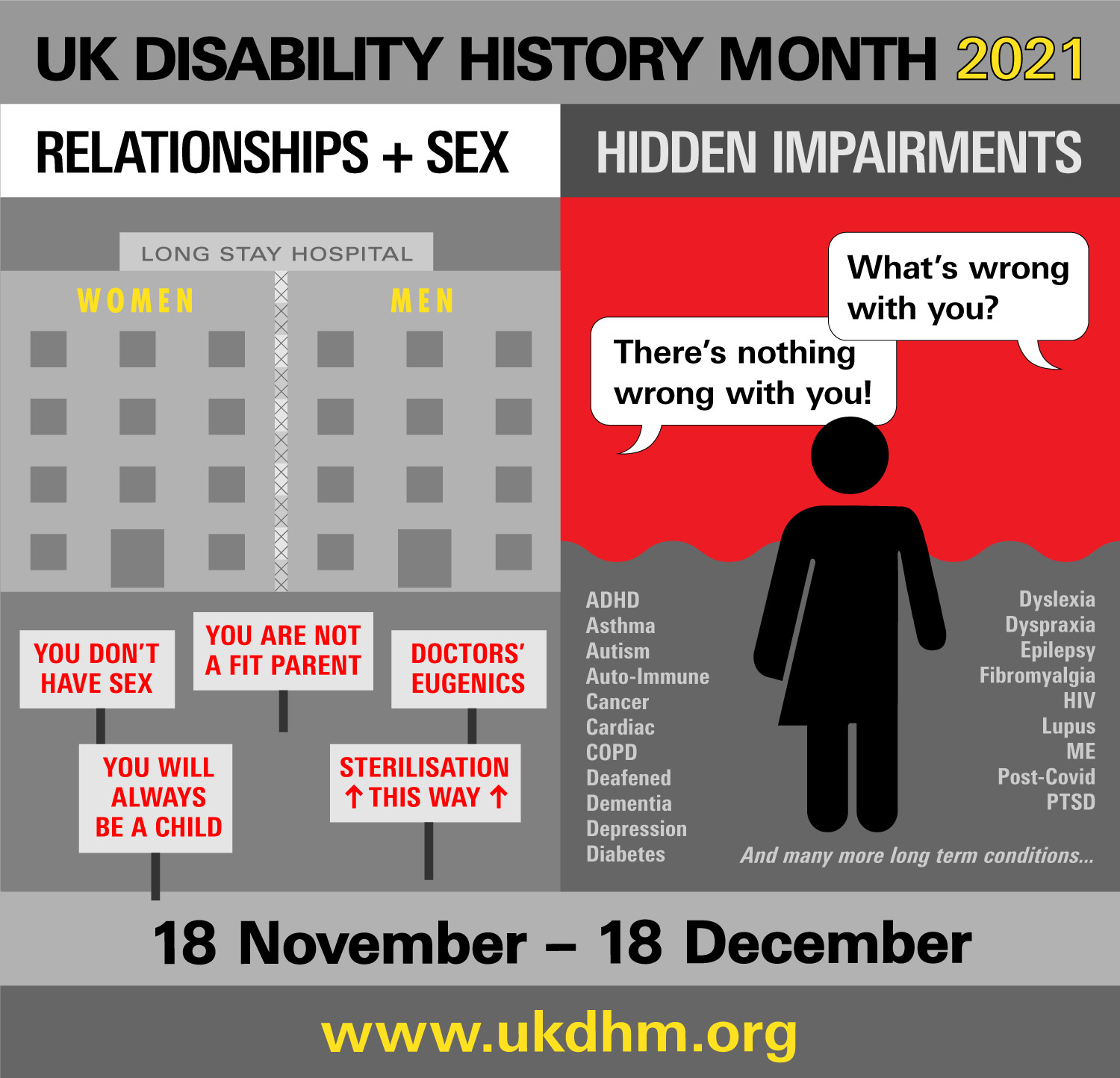
UKDHM this autumn tackles two persistent misconceptions about Disabled people:

• Disabled people are not capable of full range of relationships and sexuality!
• Those with hidden impairments aren’t really Disabled people!
By Richard Rieser, Coordinator UKDHM

Pernicious stereotypes persist that wreck lives for many Disabled people. Social Services still take children away from parents with learning difficulties or mental health issues, on the basis that their Disabled parents pose a risk to their children, rather than supporting the family to overcome barriers in line with the Human Right to Family Life. While children must be protected, live-in support for the family is considered too expensive. However, placing children into ‘care’ is far more expensive and often more psychologically damaging.

The Poor Law institutions of the 19th century and 20th century were based on rigid sex segregation and harsh conditions to discourage fakery. Often, they were the only place Disabled people and their families could go to survive. Eugenicist inspired long stay hospitals and special schools from the 1880s encouraged sex segregation, sterilisation and treated inmates as if they were perpetual children. Any relationship between boys and girls and men and women were illicit.

Recent efforts to provide Sex and Relationships Education (SRE) for all school students are commendable and should be supported, not just to educate Disabled children about abusive relationships, but to appreciate the joy of diverse sexual relationships. There are still many parents, teachers and others who, through their overprotectiveness, are denying the Human Right of Access to Sexual and Reproductive Health, Family Life and Sex Education. This month we can take stock of how negative attitudes from the past are impacting on our practices today.

The majority of Disabled people in the UK, as defined by the medical model definition of disability in the Equality Act (2010), would not be apparent by visible signs. They have hidden impairments. They are doubly discriminated against. Firstly because they are Disabled, and secondly as people generally do not believe them and assume them to be non-disabled.

‘You are disabled under the Equality Act 2010 if you have a physical or mental impairment that has a substantial and long-term negative effect on your ability to do normal daily activities. 14.1 million people in UK (OPCS).

The guidance on the definition produced by the Department for Work and Pensions (DWP) is instructive here, in describing the range of impairing conditions which will be considered. They include:

Many people with conditions made them at high risk to the effects of the COVID-19 virus. These include auto-immune conditions, diabetes, heart and lung conditions. They realised for the first time that they were Disabled people with rights and entitlements to protection from discrimination.

The problem with the Equality Act is that it puts the whole emphasis on defining a Disabled person on their impairment and its impact on carrying out ‘normal activities’, which incidentally must be viewed without the ‘impact of medication, aids and appliances’. This means, for example, those with drug-controlled epilepsy or those with HIV on antiretrovirals must be seen as their impairment would be without the effects of the medication.

A more social model influenced definition is found in the United Nations Convention on the Rights of Persons with Disabilities which the UK ratified in 2009, and forms a back stop in or legal appeals system: “Persons with disabilities include those who have long-term physical, mental, intellectual or sensory impairments which in interaction with various barriers may hinder their full and effective participation in society on an equal basis with others”.

In this respect, many of those with hidden impairments are hindered by barriers of attitude of others from enjoying full and effective participation in society. Not getting the reasonable adjustments they need is a major cause of discrimination and unhappiness to those with hidden impairments. The person experiencing the impairment and its impact on them, and people’s reactions to them, are best placed to know what adjustments they need and they should be collectively supported in getting these. This holds true at school, college work or in the community.

UKDHM adheres to the social model of disability in which the barriers of attitude, environment and organisation cause most of the disablism we face. Such thinking did not exist in most of the past, with individuals and their impairments held responsible for the disadvantage and worse. Disabled people experienced being seen as bewitched, evil or punished by God. Disabled people were often viewed as perpetual children, incapable of adult relationships. However, in this era of Universal Human Rights, we can look back and reinterpret the mistreatment resulting from our systematic oppression, caused by negative attitudes, ignorance and barriers. Such an examination of the past allows us to recognise what must actively change for Disabled people to achieve equality.

During UKDHM:

UK Disability History Month 2021 flyer, depicting relationships and sex, and hidden impairments. UKDHM dates are 18 November to 18 December 2021.

Louise Arnold portrait. Louise is Senior Lecturer at the University of East London.Inclusive education is well-embedded in the international rights treaties and documents we have signed and ratified on the world stage, but our government has not enshrined these in national policy documents. We must ask ourselves – has the government made inclusive education and movement towards inclusive societies a priority?

If we accept the rights outlined in international documents such as the United Nations Convention on the Rights of the Child (UNCRC) and UNRCPD, we should be moving away from debating inclusive education as if it is optional and instead working to find solutions at all levels – creating a system of inclusive education that serves the community rather than trying to force students into a system of education that excludes and marginalises. As academics, our role holds responsibility in contributing to shifts in thinking, language, representation and elimination of barriers in disability and inclusion, alongside Disabled people, children and Young people.

‘SEN’ (special educational needs) is a term that is still used because of its place in policy and legal guidance documents (most recently the Children and Families Act 2014 and the accompanying Special Educational Needs and Disability Code of Practice, 2015), but it is not without controversy. The issue that many have with this terminology is that it is no longer considered to be neutral or appropriate for policy.

Arguably, we should be considering children’s ‘educational rights’ (Runswick-Cole and Hodge, 2009) rather than special educational needs. The construction of the child as having ‘needs’ that are ‘special’ (special in this case meaning different and additional), rather than recognising all children as having unique qualities, preferences and experiences and considering what it takes to support every child to have a meaningful and fulfilling education, creates a narrative that it is extra work to support and engage them, that including them is above and beyond, rather than expected practice.

The language itself creates the idea that there are groups of children that are ‘other’ to society’s idea of what children should be (Griffiths, 2019). This has been in turn used to create negative stereotypes and narratives, and ultimately deny children access to education, services or inclusion in wider society.
It can also create homogeny, the idea that all children with ‘SEN’ are the same, and benefit from the same interventions or support, rather than considering the individuality of all children. The discussions we have on our degree programmes at UEL begin with identifying the kind of language we are using, and considering how this can deepen divides. We then consider the basis for discussing inclusive education- what is it and why is it important to discuss across our programmes?

The right to inclusive education has been made clear through international agreements, including the combination of the UN Convention on the Rights of the Child (though not mentioned specifically) and later the UNCRPD (2007), which calls for ‘an inclusive education system at all levels’ (24.1). It also states that Disabled people should not be ‘excluded from the general education system on the basis of disability’ (24.2 a) which can be interpreted under the social model of disability as excluding a person on the basis of impairment. ‘Full and equal participation in education and as members of the community’ (24.3). The UK government made reservations on ratifying the UNCRPD, stating that they understand that special (segregated) schools and colleges are allowed as part of an inclusive system, and that the right is reserved to send Disabled children and Young people outside their community to receive education, if it is seen as more appropriate (2009). This is in contravention to the clauses outlined above which champion a fully inclusive system of education and has been raised by many rights campaigners and organisations including ALLFIE [https://bit.ly/3t26X6Q]

In more recent legislation, Section 33 of the 2014 Children and Families Act gives schools, settings and colleges the option to say that to include a Disabled child or Young person would undermine the effective education of other children and Young people (DfE, 2014). These reservations and clauses show the unwillingness of the Government to commit to implementing or progressively realising a truly inclusive system of education, along with blame placed on the child for why inclusion is not being implemented.

Unsurprisingly then, the most recent updates on the implementation of international rights documents suggest that progress towards inclusive education and more generally progress towards an inclusive society in Britain has not been as expected or hoped for by many families, scholars and activists. Our students consider two updates in particular, one that focuses on the implementation of the UNCRC and one that focuses on the UNCRPD:

The Children’s Commissioners’ UNCRC mid-term review (2019, with an update due this year) reported grave issues with education including ‘a worrying level of use of seclusion and internal exclusion’ (p.3) and reports of children and young people, particularly those who attend segregated settings ‘being subject to restraint which causes pain’ (p.3). Segregated education then, is not meeting the needs of those excluded from mainstream education, or indeed keeping them safe.

The Equality and Human Rights Commission (EHRC, 2017) in a report to parliament raised many concerning issues, including the impact of reclassifying SEN and moving from a statement of special educational needs to the Education, Health and Care Plan (EHCP) which is only for those with ‘more serious need’ (p.25). What this reclassification means is that children who have previously been labelled as having ‘lower levels of SEN’ (p.25) are not classed as having ‘SEN’ under the new classification and therefore not seen as a priority for support. Reducing or removing support in this way, by moving the goalposts for who qualifies for it means that children in the system have been failed, by the system that is supposed to be there to support them.

The Equality and Human Rights Commission (EHRC, 2017) showed that children who areclassified as having SEN tend to experience poorer outcomes in education and they are ‘significantly more likely to be temporarily or permanently excluded’ (p.25), again painting a picture of a system that is failing children and young people. This report also found that:

These are not issues that can be placed at an individual level- there are systemic issues that keep Disabled people out of these spaces. For example, if a Disabled Young person goes to university, the EHCP finishes and does not go with them.

The importance of discussing these systemic issues as part of our courses is because many of our students hold dual roles; as parents, teachers and other educational professionals. They have their own views and opinions about inclusion based on their experiences within schools and settings, but this may have based on a version of inclusion in schools that does not include all children.

Another part of our role as academics can include linking together these key ideas – inclusive education and inclusive society. When linking these issues together, the EHRC states, ‘Education is a fundamental human right that enables people to access other rights, including an adequate standard of living and the highest attainable standard of health’ (p.24), and UNESCO (2015) adds ‘segregated education can perpetuate negative attitudes and discrimination’ which compounds the experience of Disabled children and adults who are more likely to experience exclusion from school, poverty, unemployment, health inequality, exclusion from politics and access to justice (EHRC, 2017), symptomatic of an unequal, non-inclusive society.

This must change. In 2005, Thomas stated ‘brave decisions are needed from policy makers about funding’, and this is still the case, but the drive for inclusion cannot be led solely from the top; parents, children and Young people and communities must be included so the drive comes from within (UNESCO, 2020), led by Disabled People’s Organisations- Nothing About Us Without Us (Charlton, 1998). Academics must play a role here too; challenging language used in discussions and publications and the ableism it represents, recognising the status of disability issues alongside race and gender, and not an optional ‘add-on’ for those with a particular interest, and creating research projects alongside Disabled people that speak to the experiences and concerns of Disabled people and work to eliminate barriers in research and academia.

We should be considering intersectionality as a human rights issue- disability not as a distinct experience, but interwoven with for example race, class, gender, sexuality, contributing to a person’s experience. Academics should use their platforms to amplify the views and voices of Disabled people and children and Young people, influencing policy-makers, and contribute to shifts in thinking and practice around disability and inclusion.

Academics must recognise that they are accountable to the people they are discussing and ensure their work is aligned with the priorities of Disabled people and rights-based models.

We must all broaden our understanding and definition of inclusion to include everybody, for the benefit of not just the education system but for society as a whole.

A child’s parent or a Young person may appeal to the First-tier Tribunal against the decision not to carry out an EHC Needs assessment. If you have parental responsibility for Nadeem, and he is under compulsory school age then you can submit an appeal yourself. If Nadeem is over compulsory school age, which is after the last Friday in June of the academic year he turns 16, the right of appeal becomes his. You can however still assist in an appeal and if he is not able to make an appeal himself, you should be able to do so on his behalf.

The Tribunal rules say that you cannot lodge an appeal until you have considered mediation and have contacted a mediation advisor. This must be done within two months of the date of the letter from the Local Authority refusing to carry out the EHC needs assessment. You do not have to agree to mediation and can request that the mediation provider simply sends you a certificate. The decision letter from the Local Authority should give contact details for a mediation advisor, who should be independent.

Once you have received the mediation certificate, you can lodge an appeal with the Tribunal, subject to meeting the requirements set out above. Any appeal must be received by the Tribunal within two months of the date of the decision letter, or one month of the mediation certificate, whichever is the later date. To lodge an appeal, you should complete ‘Form SEND35a’ which is found on the government website. When you have completed the appeal form it should be sent with all other relevant documents to ‘send@hmcts.gsi.gov.uk’. In deciding whether the Local Authority should carry out an EHC needs assessment, the Tribunal will consider whether Nadeem has or may have special educational needs, and whether it may be necessary for special educational provision to be made in accordance with an EHCP. It is unfortunate that these appeals are not quick and securing support in this way can take time.

Regardless of whether an EHCP is in place, it is important to note that if Nadeem is of compulsory school age and is unable to attend school because of his own anxiety, then the Local Authority may be responsible for arranging a suitable education otherwise than at school. This will depend on the specific circumstance of each case but if you have medical evidence to support Nadeem’s difficulties, you should share this with the Local Authority.  If the Local Authority refuse to make alternative arrangements, then this decision may be challengeable by way of Judicial Review. This is a complaint in the courts against a public body which seeks to resolve the situation. It is my recommendation that you speak to a legal advisor if you consider this to be the case.

If families find themselves in difficult situations like these then they can seek legal advice on their individual circumstances. It is important to remember that up to date advice on your specific circumstances will always be beneficial.

This Legal Question was posed by ALLFIE’s Simone Aspis, and answered by Lydia Neill, a Paralegal in the Public Law Team at Simpson Millar Solicitors.

Inclusion Now 60 Autumn 2021

Welcome to the latest Inclusion Now, topical inclusive education articles: Judy Heumann; Baroness Tanni Grey-Thompson; educational inclusion struggles in UK Gypsy Traveller community; UK Disability History Month + more!

Welcome to the 60th edition of Inclusion Now magazine. Text and audio versions are in the articles below, or you can read it in magazine format on Issuu.

To receive three issues of Inclusion Now a year, on the publication date, you can subscribe here. Subscribing supports our work and helps us plan for the future.

Inclusion Now is produced in collaboration with ALLFIEWorld of Inclusion and Inclusive Solutions

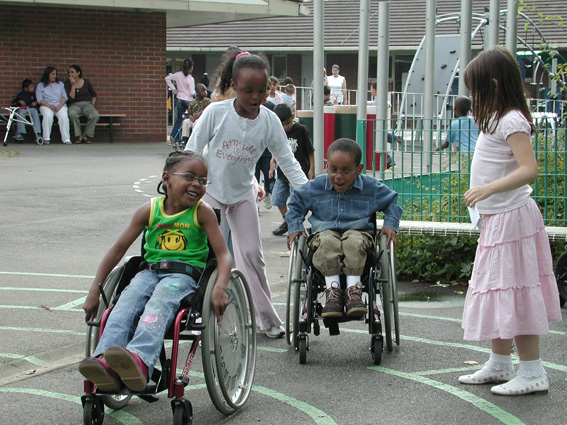
Children playing together, some in wheelchairs, some notCoronavirus Campaign update

ALLFIE would like to take this opportunity to thank all of you for helping us with our successful campaign, to put pressure on Government to remove the Children and Families Act’s easements.

In addition, we would like to thank Inclusion London, Disability Rights UK and Liberty for supporting our work.

The Government has published its COVID-19 Response: autumn/winter plan. This recommends Parliament remove Ministerial powers, under the Coronavirus Act 2020, to temporarily close schools and suspend or modify Children and Families Act provisions around local authorities’ duty to secure SEND provision in a child or Young person’s Education and Health Care Plan (EHCP). This includes statutory time scales for completing Education, Health and Care Assessments and Plans.

The Coronavirus Act 2020 Provision of Remote Education (England) Temporary Continuity (No.2) Direction, which requires schools to provide remote education for pupil(s) requiring to self-isolate on COVID-19 health grounds, has been extended for 2021 to 2022 academic year.  As with the 2020-2021 direction, the Secretary of State for Education has set out expectations that include the number of hours remote education provided for children at different key stages.

Whilst Further and Higher Education institutions fall outside this direction, nevertheless there is an expectation that remote education will be provided for their students if self-isolating because of COVID-19 health grounds.

What this campaign has raised going forward, is what happens when local authorities are not under an absolute duty to arrange SEND provision for Disabled children and Young people. The evidence has been overwhelming that schools only having to use their reasonable or best endeavours to secure SEND provision, often means nothing is arranged for Disabled children and Young people in educational settings.

ALLFIE will be continuing to highlight the dire consequences of weakening local authority’s and mainstream schools duties around arranging SEND, as per Coronavirus Act provisions, as evidence for why the Children and Families Act must not only be maintained but strengthened in line with UNCRPD Article 24’s requirements.

Further, we need to ensure that blended learning is incorporated into mainstream education settings so that Disabled children and Young people are able to continue to be part of their school or college community.

We are still keen to know about your experiences of remote education 18 months into the COVID-19 pandemic.

Contact: Simone Aspis, ALLFIE Campaigns and Policy Coordinator

Our Voice Project: What We Learned

During the COVID-19 pandemic, ALLFIE launched ‘Our Voice’ project, to listen to Disabled Young people’s voices and address their education concerns. Armineh Soorenian, Project Coordinator, reports back on key take away messages, including isolation and intersectional exclusion.

During COVID-19, ALLFIE became increasingly aware that Disabled people’s voices were marginalised in any debates on, and responses to, the pandemic. Through our work, we noticed that Disabled Young people were experiencing even more isolation and felt cut off from their school communities. These experiences were further increased for Disabled Young people with intersectional identities.

As a result, we applied to the DPO COVID-19 Emergency Fund, organised by National Emergencies Trust (NET), to set up a COVID-19 national participation project for Disabled Young people. We received the funding and created the Our Voice project.

The aim of the project was to address the isolation and intersectional exclusion of Disabled Young people during the pandemic and to listen to what matters to them.

In the sessions, we explored such topics as disability language, social model of disability, independent living, and the impact of COVID-19 on their lives.

Different members of the ALLFIE team came to each session to deliver training or bring their expertise to the discussions, while my role as a Project Coordinator was to facilitate the meetings and support the Young people as they created the various resources available on the Our Voice webpage.

During the project, we identified some valuable lessons, which I am sharing in this blog:

Time

Eleven Young people, between the ages of 16 and 25, took part in the project in total. The group size varied from week to week, and allowed in-depth discussions and time for sharing. It was very exciting to meet everyone, in some cases for the first time. From this experience, we learned to aim for smaller online groups in the future projects so that the sessions would be made more accessible to participants as we could support them better when they attended. In doing so, this would allow everyone to feel able to meaningfully participate and contribute.

Technology

Unfortunately, not everyone had access to appropriate technology and/or an internet connection and those who had did not always have a stable internet connection. Due to this, we sometimes missed some valuable voices and experiences in the project. ALLFIE’s resources are limited, so we were not able to address this in the Our Voice project but for future meetings, we are considering ways of addressing the technology divide where possible and looking at ways of supplying equipment and lobbying to improve access to technology for all.

Communication

The group members had different impairments and, as such, their support needs varied. As the facilitator, I needed to ensure that the sessions were accessible for the Young people. For example, early on we recognised that the way we were communicating had to change as not everyone in the group interacted at the same pace. We realised that we had to allow time and space for the participants to be able to talk and feel part of the group. So that’s what we did, and the members learned the new way of communicating with each other. This helped everyone to feel comfortable being in the group. It worked so well that the trainers who visited the group commented how well everyone worked together.

Empowerment

Soon I felt the group was ready to lead itself, and I learned to step back in a way that allowed me to continue supporting them and instilling confidence in the Young people, which greatly empowered them.

On 22nd June, the group lead, chaired and presented a panel discussion, talking about their experiences of the Our Voice project. I couldn’t have been happier and more proud at witnessing how the group had grown organically and how well the members bonded and supported each other in solidarity. It showed what they could do when given the opportunity.

I would like to thank all the Disabled Young people for teaching me so much, the last six months have certainly been an excellent learning journey, for us all at ALLFIE and of course for the Disabled Young people themselves.

Following the success of Our Voice, ALLFIE has decided to extend the project until at least December 2021, and refer to the first stage as Phase 1. We  have decided to continue the project until at least the December 2021. In the second phase, we will talk about the inclusion of intersectional Disabled Young voices in the Disabled people’s movements as well as some other new and exciting topics. I can’t wait to see what happens next!

Armineh Soorenian, Our Voice Project Coordinator

National Disability Strategy fails to address Disabled people’s rights

ALLFIE’s Campaigns and Policy Coordinator, Simone Aspis, on how UK Government’s National Disability Strategy, released today, will do nothing to tackle the on-going onslaught attack on Disabled people’s rights.

The National Disability Strategy has always been doomed to be a big failure, when the Government is continuingly failing to engage with Disabled people and our organisations in any meaningful manner.

From the outset, the consultation was flawed with big cracks in the process: the survey design is poor, patronising and insulting; the questions being asked give no opportunity to explain the barriers we encounter every-day; and the lack of infrastructure and support to bring our networks together is not addressed.

Personally, I felt overwhelmed by the length of the questionnaire, and it required ample time to complete the survey. As far as we know, Disabled children, pupils and students have not been formally consulted. Tokenism has generally been the way for the Government to consult with Disabled people. Time and time again, this practice fails to value Disabled people’s expertise and contributions we have made to society, through our representative organisations, networks and lived experiences. Now, it is for the courts to decide whether the Government has met the standards and requirements for effective consultation later in the year.

In the 120 plus page document, there appears to be no real proposals that will tackle the disablism and intersectional discrimination that Disabled people face in their every-day lives.

Yet again, it is clear the Government has not used UNCRPD Monitoring Committee’s Observations and Recommendations to inform this National Disability Strategy, to help achieve the progressive realisation of Disabled people’s human rights and create an inclusive society for all.

The disability survey highlighted a range of issues that show a high percentage of Disabled people are on the receiving end of hostility and victimisation, alongside experiencing barriers in accessing public services and the education, employment, social and leisure opportunities taken for granted by non-disabled people. The government has given an agreement to inclusion in areas such as playgrounds and housing design, Queen’s honours list and other work, without any specific policies.

In the education section, there was an obvious omission of acknowledging that education must have an inclusive ethos. The education section does not offer any new inclusive education policy, but retains the status quo, the continuation of business as usual.

There is nothing in the Government’s National Disability Strategy to stop the special school population rising. It has been projected that there will be an increase from 113,000 in 2020 to 121,000 in 2024, that includes the establishment of 75 new special schools for children with complex special education needs.

The identified themes running through the education section will not deal with the root causes of disablism within the education system. There is no mention of curriculum, assessment arrangements, teaching, accountability measures and dealing with all forms of exclusions, seclusions, and segregation within and outside mainstream education. These are the issues that have created the hostile environment that Disabled people encounter every day.

The more Disabled people are segregated from the experiences of ordinary life, the greater the hostility and discrimination.

How can we expect to develop inclusive societies where children, with and without protected characteristics are not playing, learning, relating, working, and living together, side by side?,

We will need to see the Department for Education up its game, in reforming a SEND framework that will support inclusive education and societies.

In solidarity.

Simone Aspis, Campaigns and Policy Coordinator

Alliance for Inclusive Education, leading Disabled People’s Organisation (DPO) for inclusive education campaigning,  is concerned that there is nothing in the Government’s National Disability Strategy to stop the special school population rising. It has been projected that there will be an increase from 113,000 in 2020 to 121,000 in 2024, that includes the establishment of 75 new special schools for children with complex special education needs.

ALLFIE condemns the Government’s National Strategy for lacking any meaningful involvement and engagement with Disabled people’s organisations, in particular Disabled children and Young people.  It is therefore not a surprise that the Government has homogenised our identities as a single issue and failed to tackle educational intersectional inequalities. Furthermore, it is not a surprise that the Government completely ignored any strategy proposals to tackle inequalities that Disabled pupils and students experience in segregated education.  ALLFIE know that segregated education reinforces being locked out of mainstream education and other life-time opportunities, which has occurred over the past decade and is outlined in ALLFIE’s Manifesto.

“The strategy does not include any proposals to deal with widespread disablism and intersectional discrimination within the education system. It continues to create substantial barriers for Disabled people’s access to mainstream early years, schools, colleges, universities, and apprenticeships.  There are no proposals to support Disabled pupils and students access to mainstream education that should include outlawing all forms of segregated education.  Furthermore, there is no strategy to develop a fully inclusive education system that supports all Disabled peoples’ human rights to inclusive education as set out in the UNCRDP, article 24 (on education) through reforms to curriculum, qualification assessments,  teacher training and practice.”
Simone Aspis (ALLFIE Policy and Campaigns Coordinator)

Notes to editors:

  1. ALLFIE is a disabled people’s organisation which campaigns for inclusive education for disabled learners. ALLFIE is a unique voice. Formed in 1990, we are the only organisation led by Disabled people focused on campaigning and information-sharing on education, training and apprenticeship issues. We campaign for the right of all Disabled pupils and students to be fully included in mainstream education, training and apprenticeships with all necessary supports. ALLFIE believes that inclusive education is the basis of lifelong equality. Children who learn and play together will grow into adults who can understand and respect each other’s differences.
  2. Media inquiries: Catherine.Bebbington@allfie.org.uk

Opening the summer issue, film-maker Steve McQueen is interviewed by ALLFIE’s Disabled Black Lives Matter group, calling out injustice within our education system, and at the intersection of disability and race. Steve’s recent BBC Small Axe film, ‘Education’, depicts one family’s struggles to secure a good education for their son, Kingsley, whose school have already marked him out as a failure. In the 1970s, the British school system failed a generation of Black students, with the practice of segregation to “educationally subnormal” schools (ESN). While the formal system was largely abolished by the time McQueen was Kingsley’s age, he was similarly channelled into a lower stream at secondary school, with drastically reduced expectations. As DBLM discover, ‘Education’ is the most autobiographical film in the Small Axe anthology, and Kingsley’s experiences reflect his own: “My own Dyslexia was a big issue and, in a way, making Education was a way of dealing with what happened to me… how I overcame certain things.”

It’s great to see a commitment to inclusion from high profile people, including politicians. From inside Parliament we hear from Olivia Blake MP, Chair of the All-Party Parliamentary Group on SEND. Richard Rieser discovers how her lived experience, as a Disabled person, has impacted on her political career (page 13).

COVID-19 remains a key theme in Disabled Young people’s lives. On page 10, Kadijah Adam updates Michelle Daley on her return to school, with some strong messages for the government. Prominent Young Deaf and Disabled person’s campaigner, Daniel Jillings, explains BSL accessibility during lockdown (page 12). Armineh Soorenian brings news of ‘Our Voice’, ALLFIE’s national COVID-19 participation project, to amplify Young people’s voices (page 8).

ALLFIE’s March International Women’s Day event, with Inclusion London, Sisters and Frida and guests, was hearteningly positive. A large global audience attended the online webinar, which addressed issues for Disabled Women, “at the frontline of discrimination and inequality, and the multiple intersections of race, class, gender, and disability”. A link to the highlights reel is on page 16, where Yewande Omoniyi-Akintelu reports back.

In solidarity,

Catherine Bebbington

Steve McQueen: “We want meaningful change – so, let’s get on with it.”

ALLFIE’s Disabled Black Lives Matter group interview with Small Axe film-maker

In April, members of ALLFIE’s Disabled Black Lives Matter (DBLM) group, ALLFIE Director, Michelle Daley, and one of our trustees, Mike Lambert, had the pleasure of meeting and interviewing artist and Oscar-winning film director, Sir Steve McQueen.

We had been impressed by his recent TV film series, Small Axe; a collection of five short dramas depicting the lives and struggles of Black, British people from the 1960s to 1980s. In particular, we were keen to talk to him about one of these dramas, ‘Education‘, which has such obvious relevance to ALLFIE’s current work; combatting school exclusions.

Small Axe: Education’ is available on BBC iPlayer until November, 2021.

It was clear from the outset of our conversation that he is completely down-to-earth and unfussed by formality, wanting to be addressed as “Steve”. As the interview continued, he showed his understanding of intersectionality and his respect for the work of grassroots organisations, like ALLFIE.

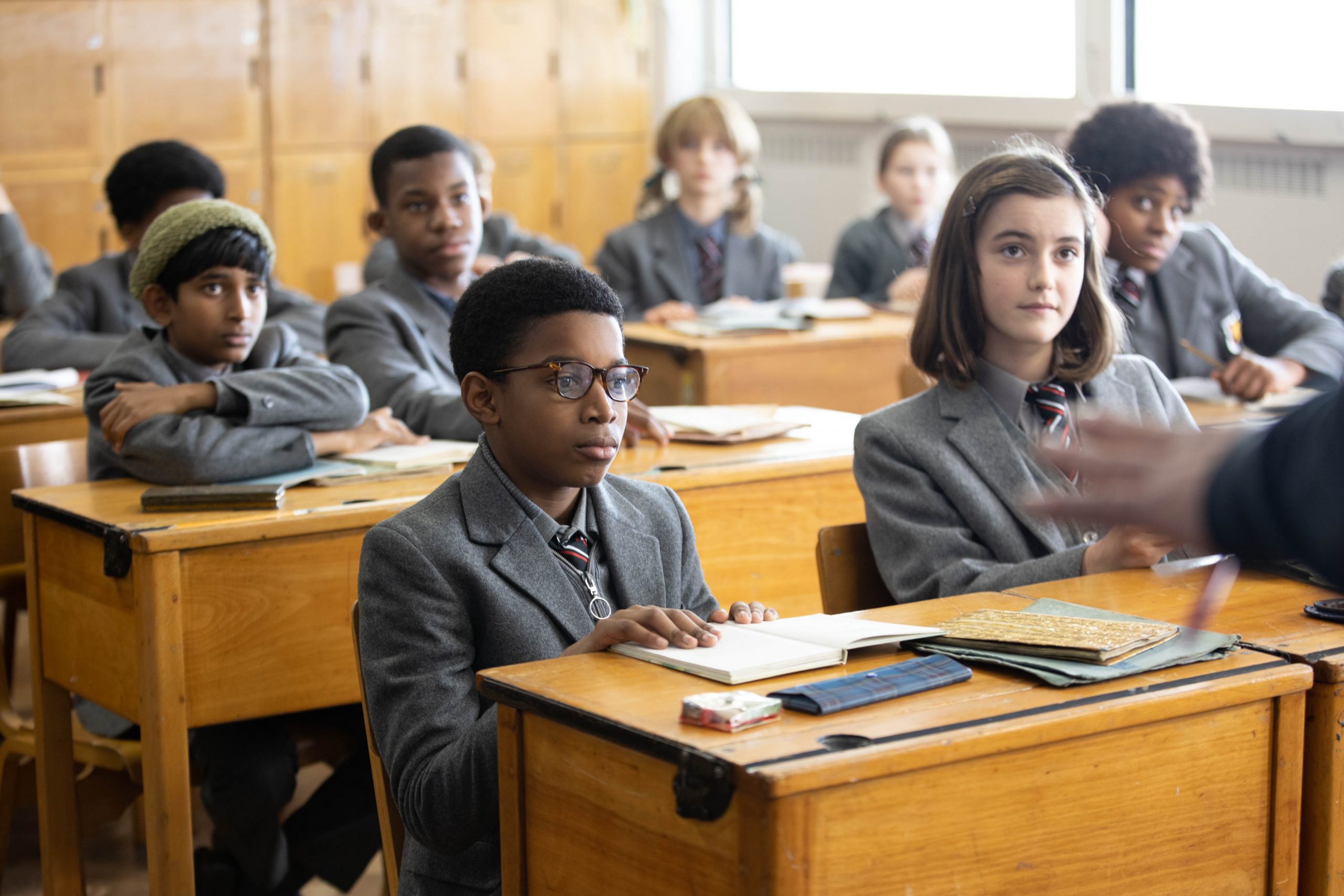
Scene from the BBC film, 'Small Axe: Education' by director Steve McQueen, depicting characters sat at desks in a school classroom setting, with main character Kingsley centre of shot. Education, from the Small Axe season, stars Kenyah Sandy as 12-year-old Kingsley, Ryan Masher as Joseph and Nigel Boyle as Mr Hamley. Copyright: BBC/McQueen Limited.

Kingsley’s Story

The central character in ‘Small Axe: Education’ is Kingsley, a 12-year-old schoolboy growing up in the early 1970s. Because of minor misbehaviour, slow progress with reading but, mostly, because of being Black, Kingsley is sent to a school for Educationally Sub-normal (ESN) children. From our research, we knew that Steve hadn’t been sent to an ESN school, but that, on account of his Dyslexia, his secondary school in Ealing had put him into a lower stream, involving drastically reduced expectations.

Disabled Black Lives Matter wanted to learn more about the semi-autobiographical basis of ‘Education’ and asked Steve:

Disabled Black Lives Matter (DBLM): “How far do Kingsley’s experiences, described in ‘Education’, reflect your own experiences when at school and how have you addressed these feelings in your later life and work?”

Steve McQueen (SMQ): “Very much so. ‘Education’ was the last one I wrote in the series. I’d been pushing a lot of stuff away as there was a lot of hurt and dealing with a lot of things through ‘Education’. So, I’d swept it under the carpet.”

“My own Dyslexia was a big issue and, in a way, making ‘Education’ was a way of dealing with what happened to me, and dealing with how I overcame certain things.

“I grew up in the 80s and went into the high-school system in 1983. What was interesting was that, if I had been around in the 70s, I would have been in an Educationally Sub-normal School and there’s no ifs or buts about that. That’s what would have happened to me, if it hadn’t been for Black parents and Black parents’ associations who fought against the government ruling and stopped putting Black children and working-class white children into these ESN schools. There was an over-population of Black children who should not have been in these schools and Bernard Coard saw this government report and said these people should not be in there but are put in there anyway. It was only because of amazing parents and parents’ associations that it stopped. And it wasn’t just a rule to stop Black kids going there; it was a mandate to abolish these schools for all children. This is what these people achieved. My presence here with you today is directly linked to what Black parents and Black people did to change the law; to take away these terrible schools.

“I wanted to put my life on the edges of what I could have experienced, or could have occurred in the 1970s. So, all the stuff you see in ‘Education’, about how my parents and sisters lived, it is fully accurate to me.”

The Parental Journey

At ALLFIE, we’re familiar with the turmoil that often surrounds the identification of a child’s support needs and the subsequent struggle of parents to assert their rights in our harsh and bureaucratic education system.
We often refer to this process as the ‘parental journey’. We were interested in the depiction of Kingsley’s parents in ‘Education’ and the development of their thoughts and feelings, to a point where they are able to help their son. We asked Steve:

DBLM: “What choices did you make when making this film to show their evolving thoughts and realisations about the education system?”

SMQ: “Often the case with a lot of immigrant people is that they trust the authorities because, obviously, coming to the mother country, they think: ‘they must know better than us… and we trust the education of our kids to these senior authorities’. Then they slowly find out that it’s not how they think things are.

“This slow realisation was part of the experience for my parents too. If you did bad at school, or whatever, it was because you were not concentrating and not because of the teacher not teaching properly. Whatever the teachers said, they would do. And I hated that, I really did hate that. I loathed some of the teachers and how they manipulated my mother at the time. For my mother, it was really an awakening.

“It was an interesting time for us as a family, to have that kind of communication for the first time. Before that, everything I did was wrong, and my parents were always right. Then, all of a sudden, they understood what was going on and the pain that I was going through.

“Sometimes it’s very difficult to be heard, even by the people that actually love you the most. It was very important for me to communicate that message in Education.”

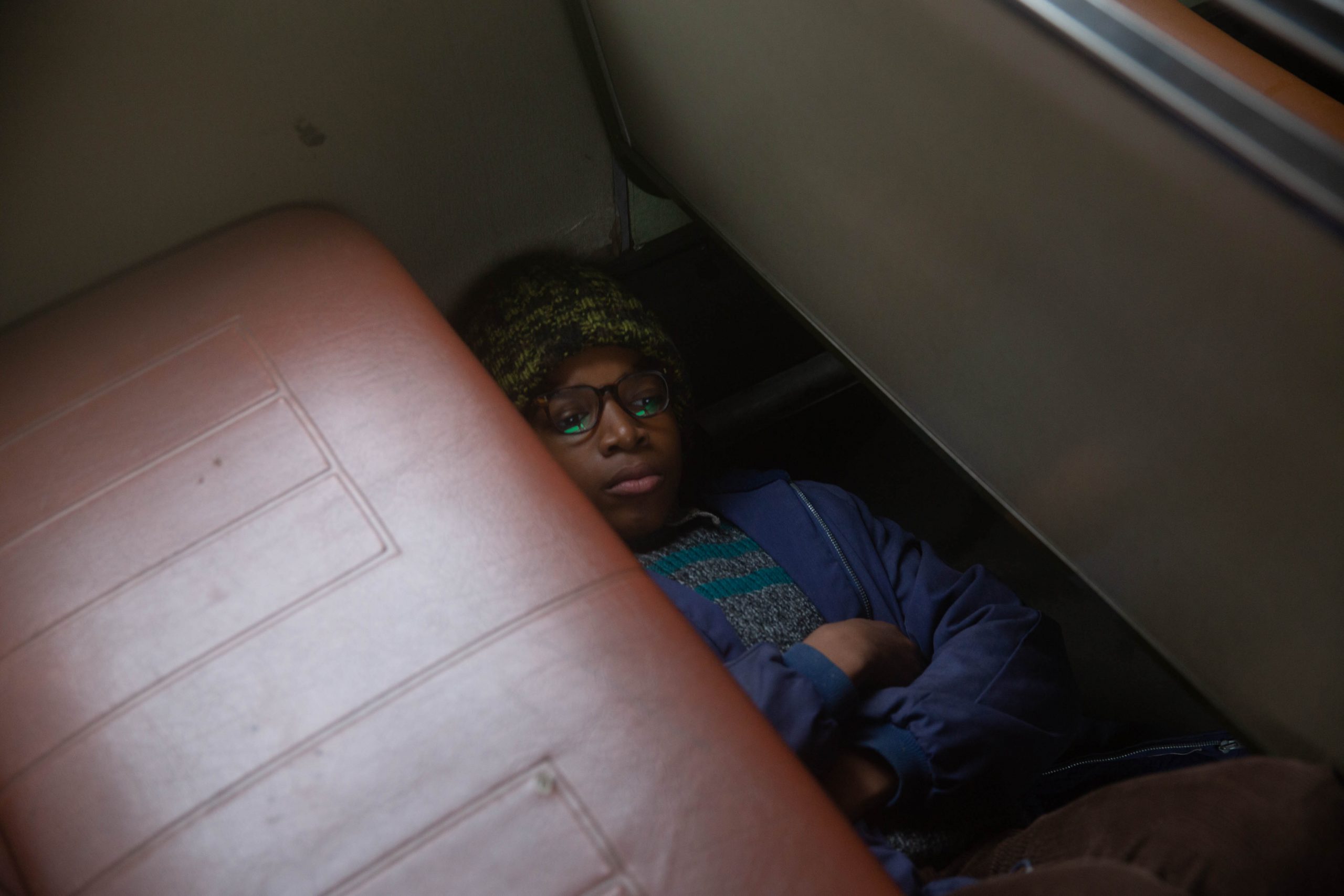
Still from the BBC film, 'Small Axe: Education' by director Steve McQueen, depicting the main character, Kingsley, hiding under the seat of the school bus. Episode: Education. Shows: Kingsley Smith (Kenyah Sandy) / Copyright: BBC/McQueen Limited.

Calling Out Injustices Within the Education System

We had read an article in Sight and Sound magazine in which Steve had described his school as ‘investing in Black failure’.

We wanted to hear more about why he had described his school this way.

SMQ: “The context of that was when, later in life, a few friends met our former deputy headteacher. He told them the story of how the headteacher at the time hadn’t wanted to do anything about how the school was failing Black children, because that would only attract more Black children to the school. It wouldn’t be attractive to getting a certain type of clientele that the headteacher wanted into his school. The idea at the time was the school was only interested in getting a certain amount of children into Oxford and Cambridge every year – it was a tick in their box. That’s why I spoke about them ‘investing in Black failure’, because they didn’t care about Black people.”

We moved onto talking about a scene in ‘Education’, which shows segregated schools as places where pupils are barely stretched, and education hardly happens. We asked Steve:

DBLM: “You included that painfully long scene in ‘Education’, where one of the teachers is singing ‘House of the Rising Sun’ to the children. Was that done deliberately to convey the sense of boredom and frustration felt by Kingsley and his classmates?”

SMQ: “That actually happened to me [Steve laughed]. One of our teachers was a guy who felt he had his dreams and it was like when you get a hairbrush in front of a mirror, except guess what, he did the same with us as his audience. They didn’t give a damn about teaching us. We were just taken advantage of really. It was all about wasting time.”

This mention of time wasting really hit home for some of us who had attended segregated schools, where we weren’t stretched, expected to succeed or given the opportunity to achieve. We shared with Steve some of our own stories about children being poorly educated and bored in segregated schools. Identifying with what we’d said, Steve laughed and exclaimed:

“Let’s get the tambourines out. But really, this is terrible.”

The Intersection of Disability and Race

One of the things that had impacted us most about Steve’s film, set in the 1970s, is how little things have really changed. The systems have shape-shifted and the words we use are different: but Black boys are still being disproportionately excluded from school on the basis of disability. The Timpson Review of School Exclusion (2019) reveals the intersectional experiences of Black, Disabled pupils (mostly Disabled, Caribbean boys) in education, who will have a 58% chance of receiving a fixed period exclusion.

Today, instead of sending such pupils to ESN schools, they’re sent to Pupil Referral Units (PRU), regarded by some as pathways to prison. According to HM Chief Inspector of Prisons Annual Report (2017-18), the reason 86% of inmates have ended up in prison, is a direct consequence of earlier school exclusion or attendance at a PRU.

As a group that embraces more than one identity and movement, we asked Steve:

DBLM: “To what extent do you identify with the Disability Rights Movement and its struggle against segregated education?”

SMQ: “The worst thing in the world is when you are put aside. This started to happen to me when I was 13 and already my path was sketched out for me. It is very important that that doesn’t happen. It is disgusting. It makes that person feel like they’re nothing. When a person is put aside, their behaviour changes, their grades change. But, when people are put side by side, everyone goes up and you feel better. This segregation, I find it all a bit disgusting and elitist.”

“I had to deal with a lot of stuff and my liberty was about doors being opened to me, in an environment of possibilities. When you’re in an environment of possibilities, then you feel like you can achieve anything and there are no limits. But when you’re put aside, you’re already being told you’re not the same as the rest. So, don’t even think about it, because you’ll never achieve more than these people say you can.”

The Future

Towards the end of our discussion, Steve spoke about his recent photographic project, called Year 3. This exhibit, which opened at Tate Britain in 2019, attempted to bring together photographs of every year three class in London.

SMQ: “This was the first time I was confronted with London and how London looks and the future of London. What I loved about the schools were images of non-Disabled and Disabled children in the same frame.”

When we asked Steve whether he has hope for the future, he replied confidently:

“Of course I do. I feel hopeful because I’m talking to you guys now. But we want meaningful change – so, let’s get on with it.

Further Reading/Viewing

  1. ‘Education’ and the four other Small Axe dramas are available, free of charge, until November 2021:
    https://www.bbc.co.uk/iplayer/episodes/p08vxt33/small-axe
  2. Bernard Coard, ‘How the West Indian Child is Made Educationally Sub-normal in the British School System’, 1971 (republished as the central article in the collection Tell it Like it is: How Our Schools Fail Black Children, 2005): https://en.wikipedia.org/wiki/How_the_West_Indian_Child_is_Made_Educationally_Sub-normal_in_the_British_School_System
  3. Edward Timpson, Review of School Exclusion, 2019: https://assets.publishing.service.gov.uk/government/uploads/system/uploads/attachment_data/file/807862/Timpson_review.pdf
  4. HM Chief Inspector of Prisons for England and Wales, annual report 2017 to 2018: https://assets.publishing.service.gov.uk/government/uploads/system/uploads/attachment_data/file/761589/hmi-prisons-annual-report-2017-18-revised-web.pdf
  5. Bernard Coard, ‘Why I wrote the ESN Book’, The Guardian, 5 February 2005: https://www.theguardian.com/education/2005/feb/05/schools.uk
  6. Subnormal: A British Scandal An examination of one of the biggest scandals in the history of British education: https://www.bbc.co.uk/programmes/m000w81h

Supported by

ALLFIE’s campaign for Inclusive Education as a human right is backed by funders and donors who reject the systemic segregation of Disabled people from society.